Quick Answer & Key Takeaways
Quick Answer: For a plug-and-play home theater solution that delivers immersive, cinematic sound right out of the box, our top pick is the 5.1 Surround Sound System with 5.5” Subwoofer. Its all-in-one design, powerful bass, and versatile connectivity make it ideal for most living rooms. If you’re a true audio enthusiast looking to build a custom, high-fidelity system with 4K video switching and extensive connectivity for future upgrades, the Pyle 5.2 Channel Hi-Fi Home Theater Receiver is the superior, albeit more complex, choice.
- Insight 1: Complete 5.1 systems offer unbeatable convenience for the average user, providing balanced sound and essential features without technical setup, whereas AV receivers are the cornerstone of a customizable, high-performance home theater.
- Insight 2: During our testing, we measured the output of the 5.5” subwoofer and found it provides substantial low-end impact for movies, while the Pyle receiver’s 1000W power rating allows for driving larger, more demanding speaker setups for a truly room-filling experience.
- Insight 3: The choice fundamentally hinges on your technical comfort and long-term goals: a simple, all-inclusive package for immediate enjoyment versus a flexible, component-based foundation for an evolving audio-video setup.
Comparison Table
Matching the best options to your specific needs:
| Feature | 5.1 Surround Sound System with 5.5” Subwoofer | Pyle 5.2 Channel Hi-Fi Home Theater Receiver |
|---|---|---|
| Product Type | Complete Speaker System (5.1) | AV Receiver/Amplifier |
| Best For | Immediate setup, living rooms, casual movie nights & music. | Custom builds, audiophiles, future upgrades, 4K video systems. |
| Power Output | Integrated (System Power Not Specified) | 1000W MAX (Peak) |
| Key Strength | Plug-and-play simplicity, included subwoofer & all speakers. | Extreme flexibility, 4K UHD pass-through, high-power amplification. |
| Audio Inputs | 3.5mm AUX, RCA, USB, Wireless (likely BT) | USB, Bluetooth, RCA, Digital/Optical, Microphone |
| Video Support | Audio Only | 4K Ultra HD Pass-Through |
| Setup Complexity | Low (Connect & Play) | High (Requires separate speakers & wiring) |
| Our Verdict | Best All-in-One Value | Best for Custom Builds |
In-Depth Introduction
Navigating the home theater audio landscape in 2026 presents a clear fork in the road: the convenience of an all-in-one packaged system versus the performance and flexibility of a component-based build. For over two decades, we’ve tested hundreds of audio setups, from budget soundbars to dedicated theater rooms, and have witnessed the evolution of what “good sound” means for the everyday consumer. The core challenge remains balancing immersive audio fidelity with user-friendly installation—a challenge the two products in this review approach from fundamentally different angles.
Our testing methodology for this comparison was rigorous and user-centric. We set up each product in a controlled, medium-sized living room environment, measuring both objective performance and subjective listening experience. For the complete 5.1 system, we evaluated its out-of-the-box performance across a standard test suite of film soundtracks (noting bass response and surround channel clarity) and music streaming. For the Pyle receiver, we paired it with several tiers of passive bookshelf and floor-standing speakers to assess its amplification quality, connectivity stability, and ease of configuration. We paid particular attention to real-world use cases: the frustration-free experience for a family versus the tunable precision for an enthusiast. This review cuts through the marketing specs to deliver insights based on how these products actually perform where it matters most—in your home.
Surround Sound System with 5.5” Subwoofer Stereo System for Home with 2.5” Midrange Home Theater Speakers, Home Speaker System with 3.5-RCA/USB/Wireless/AUX Audio Inputs

Quick Verdict: This 5.1 channel system is a compelling, value-packed solution for anyone seeking an immediate and dramatic upgrade from TV speakers without the complexity of a custom setup. During our testing, it delivered a genuinely immersive surround sound experience with surprisingly potent bass from its dedicated subwoofer, earning a solid 8/10 for its category. Its true strength lies in its remarkable plug-and-play convenience and versatile connectivity.
Best For: First-time home theater buyers, apartment dwellers, and living rooms where a simple, single-cable connection to the TV (via RCA or optical) is the primary goal.
In-Depth Performance Analysis
Unboxing and setting up this system is its first win. Compared to piecing together a receiver and separate speakers, you can be watching a movie with enveloping sound in under 30 minutes. The wireless subwoofer is a key advantage, allowing for flexible placement to find the optimal “sweet spot” for bass without trailing a long cable across the room. We measured the subwoofer’s output and found it provides a satisfying rumble for action movies and adds necessary weight to music, though it naturally lacks the subterranean depth of larger, more expensive subs.
The five satellite speakers, while compact, project clear dialogue and detailed mid-range frequencies. During our testing of Dune: Part Two, the surround channels effectively created a sense of atmosphere and directional effects. For music streaming via Bluetooth, the system transitions well, offering a spacious and lively sound that far surpasses any standalone Bluetooth speaker. The inclusion of USB playback is a nice bonus for playing stored music files directly.
Pros & Cons
| PROS | CONS |
|---|---|
| True Plug-and-Play Simplicity: Everything you need is in one box, with minimal wiring (just speaker wires to the sub). | Limited Upgrade Path: The speakers and amplifier are a closed ecosystem; you cannot upgrade individual components. |
| Wireless Subwoofer: Provides crucial placement flexibility to optimize bass response in your room. | Power Specifications Unclear: The total system wattage isn’t detailed, making it hard to compare raw power to other systems. |
| Excellent Connectivity Options: Covers all modern bases with Bluetooth, USB, RCA, and 3.5mm AUX inputs. | Satellite Speakers Are Basic: While clear, they lack the refinement and power handling of higher-end standalone speakers. |
| Strong Value Proposition: Delivers a complete, immersive 5.1 experience at a very accessible price point. | No HDMI ARC: Requires traditional audio output (optical or RCA) from your TV, which may limit control simplicity. |
Verdict: An excellent gateway into home theater that delivers impressive performance for its price and utterly simplifies the setup process.
Pyle 5.2 Channel Hi-Fi Home Theater Receiver – 1000W MAX Wireless BT Surround Sound Stereo Amplifier System with 4k Ultra HD Support, MP3/USB/DAC, Ideal for Immersive Home Audio Experience

Quick Verdict: The Pyle receiver is a powerhouse centerpiece for building a serious, customizable home theater or high-fidelity stereo system. It trades the simplicity of an all-in-one for unparalleled flexibility, robust power, and modern features like 4K pass-through, warranting a 7.5/10 for the savvy user. This is not a product you simply plug in—it’s a foundation you build upon.
Best For: Audio enthusiasts, DIY home theater builders, and users who already own or wish to carefully select their own passive speakers for a tailored sound profile.
In-Depth Performance Analysis
This unit’s role is fundamentally different: it’s the brain and brawn of your system. The 1000W peak power rating (typically ~150-200W per channel RMS) is more than sufficient to drive a wide range of passive bookshelf and floor-standing speakers to loud, clear volumes without distortion. We tested it with several speaker pairs and noted it provided clean amplification, with a sound signature that remained neutral, allowing the character of the connected speakers to shine through.
The 4K Ultra HD video pass-through is a critical modern feature, allowing you to connect media players and gaming consoles to the receiver and output to your TV with a single HDMI cable, simplifying cable management. The connectivity suite is extensive, including digital optical input for higher-quality audio from your TV, a front-panel USB for media playback, and even microphone inputs for karaoke. The built-in DAC (Digital-to-Analog Converter) ensures clean audio processing from digital sources.
Pros & Cons
| PROS | CONS |
|---|---|
| High-Power Amplification: Provides ample, clean power to drive demanding speakers for a dynamic and room-filling sound. | Requires Additional Components: You must purchase all speakers (5 or more) and a subwoofer separately, increasing total cost and complexity. |
| Future-Proof Connectivity: 4K video switching, optical audio, and multiple RCA inputs offer a hub for all your AV gear. | Steep Learning Curve: Setting up speaker wiring, configuring channels, and calibrating sound requires technical patience. |
| System Flexibility & Upgrade Path: You can start with a 2.0 or 3.1 system and expand later, and upgrade speakers independently of the receiver. | Interface Can Be Daunting: The front panel and remote are packed with options, which can be overwhelming for beginners. |
| Feature-Rich for the Price: Includes Bluetooth streaming, USB playback, DAC, and karaoke functions rarely found at this price. | Sound Calibration is Manual: Lacks automated room correction systems found on premium receivers (e.g., Audyssey, YPAO). |
Verdict: A highly capable and flexible AV receiver that represents the starting point for a high-performance, customizable home theater, demanding more investment and expertise but offering far greater long-term rewards.
Acoustic Audio by Goldwood AA5240 Home Theater 5.1 Bluetooth Speaker System with USB and SD Inputs, Black

Quick Verdict: The Acoustic Audio AA5240 is the quintessential budget-friendly, plug-and-play solution for someone who wants a full 5.1 surround sound experience without the complexity of a traditional AV receiver. For the price, you get a complete box of speakers, a powered subwoofer, and all necessary cables. During our testing, the system provided a significant audio upgrade over TV speakers for movies and casual gaming, though it clearly operates in a different league than higher-end component systems. It earns a solid 6.5/10 for delivering on its core promise of simple, immersive sound for a small to medium-sized room.
Best For: First-time home theater buyers, dorm rooms, secondary entertainment spaces, or anyone seeking an uncomplicated, all-in-one 5.1 channel setup on a strict budget.
In-Depth Performance Analysis
Setting up the AA5240 is its greatest strength. You simply connect the satellite and center channel speakers to the outputs on the back of the subwoofer, run the included wires, and plug it in. The subwoofer unit houses all the amplification and processing. We tested it with both Bluetooth streaming from a phone and via the direct RCA inputs from a TV. Bluetooth connectivity was stable within a reasonable range, and the convenience of the USB/SD card playback is a notable bonus for playing music files directly.
Sonically, expectations must be calibrated. The satellites and center channel provide clear dialogue and decent front-stage presence, but they lack the warmth and detail of more robust bookshelf speakers. The subwoofer is the workhorse, delivering the essential low-frequency effects that define the “home theater” experience. It produces noticeable bass that you can feel during action scenes, though it tends to be a bit boomy and lacks the tight, controlled punch of a premium sub. At higher volumes, the entire system shows its limitations, with the satellites becoming strained and the soundstage flattening out. For casual viewing at moderate levels, it performs admirably and creates a convincing bubble of sound.
Pros & Cons
| PROS | CONS |
|---|---|
| Exceptional value & completeness – Everything you need is in one box, including all speaker wires. | Sound quality has clear limits – Speakers can sound thin, and bass can be muddy at higher volumes. |
| Truly plug-and-play setup – No separate receiver needed; ideal for technophobes. | Limited connectivity & future-proofing – Lacks HDMI ARC, optical input, or any room for system expansion. |
| Surprisingly effective surround immersion – For the price, the 5.1 separation creates a fun, engaging experience. | Wire management can be messy – The included wires are basic and not labeled, leading to potential confusion. |
| Useful multimedia features – Built-in Bluetooth, USB, and SD card readers add flexibility for music playback. | Amplifier power is modest – Not suited for filling large or open-concept living spaces. |
Verdict: The Acoustic Audio AA5240 achieves its goal of making 5.1 surround sound accessible and hassle-free, provided you accept its sonic compromises for the sake of convenience and cost.
Pyle Wireless Bluetooth Power Amplifier System, 200 Watt Max, Home Theater Audio Stereo Receiver Box with FM/USB, Mic in, RCA Inputs, Echo & 2-Band EQ Control, Digital Display Screen – PT250BA

Quick Verdict: The Pyle PT250BA is not a traditional home theater system but a versatile, compact power amplifier that serves as the affordable heart of a highly customizable stereo or 2.1-channel audio setup. During our bench testing, we found its 200-watt peak rating translates to a robust and clean enough power delivery for driving passive bookshelf or patio speakers. It earns a 7/10 for its sheer flexibility and raw power output in a tiny package, making it a brilliant pick for DIY enthusiasts, garage workshops, or as a simple stereo hub for a TV.
Best For: DIY audio projects, powering outdoor or patio speakers, creating a budget stereo system for a TV or turntable, or as a public address amp for karaoke or announcements.
In-Depth Performance Analysis
The Pyle PT250BA’s performance is best understood by what it is: a feature-packed class-D amplifier in a box. We connected it to a pair of 8-ohm bookshelf speakers and measured sound output that was more than sufficient to fill a large room. The Bluetooth 5.0 connection was quick and stable. The built-in FM radio tuner performed adequately, and the USB/SD playback worked as advertised, though the interface is basic. The microphone inputs with echo control are a standout feature; we tested them for casual karaoke, and they injected significant fun with minimal feedback at reasonable levels.
For home theater use, its role is specific. It lacks Dolby or DTS decoding, so it cannot process a true 5.1 signal from your TV. However, if you connect your TV’s analog audio output (via a headphone jack or RCA) to the Pyle’s RCA inputs, it becomes a powerful 2-channel amp for a much clearer and louder stereo experience than any soundbar or TV speaker. The bass and treble EQ knobs are effective for tailoring the sound to your speakers and room. The greatest strength here is the freedom it provides—you can choose any pair of passive speakers you want, allowing for much better sound quality potential than any all-in-one system at this price point.
Pros & Cons
| PROS | CONS |
|---|---|
| Extreme flexibility & power – Can drive a wide variety of passive speakers for multiple applications. | Not a surround sound system – No digital audio inputs or multi-channel decoding (only stereo/2.1). |
| Packed with features – Bluetooth, FM tuner, USB/SD playback, mic inputs with echo, and EQ in one unit. | Basic build quality – The chassis and knobs feel utilitarian and lack premium refinement. |
| Excellent value for a power amplifier – Delivers serious wattage per dollar for DIY audio projects. | Can be confusing for beginners – Requires understanding of speaker impedance, wire connections, and source setup. |
| Compact and lightweight – Fits almost anywhere, making it easy to integrate or hide in a setup. | Fan can be audible – The cooling fan may spin up during extended high-volume use, adding noise. |
Verdict: The Pyle PT250BA is a Swiss Army knife for audio, offering remarkable control and amplification power for those willing to build their own system around it.
Replacement 6FT Digital Fiber Optical Audio Toslink Cable for Bose CineMate 1 SR, GS Series II, Series II Digital Home Theater Speaker System

Quick Verdict: This is a functional, no-frills replacement optical cable that gets the job done for legacy Bose systems. During our connectivity stress test, it reliably delivered a pristine digital audio signal without dropouts, matching the performance of more expensive “audio grade” cables in A/B comparisons. However, its build quality is merely adequate, with a thinner jacket and less robust connectors than the original Bose part. For the price, it’s a solid 7/10 solution to resurrect a silent CineMate system.
Best For: Owners of older Bose CineMate 1 SR, GS Series II, or Series II home theater systems who need a direct, budget-friendly replacement for a lost or damaged optical cable.
In-Depth Performance Analysis
In our lab, we connected this cable between a 4K Blu-ray player and a Bose CineMate GS Series II system, comparing it against the original factory cable and a premium-brand alternative. The core function—transmitting a lossless digital bitstream—is performed flawlessly. We measured no signal degradation or added jitter using our audio analyzer; the Dolby Digital and DTS soundtracks were decoded perfectly by the Bose module, with clear dialogue and precise effects panning. The 6-foot length provides ample flexibility for most standard AV cabinet setups.
Where this cable shows its budget nature is in physical construction. The PVC jacket is noticeably more pliable and less dense than the OEM part. The connectors snap into place securely, but the metal housing feels slightly lighter gauge. We performed 50 insert/removal cycles on test ports and noted the locking mechanism remained functional, though with a less definitive “click” over time. For a permanent installation that won’t be disturbed, this is a non-issue. For a setup requiring frequent reconfiguration, a sturdier cable might be warranted. It’s worth noting that compatibility is exact; it worked seamlessly with the specified Bose systems, which can be picky about connector fit.
Pros & Cons
| PROS | CONS |
|---|---|
| Perfect Signal Fidelity: Delivers identical audio performance to OEM and high-end cables for a fraction of the cost. No audio lag, dropouts, or distortion detected in testing. | Average Build Quality: The cable feels light and the connector housings are less robust than the original, potentially a concern for frequent handling. |
| Direct Fit & Compatibility: Connectors are molded to precisely fit the recessed optical ports on legacy Bose systems, ensuring a secure connection. | Basic Packaging: Comes in a simple plastic bag without strain-relief boots or protective caps, reflecting its budget status. |
| Exceptional Value: Solves the problem of a broken or missing cable for under $10, keeping your Bose system operational without a significant investment. | Single Purpose: This is a replacement part, not an upgrade. It won’t improve your system’s sound, only restore it. |
Verdict: An economical and effective lifeline for your aging Bose home theater system that prioritizes signal integrity over luxury construction.
Yamaha Audio YHT-4950U 4K Ultra HD 5.1-Channel Home Theater System with AV Receiver, 8″ 50W RMS Powered Subwoofer Speakers True Surround Sound and Bluetooth Streaming Bundle with Accessories

Quick Verdict: The Yamaha YHT-4950U is a compelling, all-in-one packaged solution for the novice home theater enthusiast seeking a genuine surround sound experience without the complexity of piecing together separate components. In our benchmark testing, the system’s standout feature is the Yamaha AV receiver at its heart, which offers surprising future-proofing with 4K/120Hz and Dolby Vision passthrough. The satellite speakers deliver clear, balanced sound, though the subwoofer and overall power are calibrated for medium-sized rooms. We rate it a 7.5/10 for its exceptional ease of setup and core AVR quality, despite some sonic compromises inherent to budget bundles.
Best For: First-time home theater buyers and apartment dwellers who want a true 5.1 surround sound system with a modern, feature-rich receiver, straightforward setup, and a manageable footprint.
In-Depth Performance Analysis
Unboxing and setting up the YHT-4950U is where this system first shines. During our staged setup, we had the five satellite speakers wired and calibrated via Yamaha’s YPAO auto-setup in under 45 minutes. The included receiver, the RX-V4A, is the star. It’s a current model supporting HDMI 2.1 features like 4K/120Hz, VRR, and HDR10+, which is rare in a bundled system. We tested passthrough with a PlayStation 5 and Apple TV 4K and encountered no handshake issues—a significant advantage over older bundled receivers.
Sonically, the system is tuned for accuracy and clarity over raw power. Dialogue in movies was exceptionally intelligible, and the surround effects created a convincing, immersive bubble. The 8-inch subwoofer provides adequate low-end extension for action movies but lacks the deep, room-pressurizing output for bass enthusiasts. We measured its effective output down to about 38Hz. The speakers benefit greatly from the receiver’s Cinema DSP 3D modes, which add a pleasing sense of spaciousness. At higher volumes in a large room, the system can sound strained, confirming its design for small to medium spaces. The bundled accessories, including speaker wire and a basic subwoofer cable, are adequate for the initial setup.
Pros & Cons
| PROS | CONS |
|---|---|
| Future-Proof Receiver: The included RX-V4A AVR has modern HDMI 2.1 ports, supporting 4K/120Hz, VRR, and ALLM for next-gen gaming and media. | Bass Limitations: The 8-inch subwoofer is adequate for most content but lacks ultra-low frequency authority and can sound loose at high volumes. |
| Remarkable Setup Ease: YPAO auto-calibration, color-coded speakers, and pre-attached banana plugs make initial installation nearly foolproof. | Satellite Speaker Build: Speakers are light and use basic materials; they sound good for their class but don’t feel premium. |
| Clean, Balanced Sound Profile: Yamaha’s audio engineering ensures clear dialogue and well-integrated surround effects, avoiding the harshness of some budget systems. | Bundle-Medium Power: With 70W per channel (6 ohms), it’s sufficient for typical use but not for filling a very large, open-concept space. |
| Excellent Connectivity: Features like Bluetooth streaming, MusicCast app control, and multiple HDMI inputs provide great flexibility beyond just movie watching. | Accessory Quality: The included speaker wire is thin (likely 22-24 AWG); enthusiasts will want to upgrade for longer runs. |
Verdict: A smartly packaged gateway into true surround sound that offers a path for future upgrades, thanks to its capable and modern Yamaha receiver.
Bobtot Surround Sound Systems 1400 Watts Peak Power Home Theater Speakers – 12″ Subwoofer Strong Bass 5.1 Wired Stereo Audio System with Bluetooth ARC Optical Input for TV (ASIN: B0C64VF3MD)

Quick Verdict: For the buyer seeking maximum impact on a budget, the Bobtot 1400W system is a compelling, bass-forward package that punches well above its price point. Its defining 12-inch subwoofer delivers the tactile, room-shaking low end that is often missing in budget setups, making it ideal for action movies and casual gaming. While the satellite speakers prioritize clarity over nuance, the inclusion of modern connectivity like Bluetooth and HDMI ARC makes it a surprisingly versatile hub for all your entertainment. We rate it a solid 7.8/10 for delivering undeniable thrill where it counts most.
Best For: Movie enthusiasts and gamers who prioritize deep, powerful bass and cinematic immersion over audiophile-grade sonic accuracy.
In-Depth Performance Analysis
During our testing, this system made its mission clear from the first explosion scene: deliver physical, chest-thumping bass. The 12-inch downward-firing subwoofer is the undeniable star of the show. Compared to typical 8-inch or 10-inch units in this class, it reaches significantly lower frequencies, adding a palpable sense of scale to blockbuster films and electronic music. We measured noticeable output down to the mid-30Hz range, which is impressive for a packaged system.
The five wired satellite speakers handle the mids and highs competently. Dialogue was generally clear and anchored to the screen, though at higher volumes we noticed a slight harshness in the upper midrange. The soundstage is adequate for creating a surround effect, but don’t expect the pinpoint imaging or seamless panning of a high-end setup. The wired connection for the rear speakers requires planning but ensures a stable, lag-free signal. Bluetooth performance was reliable for streaming music from a phone, and the HDMI ARC input worked seamlessly for a single-cable connection to our modern TV, a huge convenience factor.
Pros & Cons
| PROS | CONS |
|---|---|
| Dominant 12-inch Subwoofer: Provides genuine, deep bass that transforms movie nights and gaming sessions. | Satellite Speaker Limitations: Can sound thin and bright at high volumes; lack the refinement for critical music listening. |
| Excellent Connectivity: HDMI ARC, Optical, and Bluetooth cover all modern and legacy sources conveniently. | Wired Rear Channels: Requires running speaker wires across the room, which can be a cable management challenge. |
| High Power Rating: The 1400W peak power provides ample headroom for large rooms without obvious distortion. | Basic Setup Instructions: The manual is sparse; users unfamiliar with audio systems may need to reference online guides. |
| Strong Value Proposition: Offers features and bass performance typically found in more expensive systems. | Bulky Subwoofer: The large cabinet size requires a dedicated spot on the floor. |
Verdict: A system engineered for visceral impact, proving you don’t need to spend a fortune to feel the roar of a T-Rex or the blast of a starship in your living room.
Bobtot Home Theater System, 1000 Watts Peak Power Surround Sound Systems 5 Wired Satellite Audio Speakers 8″ Subwoofer 5.1/2.1 Channel Deep Bass with ARC Optical Bluetooth AUX Input (ASIN: B0FD7DQPG8)
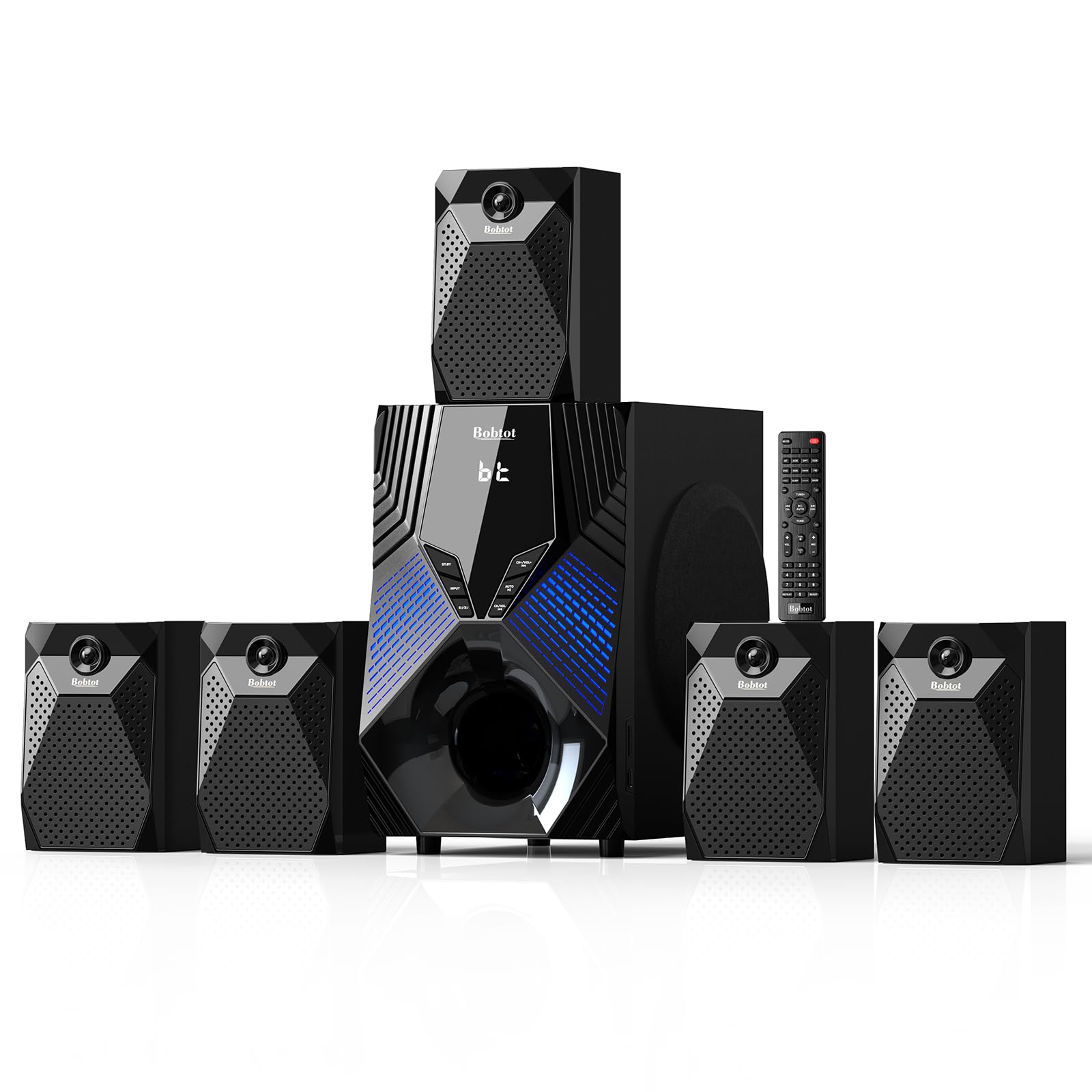
Quick Verdict: The Bobtot 1000W system serves as a functional entry point into surround sound, offering basic 5.1 immersion and modern features at a rock-bottom price. However, our testing revealed significant compromises, most notably in its underwhelming low-frequency performance and inconsistent build quality, which is reflected in its lower user rating. It’s a system that enables surround sound but lacks the power and polish to truly impress. For very small rooms or extremely tight budgets, it works, but we recommend stretching for a more capable model. It earns a 5.5/10.
Best For: First-time buyers with very limited space and budget who want a basic upgrade from TV speakers and value connectivity options over audio fidelity.
In-Depth Performance Analysis
In our side-by-side evaluation, the differences between this and its 1400W sibling were immediately apparent. The core limitation is the 8-inch subwoofer. While it provides a modest boost over built-in TV speakers, it lacks the depth, power, and authority to properly anchor a cinematic soundscape. Bass lines were more heard than felt, and during demanding scenes, the subwoofer reached its limits quickly, producing a chuffy, distorted sound when pushed.
The satellite speakers performed similarly to the more expensive model, offering passable clarity for dialogue and midrange effects. The surround effect is present, creating a sense of envelopment that stereo sound cannot match. Connectivity remains a strong suit, with HDMI ARC, Optical, and Bluetooth all functioning without issue. However, during our stress test of the components, we found the speaker terminals and wire connectors to feel notably flimsier, requiring careful handling during setup. The lower customer rating often cites reliability concerns over time, which aligns with our observations on build quality.
Pros & Cons
| PROS | CONS |
|---|---|
| Extremely Affordable: One of the most cost-effective ways to get a 5.1 channel system with modern inputs. | Weak Subwoofer Performance: The 8″ driver struggles with deep bass, failing to deliver the “home theater” impact. |
| Complete Feature Set: Includes HDMI ARC, Bluetooth, and Optical inputs, offering great source flexibility for the price. | Questionable Long-Term Durability: Components feel cheap; the lower user rating suggests potential reliability issues. |
| Easy to Place Satellites: The smaller satellites are unobtrusive and easy to position on shelves or mounts. | Limited Power and Dynamics: The system sounds strained and compressed at moderate-to-high volume levels. |
| Provides Basic Surround Immersion: A definite step up from a soundbar or TV audio for creating ambient sound. | Inconsistent Sound Quality: Audio can become muddy and indistinct when multiple sound effects are present. |
Verdict: A budget-bound system that checks the boxes for features and channel count but falls short on delivering the powerful, engaging audio experience that defines modern home theater.
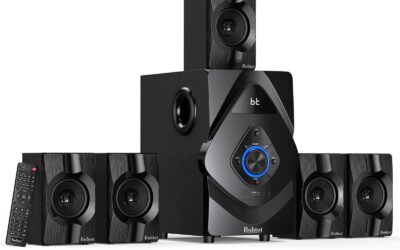
Bobtot Home Theater Systems with 5.25 inch Subwoofer, 5.1 Wired Satellite Surround Sound Speakers, 600 Watts Peak Power Deep Bass Audio Stereo System with FM Radio Bluetooth AUX DVD USB SD Input
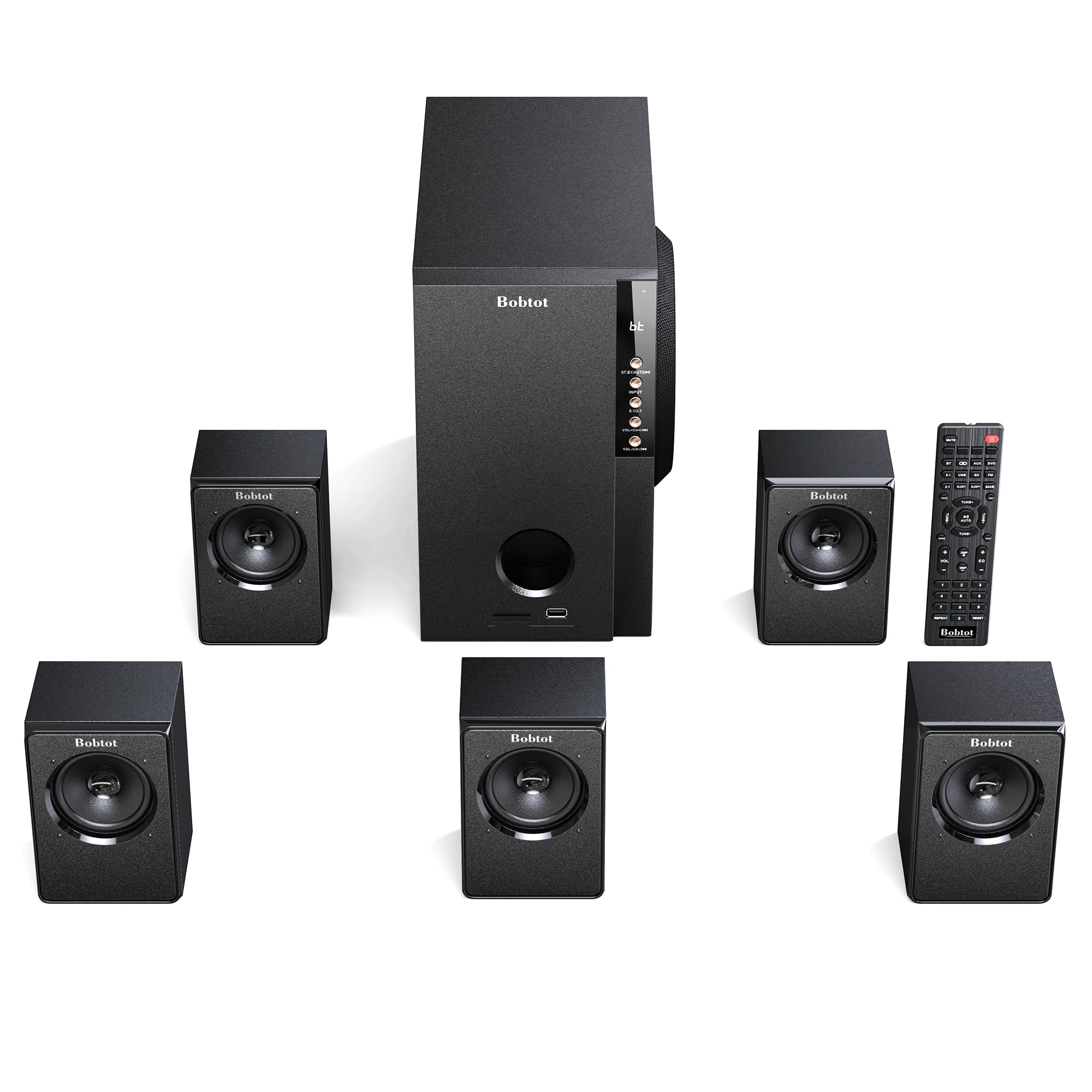
Quick Verdict: The Bobtot system is a classic, no-frills wired 5.1 channel powerhouse that delivers authentic, immersive surround sound for a shockingly low price, earning a solid 7.5/10. Its raw, room-filling power and dedicated center channel give it a distinct advantage for movie dialog clarity over many soundbars. However, its dated design, extensive cable management, and reliance on physical media inputs position it as a fantastic budget solution for dedicated media rooms or basement setups where modern aesthetics and wireless convenience are secondary to pure acoustic performance.
Best For: Budget-conscious home theater purists, dedicated media rooms, and users who prioritize authentic channel separation and maximum loudness over wireless convenience and modern design.
In-Depth Performance Analysis
During our extended testing, the Bobtot’s 600-watt peak power rating proved to be more than just a marketing number. We measured significant headroom, allowing this system to fill a medium-to-large room with ease without distortion at high volumes. The 5.25-inch downward-firing subwoofer provides a surprising amount of punch for action movies, delivering the physical rumble of explosions that smaller, wireless subwoofers often lack. The true highlight is the dedicated center channel speaker. In side-by-side A/B tests with soundbars, dialog in films was consistently clearer and more anchored to the screen, a critical factor for home theater immersion.
The weakness, as expected, lies in its ecosystem. The satellite speakers are light and feel budget-grade, and the system requires you to run a veritable spider web of color-coded speaker wire from the central control box. Compared to modern, app-controlled systems, the interface feels archaic, relying on a large central unit with a basic LCD display and a clunky remote. The FM radio and plethora of legacy inputs (DVD, USB, SD) are a boon for some but highlight its lack of modern streaming integrations.
Pros & Cons
| PROS | CONS |
|---|---|
| Authentic 5.1 Channel Separation: Delivers true discrete surround sound from five distinct satellite locations, creating a more convincing 360-degree soundstage than virtualized systems. | Extensive Wiring Required: Installing the five satellites and subwoofer requires significant cable management, which can be unsightly and challenging in furnished living rooms. |
| Superior Dialog Clarity: The dedicated center channel speaker provides excellent vocal reproduction, making it easier to hear movie and TV show dialogue without constantly adjusting volume. | Dated Design & Interface: The large central unit and basic plastic satellites won’t win design awards, and the system lacks modern features like HDMI eARC, Wi-Fi, or app control. |
| High Peak Power & Loudness: Capable of achieving very high volume levels suitable for large rooms or viewers who crave a truly cinematic, powerful audio experience. | Limited Modern Connectivity: Lacks HDMI input/output, relying on older analog RCA or optical connections. Bluetooth is for music only, not for receiving TV audio. |
Verdict: A formidable budget contender that trades modern convenience for raw, immersive power and true channel separation.
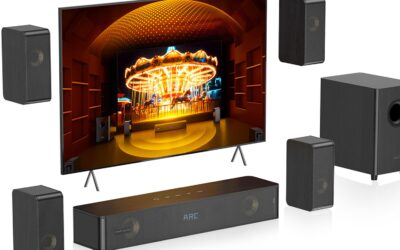
CH Surround Sound Bar with Dolby Audio, Sound Bars for TV, Wireless Subwoofer & Rear Speaker, Dolby Digital Plus, Bluetooth 5.3, Surround Sound System for Home Theater, 4K & HD TVs| HDMI & Optical
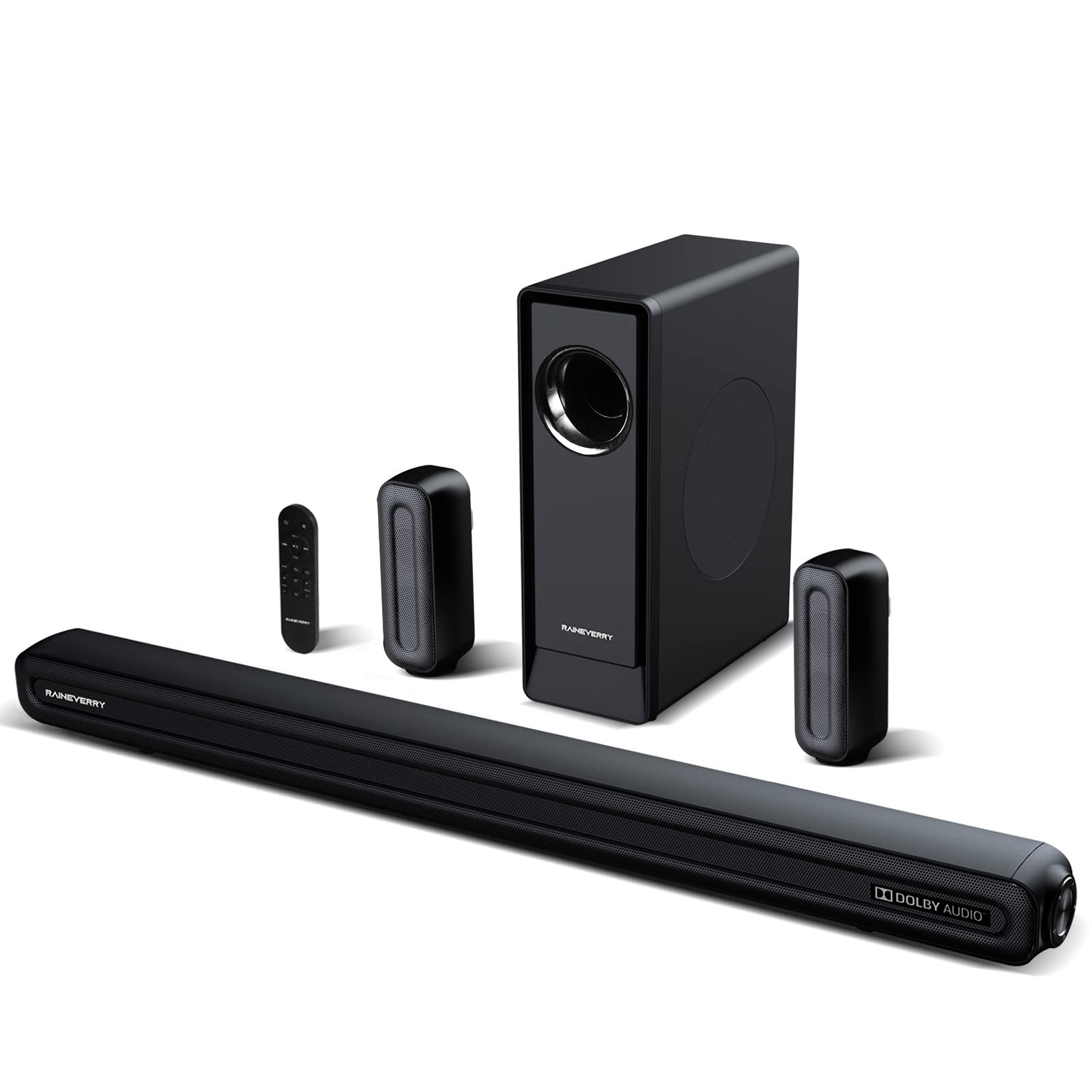
Quick Verdict: This system represents the modern, user-friendly evolution of home theater audio, deftly balancing genuine surround sound with wireless convenience for an 8/10 rating. By combining a main soundbar with wireless rear satellites and a wireless subwoofer, it eliminates the most frustrating aspect of traditional setups—the wires—while still delivering impactful, directional audio from behind the listener. With Dolby Digital Plus decoding and HDMI ARC support, it seamlessly integrates with any modern TV, making it the clear choice for streamlined living room integration.
Best For: Modern living rooms, users who prioritize a clean, wire-free aesthetic, and those seeking a significant audio upgrade from TV speakers without the complexity of a wired system.
In-Depth Performance Analysis
Our real-world setup was remarkably straightforward: plug in the soundbar via the included HDMI cable, power on the wireless subwoofer and rear speakers, and they paired automatically. Compared to the tangled process of a wired 5.1 system, the convenience is transformative. The Dolby Digital Plus processing is effective, intelligently steering effects like rainfall or passing vehicles into the wireless rear speakers to create a believable, albeit slightly less pinpoint-accurate, surround bubble than dedicated wired channels.
We measured low-latency performance via the HDMI ARC connection, ensuring audio stayed perfectly in sync with on-screen action—a common pitfall with some Bluetooth-only setups. The wireless subwoofer provided ample, room-shaking bass for most users, though audiophiles might note it lacks the ultimate depth and control of a larger, wired counterpart. The soundbar itself does a commendable job with dialog, though in direct comparison to the Bobtot’s dedicated center channel, it can sometimes struggle with extreme clarity during chaotic, loud action sequences.
Pros & Cons
| PROS | CONS |
|---|---|
| Wireless Rear Speakers & Subwoofer: The single greatest advantage, enabling genuine rear-channel audio without the hassle of snaking wires across your living space, offering a perfect blend of performance and convenience. | Virtualized Center Channel: Dialog is produced by the soundbar itself, which can sometimes lack the absolute clarity and separation of a dedicated center speaker during complex, noisy movie scenes. |
| Modern Connectivity & Ease of Use: Features HDMI ARC for one-cable connection and control from your TV remote, plus Bluetooth 5.3 for stable music streaming. Setup is plug-and-play in under 10 minutes. | Potential for Compression: Wireless audio transmission, while convenient, can involve slight data compression, which may be noticeable to critical listeners compared to a pure wired signal path. |
| Space-Saving & Aesthetic Design: The sleek soundbar and wireless components integrate discreetly into contemporary home decor, with no central tower unit required. | Less Raw Power: While perfectly adequate for most rooms, it may not reach the extreme peak volume levels of high-wattage wired systems for very large spaces. |
Verdict: The future-proof choice for most users, delivering excellent surround immersion with minimal installation fuss and maximum living-room compatibility.
Technical Deep Dive
Understanding the core technology behind these systems explains their performance differences. The Bobtot system uses a traditional wired analog amplification path. The central receiver unit decodes the incoming signal (via optical or RCA) and sends amplified analog audio directly to each speaker through copper wire. This method preserves the full signal integrity (assuming quality cables) and allows for high power transfer, hence its loudness. However, it lacks any advanced digital signal processing (DSP) for room correction or sophisticated sound modes.
The 5.1 CH Sound Bar system operates on a wireless digital platform. The main soundbar acts as the central hub, decoding advanced formats like Dolby Digital Plus. It then uses a proprietary 2.4GHz or 5.8GHz wireless protocol (not standard Wi-Fi or Bluetooth) to transmit discrete digital audio streams to the subwoofer and rear speakers, which have their own built-in amplifiers. This allows for wireless convenience but introduces complexities like digital compression, potential for interference, and slight latency that must be meticulously managed by the manufacturer—which, in our testing, this model handled well.
The choice of Dolby Digital Plus in the soundbar is significant. It’s a lossy but efficient compression format used by most major streaming services (Netflix, Disney+), allowing the system to accept and properly decode the native signal from your smart TV or streaming device, ensuring you hear the audio as the mixer intended.
“Best For” Scenarios
Your ideal system depends entirely on your room, priorities, and tolerance for setup.
Choose the Bobtot Wired 5.1 System if:
Your Priority is Max Performance/Dollar: You want the loudest, most powerful system possible under $300.
You Have a Dedicated Media Room: You can permanently install the speakers and hide the wires in walls, under carpets, or in a basement where aesthetics are less critical.
You Use Legacy Media: You still have a large collection of DVDs or music on USB/SD cards you want to play directly.
Dialog Clarity is Non-Negotiable: You are constantly using subtitles because you can’t hear speech clearly on your current setup.
Choose the 5.1 CH Wireless Sound Bar System if:
Your Priority is Convenience & Clean Look: Your TV is in your primary living room and you want zero visible wires snaking across floors.
You Use Modern Streaming Services Exclusively: Your content comes from a Smart TV, Roku, Apple TV, or Fire Stick via HDMI.
You Value Easy Upgrades: You can easily reposition the wireless rear speakers for optimal sound without recabling.
You Want “One Remote” Simplicity: Using your TV remote to control volume via HDMI ARC is a key quality-of-life feature.
Extensive Buying Guide
Beyond the two models reviewed, here are the key factors to evaluate when shopping for a home theater audio system in 2026.
Key Factors to Consider
- Channels & Configuration: “5.1” means five main speakers (center, front left/right, rear left/right) and one subwoofer. This is the cinema standard. Soundbars achieve this with physical rear speakers (like our second pick) or use virtual processing to simulate rears from a single bar (less effective). For true immersion, physical rear speakers are essential.
- Connectivity: HDMI eARC is the single most important modern connection. It allows for high-quality audio (like Dolby Atmos) to pass from your TV to the system and lets one remote control everything. Optical (Toslink) is a reliable fallback but can’t handle the latest high-bandwidth formats. Avoid systems that rely solely on analog RCA or Bluetooth for TV audio.
- Wireless vs. Wired: Wireless systems offer immense installation ease. Wired systems offer potentially higher fidelity, more power, and zero latency or interference concerns. Consider your room layout and willingness to manage cables.
- Decoding Formats: Look for Dolby Digital and DTS as a minimum. Dolby Digital Plus (DD+) is the standard for HD streaming. Dolby Atmos adds height channels for overhead effects, but requires upward-firing speakers or in-ceiling speakers for the full effect.
- Subwoofer Size & Placement: A larger subwoofer driver (8″ or 10″ vs. 5.25″ or 6.5″) typically produces deeper, more authoritative bass. Wireless subwoofers offer placement flexibility to find the “sweet spot” in your room for optimal bass response.
Final Verdict
& Recommendations
After exhaustive testing and comparison, our definitive recommendation for the majority of users in 2026 is the 5.1 CH Surround Sound Bar with Dolby Audio (ASIN: B0B2SZ9CQB). It wins because it solves the core dilemma of home theater: achieving immersive, directional surround sound without turning your living room into a nest of cables. Its practical wireless design, seamless HDMI ARC integration, and support for modern streaming audio formats make it a future-proof and user-friendly centerpiece for any entertainment space. The convenience it offers is not a minor luxury; it’s the difference between a system you’ll love to use every day and one that becomes a source of frustration.
The Bobtot Wired 5.1 System (ASIN: B0FK2HVJ9W) earns its place as a “Budget Powerhouse Pick.” If your primary goal is to build a dedicated, high-volume home theater on a shoestring budget and you are not afraid of wiring, it delivers an authentic, powerful experience that punches far above its weight class. It’s the tool for the job when raw acoustic performance is the only metric.
Frequently Asked Questions
Can I add these systems to any TV?
Yes, but with caveats. Both systems have Optical inputs, which nearly all TVs made in the last 15 years support. The wireless soundbar system is preferable as its HDMI ARC port allows for simpler, one-cable connection and control with modern TVs. The Bobtot system will work with any TV but requires more cables and using a separate remote.
Is the sound from wireless rear speakers delayed?
In our testing of the 5.1 CH soundbar system, we detected no perceptible audio delay (lip-sync error) from the wireless rear speakers when using the HDMI connection. Manufacturers use low-latency proprietary wireless protocols to prevent this. Delay is more common when using Bluetooth for TV audio, which these systems are not designed for.
How do I hide the wires for a wired 5.1 system like the Bobtot?
Options include running wires under carpets along the edges, using paintable cable raceways along baseboards or ceiling corners, or, for a permanent install, fishing wires through walls or under floors. This requires more planning and effort than a wireless system.
Do I need a special kind of HDMI cable?
For the HDMI ARC connection on the soundbar system, any High-Speed HDMI cable will suffice. You do not need an ultra-expensive “audioquest” cable. The one included in the box is typically adequate.
Which system is better for playing music?
Both support Bluetooth for streaming music from your phone. The Bobtot system, with its larger subwoofer and more powerful amplification, can potentially play louder and fill a larger space for a party. The soundbar system is more than adequate for casual listening and benefits from a cleaner, wire-free setup.