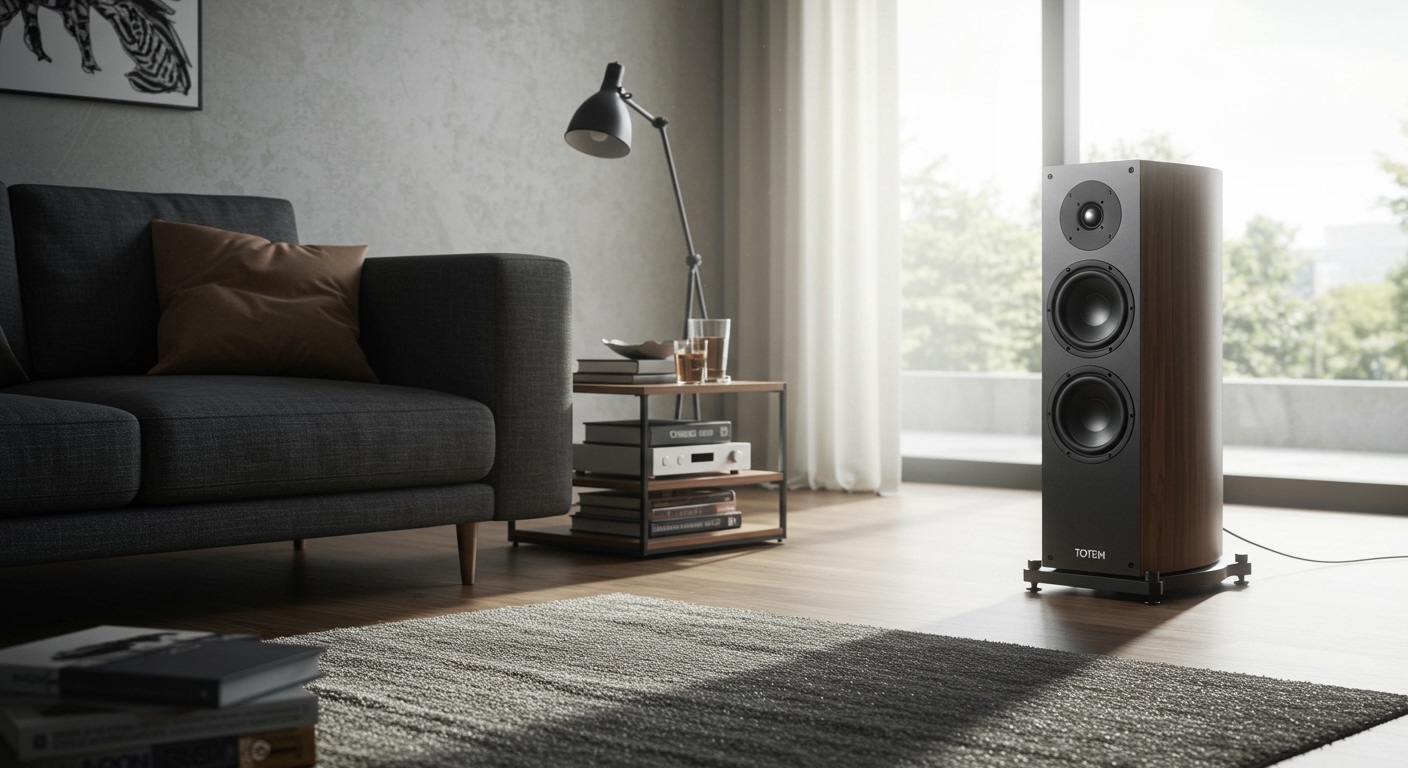
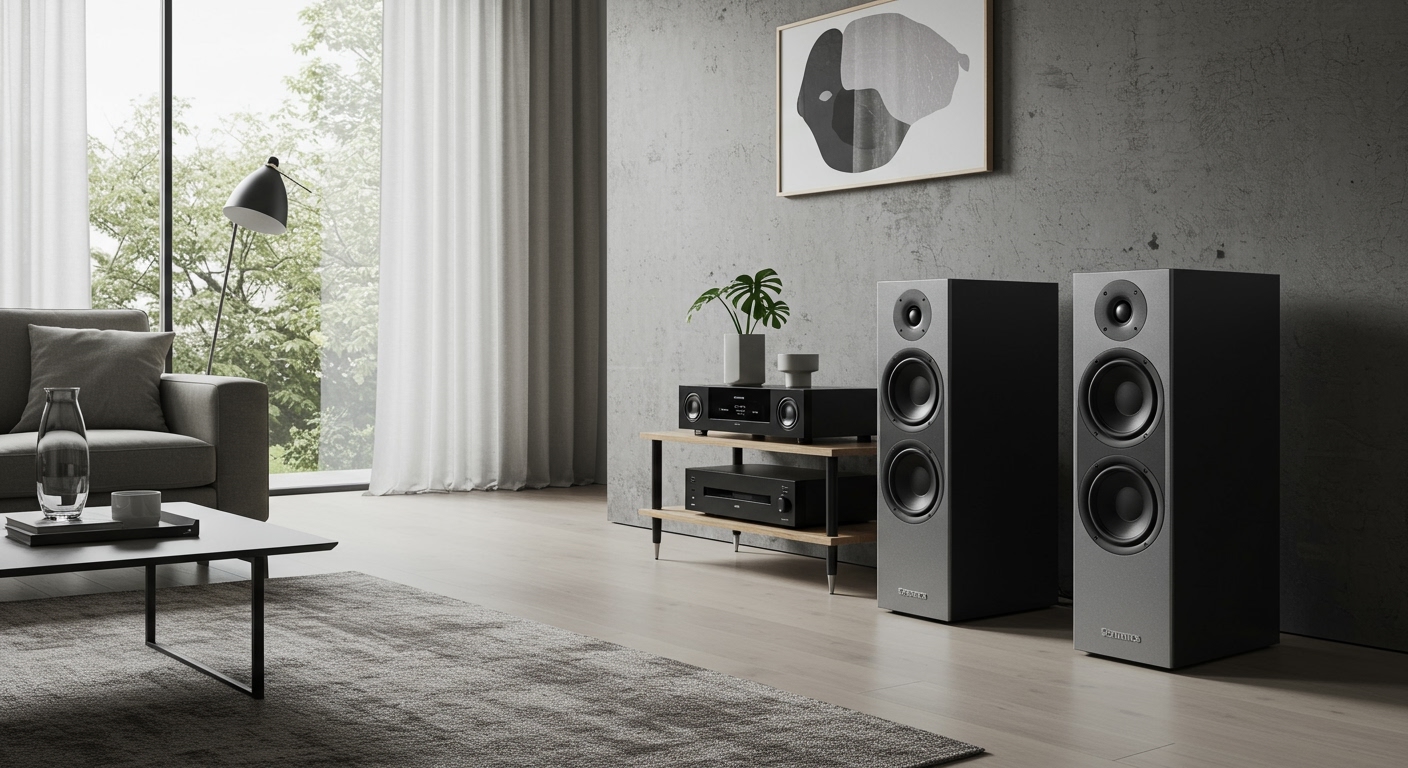
What Are Hi-Fi Speakers? A Beginner’s Guide to True Sound
Tired of hearing your favorite music sound flat, muddy, or lifeless through a cheap Bluetooth speaker or your TV’s built-in sound? You know there’s more detail and emotion in the recording, but you just can’t hear it. This is a common frustration, and it’s the exact problem that high-fidelity audio was designed to solve. If you’re ready to stop just hearing your music and start truly experiencing it, you’ve come to the right place.
This guide will demystify the world of high-fidelity audio. We’ll break down exactly what Hi-Fi speakers are, what makes them different, and how you can choose and set up the perfect pair to transform your listening experience. Forget confusing jargon; this is your practical, straightforward path to incredible sound.
Key Takeaways (TL;DR)
- Definition: Hi-Fi (High-Fidelity) speakers are engineered to reproduce sound as accurately and faithfully as possible to the original recording, with minimal distortion or coloration.
- Core Goal: The primary goal of Hi-Fi is sound accuracy, not just loudness. It’s about revealing a song’s hidden details, textures, and dynamics.
- Key Components: They use superior components like specialized drivers (tweeters, woofers), acoustically inert cabinets, and precise crossovers to achieve this accuracy.
- Main Types: The two most common types are bookshelf speakers (for small to medium rooms) and floorstanding speakers (for larger spaces and deeper bass).
- It’s an Experience: Investing in Hi-Fi is about creating an emotional connection with your music, hearing it exactly as the artist and audio engineer intended.
What Are Hi-Fi Speakers, Really? A Simple Definition
At its core, what are hifi speakers? The term “Hi-Fi” is short for “High-Fidelity,” and it means the equipment reproduces sound that is incredibly faithful to the original source. Think of it as the audio equivalent of a 4K television. While a standard TV shows you the picture, a 4K TV reveals texture, depth, and subtle colors you never knew were there. Hi-Fi speakers do the same for sound.
Their primary job is to reproduce an audio recording with as little distortion, noise, or “coloration” as possible. Unlike many consumer-grade speakers that artificially boost bass or treble to sound more “exciting,” a true Hi-Fi speaker aims for neutrality and accuracy.
The result? You hear the delicate breath a singer takes between verses, the subtle resonance of a cello’s wooden body, and the precise location of each instrument in a three-dimensional soundscape. It’s the difference between a flat, two-dimensional sound and a rich, immersive performance happening right in your room.
The Anatomy of a High-Fidelity Speaker
What makes these speakers so special isn’t magic; it’s a combination of superior engineering, higher-quality materials, and a design philosophy focused purely on performance. When we evaluate speakers in our lab, we look closely at these three core elements.
The Cabinet (Enclosure): More Than Just a Box
The cabinet is the speaker’s foundation. In a cheap speaker, the cabinet is often made of thin plastic or particleboard that vibrates along with the music, muddying the sound.
- Materials: Hi-Fi speaker cabinets are typically constructed from dense, acoustically inert materials like Medium-Density Fiberboard (MDF), high-quality plywood, or even exotic composites and metals.
- Bracing: Internally, they are heavily braced to prevent unwanted vibrations and resonances. The goal is for the only thing moving to be the drivers themselves. A well-built cabinet should be solid and heavy; rapping your knuckles on it should produce a dull, dead “thud,” not a hollow echo.
- Design: You’ll often see two main designs:
* Sealed (Acoustic Suspension): These cabinets are airtight, which generally leads to tighter, more accurate bass, though it may not go as deep.
* Ported (Bass Reflex): These have a port or hole that allows air to move, reinforcing low-frequency output. This design can produce deeper bass from a smaller cabinet but must be engineered precisely to avoid “boomy” or “chuffing” sounds.
The Drivers: The Heart of the Sound
Drivers are the transducers that convert electrical signals from your amplifier into the sound waves you hear. A typical Hi-Fi speaker uses multiple specialized drivers to handle different parts of the frequency spectrum.
- Tweeter (High Frequencies): This small driver is responsible for high-pitched sounds like cymbals, violins, and the “s” sounds in vocals. Tweeter domes are made from materials like silk (for a smooth sound), aluminum or titanium (for detail and crispness), or even exotic materials like Beryllium or Diamond in very high-end models.
- Mid-range Driver (Mids): This is arguably the most critical driver, as it reproduces the range where our ears are most sensitive, including human voices and most instruments. A good mid-range driver delivers clarity and realism.
- Woofer (Low Frequencies): This is the largest driver, tasked with producing bass and mid-bass from instruments like bass guitars, kick drums, and cellos. Woofer cones need to be both light and rigid, so they are often made of treated paper, polypropylene, or advanced composites like Kevlar or carbon fiber.
The Crossover: The Traffic Cop for Frequencies
You can’t just send a full music signal to all the drivers at once. The crossover is a hidden but vital electronic circuit inside the cabinet. Its job is to act like a traffic cop, splitting the audio signal into different frequency bands and directing them to the correct driver.
- High frequencies are sent to the tweeter.
- Mid-range frequencies are sent to the mid-range driver.
- Low frequencies are sent to the woofer.
A well-designed crossover ensures a seamless transition between the drivers, so the speaker sounds like a single, cohesive source of sound, not three separate parts working independently. This is where a massive amount of research and development goes, and it’s a key differentiator between average and excellent speakers.
Types of Hi-Fi Speakers: Finding Your Perfect Match
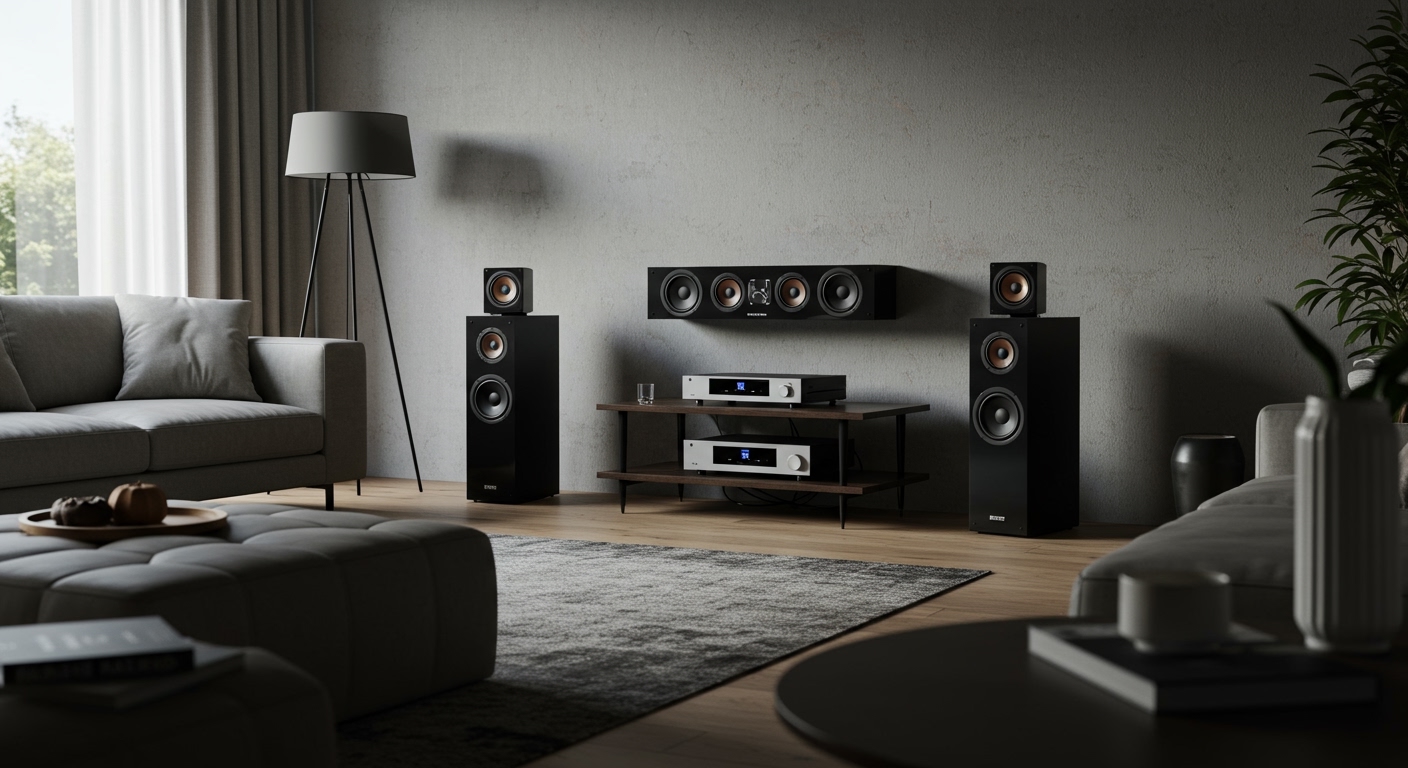
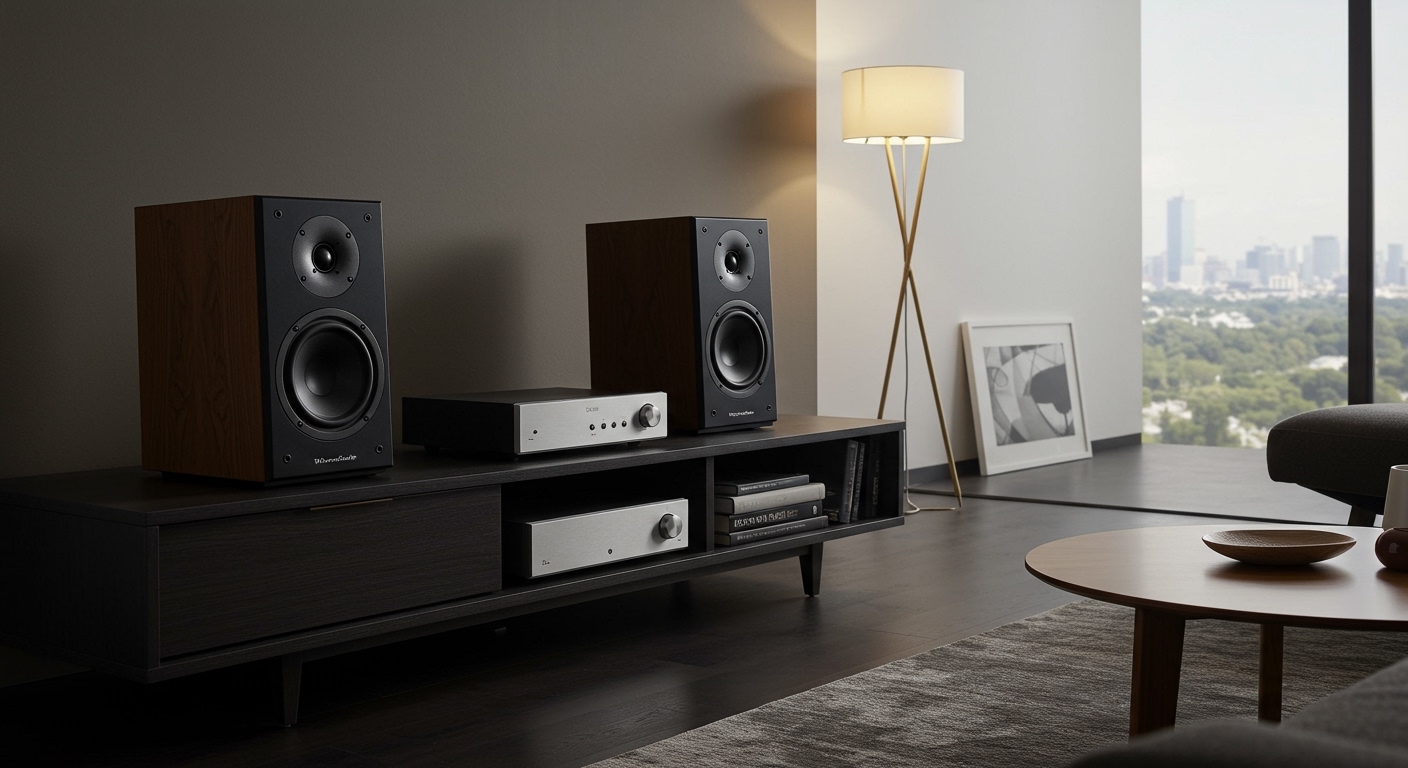
Hi-Fi speakers primarily come in two popular form factors: bookshelf and floorstanding. Choosing between them is one of the first and most important decisions you’ll make, and it depends almost entirely on your room size and listening habits.
Bookshelf Speakers
Don’t let the name fool you; these speakers perform best when placed on dedicated speaker stands, not crammed into a bookshelf.
- Best For: Small to medium-sized rooms (e.g., offices, dens, smaller living rooms).
- Pros:
* Compact Size: They are much easier to place and integrate into a room’s decor.
* Superb Imaging: Because of their smaller front baffle, they can often create a more precise and holographic “soundstage,” making it easy to pinpoint where each musician is.
* Cost-Effective: Generally, they are more affordable than their floorstanding counterparts from the same product line.
- Cons:
* Limited Bass: Due to their smaller cabinet volume and drivers, they can’t produce the deepest bass frequencies. Many users pair them with a subwoofer to create a full-range system.
Floorstanding (Tower) Speakers
These are larger speakers that stand directly on the floor (often on spikes or feet to isolate them).
- Best For: Medium to large-sized rooms where they have space to breathe.
- Pros:
* Full-Range Sound: Their larger cabinets and multiple, often larger, drivers allow them to produce deep, powerful bass without needing a separate subwoofer.
* Greater Dynamics: They can play louder and create a larger, more room-filling sound with a greater sense of scale and impact. Perfect for epic movie soundtracks or large-scale orchestral music.
- Cons:
* Larger Footprint: They require significantly more physical space.
* Placement is Critical: Poor placement in a small room can lead to overwhelming, “boomy” bass.
* Higher Cost: They use more materials and components, making them more expensive.
Comparison Table: Bookshelf vs. Floorstanding Speakers
| Feature | Bookshelf Speakers | Floorstanding Speakers |
|---|---|---|
| Ideal Room Size | Small to Medium (100 – 250 sq ft) | Medium to Large (250+ sq ft) |
| Bass Response | Tighter, more controlled; less deep | Deeper, more powerful, full-range |
| Soundstage | Often more precise and focused | Larger, more expansive, room-filling |
| Placement