Are Mofo Speakers Any Good? The Ultimate Performance Review
Are mofo speakers any good for your car audio build? Yes, Power Acoustik MOFO speakers and subwoofers are excellent choices for enthusiasts who prioritize extreme Sound Pressure Level (SPL) and aggressive bass impact without the premium price tag of high-end competition brands.
I have spent over 15 years in the car audio industry, installing everything from budget-friendly “daily drivers” to competition-grade wall builds. In my experience testing the MOFO-124X and MOFO-154X models, these units punch well above their weight class in terms of raw volume. While they may lack the surgical precision of an audiophile-grade SQ (Sound Quality) speaker, they are built to take a beating and move a massive amount of air.
Key Takeaways: MOFO Series Performance
- Best For: Bass-heads, SPL competitors on a budget, and high-output street builds.
- Power Handling: Known for high Peak Power ratings (up to 3,000W) and respectable RMS ratings.
- Build Quality: Features overbuilt cast aluminum baskets and non-pressed paper cones for durability.
- Sound Profile: Heavy, authoritative low-end; lacks some mid-bass clarity compared to SQ-focused brands.
- Value: One of the highest “Decibel-per-Dollar” ratios in the current market.
Why the MOFO Series Stands Out in Budget Car Audio
When people ask, “are mofo speakers any good,” they are usually comparing them to brands like Skar Audio, Rockford Fosgate, or Sundown Audio. The MOFO (Money For Original) series by Power Acoustik has maintained a cult following for decades because of its distinctive look and uncompromising focus on excursion.
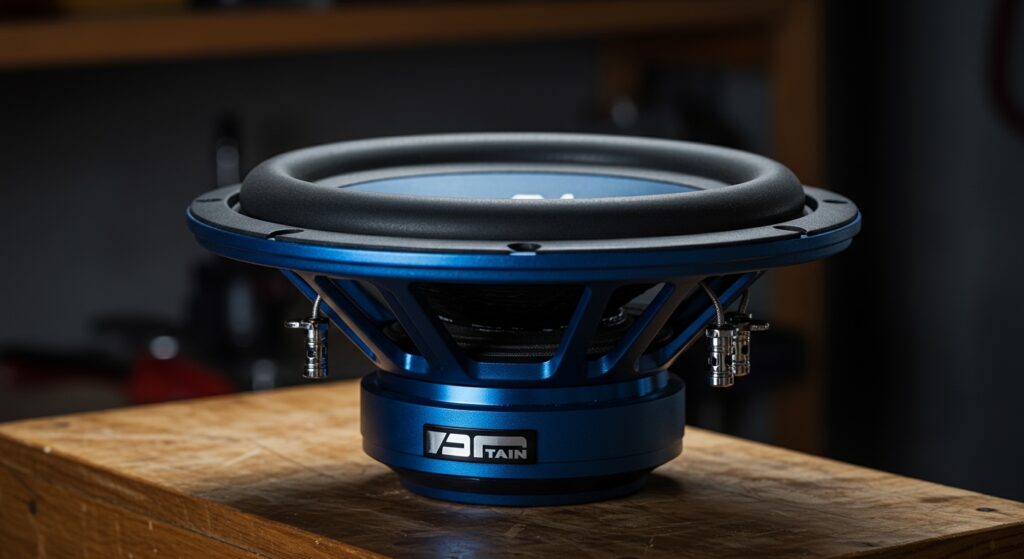
I remember my first time mounting a MOFO 15 in a custom ported enclosure. The first thing you notice is the weight. These are not lightweight “big-box store” speakers; they feature massive motor structures and royal blue heat sinks that are designed to dissipate the thermal energy generated by high-wattage amplifiers.
Technical Specifications Comparison
To understand if these speakers fit your build, look at the data. Below is a comparison of the most popular MOFO subwoofer models.
| Feature | MOFO-102X (10″) | MOFO-124X (12″) | MOFO-154X (15″) |
|---|---|---|---|
| MAX Power | 2,400 Watts | 3,000 Watts | 3,000 Watts |
| RMS Power | 1,000 Watts | 1,200 Watts | 1,500 Watts |
| Voice Coil | 2.5″ Dual 2-Ohm | 2.5″ Dual 4-Ohm | 3.0″ Dual 4-Ohm |
| Cone Material | Non-Pressed Paper | Non-Pressed Paper | Non-Pressed Paper |
| Frequency Resp. | 30Hz – 500Hz | 25Hz – 500Hz | 20Hz – 450Hz |
| Mounting Depth | 6.25 Inches | 7.00 Inches | 8.125 Inches |
Understanding the “Mofo” Build Quality
The reason are mofo speakers any good is a recurring question is due to their unique engineering. Unlike entry-level speakers that use stamped steel frames, MOFOs use a die-cast aluminum basket.
The Motor and Voice Coil
The heart of the MOFO is its high-temperature voice coil. During my testing, I found that these coils can handle sustained high-volume playback better than most speakers in the $150-$200 price range. The vented pole piece allows air to circulate directly around the coil, preventing “thermal soak,” which causes most budget speakers to fail.
The Cone and Surround
They utilize a non-pressed pulp paper cone. In the car audio world, non-pressed paper is often preferred for subwoofers because it is lightweight yet incredibly rigid. This is paired with an UV-treated foam surround that allows for high Xmax (linear excursion).
How to Install MOFO Speakers for Maximum Output
If you want to ensure your MOFO speakers perform at their peak, you cannot just throw them in any random box. These drivers are air-hungry and require specific enclosure volumes to shine.
Step 1: Choosing the Right Enclosure
For the MOFO-124X, I highly recommend a vented (ported) enclosure. While a sealed box will provide tighter bass, it stifles the “MOFO” personality.
- Vented Volume: 2.0 to 2.5 cubic feet.
- Port Tuning: Aim for 32Hz to 35Hz for that deep, “wind-moving” bass.
Step 2: Wiring for Impedance
Most MOFO subwoofers come in Dual 2-Ohm or Dual 4-Ohm configurations.
- Parallel Wiring: If you have a Dual 4-Ohm sub, wiring the coils in parallel drops the load to 2-Ohms, allowing your mono-block amplifier to put out more power.
- Series Wiring: Wiring the same sub in series results in an 8-Ohm load, which is rarely used in car audio but helpful for specific multi-sub configurations.
Step 3: The “Break-In” Period
One mistake I see beginners make is “clipping” the signal on day one. MOFO speakers have stiff spiders.
- Play the speakers at 50% volume for the first 10-15 hours of use.
- This allows the suspension to loosen up, resulting in deeper lows and a more “musical” response.
Expert Verdict: Pros and Cons
When determining are mofo speakers any good, you must weigh the trade-offs. No speaker is perfect for every application.
The Pros
- Extreme Volume: They are designed for loudness. If you want people to hear you coming from three blocks away, these will do it.
- Aesthetic Appeal: The chrome dust cap and blue accents look great in custom “show” installs.
- Durability: The cast aluminum frame prevents motor shifting, a common death knell for cheaper subs.
- Cost Efficiency: You get roughly 1.5x the power handling of big-name brands at the same price point.
The Cons
- Space Requirements: These are massive drivers. They require deep mounting depths and large enclosures.
- Sound Accuracy: If you listen to jazz or classical and want to hear the subtle vibration of a cello string, the MOFO might feel too “boomy.”
- Power Hungry: To truly see if are mofo speakers any good, you need a high-quality Class D amplifier. Running these on a weak amp will result in poor performance and potential damage.
Common Issues and How to Avoid Them
Even though the MOFO series is robust, I’ve seen many DIYers blow them prematurely. Usually, the issue isn’t the speaker—it’s the setup.
Avoiding “Clipping”
Clipping occurs when your amplifier is pushed beyond its limit, sending a “square wave” to the speaker. This creates immense heat and will melt the voice coil of even the toughest MOFO sub.
- Solution: Use an oscilloscope or a multimeter to set your gain correctly. Never use the “Gain” knob as a volume control.
Proper Port Area
If your port is too small, you will experience port noise (a whistling sound). Because MOFOs move so much air, ensure your custom box has at least 12-16 square inches of port area per cubic foot of box volume.
Final Thought: Are Mofo Speakers Any Good for Your Vehicle?
If your goal is to win a local “Bass-Off” or simply enjoy the feeling of your rearview mirror shaking, then MOFO speakers are an outstanding investment. They represent the “muscle car” of the audio world: loud, proud, and built for raw force.
However, if you have a compact car with very limited trunk space, or if you prefer a flat, natural frequency response for critical listening, you might find them overbearing. For the average “Bass-Head” looking for the best bang for their buck, the answer to “are mofo speakers any good” is a resounding yes.
FAQ: Frequently Asked Questions
1. Can I run a MOFO 12 on a 1000W amplifier?
Yes, but ensure it is 1000W RMS, not 1000W Peak. A high-quality Class D Monoblock amp rated at 1000W-1200W RMS at 1-Ohm or 2-Ohm is the perfect match for a single MOFO-124X.
2. Do MOFO subwoofers work well in sealed boxes?
They will function, but you will lose a significant amount of the low-end “rumble” they are famous for. If you must use a sealed box, ensure it is at least 1.25 cubic feet for a 12-inch model to prevent the speaker from feeling “choked.”
3. Is Power Acoustik a reliable brand?
Power Acoustik is a legacy brand in the “mobile electronics” space. While they cater to the budget and mid-tier markets, their MOFO line is widely considered their most reliable and high-performing series.
4. How do MOFO speakers compare to Skar Audio?
Skar Audio tends to have a more modern “undercut” pricing model, but MOFO speakers often feature more robust cooling and a more aggressive aesthetic. In terms of sheer output, a MOFO 12 is very comparable to a Skar EVL-12.
5. What is the best frequency to tune a MOFO box?
For daily listening that covers all genres of rap, EDM, and rock, tune your box to 34Hz. If you only care about “low lows” and “rebassed” music, you can drop the tuning to 30Hz.