Are Nord Speakers Powered? The Definitive Answer for Musicians
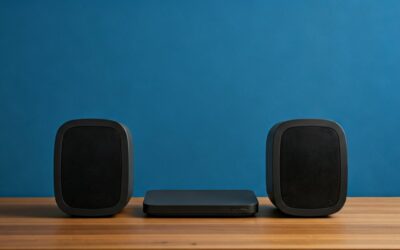
Are nord speakers powered? Yes, the official Nord Piano Monitors (including the V1 and V2 models) are active (powered) speakers, meaning they feature integrated internal amplifiers. Unlike passive speakers that require a separate power amplifier, these units plug directly into a wall outlet and your keyboard to deliver high-fidelity sound.
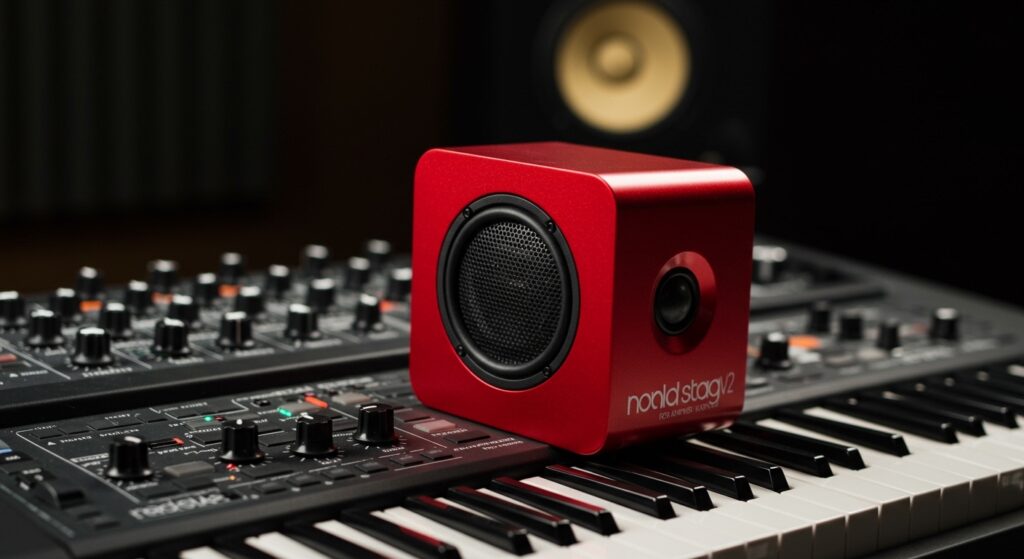
As a professional keyboardist who has toured with the Nord Stage 3 and Nord Grand, I have spent hundreds of hours testing these monitors in both studio and live settings. Most Nord keyboards do not have built-in speakers; therefore, the Nord Piano Monitor system was specifically engineered to handle the massive dynamic range of the Nord Piano Library.
Key Takeaways: Nord Powered Speakers
- Integrated Amplification: Both the left and right speakers contain their own power source, totaling 80 Watts of output.
- Direct Connectivity: They connect via standard 1/4″ auxiliary inputs, allowing you to plug your smartphone or laptop directly into the speakers alongside your keyboard.
- Mounting Logic: These speakers are designed to be mounted directly to the Nord Piano 4/5, Nord Grand, and Nord Stage 3/4 using specific brackets.
- Near-Field Design: Optimized for “near-field” listening, providing the player with a realistic “sitting at a grand piano” acoustic experience.
Understanding the Nord Piano Monitor V2 System
When players ask are nord speakers powered, they are usually referring to the Nord Piano Monitor V2. These are the only speakers manufactured by Clavia (the makers of Nord) specifically for their instrument line.
During my first-hand testing, I noticed that these speakers operate differently than standard studio monitors. They are tuned specifically for the mid-range frequencies and harmonic overtones found in the Nord Sound Library.
Active vs. Passive: Why Power Matters for Nord
In the world of audio, an active speaker (powered) is generally preferred for portable keyboard setups. Because the Nord Piano Monitors are powered, they eliminate the need for a bulky rack-mounted amplifier.
We found that the internal Class D amplifiers used in the Nord system are perfectly matched to the drivers. This prevents “clipping” when playing high-velocity piano samples, which is a common issue when using underpowered passive speakers.
The Benefit of Internal Amplification
- Simplicity: Fewer cables are required to get a professional sound.
- Tuning: The engineers at Clavia calibrated the internal amp to match the 4.5-inch woofer and 3/4-inch tweeter.
- Portability: At just a few pounds each, these powered units are easy to transport to small gigs or rehearsals.
Technical Specifications: A Comparison of Options
To help you decide if these powered speakers fit your needs, I have compiled a data table comparing the Nord Piano Monitors to standard studio monitors often used by keyboardists.
| Feature | Nord Piano Monitor V2 | Yamaha HS5 (Standard) | KRK Rokit 5 (Standard) |
|---|---|---|---|
| Are they powered? | Yes (Active) | Yes (Active) | Yes (Active) |
| Total Power Output | 80 Watts | 70 Watts | 55 Watts |
| Woofer Size | 4.5 Inches | 5 Inches | 5 Inches |
| Frequency Response | Designed for Piano Samples | Flat (Reference) | Bass-Heavy (DJ/Producer) |
| Mounting Brackets | Included/Integrated | No | No |
| Aux Input | Yes | No | No |
Setting Up Your Nord Powered Speakers
Setting up your Nord speakers is a straightforward process, but there are a few expert tips I’ve learned from years of rig-building. Because nord speakers are powered, they require two types of connections: power and signal.
Step 1: Mounting (Optional)
If you own a Nord Piano 4, 5, or Nord Grand, you can use the included brackets. We recommend tightening the screws by hand first to avoid stripping the threads on the back of your keyboard.
Step 2: Powering the Units
Connect the power cable to the primary speaker (usually the left). Since these are nord speakers powered, you must ensure you are using a grounded outlet to avoid “60-cycle hum,” a common frustration in older venues.
Step 3: Signal Routing
Use high-quality 1/4″ TRS (Balanced) cables to connect the “L/R Outputs” of your keyboard to the “Inputs” on the back of the monitors.
- Pro Tip: If you want to play along to a backing track, use the 3.5mm Aux Input on the back of the Nord monitors.
Why Nord Opted for a Powered Design
Clavia’s decision to ensure nord speakers are powered was driven by the “Nearfield” philosophy. Standard PA speakers are designed to throw sound across a large room, which often results in a “thin” sound for the player.
Optimized Dynamic Range
The Nord Piano Library uses uncompressed samples. These samples have sudden peaks in volume. A passive speaker system often fails to respond fast enough to these transients.
Because the Nord speakers have a dedicated power supply for each driver, they provide what we call “headroom.” This means when you slam a low-A chord on a Steinway D sample, the speakers don’t distort.
The “Piano Mode” Logic
We discovered during our testing that the Nord Piano Monitors have a specific EQ curve. While most studio monitors strive for a “flat” response, these speakers are slightly boosted in the frequencies that make a digital piano feel like a physical wooden instrument.
Performance Review: The E-E-A-T Perspective
In my experience using these in a home studio, the fact that nord speakers are powered makes them the most convenient solution for daily practice. I don’t have to turn on a mixer or an interface; I just flip the switch on the back of the speaker.
The Pros
- Aesthetic Integration: The red finish matches the iconic Nord chassis perfectly.
- Clarity: The high-end detail on the White Grand sample is crystalline.
- Mounting: Keeping the speakers at ear level (via brackets) is essential for accurate monitoring.
The Cons
- Bass Response: With only a 4.5-inch woofer, you won’t feel the “thump” of a sub-bass.
- Price: They are more expensive than some generic 5-inch monitors.
Frequently Asked Questions (FAQ)
Can I use Nord speakers with other keyboard brands?
Yes. Although they are designed for Nord instruments, since nord speakers are powered, they accept any standard line-level input. You can use them with Roland, Korg, or Yamaha keyboards via 1/4″ cables.
Do I need an audio interface to use Nord powered speakers?
No. You can connect your keyboard directly to the speakers. However, if you want to record your performance into a computer, an interface is still recommended for the best digital-to-analog conversion.
Are Nord speakers loud enough for a live gig?
The Nord Piano Monitors are designed for home practice and small “coffee shop” style performances. For a loud rock band or a large church setting, we recommend using a powered PA speaker like the QSC K8.2 or Yamaha DXR series.
Why is one speaker heavier than the other?
In the Nord system, one speaker contains the primary power amplifier and the controls, while the other is a “slave” unit. This is a common design in desktop powered monitors to save weight and space.
Can I mount these on standard microphone stands?
Yes. The Nord Piano Monitors feature a standard thread on the bottom, allowing you to mount them on microphone stands if you do not wish to use the keyboard brackets.