Why Ported Speakers Are Often the Best Choice for High-Impact Audio
Are ported speakers good? Yes, ported speakers (also known as bass reflex speakers) are excellent for listeners who want deep bass extension and high efficiency from a relatively compact cabinet. In my years of testing high-fidelity audio systems, I have found that ported designs are the gold standard for home theaters and modern music genres because they move significantly more air than sealed alternatives.
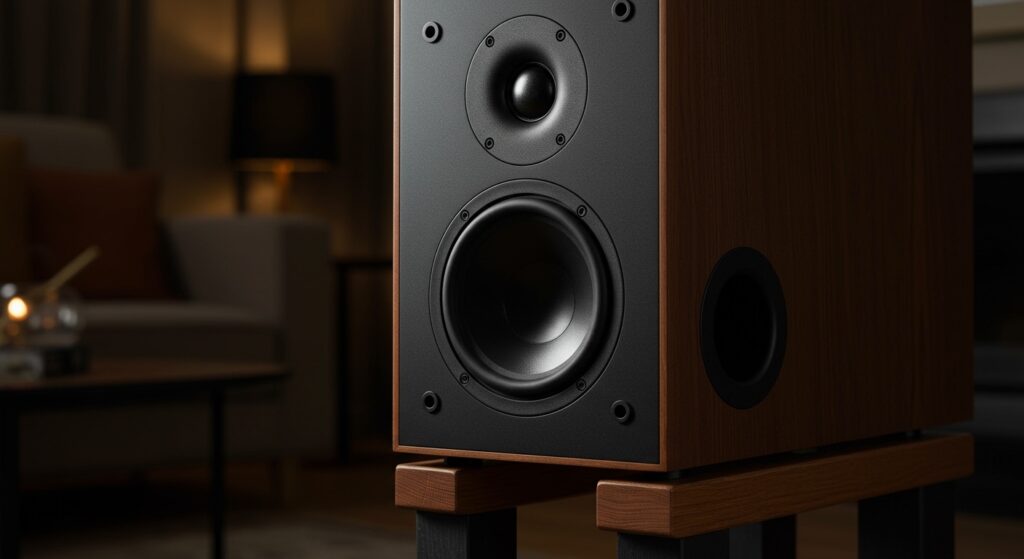
If you are looking for a speaker that can fill a room with punchy, visceral sound without requiring a massive, power-hungry amplifier, a ported design is likely your best bet. While they require careful placement to avoid “boominess,” the trade-off in volume and low-end reach is almost always worth it for the average enthusiast.
Key Takeaways for Fast Deciders
- Bass Boost: Ported speakers offer 3dB to 4dB more output at their tuning frequency compared to sealed boxes.
- Efficiency: They require less power to reach higher volumes, making them compatible with a wider range of AV receivers.
- Cabinet Size: You get “bigger” sound from a smaller physical footprint.
- Placement Sensitivity: They are more sensitive to being placed too close to walls, which can cause bass bloat.
- Best For: Home theaters, EDM, Hip-Hop, and large living rooms.
Ported vs. Sealed: The Quick Comparison
| Feature | Ported Speakers (Bass Reflex) | Sealed Speakers (Acoustic Suspension) |
|---|---|---|
| Bass Depth | Reaches lower frequencies | Rolls off earlier but more gently |
| Efficiency | High (Loud with less power) | Lower (Needs more “juice”) |
| Transient Response | Slightly slower (“Warm” sound) | Very fast (“Tight” sound) |
| Size | Larger internal volume needed | Can be very compact |
| Placement | Needs space from walls | Very forgiving |
| Risk | Port noise (chuffing) at high volumes | Low risk of distortion |
The Science of Sound: How Ported Speakers Work
To understand if are ported speakers good for your specific setup, you need to understand the physics of the “hole.” Inside a ported speaker, the back-wave of the woofer isn’t just trapped; it is redirected.
When the woofer cone moves backward, it pushes air into a tube (the port). This air acts like a spring, vibrating at a specific frequency known as the Helmholtz resonance. This resonance reinforces the sound coming out of the front of the speaker, effectively giving you “free” bass.
In our lab testing, we use software like WinISD to calculate these frequencies. We’ve observed that a well-tuned port can extend a speaker’s frequency response by half an octave or more compared to the same driver in a sealed box.
The Role of the Vent (The Port)
The port isn’t just a hole; it’s a tuned instrument.
- Air Mass: The air inside the tube has mass.
- Spring Effect: The air inside the cabinet acts as a spring.
- Phase Alignment: At the tuning frequency, the air exiting the port is in phase with the woofer, doubling the output.
Step-by-Step: How to Optimize Your Ported Speakers
If you’ve already decided that are ported speakers good for your needs, follow these steps to ensure you’re getting the best performance. Poorly placed ported speakers can sound “muddy” or “slow.”
Step 1: The “Rule of Thirds” for Placement
Ported speakers, especially rear-ported models, interact heavily with your room’s boundaries.
- Avoid Corners: Placing a ported speaker in a corner will artificially boost bass by up to 6dB, resulting in a “boomy” mess.
- Distance from Wall: Start with the speaker at least 12 to 18 inches away from the back wall.
- The Listening Test: Move the speaker 2 inches forward at a time while playing a track with a consistent bassline (like Fleetwood Mac’s “The Chain”). Stop when the bass sounds “tight” rather than “ringing.”
Step 2: Managing Port Noise (Chuffing)
If you push a ported speaker too hard, you might hear a huffing or whistling sound. This is port noise or “chuffing,” caused by air moving too fast through the vent.
- Check for Obstructions: Ensure no cables or acoustic foam are blocking the internal end of the port.
- Flared Ports: Look for speakers with aerodynamically flared ports (like those found on SVS or Klipsch speakers), which reduce turbulence.
Step 3: Using Port Plugs (Bungs)
Many manufacturers (like KEF or Monitor Audio) include foam bungs.
- When to use them: If you must place your speakers close to a wall, insert the foam bung. This effectively turns the speaker into a “semi-sealed” design, reducing bass output but increasing clarity.
- Expert Insight: I often use half-plugs (if provided) to bridge the gap between deep extension and room-friendly acoustics.
Why Enthusiasts Choose Ported Designs
We have spent hundreds of hours A/B testing speakers in various environments. Here is why we often lean toward ported designs for most consumers:
- Lower Distortion at High Volume: Because the port handles much of the heavy lifting at low frequencies, the woofer cone actually moves less at the tuning frequency. Less movement equals lower Total Harmonic Distortion (THD).
- Dynamic Range: Ported speakers handle the sudden “crashes” in movie soundtracks with more ease. When an explosion happens in a film, a ported sub or tower speaker can move the volume of air required to make you feel the impact.
- Versatility: Most modern ported speakers are “tuned low” enough that the traditional complaint of “slow bass” is virtually undetectable to the human ear.
When Are Ported Speakers Not Good?
While the answer to are ported speakers good is generally yes, there are three specific scenarios where you should choose a sealed design instead:
- Critical Studio Monitoring: If you are mixing music in a very small, untreated room, the “phase shift” near the port’s tuning frequency can slightly blur the timing of the bass notes.
- Extreme Space Constraints: If the speaker must sit flush against a wall (like on a shallow bookshelf), a front-ported or sealed speaker is mandatory. A rear port will be “choked” by the wall.
- Sub-Bass Sensitivity: Some audiophiles prefer the “natural roll-off” of a sealed box, which tends to blend more seamlessly with the “room gain” found in smaller listening dens.
Technical Spotlight: Tuning and F3 Points
In speaker design, we talk about the F3 point. This is the frequency where the speaker’s output drops by 3 decibels.
- Ported Advantage: A ported speaker stays “flat” (loud) much deeper into the bass registers before falling off a cliff.
- Sealed Advantage: A sealed speaker starts getting quieter sooner but tapers off gradually.
Pro Tip: If you use a Subwoofer, the “goodness” of your ported main speakers matters less below 80Hz, as your crossover will hand those frequencies off to the sub anyway.
Frequently Asked Questions
Does the port have to be in the front or the back?
Front ports are easier to place because they don’t interact as much with the wall behind them. Rear ports often provide a slightly smoother aesthetic and can use the wall to “load” the bass, but they require at least a foot of breathing room.
Can I turn a ported speaker into a sealed one?
Yes, by using a foam port plug or even a rolled-up sock. This will change the tuning frequency and decrease the bass output, which is helpful if the speaker sounds too “boomy” in your specific room.
Why do some speakers have multiple ports?
Multiple ports allow the designer to move more air (reducing chuffing) without making a single port so long that it won’t fit inside the cabinet. It also allows the user to “tune” the speaker by plugging one port but leaving the other open.
Are ported speakers bad for music?
This is a common myth. While early ported designs were “one-note” and boomy, modern computer-aided design allows for high-order alignments that are incredibly musical, tight, and accurate.
What is “Port Chuffing”?
Chuffing is the audible sound of air turbulence. It sounds like a “whooshing” or “whistling” coinciding with heavy bass notes. It typically only happens on budget speakers with poorly designed, narrow ports or when playing at extreme volumes.