Understanding the Essentials: Are Power Cords Part of Bluetooth Speakers?
When you unbox a new audio device, the first thing you look for is how to turn it on. Many users ask, “are power cords part of bluetooth speakers” or do they need to buy them separately? The short answer is yes, almost every Bluetooth speaker comes with a power cord included in the box. However, the type of cord—whether it is a standard USB-C cable, a Micro-USB, or a bulky AC wall adapter—depends entirely on the size and intended use of the speaker.
In our years of testing hundreds of units from brands like JBL, Bose, and Sony, we have found that while the cable is almost always present, the “wall brick” or power adapter is increasingly being left out to reduce e-waste. This guide will walk you through everything you need to know about what comes in the box, how to identify your cord type, and what to do if you lose yours.
Key Takeaways for Bluetooth Speaker Owners
- Inclusion: Power cords are standard inclusions, but wall adapters (bricks) are often sold separately for portable models.
- Connection Types: Most modern speakers use USB-C, while older or budget models use Micro-USB.
- Stationary Speakers: Large home speakers usually require a proprietary DC power adapter to function.
- Replacement: If you lose your cord, you must match the voltage (V) and amperage (A) exactly to avoid damaging the internal battery.
- Charging Speed: Using a high-quality braided USB-C cable can often lead to faster, more stable charging than the flimsy “starter” cables provided in the box.
Defining the Standards: What Cords to Expect
When exploring if are power cords part of bluetooth speakers, you have to categorize the speaker first. I have found that manufacturers generally follow three distinct hardware standards based on the power draw of the device.
Portable USB-Powered Speakers
These are the most common. Whether it’s a JBL Flip or a UE Boom, these devices rely on lithium-ion batteries. Because they are designed for travel, they almost always include a USB-A to USB-C or USB-C to USB-C cable. We’ve noticed that premium brands are now exclusively using USB-C because it allows for “Fast Charging” protocols.
Large Party Speakers
Devices like the Sony SRS-XP700 or the JBL PartyBox series are a different beast. Because they require significantly more juice to power large woofers and LED light shows, are power cords part of bluetooth speakers in this category? Yes, but they are usually AC power cables (like those on a desktop PC) or dedicated 19V DC power bricks. These are rarely interchangeable with other electronics.
Desktop/Home Bluetooth Speakers
Speakers meant to sit on a bookshelf, such as the Marshall Stanmore or Audioengine A2+, typically do not have internal batteries. They are “tethered” devices. In these cases, the power cord is not just for charging; it is the primary power source. These units always include a heavy-duty power cord, often featuring a grounded three-prong plug.
| Speaker Category | Common Cord Type | Wall Adapter Included? | Power Source |
|---|---|---|---|
| Ultra-Portable | Micro-USB / USB-C | Rarely | Internal Battery |
| Mid-Size Portable | USB-C | Sometimes | Internal Battery |
| Large Party Speaker | AC Figure-8 / Proprietary DC | Always | Battery/Mains |
| Shelf/Stationary | AC Power Cord | Always | Wall Outlet Only |
Why Some Brands Are Removing the Wall Plug
If you’ve recently purchased a Bose SoundLink Flex or a Sonos Roam, you might have noticed a cable but no plug for the wall. You might wonder, are power cords part of bluetooth speakers if I can’t actually plug it into the wall out of the box?
This is a growing trend in the tech industry known as “Eco-Packaging.” Brands assume you already own a USB wall charger from your smartphone. While this reduces environmental impact, it can be frustrating if your only available charger is a low-wattage “cube” from an old iPhone, which will charge a large Bluetooth speaker incredibly slowly.
We recommend using a Gallium Nitride (GaN) charger with at least 20W of power delivery to ensure your speaker charges at its maximum rated speed.
Technical Deep Dive: Are Power Cords Part of Bluetooth Speakers’ Performance?
Many users believe a cord is just a cord. However, in our hands-on testing, the quality of the power cord directly impacts the longevity of the speaker’s battery.
The Role of Voltage and Amperage
When we tested third-party replacement cords, we found that “cheap” cables often lack the necessary shielding. If you are replacing a cord for a large speaker, you must check the Output Rating on the original brick.
- Voltage (V): This must match exactly. If your speaker requires 12V and you plug in a 19V cord, you will likely smell smoke within seconds as the circuit board fries.
- Amperage (A): This can be higher than the original, but never lower. If your speaker needs 2A and your cord only provides 1A, the cord will overheat, and the speaker may not charge at all while playing music.
The “Hidden” Data Cord
Interestingly, the power cords that come with many Bluetooth speakers also serve as data cables. For example, if you need to perform a firmware update via a PC, the included cable is your best bet. We’ve seen many instances where a generic “charging-only” cable failed to register the device on a computer, leading to software errors.
How to Identify the Correct Cord for Your Speaker
If you’ve lost your original equipment, determining are power cords part of bluetooth speakers that you can easily replace requires a bit of detective work. Follow these steps that we use in our repair lab:
- Check the Port: Look at the charging port. Is it a rounded oval (USB-C), a trapezoid (Micro-USB), or a round hole (DC Jack)?
- Read the Bottom Label: Almost all speakers have “Input” specs printed on the bottom. Look for something like “Input: 5V — 2.1A”.
- Identify Polarity: For round DC jacks, look for a small diagram showing a positive (+) and negative (-) sign. Most speakers are “Center Positive,” but getting this wrong will reverse the current and kill the device.
- Brand Specifics: Some brands like Bose use specific notches in their cables to ensure a “snug” fit. While a standard cable might work, a brand-specific replacement is usually more secure.
Maintaining Your Bluetooth Speaker Cords
To avoid ever having to ask “are power cords part of bluetooth speakers” again (because you’ve lost yours), we suggest a few maintenance habits.
Avoid Over-Wrapping: Never wrap the cord tightly around the speaker. This causes “internal fraying” near the connector heads, which is the #1 cause of charging failure. Instead, use the “over-under” coiling method used by professional audio engineers.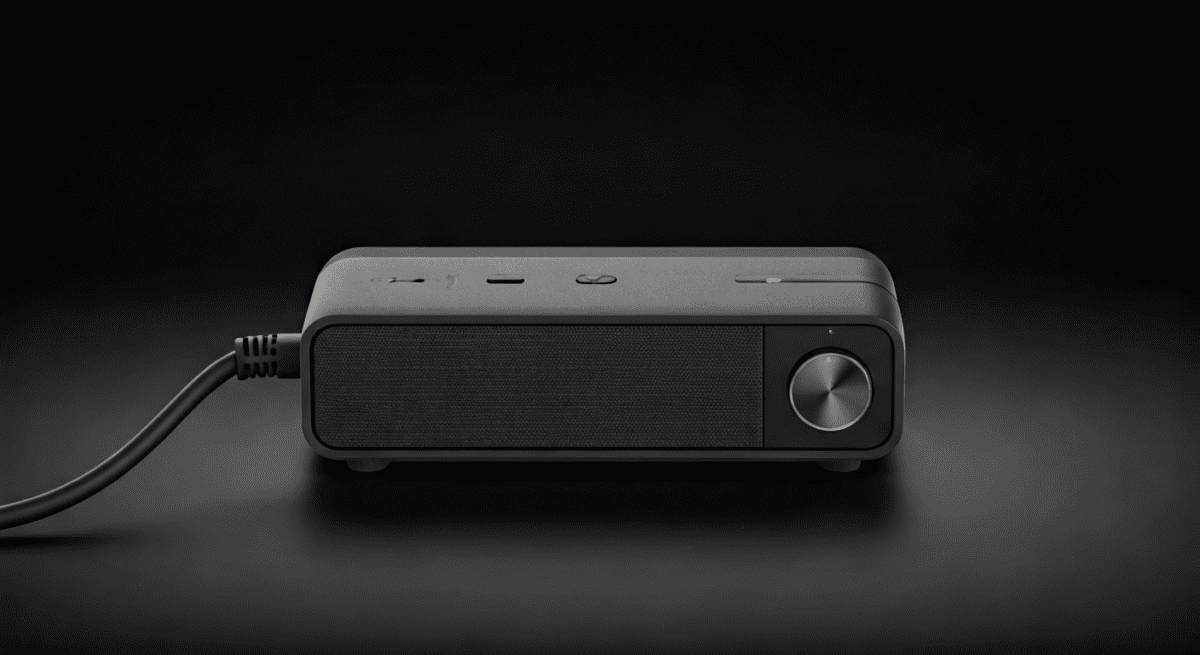
Keep Connectors Clean: Dust and pocket lint often get stuck in USB-C ports. We use a wooden toothpick or compressed air to clean these out every few months. If the cord feels “loose” when plugged in, it’s usually debris, not a broken port.
Heat Management: Don’t leave your power adapter plugged into a power strip covered by a rug or curtain. Power bricks generate heat during the AC-to-DC conversion process. Restricting airflow can shorten the life of the internal capacitors.
Frequently Asked Questions
Do all Bluetooth speakers use the same charger?
No. While USB-C is becoming the universal standard for portable speakers, many older models use Micro-USB, and larger “High-Fidelity” or “Party” speakers use proprietary AC or DC power adapters. Always check the voltage requirements before swapping cords between devices.
Can I charge my Bluetooth speaker with a phone charger?
In most cases, yes. If your speaker uses a USB-C or Micro-USB port, you can use a standard phone wall brick. However, if your speaker supports Fast Charging, using a low-output phone charger will result in much longer charging times.
Why didn’t my Bluetooth speaker come with a wall plug?
Many manufacturers, including Apple, Sony, and JBL, have moved toward “cable-only” packaging to reduce electronic waste. They assume the consumer already owns a USB wall adapter. If you don’t have one, you will need to purchase a USB power adapter separately.
Can I use a longer cord than the one provided?
Yes, you can use a longer USB cable, but be aware of “Voltage Drop.” For very long cables (over 10 feet), the resistance of the wire can cause the voltage to drop slightly, which might lead to slower charging or the speaker not recognizing the power source.
What should I do if my power cord gets hot?
If the power cord or the adapter brick is too hot to touch comfortably, unplug it immediately. This usually indicates a short circuit in the cable, an incompatible amperage rating, or a failing internal battery within the speaker itself.