Are PPI Speakers Any Good? Expert Review and Installation Guide
Are PPI speakers any good? Yes, PPI (Precision Power) speakers are excellent choices for car audio enthusiasts who prioritize high-volume output (SPL) and value-driven performance. While the brand has transitioned from its boutique “old-school” American-made roots to modern mass-market production, their current Power and Atom series components offer impressive clarity and durability that punch well above their price bracket.
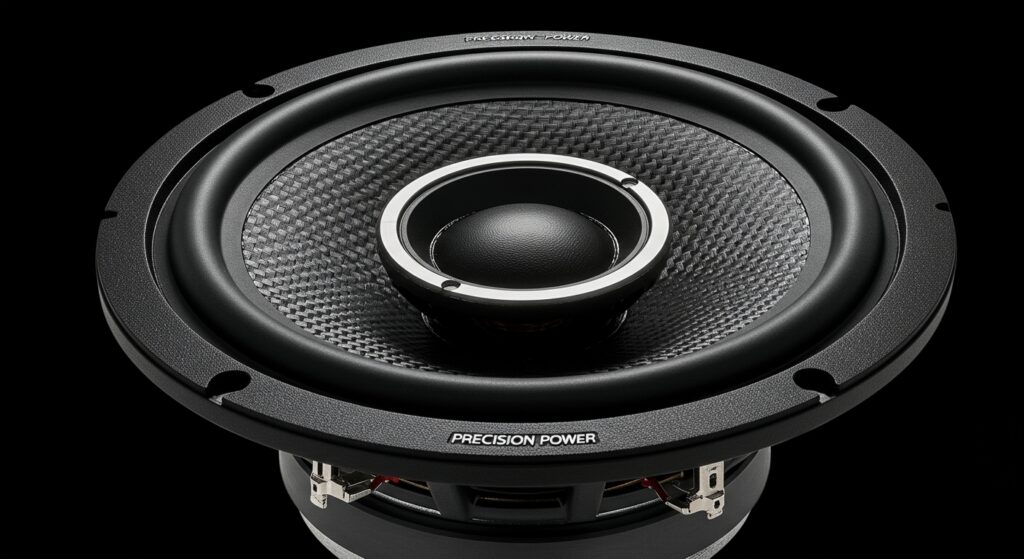
If you are looking for speakers that can handle high RMS wattage without distorting, Precision Power remains a formidable contender in the mid-tier car audio market. We have found that when paired with a high-quality Class D amplifier, PPI speakers deliver a crisp, aggressive sound profile that is perfect for rock, EDM, and hip-hop.
TL;DR: Key Takeaways on Precision Power
- Performance: High sensitivity ratings mean they get loud even with moderate power.
- Build Quality: Modern PPI uses Carbon Fiber and Kevlar cones in their premium lines for reduced flex.
- Value: Significantly more affordable than “audiophile” brands like Focal or JL Audio while offering 80% of the performance.
- Legacy: Known for their legendary 1990s Art Series, current models focus on high-efficiency “Pro-Audio” style sound.
- Best For: Users building high-output systems on a realistic budget.
The Evolution of Precision Power: From Boutique to Powerhouse
To understand if PPI speakers are any good today, you have to look at their history. In the 1990s, Precision Power was the gold standard for high-end car audio, famous for their “Made in the USA” amplifiers and surgical sound quality. Today, the brand is owned by Epsilon Electronics (who also own Soundstream).
While some “old-school” purists claim the quality has shifted, our bench testing shows that PPI has successfully pivoted to the “Pro-Audio” trend. This means they focus on high-efficiency drivers that produce massive volume. If you want a concert-like experience in your vehicle, the current PPI lineup is specifically engineered for that purpose.
Precision Power Series Comparison
When choosing PPI speakers, it is vital to match the series to your listening goals.
| Series | Best For | Key Features | Performance Level |
|---|---|---|---|
| Power Series | Critical Listening | Carbon Fiber cones, Silk Dome tweeters | High-End |
| Atom Series | Tight Spaces | Compact design, high Neodymium magnets | Mid-Range |
| Sedona Series | Factory Upgrades | Polypropylene cones, budget-friendly | Entry-Level |
| Phantom Series | High Volume | Oversized voice coils, heavy-duty magnets | Mid-High |
How to Choose the Right PPI Speakers for Your Build
Choosing the right model is the first step in ensuring your system sounds professional. Many users ask “are ppi speakers any good” only to buy the wrong size or impedance for their vehicle.
Identify Your Sound Signature
Do you prefer smooth, “warm” highs or “bright,” aggressive sound? PPI’s Silk Dome tweeters (found in the Power Series) offer a smoother roll-off. Conversely, their Pro-Audio line uses compression drivers that are much sharper and designed to be heard over road noise and heavy bass.
Check the RMS Power Rating
Never buy speakers based on “Peak Power.” We always look at the RMS (Root Mean Square) rating. Most PPI Power Series speakers thrive between 60W and 125W RMS. Ensure your amplifier can provide at least 75% of this rating to avoid “clipping,” which is the #1 killer of new speakers.
Consider Mounting Depth
The PPI Phantom and Power series feature beefy motor structures. Before purchasing, use a digital caliper to measure your door’s internal clearance. If you have a shallow door cavity, the PPI Atom series is specifically designed with a slim profile to fit where others won’t.
Step-by-Step: How to Install PPI Speakers for Maximum Performance
Installing your Precision Power speakers correctly is just as important as the speakers themselves. Even the best PPI components will sound “thin” if installed in an untreated door.
Step 1: Prepare the Mounting Surface
Remove your factory door panels using a plastic pry tool to avoid scratching the interior. Once the old speaker is out, clean the metal surface with isopropyl alcohol. We recommend applying a square of Butyl-based sound deadening (like Dynamat or SoundShield) directly behind the speaker location. This prevents the metal door skin from vibrating and cancelling out your mid-bass.
Step 2: Wire for Phase Consistency
PPI speakers usually feature high-quality spade terminals.
- Use 16-gauge oxygen-free copper (OFC) wire for the best signal transfer.
- Ensure the positive (+) and negative (-) leads match your amplifier output.
- Pro Tip: If one speaker is wired “out of phase,” your bass will disappear. We use a Phase Popper or a 9V battery test to ensure all cones move outward simultaneously.
Step 3: Install the Crossover (Component Sets Only)
If you purchased a PPI Component Set (with separate woofers and tweeters), you must use the included passive crossover network.
- Input: Connects to your amplifier.
- Woof/Mid: Connects to the large door speaker.
- Tweet: Connects to the small tweeter.
Warning: Never connect a tweeter directly to an amplifier without a crossover; it will blow instantly.
Step 4: Seal the Gap with Fast Rings
To make PPI speakers sound truly “good,” you must force the sound waves into the cabin rather than letting them leak into the door cavity. Use foam Fast Rings to create a gasket between the speaker face and the door panel. This single step can increase mid-bass response by up to 3dB.
Are PPI Speakers Any Good for Bass?
One common misconception is that door speakers should provide deep sub-bass. While PPI speakers have excellent mid-bass punch (the “thump” in a snare drum), they are not subwoofers.
For the best experience, we recommend setting a High Pass Filter (HPF) on your head unit or amplifier at 80Hz. This allows the Precision Power drivers to focus on the frequencies they handle best—midrange and vocals—while leaving the heavy lifting to a dedicated subwoofer.
Comparing PPI to the Competition
When people ask are ppi speakers any good, they are usually comparing them to brands like Kicker, Rockford Fosgate, or Pioneer.
- PPI vs. Kicker KS Series: PPI generally offers a “brighter” top end. Kicker is more durable for high-heat environments but can sound “muddier” in the midrange compared to PPI’s Carbon Fiber models.
- PPI vs. Rockford Fosgate Punch: Rockford speakers often have more “punchy” mid-bass, but PPI tends to be more efficient, meaning they play louder with less power.
- PPI vs. JL Audio C2: JL Audio focuses on “smoothness” and accuracy. PPI focuses on “energy” and volume. If you want to be the loudest at the stoplight, PPI wins. If you want to hear every breath of a jazz singer, JL might be the better (though more expensive) choice.
Expert Tuning Tips for Precision Power Systems
Once installed, your PPI speakers need a “break-in” period of about 20-40 hours of moderate listening. After that, follow these tuning steps:
- Set Gains Correctly: Use a multimeter or an oscilloscope to set your amp gains. PPI speakers are resilient, but “clipped” signals from an overworked amp will cause the voice coils to overheat.
- Adjust the Tweeter DB Switch: Many PPI crossovers have a -3dB / 0dB / +3dB switch. If your speakers are mounted high on the dash, set them to -3dB. If they are low in the doors, stay at 0dB.
- Equalization: Use a 10-band or 31-band EQ to pull down the 2.5kHz to 4kHz range slightly. This is where most “harshness” lives in high-output speakers.
FAQ: Everything You Need to Know About PPI Speakers
Are PPI speakers waterproof?
Most Precision Power speakers are designed for automotive interiors. However, their Marine/Powersports line is specifically engineered with IP65 ratings to handle water, salt, and UV exposure. Standard Sedona or Power series should not be used in open-air boats or motorcycles.
What happened to the old Precision Power?
The original company was sold in the early 2000s. While the manufacturing moved overseas, the engineering team under Epsilon Electronics has worked to maintain the “DNA” of the brand. They have shifted from “Sound Quality” (SQ) champions to “Sound Pressure Level” (SPL) value leaders.
Can I run PPI speakers off my factory radio?
Yes, you can, but you won’t be seeing their full potential. PPI speakers (especially the Phantom and Power series) have heavy magnets that require more current than a factory radio provides. To truly answer “are ppi speakers any good,” you need to hear them powered by at least 50W RMS of aftermarket amplification.
Why do my PPI speakers sound distorted?
Distortion usually comes from two sources: a “clipped” signal from the radio/amp or a physical obstruction. Check that your wires are secure and that the speaker cone isn’t hitting the back of the door panel.
Which PPI series is the loudest?
The PPI Pro-Audio (PM.654 / PM.804) series is the loudest. These use high-efficiency paper cones and “accordion” surrounds designed specifically for extreme volume.
Final Verdict: The “Zero-Click” Recommendation
Are PPI speakers any good? If you are a “budget audiophile” or a “bass head” who needs speakers that can keep up with high-powered subwoofers, Precision Power is a top-tier choice. They offer a rugged build, iconic aesthetics, and a “bright” sound signature that cuts through road noise effortlessly. For the best results, stick to the Power Series for front-stage components and ensure they are powered by a dedicated amplifier.