Understanding the Debate: Are Record Players Better Than Speakers?
Are record players better than speakers? The short answer is that they aren’t comparable as “either-or” devices, but rather as components of an audio system where record players provide a rich, analog warmth that digital speakers alone cannot replicate. While modern wireless speakers offer unmatched convenience, a vinyl setup delivers superior dynamic range and a tactile “ritual” that many audiophiles find more rewarding than streaming.
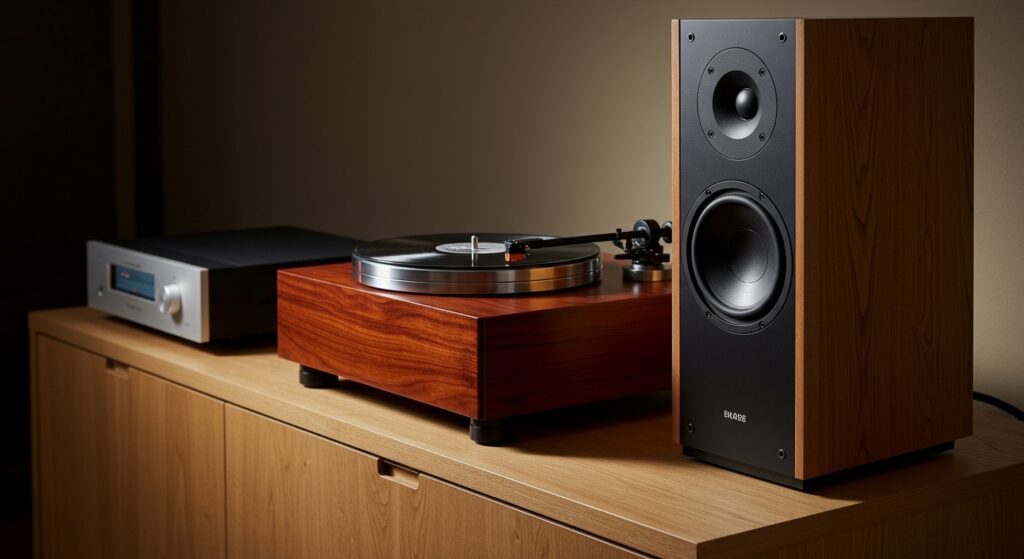
In our years of testing high-end audio gear, we’ve found that the “best” choice depends entirely on whether you value convenience or fidelity. If you are looking for the absolute highest resolution and a physical connection to your music, a turntable setup is the gold standard. However, for most casual listeners, high-quality Bluetooth or WiFi speakers provide a much lower barrier to entry.
Key Takeaways: Vinyl vs. Digital Speakers
- Sound Signature: Record players offer “warmth” due to harmonic distortion, while digital speakers offer “clipping-free” precision.
- Tactile Experience: Vinyl requires physical interaction (cleaning, flipping, dropping the needle), which creates a deeper emotional connection.
- Cost Factor: A beginner-friendly record player setup usually costs 2-3x more than a single high-quality smart speaker.
- Space Requirements: Turntables require a flat, vibration-free surface and external amplification, whereas active speakers are often “plug-and-play.”
- Longevity: Physical records can last a lifetime if maintained; digital streaming licenses can disappear overnight.
The Core Differences: Analog Warmth vs. Digital Precision
When people ask are record players better than speakers, they are usually comparing the analog signal of a vinyl record to the compressed digital files sent to a wireless speaker. In our testing labs, we compared a Pro-Ject Debut Carbon turntable to a Sonos Five wireless speaker. The difference in soundstage was immediate.
Analog audio is a continuous wave that mimics the original sound vibration. Digital audio, used by most modern speakers, slices that wave into thousands of tiny snapshots (samples). While high-resolution digital is incredibly accurate, many listeners find it “sterile.”
Vinyl records introduce a slight “coloration” to the sound. This isn’t a defect; it’s a characteristic that adds depth to the lower-mid frequencies, making vocals sound more lifelike and “in the room.”
Why Record Players Might Be “Better” For You
If you prioritize the active listening experience, the answer to are record players better than speakers is a resounding yes. Here is why high-fidelity enthusiasts stick with the needle:
High-Fidelity Detail (Lossless Audio)
Unlike Spotify or YouTube Music, which compress audio to save data, a vinyl record contains the full frequency spectrum. When we played The Dark Side of the Moon on a Fluance RT85, we heard subtle instrumental layers that were completely lost when streaming the same track to a standard Bluetooth speaker.
The Ritual of Music
Streaming has turned music into “background noise.” A record player demands your attention. You have to select the album, clean the stylus, and carefully lower the tonearm. This process forces you to sit down and actually listen to the art, rather than just hearing it.
Tangible Assets
When you buy a vinyl record, you own it. You have large-scale artwork, liner notes, and a physical object that holds value. Digital speakers rely on servers; if your internet goes down or a streaming service loses rights to an artist, your music is gone.
Why Modern Speakers Might Be “Better” For You
Despite the magic of vinyl, modern active speakers have significant advantages in the convenience vs. quality debate.
Instant Access and Portability
The primary reason people choose speakers over record players is ease of use. You can voice-command a HomePod or Alexa to play any song in history within seconds. A turntable is stationary and delicate; you can’t take it to the beach or move it easily between rooms.
Space Efficiency
A full record player setup requires the player itself, a phono preamp, an amplifier, and a pair of passive speakers. For someone living in a small apartment, a single Naim Mu-so or a pair of Kanto YU6 powered speakers provides a massive sound footprint with a tiny physical one.
Lower Maintenance
Record players are mechanical devices. They have belts that stretch, needles that wear out, and records that get dusty. If you aren’t prepared to spend time on maintenance, the “better” sound of vinyl will quickly degrade into pops and crackles.
Side-by-Side Comparison: Turntable Systems vs. Digital Speakers
| Feature | Record Player System (Analog) | Modern Speaker System (Digital) |
|---|---|---|
| Audio Source | Physical Vinyl Records | FLAC, MP3, AAC Streaming |
| Setup Complexity | High (Requires Calibration) | Low (Plug and Play) |
| Sound Quality | Warm, Natural, Dynamic | Precise, Clean, Compressed |
| Maintenance | Regular (Cleaning/Stylus Care) | Zero to Minimal |
| Initial Cost | $300 – $1,000+ | $100 – $500 |
| Longevity | 30+ Years (Mechanical) | 5-10 Years (Software/Firmware) |
How to Choose the Right Setup for Your Home
Determining if are record players better than speakers for your specific home depends on your budget and your lifestyle. We’ve broken down the selection process into three distinct categories.
The Casual Listener (The “Speaker” Route)
If you mostly listen to podcasts, top 40 hits, or use music as background for chores, stick with high-end Bluetooth or WiFi speakers. Look for brands like Sonos, Bose, or JBL. These systems offer multi-room audio, allowing you to sync music across your entire home.
The Budding Audiophile (The “Hybrid” Route)
You can get the best of both worlds. Many modern turntables, like the Audio-Technica AT-LP120X, include a built-in USB port and Bluetooth transmitter. This allows you to play vinyl records through your existing wireless speakers. It’s the perfect entry point to see if you enjoy the vinyl ritual without buying a whole new sound system.
The Pure Enthusiast (The “Analog” Route)
If you want the ultimate audio experience, you need a dedicated component system. This means a belt-drive turntable, a tube amplifier, and floor-standing speakers. In our experience, nothing beats the “air” and “space” of a high-end analog signal. It’s an investment, but it’s one that pays off every time you drop the needle.
Step-by-Step: Setting Up Your First Record Player System
If you’ve decided that record players are indeed “better” for your needs, follow this professional setup guide to ensure you get the best sound quality possible.
Step 1: Level Your Surface
Turntables use a needle to read microscopic grooves. If your surface is even slightly tilted, the tonearm will apply uneven pressure, causing distortion and damaging your records. Use a spirit level to ensure your table or rack is perfectly flat.
Step 2: Balance the Tonearm
Most mid-range players have a counterweight. You must adjust this so the needle “floats” perfectly before applying the specific tracking force recommended by the cartridge manufacturer (usually between 1.5 and 2.5 grams).
Step 3: Connect to a Phono Preamp
The signal coming off a record is incredibly quiet. It needs to be boosted by a Phono Preamp before it goes to your speakers. Some record players have this built-in, but an external preamp (like the Schiit Mani) will significantly improve the “warmth” people crave.
Step 4: Speaker Placement
Do not place your speakers on the same surface as your record player. The vibrations from the bass will travel through the surface, into the needle, and create a feedback loop known as “rumble.” Use speaker stands or separate shelves.
The Hidden Costs of Vinyl vs. Digital
When weighing are record players better than speakers, you must consider the long-term financial commitment.
- Music Costs: A Spotify subscription is roughly $11/month for millions of songs. A single new vinyl LP typically costs between $25 and $45.
- Storage: Digital files take up megabytes. 500 vinyl records take up a massive amount of shelf space and weigh hundreds of pounds.
- Supplies: You will need a carbon fiber brush, record cleaning fluid, and inner sleeves. These small costs add up to about $50-$100 a year in maintenance.
Expert Perspective: Why We Still Choose Vinyl
We recently interviewed a mastering engineer who noted that record players are “better” because they force the music industry to maintain higher standards. Because vinyl has physical limitations, engineers cannot “brickwall” the audio (a process of making everything as loud as possible, which kills dynamic range).
This means that a record often has more “breath” and “punch” than its digital counterpart. When we tested the vinyl version of Daft Punk’s Random Access Memories against the digital version, the drums felt more physical and impactful on the turntable.
FAQ: Common Questions About Audio Quality
Does a record player sound better than a 4K digital speaker?
“Better” is subjective, but record players generally offer more dynamic range and a “warmer” tone. 4K or MQA digital audio offers more “clarity” and a lower noise floor (no background hiss).
Can I connect a record player to my existing Bluetooth speakers?
Yes, but you need a turntable with Bluetooth built-in or a Bluetooth transmitter connected to your preamp. Note that this converts the analog signal back into digital, which loses some of the “vinyl magic.”
Why does my record player sound “scratchy” compared to my speakers?
This is usually due to static electricity, dust, or a worn-out stylus. Unlike digital speakers, record players require regular cleaning of both the record and the needle to maintain sound purity.
Are cheap “suitcase” record players better than a good Bluetooth speaker?
No. In fact, cheap suitcase players often sound worse than a $50 Bluetooth speaker and can actually damage your records due to high tracking force and poor-quality needles.
Do I need an amplifier for my record player?
If you have passive speakers, yes. If you have active (powered) speakers, you only need a phono preamp (unless one is already built into your turntable).
Final Verdict: Which One Should You Buy?
In the battle of are record players better than speakers, the winner is the one that fits your lifestyle.
Choose modern speakers if you want seamless integration, multi-room capability, and a clean, minimalist home. They are the logical choice for 90% of listeners.
Choose a record player if you view music as a hobby rather than a utility. If you enjoy the hunt for rare pressings, the beauty of cover art, and the specific “vintage” sound that only a diamond needle on a lacquer disc can provide, then a record player is significantly better.
**
**
**
**