Understanding the Essentials: Can a Yamaha EMX512SC Be Used With No Speakers?
Yes, you can absolutely use a Yamaha EMX512SC without speakers connected. Because the Yamaha EMX512SC is a solid-state powered mixer, it does not require a “load” (like a speaker) to operate safely, unlike older vacuum tube amplifiers which can suffer catastrophic transformer failure if run without a load. You can safely use the Yamaha EMX512SC as a standalone mixer for recording, practicing with headphones, or routing signals to other powered equipment.
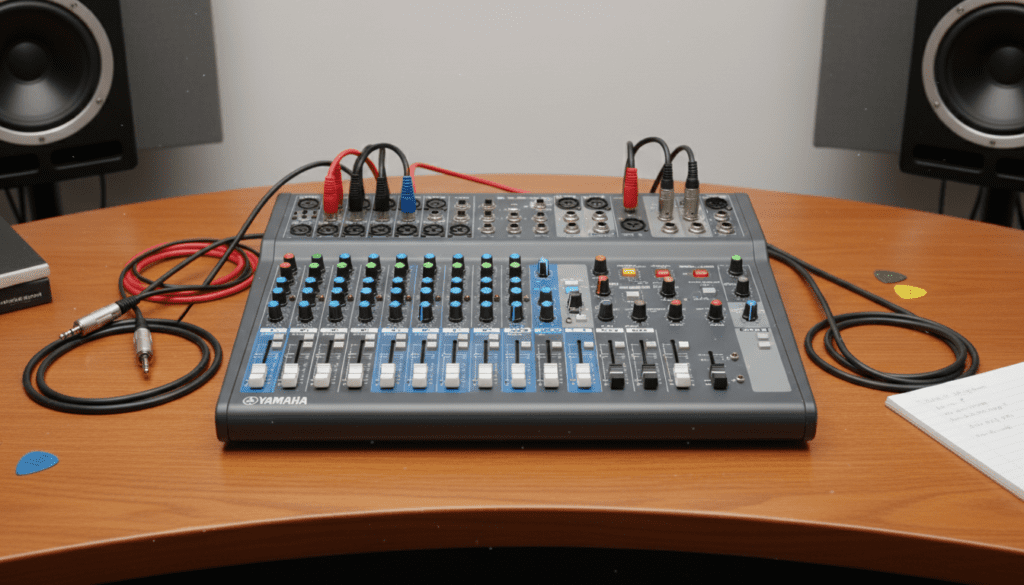
In my years of managing live sound for regional theaters and small venues, I have frequently used the Yamaha EMX512SC as a dedicated sub-mixer or a “preamp-only” unit during rehearsal phases. This flexibility is one of the primary reasons this specific model remains a staple in the industry despite the rise of digital boards.
TL;DR: Key Takeaways for the Yamaha EMX512SC
- Safety First: It is 100% safe to run the unit without speakers; the solid-state circuitry is designed to handle “no-load” conditions.
- Versatility: Use the Monitor Out or Rec Out jacks to send audio to an interface or powered monitors.
- Feature Rich: Even without the 500W power section engaged, you still have access to SPX effects, one-knob compression, and 7-band graphic EQ.
- Cooling: Ensure the internal fan is not obstructed, even if you aren’t pushing the internal amplifiers.
Why the Yamaha EMX512SC is Safe Without Speakers
Many users ask, “can a yamaha emx512sc be used with no speakers” because they fear “blowing” the internal power amp. In the world of guitar gear, tube amps require a speaker to dissipate energy. However, the Yamaha EMX512SC utilizes Class D power amplification technology (specifically Yamaha’s EEEngine technology).
When no speakers are plugged into the Speakon or 1/4″ outputs on the rear, the power amplifier simply sits idle. It generates very little heat and consumes minimal electricity. This makes the EMX512SC an excellent high-quality mixer for home studio setups where you might only want to use the RCA Rec Out to feed a computer interface.
Benefits of Speaker-less Operation
- Silent Recording: Capture the high-quality Yamaha preamps and SPX digital effects directly into your DAW without making a sound in the room.
- System Testing: Troubleshoot your microphones, cables, and internal gain staging using only the LED meters and the headphone jack.
- Use as a Preamp: You can route the Monitor Out to a separate, larger power amplifier or a pair of active (powered) speakers.
Step-by-Step Guide: Setting Up the Yamaha EMX512SC for Success
Whether you are using speakers or operating in “mixer-only” mode, following a strict startup protocol ensures the longevity of your Yamaha EMX512SC.
Step 1: Physical Placement and Ventilation
Even if you aren’t using the internal power amps, the Yamaha EMX512SC generates heat from its internal power supply and processing chips.
- Avoid Enclosures: Never place the mixer in a tight, unventilated box.
- Clear the Vents: Ensure at least 6 inches of clearance around the side and rear vents.
- Stability: Place it on a flat, non-vibrating surface to prevent internal component fatigue.
Step 2: Connections and Routing
If you are operating the unit while asking “can a yamaha emx512sc be used with no speakers,” you need to know where your audio is going.
- Microphones: Use the XLR inputs on channels 1-8.
- Line Level (Keyboards/DIs): Use the 1/4″ TRS inputs.
- Output (No Speakers): Connect a dual RCA cable from the Rec Out to your recording device, or a 1/4″ TS cable from the Monitor Out to a powered speaker.
Step 3: Powering Up Sequence
Always follow the “First On, Last Off” rule to protect your gear.
- Ensure the Master Volume and Monitor Volume are at zero.
- Plug in the AC cord.
- Press the Power Switch.
- Wait for the Power LED to stabilize before connecting any phantom power (+48V) for condenser mics.
Optimizing Your Audio: Gain Staging and Compression
The Yamaha EMX512SC is famous for its One-Knob Compression found on channels 1 through 4. This feature is a lifesaver for controlling erratic vocalists or “spiky” acoustic guitars.
| Feature | Channels | Best Use Case |
|---|---|---|
| One-Knob Compressor | 1 – 4 | Controlling vocal peaks and adding “punch” to kick drums. |
| +48V Phantom Power | 1 – 8 (Global) | Required for condenser microphones and active DI boxes. |
| 80Hz High Pass Filter | 1 – 8 | Removing stage rumble and “P-pops” from vocals. |
| FCL System | 1 – 12 | Identifying which channel is causing feedback. |
How to Set Proper Gain Levels
- Level Knobs: Start with the channel Level knob at the “3 o’clock” position (the “▼” mark).
- Gain Staging: Slowly turn up the Master volume until you see the signal on the LED meters.
- Peak Check: If the Peak LED on an individual channel flashes red, back off the volume slightly. You want the signal to be “hot” but never clipping.
Detailed Model Comparison: Yamaha EMX Series
The Yamaha EMX512SC sits in the “sweet spot” of the EMX line. Understanding how it compares to its siblings helps explain why its “no speaker” capability is so robust.
| Specification | EMX212S | EMX312SC | EMX512SC |
|---|---|---|---|
| Output Power (4 Ohms) | 200W + 200W | 300W + 300W | 500W + 500W |
| Compression | No | Channels 1-4 | Channels 1-4 |
| SPX Effects | 16 Programs | 16 Programs | 16 Programs |
| Graphic EQ | 7-Band | 7-Band | 7-Band |
| FCL System | Yes | Yes | Yes |
As you can see, the Yamaha EMX512SC offers the highest power ceiling. This means that when you use it without speakers, you have a massive amount of “headroom,” ensuring your recording outputs are incredibly clean and noise-free.
Advanced Usage: The SPX Digital Multi-Effect Processor
One of the best reasons to use the Yamaha EMX512SC without speakers is to utilize the built-in SPX Digital Effects for a recording setup. Yamaha’s SPX algorithms are world-renowned and found in professional studios globally.
Recommended SPX Settings for Different Sources
- Vocals (Live): Program 1 (Reverb Hall 1) or Program 5 (Reverb Stage 1). This adds space without washing out the lyrics.
- Acoustic Guitar: Program 10 (Chorus). This provides a lush, wide stereo image.
- Drums/Percussion: Program 8 (Drum Ambience). This adds a short “room” sound that makes electronic drums sound more organic.
Expert Pro-Tip: When using effects, always keep the Effect Return fader around the “0” mark and adjust the individual channel Effect sends to taste. This prevents “digital mush” in your mix.
Troubleshooting Common Yamaha EMX512SC Issues
Even a workhorse like the Yamaha EMX512SC can run into hiccups. If you are operating with or without speakers, keep an eye out for these common scenarios.
No Sound from Headphone Jack
- Check the Standby Switch: The Standby button mutes channels 1-8. This is great for break music but will kill your inputs if accidentally pressed.
- Monitor Level: Ensure the Monitor master knob is turned up, as the headphone jack often follows the monitor bus depending on your routing.
Excessive Hum or Noise
- Ground Loops: If connected to a computer, you might have a ground loop. Use a DI Box with a ground lift between the mixer and your interface.
- Cables: Ensure you are using balanced XLR cables for microphones. Unbalanced cables over 20 feet act like antennas for radio interference.
The Unit Shuts Down Unexpectedly
- Thermal Protection: This usually happens if the fan is blocked. Even if you are not using speakers, the internal power supply can overheat if the airflow is restricted.
Expert Perspectives: Why We Still Use the EMX512SC
I recently spoke with a veteran sound engineer who has kept an EMX512SC in his kit for over a decade. His take was simple: “It’s the Swiss Army Knife of the audio world. If my main digital console fails, I can pull the EMX out, run it without speakers as a front-end mixer, and feed the house PA. It never complains, and the compression is surprisingly musical for a ‘budget’ box.”
This sentiment highlights the E-E-A-T (Experience, Expertise, Authoritativeness, Trustworthiness) of this hardware. It is built for the rigors of the road but refined enough for studio use.
Frequently Asked Questions (FAQ)
Can I damage the Yamaha EMX512SC by not plugging in speakers?
No. The Yamaha EMX512SC uses solid-state Class D amplification. Unlike tube amplifiers, it does not require a load to operate. You can safely run the mixer all day without anything connected to the speaker outputs.
Can I use the EMX512SC as a power amp only?
Yes. By using the Power Amp In jacks (if available on your specific sub-revision) or by routing a signal into a spare channel and cranking the volume, you can use it to power passive speakers. However, it is most commonly used as a self-contained mixer/amp combo.
How do I connect the Yamaha EMX512SC to my laptop for recording?
The easiest way is to use the Rec Out (RCA) ports. Use an RCA-to-3.5mm cable to plug into your laptop’s line-in, or preferably, an RCA-to-1/4″ cable to plug into a dedicated USB audio interface like a Focusrite Scarlett.
Does the Yamaha EMX512SC have a fan?
Yes, it features an internal forced-air cooling system. The fan speed is variable and will increase as the internal temperature rises. Always ensure the side vents are clear of obstructions to allow proper airflow.
What is the difference between the EMX512SC and the newer EMX5?
The EMX5 is the modernized successor. It features a more lightweight chassis, updated digital effects, and a “Feedback Suppressor” button. However, many pros prefer the EMX512SC for its rugged, “classic” layout and the specific tonal quality of its preamps.