Can an ETX Sub be Used with EKX Speakers?
Yes, can an etx sub be used with ekx speakers is a resounding “yes.” Electro-Voice (EV) designs its QuickSmartDSP ecosystem specifically to allow high-performance mixing and matching between the ETX, EKX, and ZLX series.
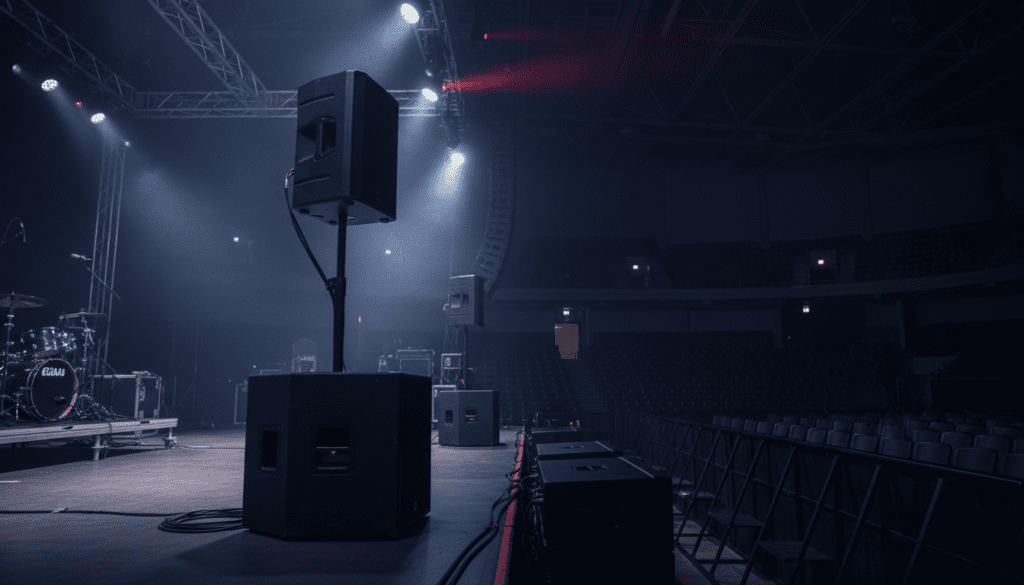
By pairing an ETX-18SP or ETX-15P subwoofer with EKX-12P or EKX-15P top cabinets, you gain significantly more “thump” and low-end headroom than a standard all-EKX system. I have personally deployed this hybrid configuration for medium-sized outdoor events where the EKX tops provided clear vocal clarity while the ETX subs handled the heavy lifting of electronic bass.
TL;DR: Key Takeaways for ETX and EKX Compatibility
- Plug-and-Play Ready: Both series use standard XLR/TRS combo inputs and XLR link outputs.
- DSP Optimization: Use the “Link” or “Sub” presets in the EKX menu to match the ETX crossover points (usually 80Hz, 100Hz, or 120Hz).
- Performance Boost: An ETX subwoofer offers higher SPL (Sound Pressure Level) and deeper frequency extension than its EKX counterpart.
- Phase Alignment: Keep the polarity set to “Normal” on both units unless the sub is placed more than a few feet away from the tops.
Why Mixing ETX Subs with EKX Speakers is a Pro Move
While it is common to stay within a single product line, mixing the ETX and EKX series is a strategic upgrade. The ETX line is Electro-Voice’s flagship portable wood-cabinet series, featuring higher-wattage Class-D amplifiers and FIR-Drive technology.
In my experience, the EKX-12P is one of the most balanced tops for the price, but the EKX-18SP sub can sometimes run out of breath in high-energy environments. By swapping to an ETX-18SP, you increase your maximum output from 132 dB to 135 dB. While 3 dB sounds small on paper, it represents a doubling of acoustic power.
Primary Benefits of the ETX + EKX Hybrid Setup
- Increased Headroom: The ETX sub will hit its limit much later than the EKX tops, ensuring your bass stays clean at high volumes.
- Professional Aesthetic: Both cabinets feature the same high-quality EVCoat finish, so they look like a matched set on stage.
- Advanced Cooling: The ETX subwoofers feature internal fans that are more robust for long, hot summer gigs compared to the passive cooling of smaller units.
Technical Compatibility: Comparing the Specs
To understand why can an etx sub be used with ekx speakers, we need to look at the signal flow and processing. Both series use 24-bit DSP, which ensures that the audio signal remains “clean” as it passes from the sub to the top.
| Feature | EKX-18SP Subwoofer | ETX-18SP Subwoofer | EKX-12P Top Speaker |
|---|---|---|---|
| Max SPL | 132 dB | 135 dB | 132 dB |
| Power Rating | 1300 Watts | 2000 Watts | 1500 Watts |
| Frequency Low | 35 Hz | 28 Hz | 50 Hz |
| Cabinet Material | 15mm Plywood | 18mm Birch Plywood | 15mm Plywood |
| Processing | QuickSmartDSP | FIR-Drive DSP | QuickSmartDSP |
As the data shows, the ETX sub provides a much lower frequency response (28 Hz vs 35 Hz). This is the difference between “hearing” the kick drum and “feeling” it in your chest.
Step-by-Step Guide: Setting Up Your ETX Sub with EKX Tops
Setting up this system requires more than just plugging in cables. You must align the DSP settings to ensure the speakers aren’t “fighting” each other at the crossover frequency.
Step 1: Physical Placement
Place your ETX subwoofer on a flat, stable surface. Use a high-quality 35mm threaded pole (like the EV TSP-1) to mount your EKX-12P or EKX-15P directly above the sub. This minimizes “comb filtering” and keeps the sound sources phase-aligned.
Step 2: Signal Routing
- Run the Main Left/Right outputs from your mixer into the Input 1 of your ETX Subwoofers.
- Connect an XLR cable from the Output (Link) of the ETX Sub to the Input 1 of your EKX Top.
- Repeat for the other side if running a stereo pair.
Step 3: Configuring the ETX Subwoofer DSP
- Press the Master Vol knob to enter the menu.
- Navigate to SUBSET.
- Select the Low Pass Frequency. I highly recommend 100Hz for a punchy, modern sound.
- Set LOCATION to “Normal” or “Corner” depending on where the sub is sitting.
Step 4: Configuring the EKX Top Speaker DSP
- Enter the menu on your EKX speaker.
- Navigate to SUB.
- Select the High Pass Frequency that matches your sub (e.g., 100Hz).
- Crucial Tip: If you select “ETX-18SP” in the EKX menu (if available) or simply use the matching numerical value, the internal filters will align perfectly.
Expert Tuning: Achieving Perfect Phase Alignment
When people ask can an etx sub be used with ekx speakers, they often worry about “muddiness.” This happens when the sub and the top are out of phase.
I always perform a “thump test.” Play a track with a heavy, consistent kick drum. While standing 10 feet back, have someone toggle the Polarity on the ETX sub from Normal to Reverse. Whichever setting provides the loudest, tightest bass is the correct one for that specific room. Usually, with EV-to-EV connections, Normal is the standard.
Using Delay for Large Stages
If your ETX subs are located at the front of the stage and your EKX tops are pushed back 5 feet, you must use the Delay setting in the ETX DSP.
- Rule of Thumb: 1.1 milliseconds of delay for every 1 foot of distance.
- In this case, add 5.5ms of delay to the speakers that are “further forward” to time-align the sound hitting the audience’s ears.
Avoiding Common Pitfalls
While the hardware is compatible, user error can lead to blown drivers or poor sound quality. Follow these “pro-level” safety tips:
- Avoid Double-Filtering: Do not use the crossover on your mixer AND the crossover on the speakers. Set your mixer to “Full Range” and let the EV DSP handle the split.
- Watch the Limiters: The ETX and EKX both have “Limit” indicators on the LCD. If you see the ETX sub limiting while the EKX tops are only at 50%, you need to balance your gain stages.
- Cable Quality: Use shielded XLR cables. Cheap cables can pick up interference from the high-current power supplies inside the ETX-2000W amplifier.
Is the Upgrade Worth the Cost?
Investing in an ETX-18SP to pair with your EKX system is one of the best ROI (Return on Investment) upgrades for a mobile entertainer.
- For Wedding DJs: The EKX-12P is elegant and small. Pairing it with an ETX-15P sub gives you a compact system that can still handle a packed dance floor.
- For Live Bands: The ETX-18SP provides the “throw” needed to reach the back of a deep bar or club, something the EKX-15SP might struggle with.
- For Rental Houses: Mixing these series allows you to scale your inventory. You can rent out the EKX as a small PA and the ETX/EKX combo as a “Premium” package.
Frequently Asked Questions
Does the ETX sub sound different than the EKX sub?
Yes. The ETX series uses a higher-grade birch plywood and a more powerful 2000W amplifier. This results in a “drier” and more authoritative bass response. The EKX is excellent but sounds slightly more “resonant” and has less total output.
Can I use the QuickSmart Mobile app with both?
The QuickSmart Mobile app works with the ELX200, EKX, and ETX series (provided you have the Bluetooth-enabled models or the newer versions). You can group them together to control the master volume of the entire hybrid system from your phone.
Will using an ETX sub with EKX tops void my warranty?
Absolutely not. Electro-Voice encourages the use of their products across different tiers. As long as you are using standard audio connections and not exceeding the thermal limits of the speakers, your warranty remains intact.
Which crossover setting is best for this combo?
For most applications, 100Hz is the “sweet spot.” It removes the heavy lifting from the EKX tops, allowing them to produce clearer mid-range vocals, while the ETX sub handles the frequencies it was built for.
Can I use two EKX tops with just one ETX sub?
Yes. This is a very common “2.1” setup. You run the Left and Right signals into the sub’s two inputs, and then “Link” out to the respective Left and Right EKX speakers. The ETX sub will sum the bass signal to mono while passing the stereo signal through to the tops.