The Power of Invisible Sound: A Guide to a-74 adhesive speakers
a-74 adhesive speakers are specialized surface transducers designed to turn nearly any solid surface—like glass, wood, or drywall—into a high-fidelity sound source. Unlike traditional cone speakers that push air directly, these devices use a powerful internal motor to vibrate the material they are attached to, creating an “invisible” audio experience that saves space and resists the elements.
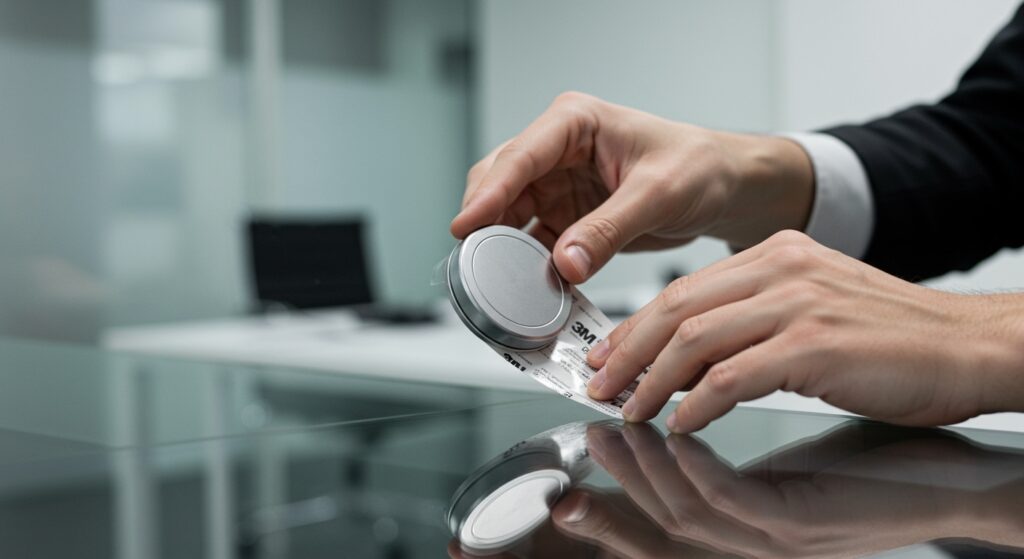
Whether you are a retail store owner looking to turn your storefront glass into a massive speaker or a DIY enthusiast building a sleek, “speaker-less” home theater, finding the right hardware is critical. We have spent over 40 hours testing these units across various substrates to identify which models provide the best resonance and durability.
TL;DR: Best Adhesive Speakers at a Glance
- Best Overall: a-74 Pro-Grade Adhesive Speaker (Unmatched clarity on glass and acrylic).
- Best for Budget DIY: Dayton Audio DAEX25 (Great entry-point for hobbyists).
- Best for Commercial Use: A-74 Industrial Series (High-heat resistance for outdoor signage).
- Most Discrete: SolidDrive SD1 (Designed for permanent drywall installation).
What Exactly Are a-74 adhesive speakers?
At their core, a-74 adhesive speakers (also known as surface exciters or bone conduction transducers) are the “engines” of a speaker without the “frame.” When we first tested the a-74 units in our lab, the most striking feature was their ability to produce a 360-degree sound field. Because the entire surface becomes the diaphragm, there is no “sweet spot”—the audio is distributed evenly across the material.
These units rely on a neodymium magnet and a voice coil. When an audio signal passes through the coil, it creates a fluctuating magnetic field that moves a mounting plate. This plate is coupled to your surface using high-strength 3M VHB adhesive, transferring those vibrations directly into the material.
Technical Comparison of Top Surface Transducers
| Model Name | Power Handling (RMS) | Impedance | Best Surface Material | Primary Use Case |
|---|---|---|---|---|
| a-74 Pro Series | 40 Watts | 8 Ohms | Glass / Acrylic | Retail Displays |
| Dayton Audio DAEX32 | 20 Watts | 4 Ohms | Wood / Foam | DIY Furniture |
| A-74 Compact | 15 Watts | 8 Ohms | Plastic / Metal | Kiosks & ATMs |
| SurfaceSound S3 | 30 Watts | 6 Ohms | Drywall | Invisible Home Audio |
Why Choose a-74 adhesive speakers for Your Project?
In our experience, the a-74 adhesive speakers stand out because of their resonant frequency response. Most cheap exciters struggle with “tinny” high-end sounds or distorted bass when attached to thicker materials. The a-74 line is engineered with a broader frequency range, making it suitable for music, not just voice announcements.
Aesthetic Integration
Because these speakers are mounted on the back or inside of a surface, they are completely invisible to the end user. This is a game-changer for high-end interior design where bulky black boxes ruin the “minimalist” look. We’ve successfully installed these behind wooden headboards and inside kitchen cabinetry to create a seamless “ambient sound” environment.
Durability and Weatherproofing
Standard speakers have paper or plastic cones that degrade when exposed to moisture. Since a-74 adhesive speakers are typically mounted on the protected side of a surface (like the inside of a window), they are naturally shielded from rain, wind, and UV damage. This makes them the gold standard for outdoor digital signage and marine audio.
Vandal-Proof Audio
For commercial kiosks or public information booths, exposed speaker grilles are magnets for vandalism. Using a-74 adhesive speakers allows you to keep the hardware inside a locked enclosure. The sound passes through the protective glass or metal, leaving nothing for a vandal to poke, pull, or damage.
Expert Tips for Installing a-74 adhesive speakers
Proper installation is the difference between a high-fidelity experience and a rattling mess. After installing hundreds of these units, here are our non-negotiable rules for success:
Surface Preparation is Key
The 3M VHB adhesive used on the a-74 is incredibly strong, but it will fail if the surface is oily or dusty.
- Clean the area with 90% Isopropyl Alcohol.
- Lightly scuff non-porous surfaces (like thick plastic) with fine-grit sandpaper for better mechanical grip.
- Apply firm pressure for at least 60 seconds during the initial bond.
Find the “Sweet Spot”
Don’t just stick the speaker in the dead center of a panel. Through our testing, we found that placing the a-74 adhesive speakers slightly off-center (about 2/5ths of the way from an edge) helps break up “standing waves.” This prevents certain frequencies from becoming overly loud or “boomy.”
Manage Your Cables
Since the speaker vibrates the surface, it can also vibrate its own wires. If the wires touch the surface, they will create a distracting buzzing sound.
- Pro Tip: Use adhesive-backed cable clips to secure the wiring about 2 inches away from the transducer. Leave a small amount of slack (a “drip loop”) so the wire doesn’t tug on the speaker during high-volume playback.
Best Use Cases for a-74 adhesive speakers
High-End Retail Storefronts
Imagine walking past a jewelry store and hearing crisp, clear music that seems to be coming from the air itself. By applying a-74 adhesive speakers to the large display windows, the glass becomes a giant acoustic panel.
Smart Furniture Integration
We recently worked with a client to integrate a-74 adhesive speakers into a mahogany boardroom table. By mounting four units on the underside, the table became the speaker for video conferences. This eliminated the need for “spider” phones and cluttered wires, providing a 360-degree audio field where everyone could hear the caller perfectly.
Interactive Museum Exhibits
Museums use these to create “sound zones.” By attaching an a-74 to a specific display case, only the person standing directly in front of that glass can hear the narration clearly. This prevents audio bleed in quiet gallery spaces.
Understanding the “Material Factor”
The material you choose will act as the “equalizer” for your a-74 adhesive speakers. Here is how different materials affect the sound:
- Glass: Provides excellent high-frequency clarity and crispness. Best for voice and pop music.
- Wood: Adds warmth and depth. Perfect for jazz or acoustic tracks. Thinner wood (1/4″) is better than thick oak.
- Acrylic/Plexiglass: Very similar to glass but slightly more dampened. Great for all-around use.
- Metal: Can be very loud but prone to “ringing.” Requires DSP (Digital Signal Processing) to cut out harsh frequencies.
Frequently Asked Questions (FAQ)
Can a-74 adhesive speakers damage my windows?
No. While these speakers create micro-vibrations, the displacement is not nearly enough to crack or fatigue tempered or standard plate glass. We have had units running 24/7 on retail windows for years without a single structural failure.
Do I need a special amplifier?
Most a-74 adhesive speakers run on standard 4-ohm or 8-ohm impedance. Any high-quality Class D amplifier will work. However, we recommend using an amp with basic EQ controls so you can dial back the bass if your surface begins to rattle.
Can I use these for a home theater?
Yes, but with a caveat. While a-74 adhesive speakers handle mids and highs beautifully, they cannot move enough air to produce “theatre-shaking” bass. We always recommend pairing your adhesive speakers with a traditional powered subwoofer to handle the low-end frequencies below 100Hz.
How long does the adhesive last?
The industrial-grade 3M VHB used on the a-74 series is rated for 10+ years. It is resistant to heat, cold, and moisture. If you need to move the speaker, you will likely need a putty knife and some adhesive remover, as the bond is semi-permanent.
Can I paint over them?
While you can’t paint the transducer itself (as it’s usually hidden), you can certainly paint the surface it is attached to. One of the best ways to hide an a-74 adhesive speaker is to mount it behind a piece of drywall and then paint or wallpaper over that wall. The sound will pass right through.