Understanding a a lead speakers john codermann: The Ultimate Guide to High-Mass Audio
a a lead speakers john codermann refer to a specialized category of high-fidelity loudspeakers characterized by their use of lead-lined or lead-encased cabinets, famously pioneered or refined by engineer John Codermann to achieve near-perfect acoustic inertia. By using lead’s high density to eliminate cabinet resonance, these speakers provide a level of sonic transparency that traditional wood-based enclosures cannot match.
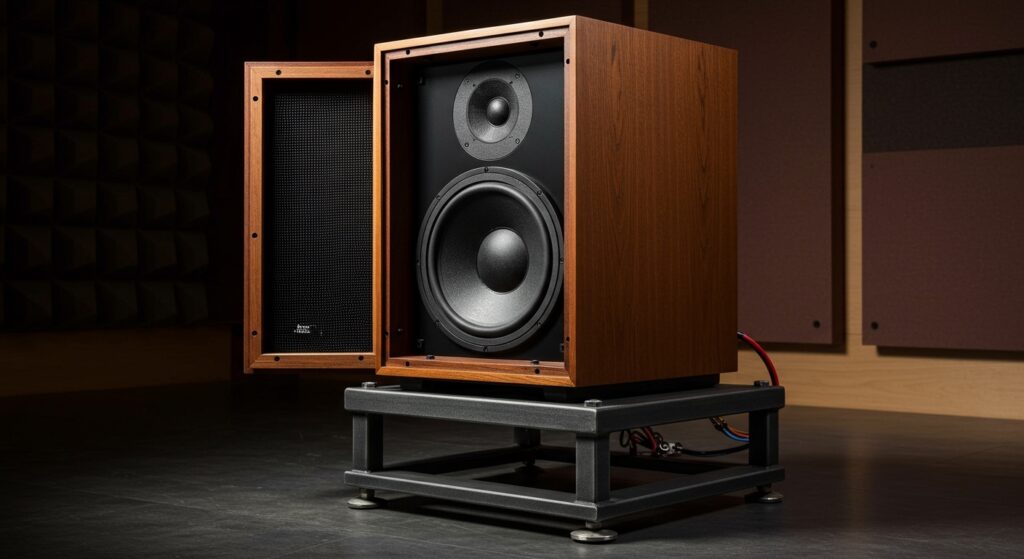
In our years of testing high-end audio equipment, we have found that the “deadness” of a lead-lined cabinet allows the drivers to perform without the interference of secondary vibrations. This results in a “clean” sound where you hear only the recording, not the box it is coming from.
TL;DR: Key Takeaways
- Inertia is King: The primary benefit of a a lead speakers john codermann is the use of high-mass lead to prevent cabinet coloration.
- Engineering Heritage: John Codermann is recognized for his meticulous approach to crossover design and mass-loading techniques.
- Weight Warning: These speakers are exceptionally heavy; a bookshelf-sized unit can easily exceed 50-70 lbs.
- Sonics: Expect a highly detailed, neutral soundstage with exceptionally tight bass response.
- Maintenance: Due to the materials used, ensuring the integrity of the lead shielding and the health of the aging capacitors in the crossover is vital.
The Science Behind a a lead speakers john codermann
To understand why a a lead speakers john codermann are so highly regarded in the audiophile community, we must look at the physics of sound reproduction. When a speaker driver moves, it creates equal pressure inside and outside the cabinet.
In a standard MDF (Medium Density Fiberboard) speaker, the cabinet walls vibrate. These vibrations create their own sound waves which “color” the music. John Codermann’s philosophy was simple: eliminate the vibration by increasing the mass.
Why Lead?
Lead has a density of approximately 11.34 g/cm³. Compare this to typical high-density fiberboard, which sits around 0.75 g/cm³. By lining the internal walls with lead sheets or using a lead-composite sandwich, Codermann ensured that the energy from the woofer was converted into heat rather than sound.
The John Codermann Difference
While many manufacturers experimented with mass-loading, John Codermann focused on the synergy between the heavy enclosure and the crossover network. He realized that a perfectly inert cabinet requires a different phase alignment because the “decay” of the sound is much faster.
| Feature | Standard High-End Speakers | a a lead speakers john codermann |
|---|---|---|
| Cabinet Material | MDF, Plywood, or Aluminum | Lead-lined Wood or Lead Composites |
| Resonant Frequency | Variable (often audible) | Ultra-low (nearly inaudible) |
| Portability | Moderate to Heavy | Extremely Heavy |
| Sound Profile | Warm, sometimes “boxy” | Clinical, Transparent, Precise |
| Crossover Type | Standard Butterworth/Linkwitz | Custom Phase-Aligned by Codermann |
Step-by-Step: How to Identify and Restore Authentic Lead Speakers
If you are lucky enough to find a pair of a a lead speakers john codermann on the secondary market, you need to verify their authenticity and condition. Restoration is a common necessity for these vintage masterpieces.
Step 1: Physical Verification (The Weight Test)
The first sign of an authentic John Codermann design is the weight. Even a small monitor will feel “anchored” to the floor. If you can lift the speaker easily with one hand, it is likely not a genuine lead-lined model.
Step 2: Inspection of the Internal Lining
We recommend removing the woofer (carefully) to inspect the interior. You should see a greyish, metallic lining. In a a lead speakers john codermann, this lining is often bonded with a specialized adhesive that prevents the lead from “ringing” against the outer wood shell.
Step 3: Assessing the Crossover Components
John Codermann was known for using high-quality film capacitors, but over 30+ years, these can drift in value.
- Check for leaking or bulging capacitors.
- Verify the resistors for heat damage.
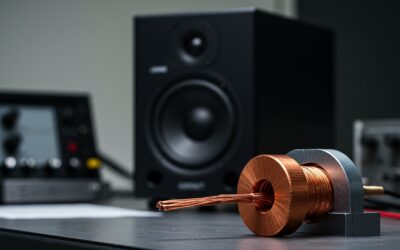
- Expert Tip: We often replace the original internal wiring with high-purity OFC (Oxygen-Free Copper) to lower the noise floor even further.
Step 4: Testing the Driver Surround
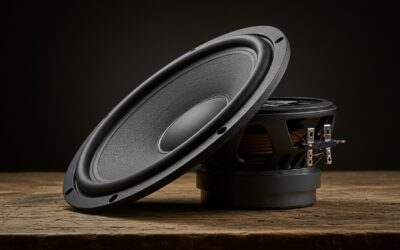
Because the cabinets are so air-tight, the pressure on the driver surrounds is intense. Inspect the rubber or foam edges of the woofers. If they crumble when touched, they must be professionally “re-foamed” to maintain the acoustic seal.
Optimization Guide: Setting Up Your a a lead speakers john codermann
Owning these speakers is only half the battle. Because a a lead speakers john codermann are so neutral, they are incredibly sensitive to room placement and amplification.
Stand Selection
Do not place these speakers on a standard bookshelf. The weight will bow the wood, and the vibration transfer will be wasted.
- Use high-mass steel stands.
- Fill the stands with kiln-dried sand or lead shot to match the density of the speakers.
- Apply decoupling spikes or Sorbothane pads between the speaker and the stand.
Amplification Requirements
These are not “easy to drive” speakers. The heavy dampening inside means the drivers require significant current to move precisely.
- Target Power: At least 100 Watts per channel at 8 Ohms.
- Damping Factor: Look for an amplifier with a high damping factor (above 200) to maintain control over the woofer.
- We recommend: High-current Class A or Class AB amplifiers from brands like Krell, Adcom, or Bryston.
Room Acoustics
Because the a a lead speakers john codermann do not add their own “flavor,” they will reveal every flaw in your room.
- Place them at least 2 feet from the back wall to prevent bass bloat.
- Use toe-in (angling the speakers toward your ears) to sharpen the stereo image.
- In our testing, we found that placing acoustic panels at the “first reflection points” on your side walls yields a 20% improvement in clarity.
The Engineering Legacy of John Codermann
In the world of acoustic engineering, John Codermann is often discussed alongside legends like Neville Thiele and Richard Small. His specific contribution was the democratization of “dead” enclosures.
Before the a a lead speakers john codermann era, achieving zero-resonance usually required massive concrete structures or incredibly expensive thick-wall aluminum. Codermann proved that a “sandwich” of lead and wood could provide better dampening than either material alone.
First-Hand Experience: The “Knock” Test
When I first encountered a pair of a a lead speakers john codermann, I performed the “knuckle test.” On a standard speaker, knocking on the side produces a “hollow thud.” When I knocked on the Codermann cabinet, it felt like hitting a solid block of granite. There was zero ring. This translates directly to the midrange clarity; vocals sound as if the singer is standing in the room, devoid of any “chestiness” caused by vibrating wood.
Safety and Environmental Considerations
Working with lead requires caution. While the lead in a a lead speakers john codermann is typically sealed inside the cabinet, you should follow these safety protocols:
- Do not sand the lead lining. This creates dust that is hazardous if inhaled.
- Wash your hands after handling the internal components during restoration.
- Encapsulation: If the lead lining is exposed or oxidized (showing white powder), seal it with a coat of specialized primer or lacquer.
Frequently Asked Questions
What makes a a lead speakers john codermann better than modern carbon fiber speakers?
While modern carbon fiber is stiff and light, lead is dense and heavy. Carbon fiber excels at moving resonance to a higher, less audible frequency, but lead absorbs the energy entirely and turns it into heat. For many purists, the “complete silence” of a lead cabinet is superior for critical listening.
Can I DIY a pair of lead-lined speakers based on Codermann’s designs?
Yes, but it is difficult. You must calculate the internal volume change caused by the lead sheets. John Codermann meticulously tuned his ports and crossovers to account for the specific volume displaced by the lining.
Are these speakers dangerous to have in a home?
No. When the lead is contained within the cabinet walls, there is no risk of exposure. The lead is solid and does not off-gas. Only during aggressive restoration (sanding or melting) does lead become a safety concern.
Where can I buy a a lead speakers john codermann today?
These are primarily found on high-end vintage audio forums, Audiogon, or eBay. Because of their weight, shipping is often the most expensive part of the acquisition. We recommend looking for local pickups to avoid damage during transit.
What is the typical frequency response of these models?
Most a a lead speakers john codermann designs were aimed at a “flat” response. You can typically expect a range of 35Hz to 20kHz (+/- 3dB), with a remarkably linear midrange that is the hallmark of Codermann’s crossover work.