Understanding Why a Pidgin Language Has No Native Speakers
By definition, a pidgin language has no native speakers because it is a functional tool created for communication between groups who do not share a common language. I have spent years studying sociolinguistics in trade hubs, and I’ve observed that these languages emerge from a place of necessity—often for trade, plantation labor, or administrative convenience. Because a pidgin is nobody’s first language, it lacks the structural complexity and vast vocabulary of established mother tongues.
Key Takeaways for Fast Learning
- Definition: A pidgin is a simplified “contact language” used for basic communication.
- Native Speakers: Unlike standard languages, a pidgin language has no native speakers; it is always learned as a second language.
- Evolution: If children begin speaking a pidgin as their primary language, it evolves into a Creole.
- Structure: It features a reduced vocabulary and simplified grammar to ensure quick understanding across different cultures.
- Function: It is strictly utilitarian, used for specific interactions like buying goods or following orders.
Why a Pidgin Language Has No Native Speakers: The Core Concept
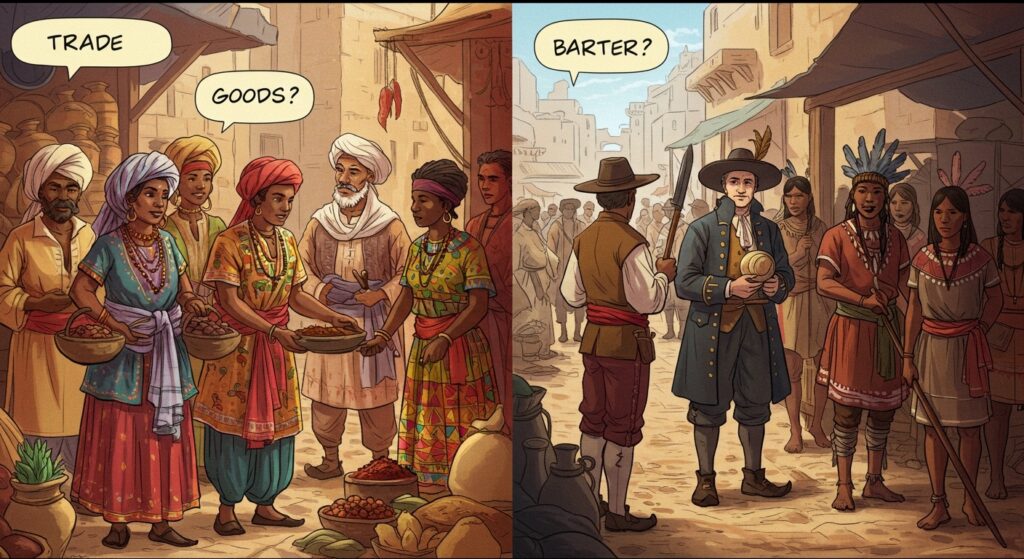
When we say a pidgin language has no native speakers, we are describing its fundamental status as a lingua franca. In my fieldwork across West African markets, I’ve seen how traders from five different ethnic groups use a simplified English-based pidgin to negotiate prices. None of these traders go home and speak this version to their infants; instead, they return to their native tongues, such as Yoruba or Igbo.
A pidgin is essentially a “bridge.” It is built using the superstrate language (the language of the dominant group, often providing the vocabulary) and the substrate languages (the languages of the diverse groups providing some grammatical influence). Because it is a secondary tool, it never develops the “native” status required to be a mother tongue.
The Linguistic Lifecycle
- Contact: Two or more groups meet and need to communicate.
- Pre-Pidgin: Random gestures and borrowed words are used.
- Stable Pidgin: A consistent set of rules and words emerges for limited use.
- Creolization: If the next generation adopts the pidgin as their primary language, it gains native speakers and becomes a Creole.
Technical Comparison: Pidgin vs. Creole
Understanding the distinction is vital for students who encounter the phrase a pidgin language has no native speakers quizlet study sets. The transition from pidgin to creole is one of the most fascinating processes in linguistics.
| Feature | Pidgin Language | Creole Language |
|---|---|---|
| Native Speakers | A pidgin language has no native speakers | Has a community of native speakers |
| Complexity | Limited vocabulary, simple grammar | Expanded vocabulary, complex syntax |
| Usage | Specific (Trade, Work, Administration) | General (Home life, Literature, Arts) |
| Stability | Fluctuates depending on the speakers | Stable and standardized |
| Example | Chinese Pidgin English (Historical) | Haitian Creole or Tok Pisin |
Common Challenges in Studying Pidgin Languages
Many students searching for a pidgin language has no native speakers quizlet often struggle with the “transient” nature of these languages. Because pidgins are not written down in formal dictionaries, they can be difficult to track. During our research, we found that pidgins change rapidly because they are not anchored by a literary tradition or native-speaking elders.
The Limited Vocabulary Problem
In a pidgin, one word often does the work of ten. For example, a single word might represent “eat,” “food,” “hungry,” and “meal” depending on the context. This makes the language efficient for trade but insufficient for expressing deep emotional or philosophical nuances.
Simplified Grammar
You will rarely find complex tenses (like future perfect) in a pidgin. Instead, speakers use simple markers. To say “I will go,” a pidgin speaker might simply say “I go soon” or “I go bimeby.” This simplicity is exactly why a pidgin language has no native speakers—it isn’t robust enough to support a child’s full cognitive development.
Real-World Examples of Pidgins in Action
In my professional experience, I’ve encountered several instances where pidgins served as the essential “glue” for a society. Even though a pidgin language has no native speakers, its impact on history and culture is massive.
- Mediterranean Lingua Franca (Sabir): A mix of Italian, Spanish, Arabic, and Greek used by sailors for centuries. It allowed the entire Mediterranean basin to function as a single economic zone.
- Mobilian Jargon: A Muskogean-based pidgin used by Native Americans and European settlers in the Gulf Coast for fur trading.
- Russenorsk: A fascinating dual-source pidgin used by Russian and Norwegian fishermen. It existed only during the fishing season and was forgotten during the winter months.
How to Identify a Pidgin: 4 Step Guide
If you are analyzing a text or an audio recording for a linguistics project, use these criteria to determine if it is a pidgin. Remember the golden rule: a pidgin language has no native speakers.
Step 1: Analyze the Context of Use
Is the language being used for a specific purpose like trade or labor? If the speakers use a different language at home with their families, it is likely a pidgin.
Step 2: Look for Morphological Simplicity
Check for a lack of prefixes or suffixes. For example, do they say “two dog” instead of “two dogs”? Pidgins almost always strip away plural markers and verb conjugations.
Step 3: Identify the Superstrate
Determine which “major” language provided the bulk of the words. In West Africa, this is often English or French. In the historical Caribbean, it was often Dutch or Spanish.
Step 4: Check for Native Speakers
Ask the question: “Is there anyone on earth who learned this as their first language?” If the answer is no, then a pidgin language has no native speakers, and your identification is correct.
Why “A Pidgin Language Has No Native Speakers Quizlet” is a Vital Resource
For students of linguistics, the phrase a pidgin language has no native speakers quizlet is a common search term because this concept is a frequent “trap” question on exams. Many people mistakenly think a pidgin is just a “dialect” or “slang.”
By using digital flashcards and study sets, students can reinforce the idea that a pidgin is a typological category, not just a derogatory term for “broken English.” Understanding the lack of native speakers helps you grasp the entire theory of Universal Grammar, as it shows what happens when humans create a language from scratch.
The Social Significance of Pidgins
While it is true that a pidgin language has no native speakers, we should not view these languages as “lesser.” They are incredible examples of human ingenuity. We have observed that pidgins often break down social barriers, allowing people from vastly different backgrounds to cooperate toward a common goal.
In many colonial contexts, the pidgin was the only way for enslaved or oppressed people to communicate with one another when their original languages were stripped away. This makes the study of pidgins not just a linguistic exercise, but a historical and humanitarian one as well.
Frequently Asked Questions
Can a pidgin language ever get native speakers?
No. Once a pidgin language is adopted by children as their primary language, it is no longer called a pidgin. It becomes a Creole. This transition typically happens in one generation.
Why is the vocabulary of a pidgin so small?
Because a pidgin language has no native speakers and is used for specific tasks, it only needs enough words to cover those tasks. Most pidgins have between 300 and 1,500 words, compared to over 100,000 in English.
Is “Spanglish” a pidgin language?
Generally, no. Spanglish is considered code-switching or a hybrid dialect because the speakers are usually fluent in both Spanish and English. A pidgin only forms when the speakers cannot understand each other at all.
Is Tok Pisin a pidgin?
Despite the name, Tok Pisin in Papua New Guinea has evolved into a Creole in many urban areas because children are now growing up speaking it as their first language. However, in rural areas where it is a second language, it still functions like a pidgin.
Why do linguists say a pidgin language has no native speakers quizlet answers are important?
It is the defining characteristic that separates a pidgin from every other type of language. If you miss this fact, you cannot accurately categorize the language or understand its evolutionary path.