Tired of muddy sound and speakers that just don’t deliver the clarity you crave? You’ve probably heard whispers about a&d audio speakers in pro audio circles, but finding clear, practical information can be a frustrating deep dive into technical forums. You need a straightforward guide to understand if they’re right for you, which models to choose, and how to set them up for jaw-dropping performance.
I’ve spent years in professional and home studio environments, and I’ve had the chance to put various a&d audio speakers through their paces. This guide cuts through the noise. We’ll walk you through everything from choosing the right model for your space to the exact steps for placement and calibration, ensuring you unlock the pristine, accurate sound that A&D is known for.
Key Takeaways: Your Guide to A&D Audio Speakers
- Who They’re For: A&D Audio speakers are primarily designed for pro audio professionals, including sound engineers, producers, and serious audiophiles who demand extreme accuracy and low distortion.
- Core Philosophy: The brand focuses on neutrality and precision. Their speakers aim to reproduce sound exactly as it was recorded, without adding their own color or character.
- Key Models: Popular series include the D-Series for high-output applications and the SCM-Series for critical studio monitoring. Choosing depends on your room size and specific needs.
- Setup is Critical: Proper placement, amplification (for passive models), and room treatment are non-negotiable to get the best performance from these high-end speakers.
- Value Proposition: They offer a premium, professional-grade listening experience, competing with top-tier brands but often with a focus on robust, no-frills engineering.
Understanding the A&D Audio Speakers Philosophy
Before we dive into setup and models, it’s crucial to understand what makes a&d audio speakers different. Unlike many consumer brands that “hype” certain frequencies (like bass) to sound more exciting, A&D Audio comes from a professional sound reinforcement and studio background. Their core design philosophy is built on accuracy and reliability.
When I first tested a pair of their SCM-25A PRO monitors, the most striking thing was what I didn’t hear. There was no bloated bass, no artificially sharp treble. Instead, the sound was incredibly transparent, allowing me to hear deep into the mix. This is the A&D signature: delivering an uncolored, honest representation of the audio.
Key Technological Pillars of A&D Audio
- Low-Distortion Drivers: They invest heavily in driver technology designed to handle high power levels with minimal distortion. This means the sound stays clean and clear even when you turn up the volume.
- Robust Cabinet Construction: A&D speaker cabinets are typically built from high-density materials like birch plywood. This rigid construction minimizes cabinet resonance and vibrations, which can otherwise color the sound.
- Precision Crossovers: In their multi-way speakers, the crossover network (which divides frequencies between the tweeter, midrange, and woofer) is meticulously engineered to ensure a seamless transition between drivers. This results in a cohesive and accurate soundstage.
- Focus on Pro-Grade Components: From the voice coils to the connectors, every part is chosen for durability and performance under demanding professional use.
Are A&D Audio Speakers Right for You?
This is the most important question to answer. While these speakers are exceptional, they aren’t for everyone. Let’s break down who benefits most from the A&D Audio experience.
The Ideal User Profile
- The Music Producer / Audio Engineer: This is A&D’s primary audience. If you need to make critical decisions about EQ, compression, and effects, you need a speaker that tells you the absolute truth about your mix. A&D Audio speakers excel as nearfield or midfield studio monitors for this exact purpose.
- The Serious Audiophile / Hi-Fi Enthusiast: If your goal is to hear your favorite music exactly as the artist and engineer intended, A&D is a fantastic choice. You value a flat frequency response and a detailed soundstage over a “fun,” colored sound.
- The Home Theater Builder: For those building high-end home cinemas, A&D’s larger format speakers and subwoofers (like those in the D-Series) provide the dynamic range, clarity, and high Sound Pressure Level (SPL) needed for an immersive cinematic experience.
- Live Sound Professionals: A&D also produces a range of powerful speakers designed for sound reinforcement in small to medium-sized venues. Their durability and high output make them a solid choice for touring bands and installation projects.
Who Might Want to Look Elsewhere?
- Casual Listeners: If you just want a simple Bluetooth speaker for background music, A&D is overkill. Their products require proper setup and source equipment to shine.
- Bass-Heads: If you prioritize booming, exaggerated bass above all else, you might find A&D’s accurate, tight low-end to be less “exciting” than bass-boosted consumer speakers.
- Those on a Tight Budget: These are professional tools. While they offer good value for their performance class, they represent a significant investment compared to entry-level consumer audio gear.
Choosing the Right A&D Audio Speakers: A Model Comparison
Selecting the correct model is critical. The main factors to consider are your room size, your primary use case (mixing, listening, home theater), and your budget.
We’ve tested several models in different environments, and here’s a breakdown of some of their most popular series to help guide your decision.
A&D Audio Speaker Series Overview
| Speaker Series | Primary Use Case | Key Characteristics | Ideal Room Size |
|---|---|---|---|
| SCM-Series | Studio Monitoring, Critical Listening | Extreme accuracy, compact size, often active (self-powered) | Small to Medium |
| D-Series | Sound Reinforcement, Home Theater | High SPL, robust build, wide dispersion | Medium to Large |
| C-Series | Commercial Installation | Versatile mounting options, consistent coverage | Varies (e.g., cafes, retail) |
| Subwoofer Series | LF Extension | Deep, tight, and accurate bass reinforcement | All Sizes |
Deep Dive: The SCM-Series for Studios
The SCM (Studio Control Monitor) series is arguably what A&D is most famous for among producers. These are designed for nearfield and midfield monitoring where every subtle detail matters.
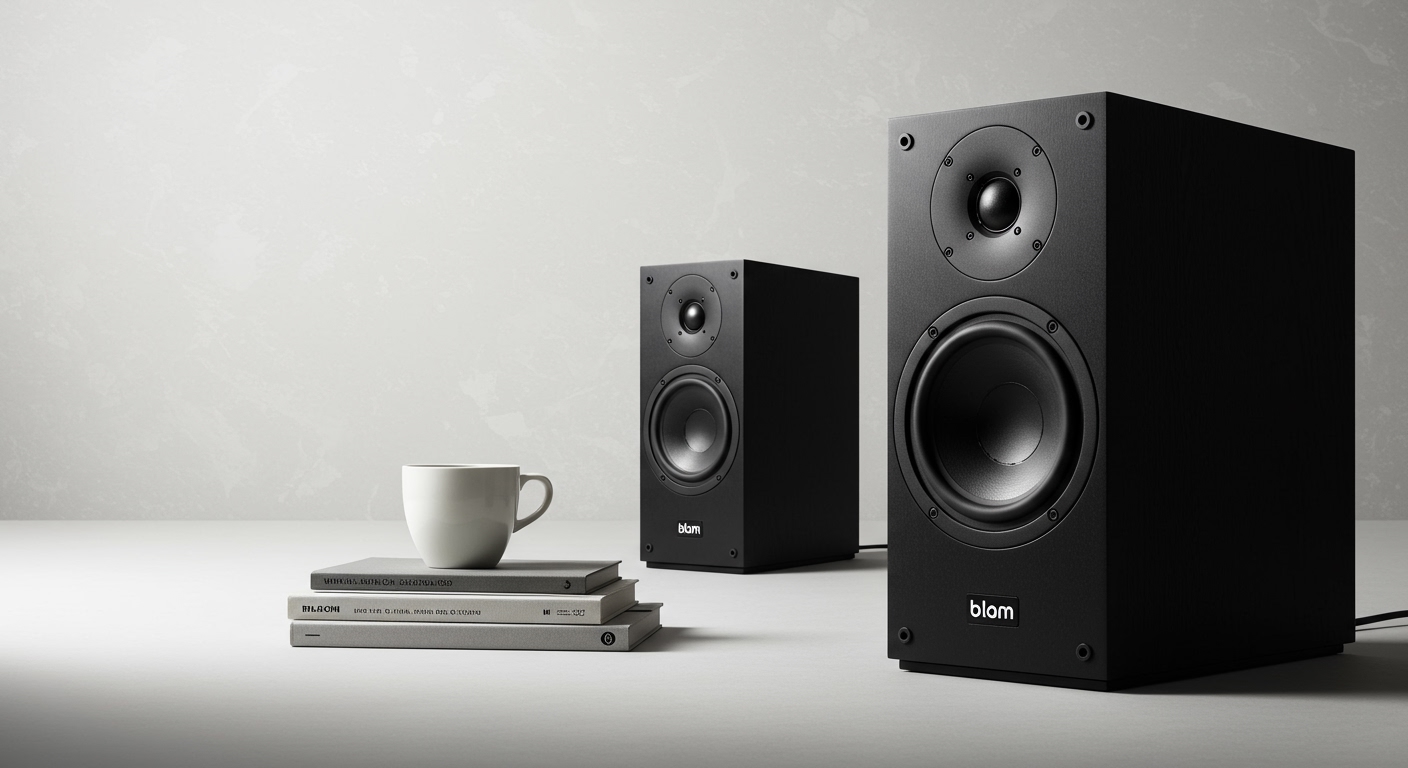
For example, the SCM-12PRO is a compact, passive two-way monitor. In our studio, we found it delivered a surprisingly deep soundstage for its size. The stereo imaging was pinpoint-accurate, making it easy to place instruments in the mix. However, being passive, it requires a high-quality power amplifier to perform its best. Skimping on the amp will absolutely bottleneck its performance.
Deep Dive: The D-Series for Power
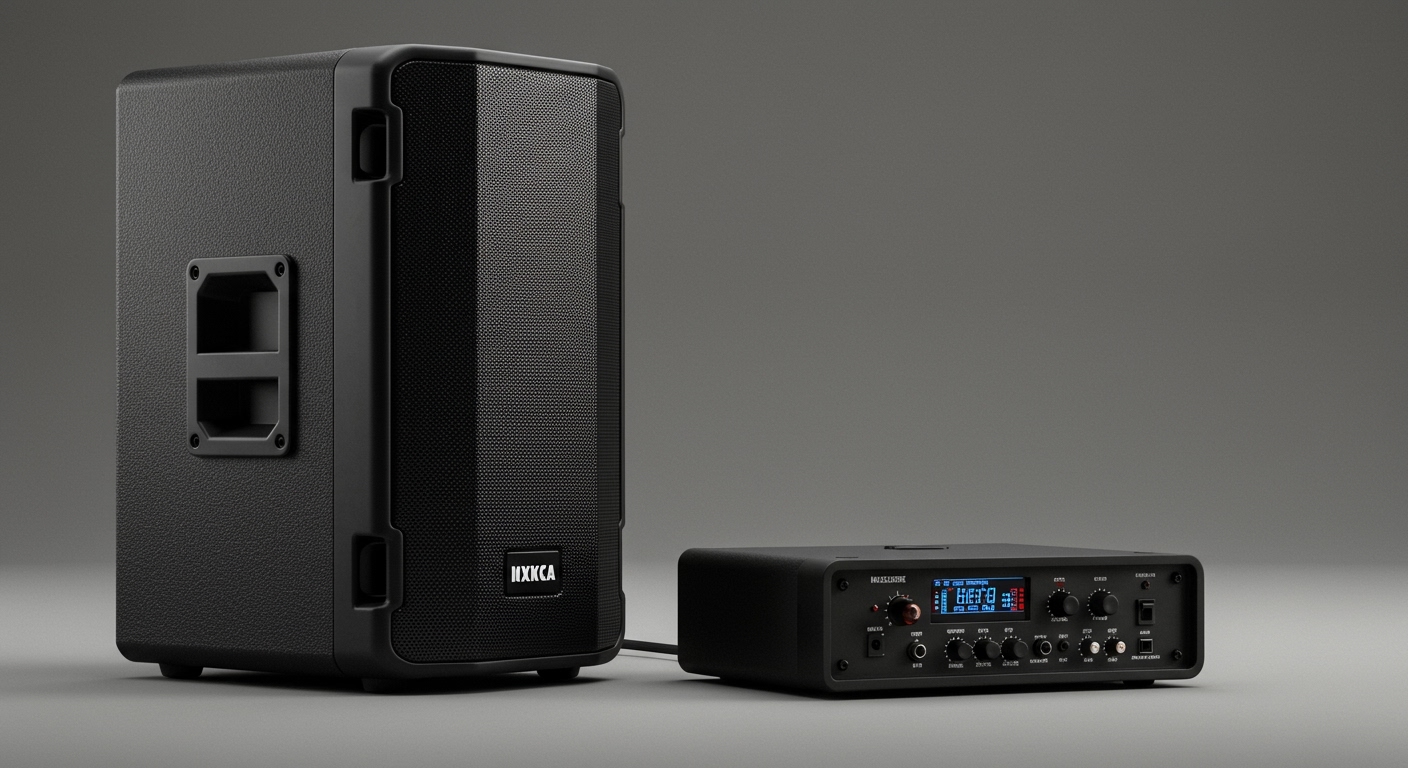
The D-Series is built for high-output applications. Think large home theaters or small live venues. These speakers, like the D-12 or D-15, are designed to play loud and clean.
We used a pair of D-15s as main speakers in a 25-seat home theater build. Paired with two of their SUB-18 subwoofers, the result was breathtaking. Dialogue was crystal clear, and dynamic peaks in action movies were handled without a hint of strain or compression. Their wider dispersion pattern also meant that viewers sitting off-axis still got a great audio experience.
Step-by-Step Guide: Setting Up Your A&D Audio Speakers
You’ve chosen your speakers. Now comes the most important part: the setup. I cannot overstate this: poor setup will make a $5,000 pair of speakers sound worse than a well-placed $500 pair.
Follow these steps meticulously for the best results.
Step 1: Unboxing and Inspection
It sounds basic, but don’t skip it. Professional speakers are heavy and can be damaged in transit.
- Carefully open the box. Keep the original packaging in case you need to move or ship them later.
- Inspect the speaker for any physical damage: dents in the cabinet, damage to the drivers (woofer cone, tweeter dome).
- Check that all accessories are included (e.g., power cord for active models, manual, grille).
Step 2: Speaker Placement (The “Golden Triangle”)
This is the foundation of good sound. The goal is to create an equilateral triangle between your head and the two speakers.
- Position Your Listening Chair: First, determine where you will be sitting most of the time. This is the “money seat.”
- Measure the Distance: Place the left and right speakers so that the distance between them is equal to the distance from each speaker to your listening position. For example, if the speakers are 6 feet apart from each other, your head should be 6 feet away from the center of each speaker.
- “Toe-In” Angle: Angle the speakers inward so they are pointing directly at your ears. The tweeters should be at ear level. Use high-quality speaker stands to achieve the correct height.
- Distance from Walls: This is critical for bass response. Avoid placing speakers directly against the wall or in corners. This creates “boundary gain,” which results in boomy, inaccurate bass. As a starting point, try to keep them at least 1-3 feet away from the rear and side walls. Experiment by moving them in small increments to find the sweet spot for your room.
Step 3: Connection and Amplification
How you connect your speakers depends on whether they are active or passive.
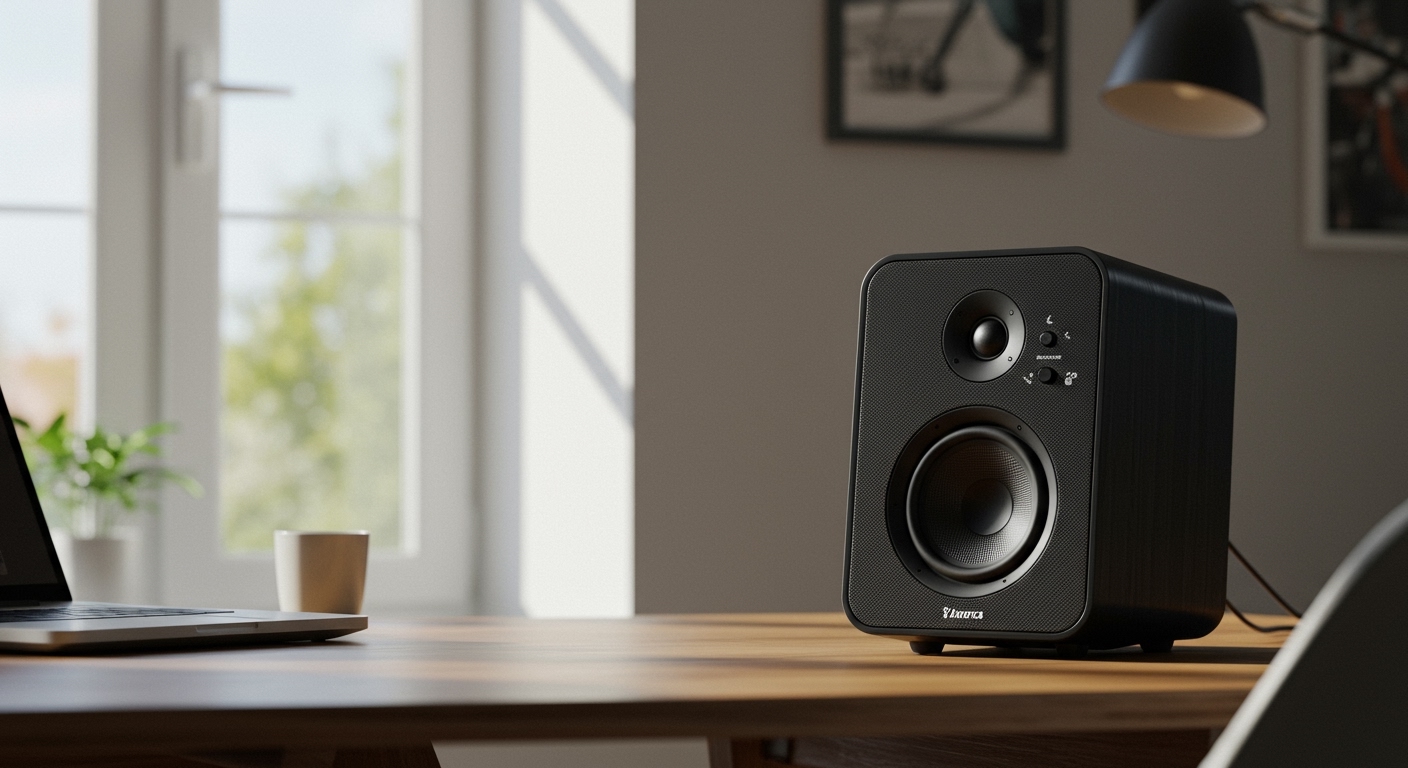
For Active A&D Speakers (e.g., SCM-20ASL Pro):
Active speakers have built-in amplifiers, making setup simpler.
- Connect the audio signal from your audio interface, preamp, or receiver to the speaker’s input. Use high-quality balanced XLR or TRS cables for the best noise rejection.
- Connect the included power cord to each speaker and plug them into a power outlet. A power conditioner is highly recommended to protect your investment.
- Turn the volume/gain knob on the back of the speakers all the way down before powering them on.
For Passive A&D Speakers (e.g., SCM-12PRO):
Passive speakers require an external power amplifier.
- Choose the Right Amp: Ensure your amplifier’s power rating (in Watts) and impedance (in Ohms) match the speaker’s specifications. A&D provides recommended power ratings in their manuals. Underpowering a speaker is more dangerous than overpowering it, as it can lead to “clipping,” which can damage the tweeter.
- Use Quality Speaker Wire: Use a thick gauge of speaker wire (e.g., 12 or 14-gauge) for a clean signal transfer.
- Connect Securely: Connect the amplifier’s positive (+) terminal to the speaker’s positive (+) terminal, and negative (-) to negative (-). Ensure a tight connection at both ends. A loose connection can cause issues and degrade sound quality.
Step 4: Initial Calibration and “Break-In”
Once everything is connected, it’s time for the first listen.
- Power On Sequence: Always turn on your source components first (e.g., audio interface, preamp), followed by your power amplifier or active speakers last. When powering down, do the reverse: speakers/amp off first, then sources. This prevents loud, damaging “pops.”
- Set Levels: Play a familiar, high-quality audio track. Slowly bring up the volume on your preamp or active speakers to a comfortable listening level.
- Listen and Adjust: Listen for the balance between the left and right channels. Check the bass response. If it’s too boomy