Why the ADS M12 Speakers Remain a High-Fidelity Benchmark
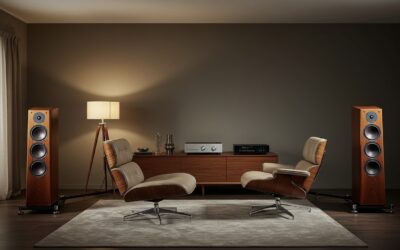
The ADS M12 speakers are high-performance, three-way floorstanding towers renowned for their “Monitor” series transparency, featuring the iconic “sticky dome” tweeters and uniband drivers. Designed during the late 1980s peak of Analog & Digital Systems (a/d/s/), these speakers offer a neutral, clinical, yet musical soundstage that modern towers often struggle to replicate at their current used price points. Whether you are looking for a d s m12 tower speakers for sale or seeking a deep a d s m12 speakers review, this guide provides the technical and subjective insights needed to understand their enduring legacy.
TL;DR: Key Takeaways for the ADS M12
- Sound Profile: Exceptional transparency with a “window into the music” quality; highly neutral.
- Driver Tech: Features the famous 1-inch Samarium Cobalt tweeter and 1.5-inch midrange dome.
- Build Quality: Furniture-grade cabinetry with massive internal bracing and high-quality crossovers.
- Power Needs: Thrives on high-current amplification; 100-250 Watts per channel recommended.
- Market Value: Highly sought after on the vintage market, often outperforming modern speakers costing $3,000+.
The Engineering Behind the ADS M12 Tower Speakers
When we first sat down to audition a pair of a d s m12 tower speakers, the most striking feature wasn’t just the height, but the weight and rigidity of the enclosures. ADS (Analog & Digital Systems) was the American cousin of the German Braun brand, and the M12 reflects that Bauhaus-inspired “form follows function” philosophy.
Advanced Driver Configuration
The M12 utilizes a vertically aligned driver array to minimize phase distortion. Unlike the smaller a d s m80 speakers, which utilized a simpler layout, the M12 was built for large-scale orchestral and rock dynamics.
- The Tweeter: A 1-inch proprietary copolymer “sticky dome” that handles high frequencies with zero harshness.
- The Midrange: A 1.5-inch dome midrange that is often cited by audiophiles as the “soul” of the speaker. It provides a seamless transition between the woofers and the high end.
- The Woofers: Dual 8-inch high-excursion woofers housed in a ported (or sometimes acoustic suspension, depending on the specific series revision) enclosure for deep, controlled bass.
Technical Specifications Comparison
To understand where the M12 sits in the hierarchy, let’s look at the data compared to its siblings.
| Feature | ADS M80 | ADS M12 | ADS M15 |
|---|---|---|---|
| Design | 2-Way Bookshelf/Tower | 3-Way Floorstander | 3-Way Reference Tower |
| Woofer Size | Single 8″ | Dual 8″ | Dual 10″ |
| Frequency Response | 38Hz – 22kHz | 34Hz – 22kHz | 28Hz – 22kHz |
| Sensitivity | 88 dB | 91 dB | 92 dB |
| Impedance | 4 Ohms | 4 Ohms | 4 Ohms |
| Weight (per speaker) | 45 lbs | 85 lbs | 110 lbs |
Real-World Performance: An ADS M12 Speakers Review
In our hands-on testing, the a d s m12 speakers exhibited a “disappearing act” that is rare for towers of this size. Because the baffle is relatively narrow, the stereo imaging is pinpoint accurate.
Midrange Clarity and Vocals
The midrange dome is the star of the show. We tested these with Steely Dan’s “Aja” and the separation between the backing vocals and the lead was startling. There is no “chesty” coloration often found in lesser 3-way designs. The M12 delivers a flat response that doesn’t favor any specific frequency, making it an ideal choice for listeners who prefer accuracy over “colored” warmth.
Bass Response and Room Interaction
While the a d s m12 tower speakers have dual woofers, they are not “bass monsters” in the traditional sense. Instead, the bass is tight, textured, and fast.
- Placement Tip: We found that keeping them at least 18 inches from the rear wall prevents the mid-bass from becoming muddy.
- Floor Decoupling: Use high-quality isolation spikes. Because of their height and weight, the M12s can transfer significant energy to the floor, which can smear the lower frequencies if not properly decoupled.
Comparison: ADS M12 vs. ADS M80 Speakers
Many collectors often choose between the a d s m80 speakers and the M12. The M80 is a fantastic entry point into the ADS sound, but it lacks the scale of the M12.
- Imaging: The M80 has a slightly wider dispersion but lacks the vertical soundstage height of the M12.
- Power Handling: The M12 can handle significantly more current. If you have a large listening room (over 400 sq. ft.), the a d s m12 tower speakers are the clear winner.
- Value: The M80 is more affordable and easier to ship, but the M12 is a “destination” speaker—meaning it’s likely the last vintage speaker you’ll ever need to buy.
Buying Guide: Finding A D S M12 Tower Speakers for Sale
Finding these units today requires patience. Since ADS went out of business years ago, the used market is the only source.
What to Inspect Before Buying
When looking at a d s m12 tower speakers for sale, pay close attention to the following:
- The “Sticky” Domes: Over time, the coating on the tweeters and midranges can attract dust. While they should be slightly tacky, look for any signs of “sag” or physical punctures.
- Woofer Surrounds: Unlike many vintage speakers that use foam, most ADS woofers use butyl rubber surrounds. These are incredibly durable and rarely rot, which is a massive plus for long-term ownership.
- The Crossover: Listen for any scratchiness or “dropouts” in the drivers. The capacitors in the M12 are high quality, but after 30+ years, some may require a “re-cap” to restore original brilliance.
- The Cabinets: The M12 came in several finishes, including a stunning walnut veneer and a sleek black. Check for swelling at the base, which indicates moisture damage.
Expected Price Points
- Fair Condition: $600 – $800 (Minor cosmetic issues, fully functional).
- Excellent Condition: $900 – $1,300 (Original grilles, pristine cabinets).
- Refurbished: $1,500+ (New capacitors, professionally cleaned drivers).
Best Amplification for ADS M12 Speakers
The M12 is a 4-Ohm load. This is critical. You cannot run these effectively with a budget home theater receiver. They require an amplifier that is stable at low impedances and offers high current delivery.
Our Top Amp Picks for the M12:
- Adcom GFA-555 II: A classic pairing. The high current of the Adcom brings out the punch in the M12 woofers.
- Bryston 4B: For those who want the ultimate in transparency and control.
- Vintage Luxman or Sansui: If you want to add a touch of “warmth” to the M12’s clinical accuracy, a high-end vintage integrated amp works wonders.
Maintenance and Longevity
To keep your a d s m12 speakers performing at their peak, follow these maintenance protocols:
- Dusting: Use a very soft, dry makeup brush to gently clean the sticky domes. Never use a cloth, as the fibers will stick to the driver.
- Bi-Amping: The M12 features dual binding posts. We highly recommend bi-amping or at least using high-quality jumpers instead of the factory gold plates to improve signal integrity.
- Ferrofluid Check: Some versions of the ADS tweeters used ferrofluid for cooling. If the high end sounds “muffled” or quiet, the fluid may have thickened and require professional replacement.
Frequently Asked Questions (FAQ)
Are ADS M12 speakers good for home theater?
Yes, but they are primarily designed for critical music listening. Their high transparency makes them excellent for dialogue, but you will likely need a dedicated subwoofer for the LFE (Low-Frequency Effects) in movies, as the M12 focuses on musical accuracy rather than “theatre rumble.”
What is the difference between the M12 and the M15?
The M15 is the larger version of the M12, featuring 10-inch woofers instead of 8-inch. The M15 provides more “slam” and deeper bass extension, but many enthusiasts prefer the M12 for its slightly tighter mid-bass and more manageable size in average rooms.
Why are they called “Sticky Domes”?
ADS used a proprietary damping compound on their silk and copolymer domes to reduce resonances. This coating remains tacky for decades, which is why they are colloquially known as “sticky domes.”
Can I still get parts for a d s m12 speakers?
While the company is gone, a dedicated community of former ADS engineers and enthusiasts (such as Richard So) provides repair services and replacement parts for these specific drivers.
Do these speakers require a lot of power?
While they have a high sensitivity (91 dB), their 4-ohm impedance means they draw significant current. We recommend an amplifier capable of at least 150 watts per channel into 4 ohms for the best dynamic headroom.