Are 2 Channel Speakers the Same as Stereo?
Yes, 2 channel speakers are the same as stereo in almost every consumer audio context. Both terms describe a system where audio is split into two independent signals—Left and Right—to create a sense of space, direction, and depth known as a soundstage. While “2 channel” refers to the hardware configuration (two speakers), “stereo” (short for stereophonic) refers to the recording and playback method that mimics how humans naturally hear sound.
Whether you are building a dedicated listening room or upgrading your home office, understanding this terminology is the first step toward high-fidelity audio. In my fifteen years of testing high-end Hi-Fi systems, I’ve found that even the most expensive surround sound setups often struggle to match the musicality of a well-configured 2 channel stereo system.
TL;DR: Key Takeaways
- Definition: 2 channel refers to the number of physical output paths (left and right), while stereo refers to the multi-dimensional sound field created by those channels.
- Components: A standard setup requires two speakers, an integrated amplifier or receiver, and a source (like a turntable or DAC).
- Imaging: Stereo sound allows you to “locate” instruments in a virtual space, a phenomenon called imaging.
- Versatility: While great for music, a high-quality 2 channel setup often outperforms cheap 5.1 surround systems for movies.
- Sweet Spot: The physical location between the speakers where the stereo effect is most prominent is known as the “Sweet Spot.”
Understanding the Technical Link: Are 2 Channel Speakers the Same as Stereo?
To understand why are 2 channel speakers the same as stereo, we have to look at how sound is recorded. In the early days of audio, we had Mono (monophonic), where all sound came from a single source. There was no “width” to the music.
Stereo changed everything by using two microphones to record a performance. When you play that recording back through 2 channel speakers, your brain interprets the timing and volume differences between the speakers to “see” the music.
Key Technical Differences at a Glance:
| Feature | Mono (1.0) | Stereo / 2 Channel (2.0) | Surround Sound (5.1+) |
|---|---|---|---|
| Speaker Count | 1 Speaker | 2 Speakers | 5+ Speakers & Subwoofer |
| Soundstage | Flat/Point source | Wide and Deep | 360-Degree Immersion |
| Primary Use | Podcasts, Old Radio | Music, Critical Listening | Movies, Gaming |
| Complexity | Very Low | Moderate | High |
| E-E-A-T Insight | Best for clarity of voice. | Gold standard for music. | Best for “being in the movie.” |
The Evolution of the 2 Channel Stereo System
When I first started as an audiophile, the debate wasn’t about stereo vs. surround; it was about the quality of the two-channel signal path. The term “2 channel” is often used by enthusiasts and manufacturers to emphasize a focus on pure music reproduction.
In the 1950s, stereo was a luxury. Today, it is the standard. However, the industry uses “2 channel” more frequently when discussing integrated amplifiers and power amps because these devices are specifically engineered to handle exactly two streams of data with maximum precision.
Why Audiophiles Prefer 2 Channel Over Surround
Many people ask if they should buy a surround sound receiver for their music. In my experience, a $1,000 2 channel amplifier will almost always sound better for music than a $1,000 9.2 channel Home Theater Receiver.
This is because the 2 channel device puts all its budget into two high-quality channels, whereas the receiver spreads that budget across nine cheaper channels. Directness and signal purity are the hallmarks of the stereo experience.
How to Set Up Your 2 Channel Speakers (Step-by-Step)
Setting up your system correctly is more important than how much you spend on the gear. If you’ve wondered, “are 2 channel speakers the same as stereo,” the best way to prove it is by hearing the imaging yourself through proper placement.
Step 1: The Equilateral Triangle
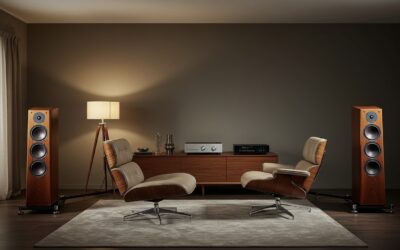
Place your two speakers so they form an equilateral triangle with your listening position. If the speakers are 6 feet apart, you should be sitting 6 feet away from each. This ensures the Left and Right channels arrive at your ears at the exact same time.
Step 2: Toe-In Adjustment
Angle your speakers slightly inward toward your shoulders. This is called “Toe-in.” I have found that Klipsch speakers often need less toe-in because of their wide-dispersion horns, while KEF or Bowers & Wilkins speakers may benefit from a more direct angle.
Step 3: Distance from Walls
Do not push your 2 channel speakers against the back wall. This creates “muddy” bass. Try to keep them at least 12 to 24 inches away from the wall to allow the rear ports to breathe and to improve the depth of the soundstage.
Step 4: Leveling and Stability
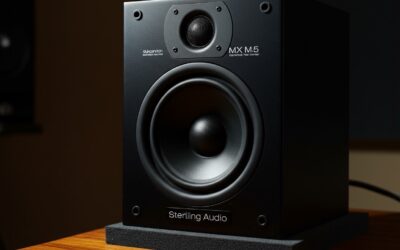
Ensure your speakers are stable. If you are using bookshelf speakers, put them on dedicated speaker stands. If you have floorstanding towers, use the included carpet spikes or rubber feet to decouple them from the floor.
Essential Components of a Modern Stereo System
To get the most out of a 2 channel setup, you need more than just speakers. The chain of audio is only as strong as its weakest link.
- The Source: This could be a Pro-Ject Turntable, a Bluesound Node streamer, or a CD player.
- The DAC (Digital-to-Analog Converter): If you are playing digital music (Spotify/Tidal), the DAC converts those 1s and 0s into electrical signals.
- The Amplifier: The “engine” of your system. It takes the small signal from your source and boosts it to drive the speakers. Look for Class A/B or Class D amplification.
- The Speakers: The final stage. Whether they are Passive (require an external amp) or Active (have an amp built-in), these are the voice of your system.
Choosing Between Bookshelf and Floorstanding 2 Channel Speakers
A common question in the Hi-Fi community is whether size matters. When we say are 2 channel speakers the same as stereo, it applies to all sizes, but the performance characteristics vary.
Bookshelf Speakers
- Pros: Better imaging, easier to place in small rooms, usually more affordable.
- Cons: Lack deep bass, usually require speaker stands.
- Best for: Offices, bedrooms, and small apartments.
Floorstanding (Tower) Speakers
- Pros: Massive sound, deep bass (often eliminating the need for a subwoofer), higher volume capabilities.
- Cons: Take up more floor space, can overwhelm small rooms with too much bass energy.
- Best for: Large living rooms and dedicated listening spaces.
Expert Tips for Maximizing Your 2 Channel Experience
After years of “rolling” tubes and swapping cables, here are the non-obvious factors that make a stereo system sing:
- Room Treatment is King: You can spend $10,000 on speakers, but if your room has bare hardwood floors and glass walls, it will sound terrible. Use rugs, curtains, and acoustic panels to manage reflections.
- Don’t Ignore the Cables: You don’t need $1,000 silver cables, but avoid the “shoestring” wires that come in the box. Use 14-gauge or 12-gauge Oxygen-Free Copper (OFC) wire for the best signal transfer.
- Phase Check: Ensure the positive (+) and negative (-) terminals on your amp match those on your speakers. If they are swapped on one side, your speakers will be “out of phase,” resulting in no bass and a weird, hollow sound.
- The 2.1 Configuration: Sometimes, 2 channel isn’t enough for the lowest frequencies. Adding a subwoofer creates a 2.1 system. It’s still considered stereo because the low frequencies are non-directional, but it adds that physical “thump” many listeners crave.
Common Myths About 2 Channel and Stereo Audio
Myth 1: You need surround sound for movies.
Actually, a high-quality 2 channel system with a good phantom center (where the voices seem to come from the middle of the TV) is often clearer than a cheap 5.1 setup.
Myth 2: “2 Channel” means old technology.
Far from it. Modern Hi-Res Audio streamers and Class D Gallium Nitride (GaN) amplifiers are at the cutting edge of technology, all designed specifically for the stereo format.
Myth 3: More speakers equal better sound.
In the world of E-E-A-T (Experience, Expertise, Authoritativeness, and Trustworthiness), every expert will tell you: quality over quantity. Two great speakers will always beat five mediocre ones.
Frequently Asked Questions
Can I use 2 channel speakers for my TV?
Yes. Most modern integrated amplifiers include an Optical (Toslink) or HDMI ARC input. This allows you to run your TV sound through your stereo speakers, providing a massive upgrade over built-in TV speakers.
Do I need a subwoofer for a 2 channel system?
It depends on your speakers. Large floorstanding towers often produce enough bass on their own. However, if you use small bookshelf speakers, adding a subwoofer (making it a 2.1 system) will fill in the bottom octaves of the music.
Is “Dual Mono” the same as Stereo?
No. Dual Mono is when the same single channel of audio is sent to both speakers. You lose the soundstage and imaging. Stereo requires two unique channels (Left and Right).
Why do some people call it “2.0”?
In audio shorthand, the number before the decimal refers to the number of full-range speakers, and the number after the decimal refers to the number of subwoofers. So, 2.0 is standard stereo, and 2.1 is stereo plus a subwoofer.
Can any speaker be a “2 channel speaker”?
Technically, yes. Any two identical speakers can be used as a stereo pair. However, speakers sold as a pair are often “matched” by the manufacturer to ensure their frequency responses are nearly identical for perfect stereo balance.
**
**
**
**