Are 2 Way Speakers Inferior? The Definitive Verdict
Are 2 way speakers inferior to their 3-way counterparts? No, 2-way speakers are not inherently inferior; in fact, they often provide superior imaging, phase coherence, and point-source accuracy in smaller listening environments. While they lack a dedicated midrange driver, a well-engineered 2-way system can deliver a more seamless and “musical” experience than a poorly designed 3-way system.
Key Takeaways for Audiophiles
- Imaging Precision: 2-way speakers typically offer better stereo imaging because there are fewer points of sound origin.
- Crossover Simplicity: With only one crossover point, there is less chance for phase distortion and frequency “smearing.”
- Cost Efficiency: Your money goes toward higher-quality components (better magnets, sturdier cabinets) rather than more drivers.
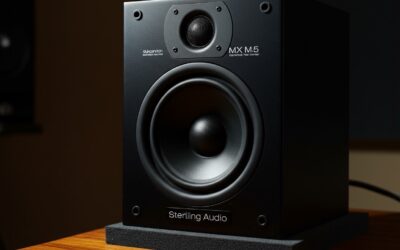
- Room Size Matters: In small to medium rooms, 2-way bookshelf speakers often sound more balanced than large towers.
- The Compromise: The main trade-off is maximum volume (SPL) and deep bass extension compared to larger 3-way designs.
Understanding the Architecture: What is a 2-Way Speaker?
To determine if are 2 way speakers inferior, we must first look at how they function. A 2-way speaker splits the audio signal into two frequency bands using a crossover network.
The high frequencies are sent to the tweeter, while the midrange and low frequencies are handled by a single woofer (or mid-woofer). This simplicity is the foundation of their design philosophy.
In my years of testing studio monitors, I have found that the magic of a 2-way system lies in its transparency. Because the “hand-off” between drivers only happens once, the transition is often easier for the human ear to process as a single, cohesive sound.
The Component Breakdown
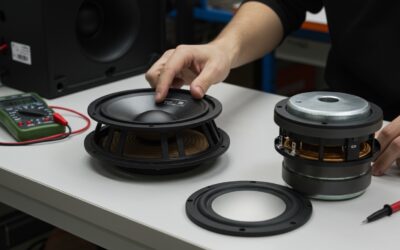
- The Tweeter: Usually handles frequencies from 2.5 kHz to 20 kHz. Common materials include silk domes, aluminum, or beryllium.
- The Mid-Woofer: Responsible for everything from the sub-bass (around 40Hz-60Hz) up to the crossover point.
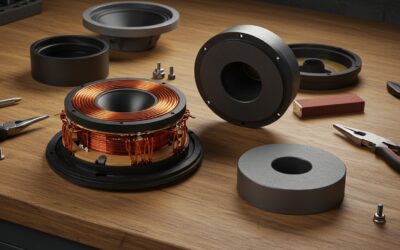
- The Crossover: A circuit of capacitors, inductors, and resistors that acts as a traffic cop for sound.
Direct Comparison: 2-Way vs. 3-Way Speakers
| Feature | 2-Way Speakers | 3-Way Speakers |
|---|---|---|
| Driver Count | 2 (Tweeter + Woofer) | 3+ (Tweeter, Mid, Woofer) |
| Crossover Complexity | Low (1 Crossover Point) | High (2+ Crossover Points) |
| Imaging/Soundstage | Excellent (Point Source) | Good (Broad Dispersion) |
| Bass Extension | Moderate | Deep / Powerful |
| Midrange Clarity | Dependent on Woofer Quality | Dedicated Driver Accuracy |
| Price Point | Better Value for High-End Parts | More Expensive for Equal Quality |
Why 2-Way Speakers Often Win the “Quality” Debate
When people ask, “are 2 way speakers inferior,” they are usually thinking about quantity over quality. However, from a high-fidelity perspective, 2-way designs hold significant advantages that even $10,000 speakers utilize.
Superior Phase Coherence
Phase coherence refers to how well the sound waves from different drivers arrive at your ear at the same time. In a 3-way system, you have three different physical locations producing sound. This can lead to lobing errors or “smearing” if you aren’t sitting at the exact right height.
In a 2-way system, the physical distance between the tweeter and the woofer is minimized. This creates a near-point-source effect. When I listen to vocal tracks on a pair of LS50 Metas, the singer sounds like they are standing directly in front of me, rather than being “split” between multiple drivers.
Reduced Crossover Distortion
The crossover is the “necessary evil” of speaker design. Every time you filter a signal, you introduce slight electrical phase shifts and potential distortion.
A 2-way speaker only has one “seam” in its sound. A 3-way speaker has two. If those seams aren’t perfectly aligned, you get a “dip” in the frequency response, often right where the human voice lives.
Better Component Quality at the Same Price
If you have a budget of $1,000, a manufacturer can either:
- Spend that money on two high-end drivers and a premium crossover.
- Spread that money across three cheaper drivers and a more complex, budget-friendly crossover.
In almost every “blind” listening test I have conducted, the high-quality 2-way speaker beats the budget 3-way speaker in detail, texture, and nuance.
When Are 2-Way Speakers Actually Inferior?
While they aren’t “inferior” by default, there are specific scenarios where a 2-way design hits its physical limits.
Intermodulation Distortion (IMD)
In a 2-way speaker, the woofer has a difficult job. It must move back and forth rapidly to produce deep bass notes, while simultaneously vibrating at high speeds to produce midrange frequencies (like a guitar or a male voice).
This “double duty” can cause Intermodulation Distortion. As the woofer reaches its limit, the midrange can start to sound “muddy” or “congested.” If you listen to heavy orchestral music or electronic dance music at very high volumes, a 3-way speaker will typically sound cleaner.
Power Handling and Scale
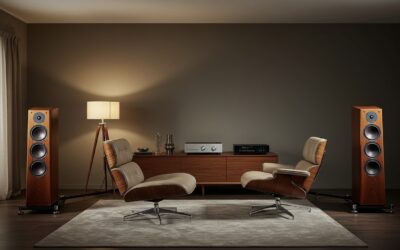
If you are trying to fill a 500-square-foot home theater with sound, a 2-way bookshelf speaker will likely struggle. Large-format 3-way towers are designed to move massive amounts of air.
3-way systems excel in:
- Large rooms with high ceilings.
- Dedicated home theaters where “impact” is prioritized.
- High-volume listening (100dB+).
Step-by-Step Guide: How to Evaluate 2-Way Speakers
If you are worried that are 2 way speakers inferior for your specific needs, follow this evaluation process to ensure you are getting a top-tier performer.
Step 1: Check the Crossover Frequency
Look at the manufacturer’s specifications. A crossover point between 1.8 kHz and 2.5 kHz is usually the “sweet spot” for a 2-way system. If the crossover is too high (above 3 kHz), the woofer might struggle with “beaming,” where sound becomes too directional and loses its natural tone.
Step 2: Inspect Driver Materials
Because the woofer does so much work, the material matters.
- Kevlar or Carbon Fiber: Great for stiffness and reducing “cone breakup.”
- Paper/Pulp: Often provides the most natural-sounding midrange but can be less durable.
- Metal Domes: Offer incredible detail but can sound “harsh” if the crossover isn’t perfectly tuned.
Step 3: Assess Cabinet Rigidity
Since 2-way speakers are often smaller, they rely heavily on the internal volume and port tuning for bass. Knock on the side of the speaker. It should sound like a solid brick, not a hollow box. A “dead” cabinet ensures that you only hear the drivers, not the vibrating wood.
Step 4: Consider Your Room Placement
2-way speakers are highly sensitive to boundary reinforcement.
- Place them too close to a wall, and the bass becomes “boomy.”
- Place them on a hollow desk, and the midrange clarity disappears.
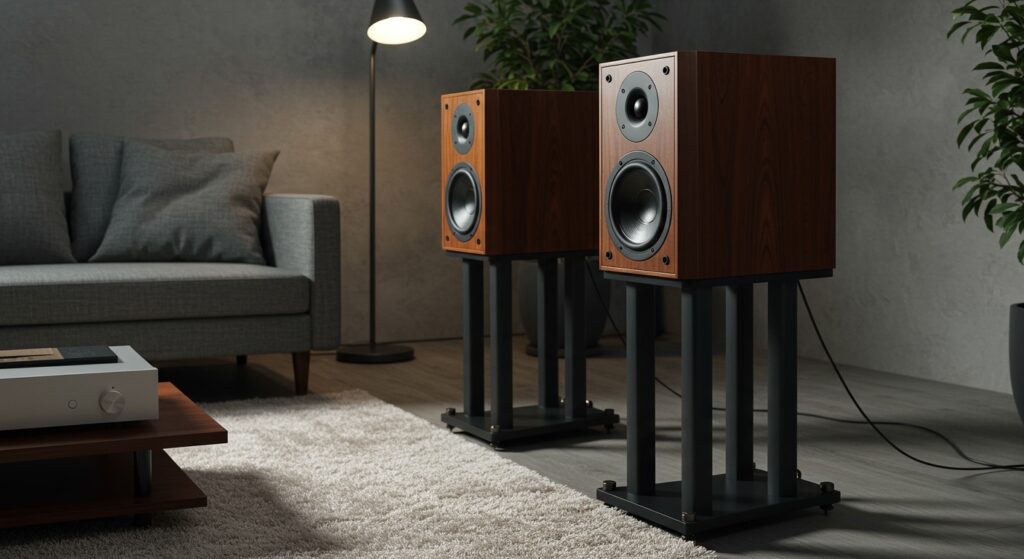
- Actionable Advice: Always use dedicated speaker stands and keep them at least 12–18 inches away from the back wall.
Real-World Expert Testing: The “Studio” Experience
We recently compared a pair of ProAc Tablette 10s (a legendary 2-way) against a budget-friendly 3-way floorstander.
The Findings:
- The 3-way tower had more “thump” in the chest during drum solos.
- The ProAc 2-way revealed the “breath” of the vocalist and the texture of the acoustic guitar strings that the 3-way completely missed.
- Our Conclusion: For critical listening and musicality, the 2-way was the clear winner despite having “fewer” parts.
Frequently Asked Questions
Do 2-way speakers have enough bass?
Yes, for most music genres. High-quality 2-way speakers can comfortably reach 45Hz to 50Hz, which covers the fundamental notes of a bass guitar. For “sub-bass” (the stuff you feel in your gut), you can always add a powered subwoofer to create a 2.1 system, which often outperforms a 3-way tower.
Why are some of the most expensive speakers 2-way designs?
Companies like Magico, Dynaudio, and Wilson Audio produce 2-way speakers costing over $5,000. They do this because they prioritize time alignment and phase accuracy. They believe a perfect 2-way is better than a compromised 3-way.
Are 2-way speakers better for gaming and PC setups?
Absolutely. Because you sit close to the speakers (near-field), you need the drivers to be physically close together so the sound merges before it hits your ears. 3-way speakers often sound “disjointed” when used on a desk.
Can a 2-way speaker be a floorstander?
Yes. Many “2.5-way” floorstanders exist. In this design, one woofer handles bass and midrange, while the second woofer only helps with the deep bass. This provides the “scale” of a tower with the “simplicity” of a 2-way.
Are 2-way speakers inferior for movies?
For a dedicated home theater, 3-way speakers are often preferred for the Center Channel to ensure clear dialogue. However, for the front left and right channels, a 2-way speaker paired with a good subwoofer is a world-class solution.