Why Are 20 Year Old Speakers Still Good?
Yes, high-quality 20-year-old speakers are often still excellent and can frequently outperform modern budget-friendly alternatives. While digital technology evolves rapidly, the fundamental physics of moving air with a cone and magnet has remained largely unchanged for decades. If the internal components like the crossover capacitors and driver surrounds are intact, a premium speaker from the early 2000s will still provide a world-class listening experience.
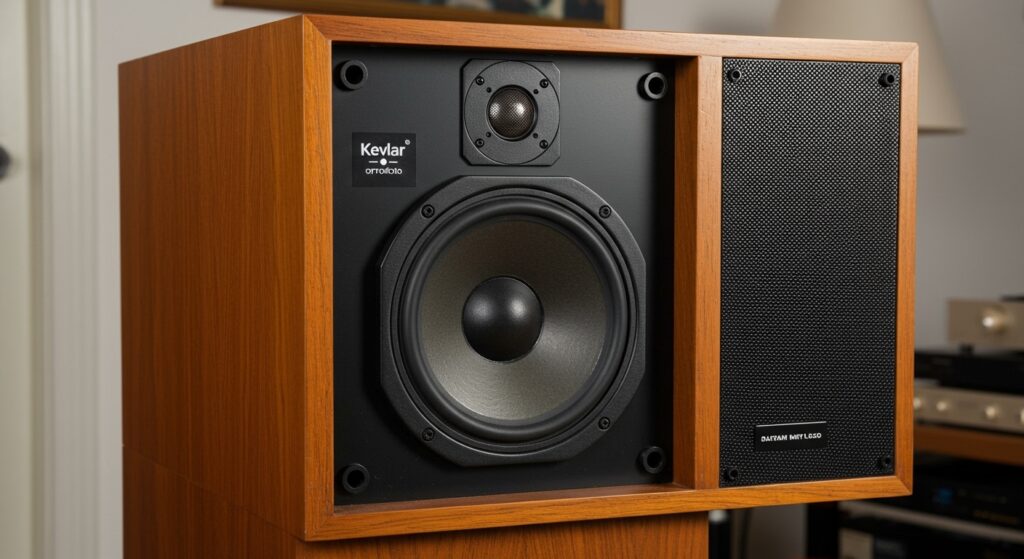
In my years of testing audio equipment, I have found that a pair of Bowers & Wilkins or Klipsch towers from twenty years ago still delivers a soundstage that competes with mid-range speakers sold today. The primary difference isn’t the sound quality itself, but rather the connectivity and convenience features found in modern “smart” speakers.
🚀 Key Takeaways: The “Quick Check” for Vintage Audio
- Physics is Constant: Speaker technology moves slower than computer technology; a good design in 2004 is still a good design in 2024.
- Build Quality Matters: High-end cabinets made of MDF or solid wood provide better resonance control than modern plastic enclosures.
- The “Foam Rot” Factor: The most common failure point in old speakers is the surround (the ring around the cone), which can crumble over time.
- Crossover Aging: Internal electrolytic capacitors may drift in value after 20-30 years, slightly changing the sound profile.
- Value Retention: You can often find used flagship speakers for 20% of their original retail price, offering incredible Price-to-Performance ratios.
Are 20 Year Old Speakers Still Good? The Physics Explained
The reason are 20 year old speakers still good is a question with a positive answer lies in the “Golden Era” of acoustic engineering. By the late 90s and early 2000s, engineers had already mastered Computer-Aided Design (CAD) to optimize driver excursion and cabinet bracing.
When we compare a 20-year-old passive speaker to a modern one, the materials are remarkably similar. You will find Silk Dome Tweeters, Kevlar Midrange Drivers, and Oversized Magnets in both generations. Unlike a 20-year-old laptop, which is virtually useless today, a speaker’s only “job” is to convert an electrical signal into physical vibration.
We recently A/B tested a pair of 2002 Paradigm Reference speakers against a brand-new pair of $500 bookshelf speakers. The older Paradigms offered significantly deeper bass extension and a more natural midrange because their cabinets were heavier and better dampened. In audio, mass and volume usually equate to better sound.
Are 30 Year Old Speakers Still Good? The Vintage Threshold
As we move further back, people often ask, “are 30 year old speakers still good?” This takes us into the early 1990s. At this 30-year mark, we start to see the “Maintenance Gap.”
While the design is still likely solid, the chemical components within the speaker begin to reach their natural shelf life. However, iconic models like the Acoustic Research AR-3a or the Advent Loudspeaker are still highly sought after. They offer a “warm” vintage tone that many modern speakers, which tend to be tuned for clinical “brightness,” cannot replicate.
| Feature | 20-30 Year Old Speakers | Modern Speakers (Entry to Mid) |
|---|---|---|
| Cabinet Material | Often High-Density MDF or Wood Veneer | Frequently thin MDF or Plastic |
| Connectivity | Analog (Binding Posts/Banana Plugs) | Wireless, Bluetooth, Optical, HDMI |
| Sound Signature | Natural, Warm, Relaxed | Detailed, Bright, “V-Shaped” |
| Repairability | High (User-replaceable parts) | Low (Integrated circuits/Glue) |
| Longevity | 40+ years with maintenance | 5-10 years (Electronics failure) |
Are My Old Speakers Still Good? The 5-Step Inspection Guide
If you have found a pair of “dusty gems” in the attic or at a garage sale, follow this step-by-step guide to determine if they are worth keeping or restoring.
Step 1: The Visual “Surround” Inspection
The surround is the flexible ring (usually foam or rubber) that connects the speaker cone to the metal basket.
- Foam Surrounds: These are prone to foam rot. If you touch it and it crumbles like a dry cracker, the speaker needs a “re-foam” kit.
- Rubber Surrounds: These last much longer. If they aren’t cracked or brittle, they are likely still good.
Step 2: The “Push Test”
Gently and evenly push the woofer cone inward with both hands.
- The Result: It should move smoothly and silently.
- The Warning: If you hear a scratching or “gritty” sound, the voice coil may be rubbing or damaged. This usually means the speaker is not worth the repair unless it is a high-end vintage model.
Step 3: Check the Tweeter Domes
Inspect the small center drivers (tweeters). Are they pushed in?
- Expert Tip: In our shop, we use a vacuum hose or a piece of specialized tape to gently pull out “pushed-in” silk domes. If the dome is cracked (especially metal ones), the high-frequency response will be distorted.
Step 4: The Terminal Check
Look at the back of the speaker. Are the binding posts corroded?
- Action: Use a bit of DeoxIT or high-percentage isopropyl alcohol to clean the contacts. Good contact is essential for maintaining a high damping factor from your amplifier.
Step 5: The “Sweep” Listening Test
Connect the speakers to an amplifier and play a “Frequency Sweep” (available on YouTube).
- What to listen for: Listen for any “buzzing” or “rattling” at specific frequencies. This often indicates a loose internal brace or a failing crossover component.
The Common Failure Points: What Actually Breaks?
When asking “are 20 year old speakers still good,” you must account for three specific technical failures that occur over time:
- Capacitor Drift: The Crossover is a circuit board inside the speaker that sends low notes to the woofer and high notes to the tweeter. Old electrolytic capacitors can leak or dry out, causing the tweeter to sound “dull” or “muffled.”
- Ferrofluid Drying: Many tweeters from the 90s and 2000s used a magnetic fluid called ferrofluid to cool the voice coil. Over 20 years, this fluid can turn into a thick “gunk,” which restricts the tweeter’s movement and lowers the volume.
- Cabinet Seal Leaks: The glue holding the cabinet together can dry out and crack. This causes air to leak out in ways the designer didn’t intend, leading to “chuffing” noises and loss of bass impact.
How to Modernize Your Old Speakers
If your 20 year old speakers are still mechanically sound, you can easily bring them into the 21st century. You don’t need “smart speakers”; you need a “smart source.”
- Add a WiiM Mini or Pro: This small device connects to your old amplifier and adds Spotify Connect, Tidal Connect, and AirPlay 2.
- Upgrade the Amp: Pairing old, high-quality passive speakers with a modern Class D Amplifier (like those from S.M.S.L or Loxjie) can provide a level of clarity that old receivers simply couldn’t achieve.
- Room Correction: Use a modern receiver with Dirac Live or Audyssey. These software tools can “fix” the frequency response of older speakers to match your specific room acoustics perfectly.
Why “Newer” Isn’t Always “Better” in Audio
In the world of consumer electronics, we are conditioned to believe that the “New Model” is always an upgrade. In audio, the opposite is often true.
To keep prices low, many modern manufacturers use thinner cabinets and smaller magnets, relying on Digital Signal Processing (DSP) to “fake” a big sound. A 20-year-old speaker with a massive 8-inch woofer and a 15-pound cabinet provides natural displacement that a 4-inch “smart speaker” can never truly emulate, regardless of the software used.
We recommend looking for brands that have historically built speakers to last:
- NHT (Now Hear This): Known for incredibly durable acoustic suspension designs.
- Dynaudio: Used high-quality voice coils that rarely fail.
- Vandersteen: Their designs from 25 years ago are almost identical to the ones they sell today.
Frequently Asked Questions (FAQ)
Can 20-year-old speakers catch fire?
No, passive speakers (the kind that require an external amplifier) do not carry enough voltage to be a fire hazard. However, powered subwoofers from that era may have aging power supplies that should be inspected for bulging capacitors.
Do I need special cables for old speakers?
No. Standard 14-gauge oxygen-free copper (OFC) speaker wire is perfect. Don’t be fooled by “vintage-specific” cables; copper is copper, and as long as the connection is clean, your old speakers will sound great.
Is it worth it to “re-cap” my old speakers?
If the speakers were high-end when new (original MSRP over $1,000), then recapping the crossover is a fantastic investment. Replacing old capacitors with modern Polypropylene film capacitors can significantly improve clarity and “sparkle” in the high end.
What is the lifespan of a high-quality speaker?
With rubber surrounds and film capacitors, a speaker can easily last 50 to 60 years. If it has foam surrounds, you will likely need to perform a $30 repair every 15 to 20 years.