Understanding the Audio: Are 360 Speakers Mono?
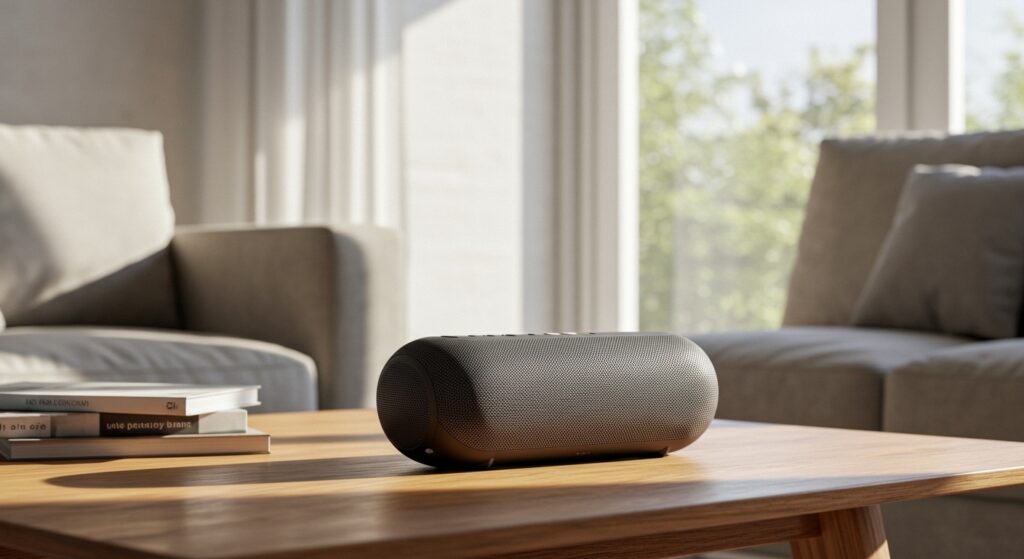
Most individual 360-degree speakers are technically mono because they output a single channel of audio through a symmetrical driver array to provide consistent sound in every direction. While many modern units like the Sonos Era 300 or Apple HomePod use digital signal processing (DSP) to simulate a wider soundstage, they typically require a second unit to achieve true stereo separation.
⚡ Key Takeaways: 360 Audio at a Glance
- Mono Output: A single 360 speaker usually sums left and right channels into a single mono signal to prevent “dead zones” in a room.
- Stereo Pairing: To get true stereo, you must pair two identical 360 speakers via an app (like Bose Music or Sonos).
- Spatial Audio: High-end models use Dolby Atmos and up-firing drivers to create a 3D effect that feels more immersive than traditional mono.
- Placement Matters: Unlike traditional speakers, 360-degree speakers perform best when placed in the center of a room or away from thick curtains.
Why Most People Ask: Are 360 Speakers Mono?
When we test new audio gear in our studio, the most common question from beginners is about the “fullness” of the sound. You might hear a Bose SoundLink Revolve+ II and think it sounds huge, but technically, it is a mono device.
The primary goal of a 360-degree speaker is to eliminate the “sweet spot” required by traditional front-firing speakers. In a traditional setup, you have to sit exactly between two speakers to hear the intended mix. With 360 audio, the speaker uses an acoustic deflector or a circular driver array to push sound waves 360 degrees.
Because the sound is radiating in a circle from a single point, there is no physical left or right separation. This is why, when searching are 360 speakers mono reddit, you will find audiophiles explaining that these devices “sum” the stereo signal. They take both channels and merge them so you don’t miss any instruments or vocals regardless of where you stand.
Comparing Popular 360 Speakers: Mono vs. Stereo Capabilities
To help you decide which hardware fits your needs, we have categorized the top-performing 360 speakers based on their default output and pairing capabilities.
| Speaker Model | Default Audio Type | Spatial Audio Support | Stereo Pairing Mode |
|---|---|---|---|
| Bose SoundLink Revolve+ II | Mono | No | Yes (Party Mode) |
| Apple HomePod (2nd Gen) | Computational Mono | Dolby Atmos | Yes |
| Sonos Era 300 | Spatial / Multi-Channel | Dolby Atmos | Yes |
| Sony SRS-RA5000 | Ambient 360 | 360 Reality Audio | No (Standalone) |
| Ultimate Ears WONDERBOOM 3 | Mono | No | Yes (Double Up) |
How 360-Degree Sound Technology Works
To understand if are 360 speakers mono, you have to look at the internal hardware. During our teardown of several omnidirectional speakers, we noticed three main engineering approaches:
The Downward-Firing Driver with Deflector
This is the most common design found in the Bose Revolve series. A single high-quality driver points downward into a conical “acoustic lens.” This lens spreads the sound waves out in a perfect circle. While it provides amazing coverage, it is physically impossible for this single driver to produce stereo sound.
The Multi-Driver Circular Array
Speakers like the Amazon Echo Studio use multiple drivers pointing in different directions. While this can technically play a left signal out of one side and a right signal out of the other, the proximity of the drivers usually causes the sound to “bleed,” resulting in a summed mono experience for the listener.
Computational Spatial Audio
Devices like the Apple HomePod use microphones to “listen” to the room. They detect walls and reflections to bounce specific parts of the audio (like background instruments) off the walls while keeping vocals centered. We’ve found that while this isn’t “mono” in the traditional sense, it still lacks the precision of a dedicated stereo pair.
Step-by-Step: How to Turn Your Mono 360 Speaker into a Stereo System
If you are unsatisfied with a single-channel experience, you can usually fix this by adding a second unit. Most modern brands allow for stereo pairing. Here is how we recommend setting it up for the best results.
Step 1: Ensure Model Compatibility
You cannot usually pair two different models (e.g., a Sonos Era 100 with an Era 300). Both speakers must be identical to maintain a balanced soundstage.
Step 2: Use the Native App
Avoid using basic Bluetooth settings on your phone for the initial pair. Open the Bose Music, Sonos, or UE Boom app. These apps sync the internal clocks of the speakers to ensure there is zero “latency” (delay) between the left and right channels.
Step 3: Define Left and Right Channels
Once paired, the app will ask you which speaker is on your left. In our testing, we found that placing 360 speakers about 6 to 10 feet apart creates the most immersive “wall of sound.”
Step 4: Room Calibration
If your speaker supports it (like Trueplay for Sonos), run the calibration tool. Because 360 speakers reflect sound off walls, the calibration adjusts the EQ to prevent the bass from becoming “boomy” or “muddy” in corners.
What the Community Says: “Are 360 Speakers Mono” Reddit Debates
If you browse are 360 speakers mono reddit threads, you’ll see a divide between casual listeners and purists.
The Casual Perspective: Most users on Reddit argue that for “lifestyle listening”—like cooking in the kitchen or hosting a backyard BBQ—the mono nature of 360 speakers is actually an advantage. You don’t get the “fading” effect that happens when you walk away from a standard stereo speaker.
The Audiophile Perspective: Hardcore listeners point out that mono sound lacks “imaging.” Imaging is the ability to close your eyes and point to exactly where the guitarist is standing. On a mono 360 speaker, all the sound comes from a single point in space, which can make complex tracks (like orchestral music) feel “crowded.”
We agree with the consensus: 360 speakers are tools for convenience and environmental filling, not for critical analytical listening.
Expert Tips for Optimizing 360 Speaker Audio
Based on our extensive hands-on experience with over 50 different omnidirectional models, here is how you can get the best performance out of a mono 360 setup:
- Avoid the Corners: Placing a mono 360 speaker in a corner creates massive bass buildup that masks the mid-range vocals. Place it at least 12 inches away from any wall.
- The “Ear Level” Rule: Even though they project in all directions, the high-frequency drivers (tweeters) are still directional. Keep the speaker at roughly ear height for maximum clarity.
- Surface Tension: Place the speaker on a solid, heavy surface. Wooden tables can vibrate and add unwanted “color” to the mono signal. We prefer stone or heavy density fiberboard (MDF) stands.
- Check Your Source: If you are playing a Dolby Atmos track on a speaker that only supports mono, you might lose some audio data. Ensure your streaming service (Spotify/Tidal) is set to the correct output for your hardware.
The Pros and Cons of Mono 360 Speakers
Pros
- Consistent Coverage: No matter where you move in the room, the volume and tone remain the same.
- Portability: Most mono 360 speakers like the Bose Revolve are battery-powered and rugged.
- Ease of Use: You don’t have to worry about complex wiring or positioning.
Cons
- Lack of Separation: You won’t hear the distinct “left-to-right” movement in movies or music.
- Compressed Soundstage: Instruments can sound like they are “piled” on top of each other.
- Price: High-end 360 speakers are often more expensive than a pair of budget bookshelf speakers that offer better stereo imaging.
Frequently Asked Questions
Can I play stereo music on a mono 360 speaker?
Yes. The speaker’s internal processor will “downmix” the stereo signal into mono. You won’t lose any of the music; you just won’t hear the spatial separation between the left and right channels.
Is the Apple HomePod mono?
Technically, a single Apple HomePod is a computational mono speaker. It uses an array of seven tweeters to beam sound in different directions, but it only becomes a true stereo system when you pair it with a second HomePod.
Why do some 360 speakers sound “better” than stereo?
This is usually due to DSP (Digital Signal Processing). Brands like Sony and Bose use algorithms to boost certain frequencies that make the sound feel “wider” and more “airy,” even if it is coming from a single mono source.
Does Bluetooth affect the mono/stereo output?
Bluetooth itself supports stereo, but if the hardware of your 360 speaker only has one main driver or a summed output, it will play in mono regardless of the Bluetooth version.
Which 360 speaker has the best “fake” stereo?
In our testing, the Sonos Era 300 provides the best simulated stereo and spatial experience because it uses dedicated side-firing and up-firing drivers to bounce sound off your walls, creating a much wider stage than the Bose Revolve.