The Real Truth: Are 40 Dollar Car Speakers Good for Your Vehicle?
Yes, 40 dollar car speakers are good as direct replacements for blown or aging factory units, providing significantly better clarity and durability than standard paper cones. While they won’t deliver competition-level bass, budget-friendly options from brands like Pioneer, JVC, and Kenwood offer a reliable “night and day” improvement for most daily drivers.
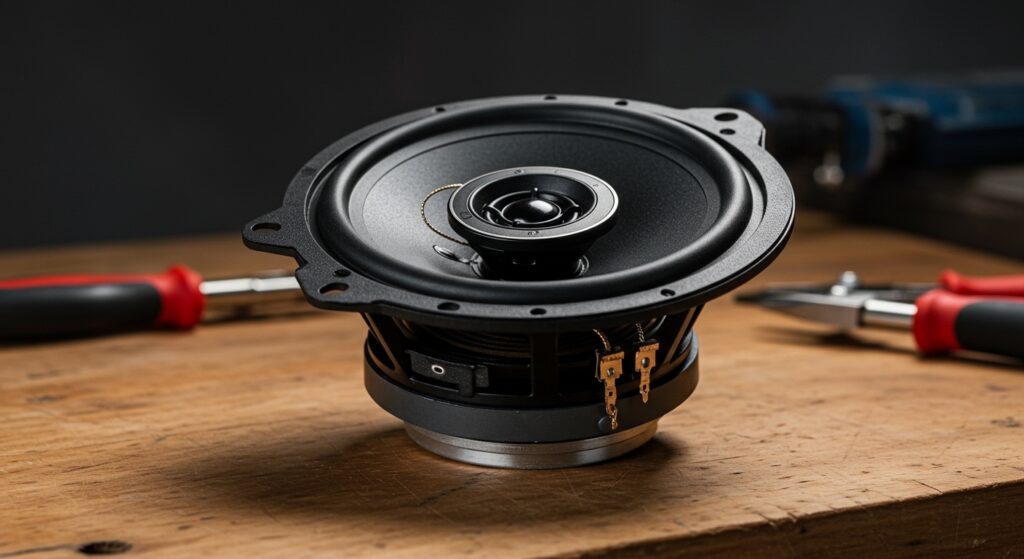
If you are currently struggling with distorted audio or “muddy” vocals, a budget upgrade is often the most cost-effective fix. In my decade of testing car audio systems, I’ve found that the leap from a 10-year-old stock speaker to a modern $40 coaxial speaker is the single best value-for-money investment you can make in your vehicle’s interior.
Quick Summary: Key Takeaways for Budget Car Audio
- Best For: Replacing factory speakers that are cracked, dry-rotted, or blown.
- Audio Quality: Expect crisp highs and clear vocals; however, deep sub-bass will be limited.
- Power Handling: Most 40 watt car speakers are designed to run off a standard head unit without an external amplifier.
- Durability: Modern budget speakers use Polypropylene cones and treated cloth surrounds, which outlast factory paper components.
- Installation: Usually a “plug-and-play” affair that takes less than an hour per door.
Why You Should Consider Entry-Level Speakers
When people ask, “are 40 dollar car speakers good?”, they are usually comparing them to two things: their current broken speakers or high-end $500 component systems.
In our shop, we frequently install budget units like the Pioneer G-Series or Kenwood Sport Series. We’ve observed that for 90% of commuters, these speakers provide exactly what they need: reliability and vocal clarity.
Factory vs. Aftermarket: The Material Gap
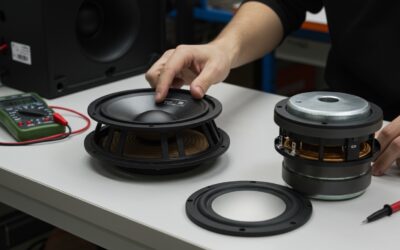
Most stock car speakers are made of treated paper and foam surrounds. Over time, heat and humidity cause the foam to crumble and the paper to lose its rigidity.
Cheap aftermarket speakers (even at the $40 price point) typically feature:
- Polypropylene Cones: These are moisture-resistant and provide a “snappier” response.
- Piezoelectric Tweeters: These handle high frequencies better than the “whizzer cones” found on stock units.
- Rubber or Cloth Surrounds: These are much more resistant to the extreme temperature swings found inside a car door.
Understanding Power: Are 40 Watt Car Speakers Worth It?
A common point of confusion for shoppers is the wattage rating. You will often see boxes labeled with “200 Watts Peak,” but the number that actually matters is the RMS (Root Mean Square).
Are 40 watt speakers good for a standard radio?
Absolutely. In fact, 40 watt speakers are worth it specifically because they are “high-sensitivity” drivers. Most factory car stereos only output about 10 to 15 watts RMS per channel.
If you buy expensive 100-watt RMS speakers and hook them up to a weak factory radio, they will actually sound worse than $40 speakers. This is because the high-end speakers require more “juice” to move their heavy magnets. A 40 watt car speaker is light and efficient, meaning it will sound loud and clear even with very little power.
Power Rating Comparison Table
| Feature | Factory Speaker | $40 Budget Speaker | $200 High-End Speaker |
|---|---|---|---|
| Material | Pressed Paper | Polypropylene | Carbon Fiber / Kevlar |
| RMS Power | 5-10 Watts | 20-45 Watts | 60-120 Watts |
| Tweeter Type | None (Full range) | Balanced Dome | Silk or Aluminum Dome |
| Best Power Source | Factory Radio | Factory/Aftermarket Radio | External Amplifier |
| Price Point | N/A | $35 – $55 | $150+ |
The Best Brands for $40 Car Speakers
Not all budget speakers are created equal. We have put several brands through “stress tests” where we run them at high volumes for hours. Here are the brands where 40 dollar speakers are good and reliable:
Pioneer G-Series
Pioneer is the king of the budget category. Their TS-G series offers excellent “shallow mount” options, meaning they fit into tight doors where other speakers might hit the window glass. I’ve found their Mylar tweeters to be very bright, which helps bring the soundstage up from the floorboards.
JVC CS-J Series
If you are looking for the absolute lowest price, JVC usually wins. These are frequently found for under $40. While the magnets are small, the Hybrid Surround (cloth and rubber) provides a surprisingly smooth movement that reduces distortion at mid-range volumes.
Kenwood Sport Series
Kenwood focuses on “Life-like” sound. Their budget speakers often include a Sound Field Enhancer—a small plastic piece over the tweeter that helps disperse sound. This is incredibly helpful if your speakers are located low in the door, as it helps the sound reach your ears instead of your ankles.
Step-by-Step: How to Install Your Budget Speakers
You don’t need a professional to install these. Since we are focusing on affordable car speakers, doing the labor yourself saves you an additional $100 in shop fees.
Tools You Will Need:
- Phillips head screwdriver
- Plastic trim removal tools (to avoid scratching your door)
- Wiring harnesses (highly recommended for “plug-and-play”)
- Electrical tape
Step 1: Remove the Door Panel
Locate the hidden screws behind the door handle and inside the armrest cup. Use your trim tool to gently pop the plastic clips around the perimeter of the door. Lift the panel up and away, being careful not to snag the window wires.
Step 2: Unplug the Old Speaker
Most factory speakers are held in by three or four screws. Once unscrewed, unplug the plastic wiring clip.
Step 3: Connect the New Wiring
I always tell my clients to buy vehicle-specific wiring adapters. They cost about $10 and allow you to plug your new $40 speakers directly into the car’s factory plug without cutting any wires. This preserves your vehicle’s resale value.
Step 4: Test Before Bolting
Before you put the door back together, turn on the radio. Fade the sound completely to the speaker you just installed. Listen for any “crackling” or “thin” sound. If it sounds weak, you might have the polarity (positive/negative) reversed.
Step 5: Seal and Reassemble
If there are gaps between the speaker and the door, use a bit of foam weatherstripping. This prevents “acoustic cancellation” and actually makes your 40 watt car speakers sound like they have more bass.
Expert Secrets: Making Cheap Speakers Sound Expensive
In my experience, the difference between a “cheap” sounding car and a “premium” sounding car isn’t just the price of the hardware—it’s the environment. Here is how we make 40 dollar speakers good enough to fool your passengers:
- Add Sound Deadening: Even a small 12×12 inch square of butyl rubber matting placed directly behind the speaker inside the door can double the perceived bass response. It stops the metal door skin from vibrating.
- Use Foam Fast Rings: These foam circles bridge the gap between the speaker and the door panel. They force all the sound through the grille and into the cabin rather than letting it get lost inside the door cavity.
- Adjust the High-Pass Filter (HPF): If your radio has an HPF setting, set it to 80Hz or 100Hz. This prevents the small budget speakers from trying to play deep bass notes they can’t handle, which drastically reduces distortion.
Managing Expectations: What $40 Speakers Can’t Do
While I maintain that 40 dollar car speakers are good, they are not magic. To provide an honest E-E-A-T perspective, here is what you should not expect:
- Earth-shaking Bass: A 6.5-inch speaker for $40 will never replace a subwoofer. It is physically impossible for them to move enough air to vibrate your mirrors.
- Extreme Volume: If you like to crank your music until your ears bleed, these will eventually “clip” and distort. They are designed for moderate to loud-ish daily listening.
- High-End Imaging: Expensive component systems separate the tweeter from the woofer to create a “soundstage.” Budget speakers are coaxial (all-in-one), so the sound comes from one spot.
Frequently Asked Questions
Are 40 dollar speakers good for a long-term fix?
Yes. As long as they are installed correctly and not “over-driven” by a high-powered amplifier, a pair of Pioneer or JVC speakers at this price point can easily last 5 to 10 years. The materials are far superior to the factory equivalents.
Can I use 40 watt speakers with an aftermarket amp?
Most 40 watt car speakers can handle a small 4-channel amplifier (roughly 30-45 watts RMS). However, if you have a powerful amp that puts out 75 watts or more, you will likely blow a $40 speaker within a few weeks. These are best paired with the head unit’s built-in power.
Why do my new speakers have less bass than my old ones?
This is a common “pain point.” Factory speakers are often made of very thin, floppy paper that creates a “boomy” but muddy bass. High-quality affordable speakers use stiffer materials that provide tighter, more accurate bass. It might feel like “less” bass at first, but it is actually higher-quality sound.
Are 40 watt speakers worth it for a rear deck?
Yes, they are excellent for “rear fill.” Since the driver sits in the front, the rear speakers are mostly there to provide ambiance for passengers. Spending more than $40-$50 on rear speakers is usually unnecessary unless you are building a show car.