Are 5×7 and 6×8 Speakers the Same? The Direct Answer
So you’re upgrading your car’s sound system and hit a snag with the speaker sizes. You see listings for both 5×7 and 6×8 speakers, and they look almost identical. The short answer is yes, 5×7 and 6×8 speakers are functionally the same and are considered interchangeable for installation purposes. They share the same mounting hole pattern, meaning a 6×8 speaker will fit directly into a factory location designed for a 5×7, and vice versa, with no modification needed in most vehicles.
However, while they fit the same, they are not technically identical. The difference lies in the cone size, which can subtly affect sound quality, particularly bass response. Think of them as two different names for the same fitment size, a common practice in the car audio world to reduce confusion, even if it sometimes creates it. In my years as an installer, I’ve swapped them countless times in vehicles from Ford, Mazda, and Chrysler without a single issue.
Key Takeaways: 5×7 vs. 6×8 Speakers
- Interchangeable Fitment: Both 5×7 and 6×8 speakers use the exact same mounting screw pattern. They are designed to be direct drop-in replacements for each other.
- Slight Size Difference: A 6×8 speaker has a slightly larger cone surface area than a 5×7 speaker.
- Sound Quality Impact: The larger cone on a 6×8 can produce slightly better low-end frequency (bass) response and may handle more power.
- Common Applications: This size is most frequently found in Ford, Mazda, and some Chrysler/Dodge/Jeep vehicles.
- The Verdict: For almost all applications, you can buy either size with confidence. I typically recommend the 6×8 if available, as it offers a marginal performance advantage for the same price.
Understanding the Subtle Physical Differences
While the mounting points are identical, the names “5×7” and “6×8” do refer to the frame’s approximate outer dimensions in inches. The key difference isn’t the frame, but what fits inside it: the speaker cone.
Cone Surface Area
The single most important physical difference is the cone surface area. A speaker produces sound by moving air, and a larger cone can move more air.
- A 6×8 speaker has a slightly larger woofer cone than a 5×7 speaker.
- This increased surface area, often called Sd (Effective Piston Area), is the primary reason for the potential performance difference between the two.
- Even a small increase in cone area can lead to a noticeable improvement in efficiency and bass output.
From my experience, when comparing two speakers from the same product line (e.g., a Pioneer TS-A Series 5×7 vs. its 6×8 counterpart), the 6×8 version consistently provides a fuller, warmer sound in the lower frequencies.
Mounting Holes vs. Basket Size
This is where the interchangeability comes from. Despite the different basket dimensions, the screw holes are in the same locations.
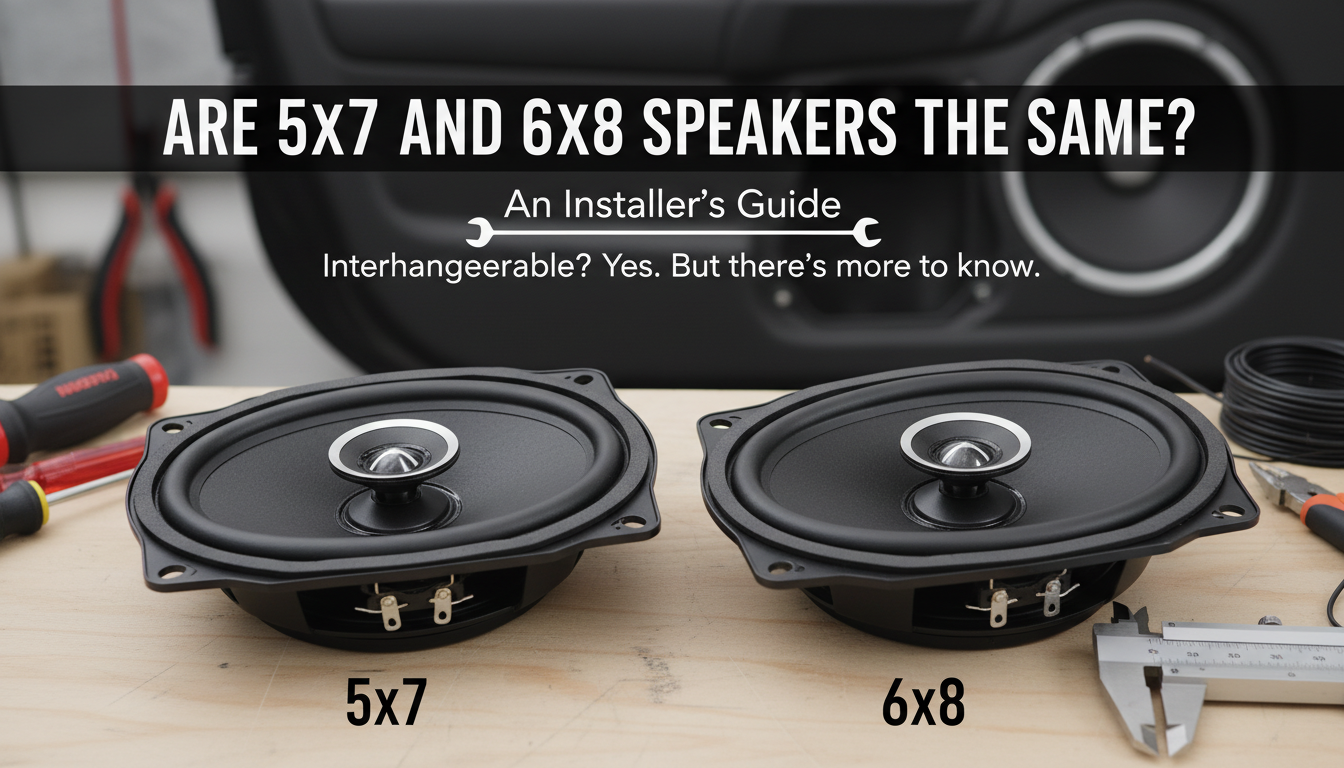
- Mounting Pattern: Both sizes use an elongated 4-hole pattern that is standardized across the industry.
- Vehicle Cutout: The factory speaker opening in your car door or rear deck is designed to accommodate the larger 6×8 basket, ensuring the 5×7 also fits without any empty gaps.
This is a smart design choice by vehicle manufacturers like Ford, as it gives them and their customers more flexibility with audio components.
Performance & Sound Quality: Does an Inch Matter?
So, we’ve established they fit the same, but do they sound the same? Not exactly. While the difference may be subtle to a casual listener, an audiophile or even just a discerning music lover will likely notice.
Bass Response and Low-Frequency Extension
This is where the larger cone of the 6×8 speaker shines.
- More Air Movement: As mentioned, the larger cone moves more air with each excursion. This translates directly to better performance in the 60 Hz to 250 Hz range, which covers mid-bass and the lower end of midrange frequencies.
- Deeper Notes: You’ll find that bass guitar lines, kick drums, and deep electronic tones sound punchier and more present with a 6×8 speaker. The 5×7 is perfectly capable, but the 6×8 just has a bit more authority.
Power Handling (RMS)
Often, but not always, the 6×8 version of a speaker model will have a slightly higher RMS (continuous) power handling rating. This is because the larger cone and potentially larger voice coil can dissipate heat more effectively.
If you plan on powering your speakers with an external amplifier, choosing the 6×8 version can give you a little more headroom to turn up the volume without distortion. If you’re just using your factory head unit’s power, this difference is negligible.
Speaker Comparison Table
Here is a quick breakdown of the typical differences you’ll find when comparing speakers from the same series.
| Feature | 5×7 Speaker | 6×8 Speaker | Expert Insight |
|---|---|---|---|
| Mounting Pattern | Standard 4-Hole | Identical Standard 4-Hole | Both are a direct fit. No adapters needed. |
| Cone Area | Standard | Slightly Larger (+5-10%) | The 6×8’s main advantage for better bass. |
| Bass Response | Good | Better / Deeper | Noticeably fuller sound in the low end. |
| Power Handling | Standard | Often Slightly Higher | A benefit if you’re using an external amplifier. |
| Availability | Common | Very Common | 6×8 is often more widely available and marketed. |
| Best For | Factory replacement | Performance upgrade | Choose the 6×8 for a clear sonic improvement. |
How to Install a 6×8 Speaker in a 5×7 Location (Step-by-Step)
Since are 6×8 and 5×7 speakers the same for installation, this process is straightforward. I’ve done this job hundreds of times, and it rarely takes more than 30 minutes per door.
Tools & Materials Needed
- Panel removal tool (plastic trim pry tool)
- Screwdriver set (usually Phillips head)
- Socket set (sometimes needed for door bolts)
- Your new 6×8 speakers
- Speaker wire harness adapters (highly recommended to avoid cutting factory wires)
Step-by-Step Installation Guide
- Disconnect the Battery: Before starting any electrical work on your car, always disconnect the negative terminal of your car battery as a safety precaution.
- Remove the Door Panel: This is often the most intimidating step, but it’s simple with the right tool.
- Remove the Old Speaker: The factory speaker is typically held in by four screws (usually 5.5mm or 7mm hex, or Phillips).
- Prepare the New Speaker:
- Mount the New 6×8 Speaker:
- Test the Speaker: Before you put the door panel back on, reconnect the car battery and turn on your stereo. Test the speaker to make sure it’s working correctly. Check the balance and fader controls to isolate the new speaker.
- Reassemble the Door Panel: Once you’ve confirmed everything works, simply reverse the removal process. Reconnect the electrical harnesses, hang the panel back on the door, and press firmly around the edges to snap the clips back into place. Finally, replace all the screws you removed.
Congratulations! You’ve successfully upgraded your speaker. Repeat the process for the other side.
Common Vehicles and Fitment Questions
One of the most common questions I get is, “Will these fit my car?” The 5×7 / 6×8 size is predominantly used by American and some Japanese automakers.
- Ford: This is the most common user of this speaker size. You’ll find it in the F-150, Mustang, Explorer, Focus, and many others. For these vehicles, a 6×8 is a perfect drop-in upgrade.
- Mazda: Many Mazda vehicles, like the Mazda3, Mazda6, and Miata, also use this size in their doors and rear decks.
- Chrysler/Dodge/Jeep: Some older models from this family of brands use the 5×7 / 6×8 size, though they have moved to other sizes in more recent vehicles.
Pro Tip: Always use an online vehicle fitment guide (like the ones on Crutchfield or Sonic Electronix) to confirm the exact speaker sizes for your specific year, make, and model before purchasing.
Frequently Asked Questions (FAQ)
1. Are 5×7 speakers the same as 6×8?
Yes, for all practical purposes, they are the same. They share an identical mounting hole pattern, making them completely interchangeable in vehicles designed for either size. The primary difference is the slightly larger cone on a 6×8 speaker, which can offer better bass response.
2. Can I replace a 5×7 speaker with a 6×8 without an adapter?
Absolutely. No adapter plate is needed. A 6×8 speaker is designed to be a direct, drop-in replacement for a factory 5×7 location. The screw holes will line up perfectly.
3. Is there a noticeable sound quality difference between 5×7 and 6×8 speakers?
There can be a subtle but noticeable difference. A 6×8 speaker, with its larger cone surface area, can typically produce deeper and more impactful mid-bass frequencies than its 5×7 counterpart from the same product series. If you’re upgrading for better sound, the 6×8 is the superior choice.
4. Why do manufacturers make two sizes that are interchangeable?
It’s largely a matter of marketing and historical naming conventions. Some car manufacturers originally specified “5×7” while others specified “6×8.” Car audio companies produce speakers that fit this universal mounting standard and often label them as “5×7 / 6×8” to show they fit both applications, eliminating customer confusion at the point of sale.