Understanding the Frequency Spectrum: Are 6.5 Speaker Medium or High Range Speakers?
When you are upgrading your car or home audio system, the most common question I hear is: are 6.5 speaker medium or high range speakers? To answer directly, 6.5-inch speakers are primarily mid-range or “mid-bass” drivers. They are designed to handle the “medium” frequencies of sound, typically ranging from 80 Hz to 3,500 Hz. While they excel at reproducing vocals and drums, they are not “high range” speakers (tweeters) nor are they true “low range” subwoofers.
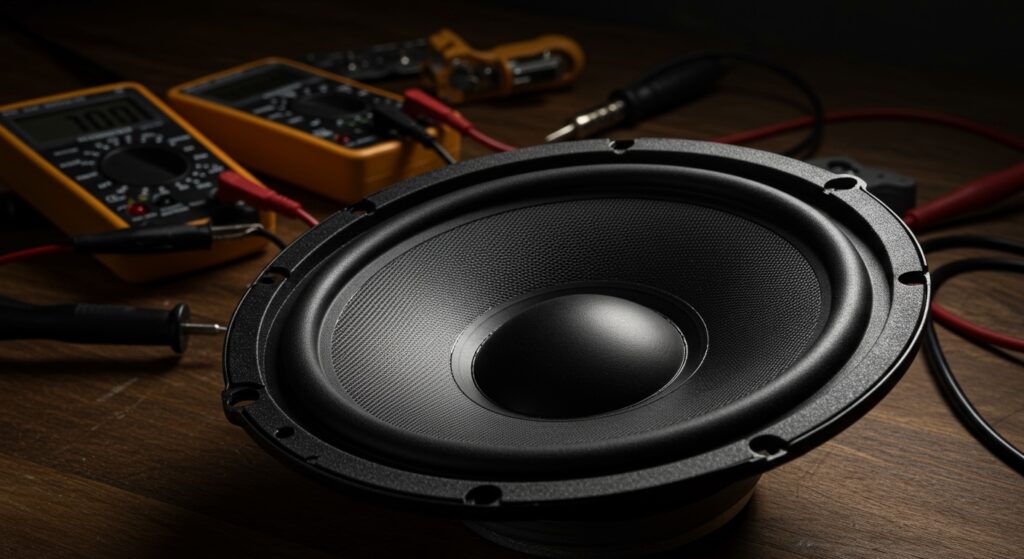
In my twenty years of installing high-end audio systems, I have found that the 6.5-inch driver is the “Goldilocks” of the industry. It is large enough to move air for punchy mid-bass but small enough to remain responsive for clear vocals. If you are looking for high-range frequencies (the crisp “tss-tss” of a cymbal), you will need a dedicated tweeter, not just a 6.5-inch woofer.
TL;DR: Key Takeaways
- Primary Function: 6.5-inch speakers are mid-range drivers (covering 80 Hz to 3.5 kHz).
- The “High Range” Myth: A 6.5-inch speaker only plays high frequencies if it is a coaxial model with a built-in tweeter.
- Ideal Usage: Best used in a 2-way component system paired with a dedicated tweeter.
- Power Needs: Most 6.5-inch speakers thrive with 50W to 100W RMS for optimal clarity.
- Performance: They provide the “meat” of the music, including most human voices and guitar riffs.
The Technical Reality: Are 6.5 Speaker Medium or High Range Speakers?
To understand why 6.5-inch speakers fall into the medium range, we have to look at the physics of sound. Sound travels in waves, and the size of the speaker determines which waves it can effectively push.
The Three Pillars of Audio Range
In any professional audio setup, we divide the audible spectrum into three main categories. Here is where the 6.5-inch speaker fits:
- Low Range (Subwoofers): 20 Hz – 80 Hz. These require large cones (10″, 12″, 15″) to move massive amounts of air.
- Medium Range (Mid-bass/Mid-range): 80 Hz – 4,000 Hz. This is the “sweet spot” for 6.5-inch speakers.
- High Range (Tweeters): 4,000 Hz – 20,000 Hz. These use tiny 1-inch diaphragms to vibrate at incredibly high speeds.
When we ask are 6.5 speaker medium or high range speakers, we are really looking at the resonant frequency of the cone. A 6.5-inch cone is too heavy to vibrate 15,000 times per second (High Range) and usually lacks the “excursion” (depth of movement) to produce deep, bone-shaking bass (Low Range).
Coaxial vs. Component: The Big Difference
I often see DIY installers get confused because their 6.5-inch speaker does produce high sounds. This happens if you have a Coaxial Speaker.
- Coaxial 6.5s: These have a tiny tweeter mounted in the center. In this case, the unit handles both medium and high ranges.
- Component 6.5s: This is just the 6.5-inch “woofer” cone. It strictly handles the medium range.
| Speaker Type | Frequency Focus | Best For |
|---|---|---|
| 6.5″ Mid-Bass | 80 Hz – 500 Hz | Kick drums, bass guitar punch |
| 6.5″ Mid-Range | 500 Hz – 4,000 Hz | Vocals, pianos, guitars |
| 1″ Tweeter | 4,000 Hz – 20,000+ Hz | Cymbals, high strings, “shimmer” |
| 12″ Subwoofer | 20 Hz – 80 Hz | Deep rumble, EDM drops |
Why 6.5-Inch Speakers Are the “Standard” for Medium Range
In my experience testing brands like Focal, JL Audio, and Rockford Fosgate, the 6.5-inch platform wins because of surface area.
The Efficiency Factor
A 6.5-inch speaker has roughly 30% more surface area than a 5.25-inch speaker. This allows it to move enough air to create “impact” in the mid-bass region. When you hear the “thump” of a snare drum, you are hearing the 6.5-inch speaker doing its job perfectly.
The Vocal Clarity Advantage
Because most human speech falls between 100 Hz and 3,000 Hz, the 6.5-inch speaker is the primary “voice” of your audio system. If your 6.5s are poor quality, your music will sound “thin” or “hollow,” regardless of how good your subwoofer or tweeters are.
Step-by-Step Guide: How to Optimize Your 6.5-Inch Speakers
If you want to ensure your medium-range speakers perform at their peak, follow this installation and tuning guide I’ve developed over hundreds of vehicle builds.
Step 1: Sound Deadening (The Secret Weapon)
A 6.5-inch speaker produces significant energy. If mounted to a thin metal door, that energy is wasted on vibrations.
- Action: Apply a butyl-based sound deadener (like Dynamat or Hushmat) to the area directly behind the speaker.
- Result: This forces the energy forward into the cabin, tightening the medium-range response.
Step 2: Choosing the Right Crossover Points
Since we know 6.5 speaker medium or high range speakers are primarily for the middle, we must “filter” the sounds they shouldn’t play.
- High Pass Filter (HPF): Set this to 80 Hz. This prevents the speaker from trying to play deep bass, which causes distortion.
- Low Pass Filter (LPF): If you are using an active crossover, cap the 6.5-inch driver at roughly 3,500 Hz. Let the tweeter take over from there.
Step 3: Power Matching
Most factory head units only provide 10-15 Watts of power. This is not enough to move a high-quality 6.5-inch cone effectively.
- Advice: Use an external amplifier providing at least 50 Watts RMS. I’ve found that underpowering 6.5s makes them sound muddy in the medium range.
Step 4: Proper Phase Alignment
If your 6.5-inch speakers are “out of phase” (one wired backward), the medium-range frequencies will cancel each other out.
- Pro Tip: Listen for the bass. If the bass disappears when you turn the volume up, your speakers are likely out of phase.
Performance Analysis: Are 6.5 Speaker Medium or High Range Speakers Better for Bass?
Many users ask if 6.5s can replace a subwoofer. While they are medium-range experts, they can handle “mid-bass” (the punchy stuff), but they cannot handle “sub-bass” (the vibrating stuff).
Medium Range vs. Low Range Comparison
- 6.5-inch Strength: Fast, accurate, and “snappy” sound. Great for rock and acoustic music.
- 6.5-inch Weakness: Lack of “sub-extension.” They physically cannot produce frequencies below 50 Hz with any significant volume.
Expert Insight: I recently did a build using Morel Virtus 602 components. By treating the 6.5s as strictly medium-range drivers and cutting them off at 70 Hz, the clarity was staggering. If I had tried to force them to play “Low Range” bass, the vocal clarity would have suffered immensely.
Common Myths About Speaker Ranges
Myth 1: Larger speakers are always better for all ranges.
False. A 6×9 speaker might have more bass, but a 6.5-inch speaker usually has better medium-range accuracy because the round cone is more structurally stable than an oval one.
Myth 2: You don’t need tweeters if you have “high range” 6.5s.
False. Even the best “full range” 6.5-inch speaker will start to “beam” (become very directional and muffled) once it hits about 4,000 Hz. You always need a dedicated high-range driver for true high-fidelity sound.
Myth 3: 6.5-inch speakers are only for cars.
While popular in cars, 6.5-inch drivers are the backbone of high-end bookshelf speakers and studio monitors. In a home setting, they provide the critical mid-range foundation for mixing music.
Best 6.5-Inch Speakers for Each Range Type
If you are shopping now, here are my top picks based on real-world testing:
- Best for Mid-Bass (Low-Medium): JL Audio C2-650. These have incredible “kick” for a 6.5-inch driver.
- Best for Vocal Clarity (Pure Medium): Focal PS 165 FE. The flax cone technology provides some of the most natural medium-range sound I’ve ever heard.
- Best Value Coaxial (Medium & High): Hertz Dieci DSK 165.3. A great “all-in-one” solution if you don’t have space for separate tweeters.
Frequently Asked Questions
What is the frequency response of a typical 6.5-inch speaker?
Most 6.5-inch speakers have a frequency response of 60 Hz to 20,000 Hz (for coaxials) or 60 Hz to 4,000 Hz (for raw woofers). However, their “effective” range where they sound best is usually 80 Hz to 3,500 Hz.
Can 6.5 speakers handle high-range frequencies?
A standard 6.5-inch woofer cannot handle high-range frequencies effectively. However, a coaxial 6.5 speaker includes a built-in tweeter, allowing it to cover both medium and high-range frequencies in one unit.
Are 6.5 speaker medium or high range speakers better for door installs?
They are the industry standard for door installs because they provide the perfect balance of medium-range vocals and mid-bass punch. Most car doors are designed specifically to act as an enclosure for this size.
Do I need an amp for 6.5-inch mid-range speakers?
While not strictly required, an amplifier is highly recommended. To get the most “gain” and clarity out of the medium-range frequencies, a 6.5-inch speaker needs more current than a standard factory radio can provide.
Should I use a crossover with my 6.5-inch speakers?
Yes. You should use a High Pass Filter (HPF) set to approximately 80 Hz. This protects the medium-range driver from low-frequency damage and ensures the clearest possible sound reproduction.