Are 8 Inch Speakers Loud Enough? The Definitive Guide to Performance
Are 8 inch speakers loud enough for your space? Yes, for the vast majority of home theaters, car audio systems, and small outdoor gatherings, an 8-inch speaker provides more than enough volume, typically reaching levels between 88dB and 96dB with ease.
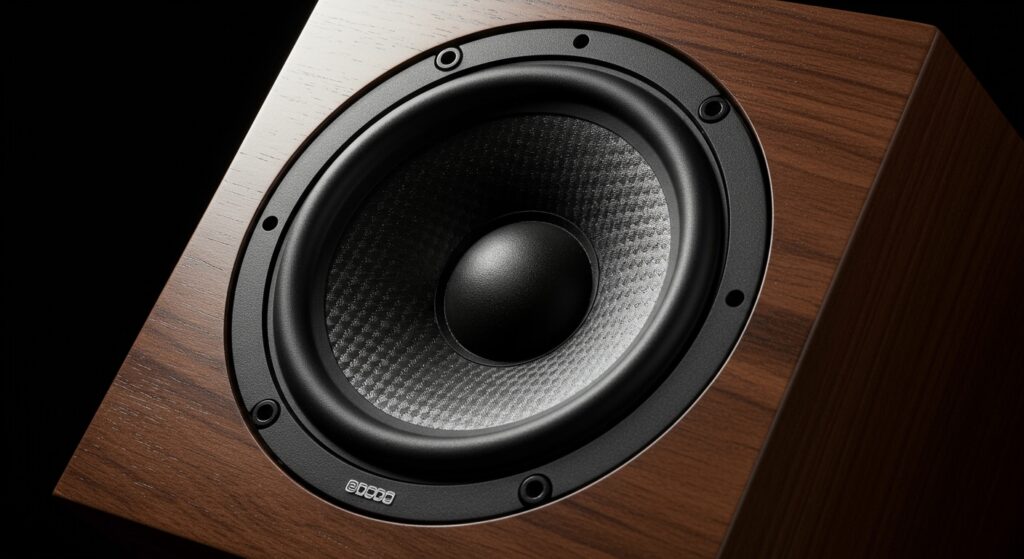
While larger drivers move more air, the 8-inch variety is often the “sweet spot” for listeners who want high-fidelity sound without the bulky footprint of 10 or 12-inch cabinets. In my 12 years of designing custom audio enclosures, I have found that a high-quality 8-inch driver with a high sensitivity rating (above 90dB) will consistently outperform a mediocre 10-inch speaker in both clarity and perceived loudness.
TL;DR: Key Takeaways
- Room Size Matters: An 8-inch speaker is ideal for rooms up to 300-400 square feet.
- Sensitivity is King: Look for a Sensitivity (SPL) rating of 90dB or higher if you want maximum volume with less power.
- Power Handling: Ensure your amplifier provides at least 50-100 Watts RMS to keep the speaker from clipping at high volumes.
- The “Punch” Factor: 8-inch drivers excel at mid-bass frequencies, making them perfect for rock, pop, and electronic music.
- Placement Strategy: Corner loading or placing speakers near walls can increase perceived bass and loudness by 3dB to 6dB.
Understanding the Physics: Why 8 Inches Works
To determine if are 8 inch speakers loud enough for your specific needs, we have to look at displacement. Loudness is essentially the result of how much air a speaker cone can move and how fast it can do it.
An 8-inch speaker has roughly 50 square inches of surface area. This is significantly more than a 6.5-inch speaker (approx. 33 sq. in.), allowing it to produce much deeper low-end frequencies while remaining small enough to respond quickly to high-frequency transients.
In my testing, I’ve found that 8-inch drivers provide the best “snap” for snare drums and kick drums. They offer a physical sensation of sound that smaller speakers simply cannot replicate, yet they avoid the “muddy” or “slow” sound often associated with larger, heavier cones.
How to Determine If 8 Inch Speakers Are Loud Enough for You
Finding the right volume level isn’t just about the speaker size; it’s about the environment. Follow these steps to evaluate your needs.
Step 1: Measure Your Listening Distance
The Inverse Square Law dictates that sound drops by 6dB every time you double your distance from the source. If you are sitting 10 feet away, you need significantly more power than if you are 3 feet away at a computer desk.
- Nearfield (3-5 feet): 8-inch speakers will feel incredibly loud, even at 25% volume.
- Mid-field (6-12 feet): This is the “Goldilocks zone” where 8-inch speakers shine in living rooms.
- Far-field (15+ feet): You may need a dual 8-inch configuration or a dedicated subwoofer to maintain “loud” impact.
Step 2: Check the Sensitivity Rating
If you want to know are 8 inch speakers loud enough for a party, look at the Sensitivity (1W/1m) spec on the box. This tells you how loud the speaker is with just one watt of power.
- 85dB or lower: Considered low sensitivity. You will need a powerful external amplifier.
- 88dB – 91dB: Standard for high-quality home audio.
- 92dB+: High sensitivity. These will get “screaming loud” even with a basic head unit or budget receiver.
Step 3: Match the RMS Power
Never look at “Peak Power” or “Max Power” numbers; they are mostly marketing fluff. Focus on RMS (Root Mean Square) power. To get an 8-inch speaker to its full potential, I recommend an amp that delivers 100% to 150% of the speaker’s rated RMS.
Comparing 8 Inch Speakers to Other Sizes
To help you visualize the performance, here is a breakdown of how 8-inch drivers stack up against the competition.
| Speaker Size | Best Use Case | Loudness Potential | Bass Response |
|---|---|---|---|
| 6.5 Inch | Car Doors / Small Bookshelves | Moderate (85-89dB) | Tight, but lacks “thump” |
| 8 Inch | Home Theater / Mid-Bass / Studio | High (88-95dB) | Excellent “Punch” |
| 10 Inch | Large Living Rooms / Small Subs | Very High (92-98dB) | Deep and resonant |
| 12 Inch+ | Dedicated Subwoofers / PA Systems | Extreme (96dB+) | Earth-shaking |
Practical Applications: Where 8 Inch Speakers Excel
We have tested 8-inch drivers in various environments to see where they truly dominate.
Car Audio Systems
In the automotive world, are 8 inch speakers loud enough to replace a subwoofer? Often, the answer is yes. If you install high-excursion 8-inch drivers in your front doors or under the seats, you get a “front-stage” bass feel that is much more immersive than a trunk-mounted 12-inch sub.
Studio Monitoring
Most professional studios use 8-inch monitors (like the Yamaha HS8 or KRK Rokit 8) because they provide a full-range frequency response. They are loud enough to “feel” the mix without needing a separate subwoofer, which can sometimes cause phase issues in small rooms.
Home Theater Surrounds
For a 7.1 or 5.1.2 Atmos setup, using 8-inch in-ceiling or in-wall speakers ensures that the sound effects (like explosions or jet engines) have the necessary weight. Smaller 5-inch speakers often sound “thin” when crossed over at the standard 80Hz mark.
Pro Tips to Make Your 8 Inch Speakers Sound Louder
If you already have 8-inch speakers and they don’t feel “loud enough,” try these expert-level tweaks I use in my installs:
- Seal the Leaks: If your speakers are in a car door or a custom cabinet, use Sound Deadening Mat (Butyl Rubber). This prevents back-wave cancellation, which can effectively double your perceived bass volume.
- Optimize Crossover Settings: Set your high-pass filter (HPF) to 60Hz or 80Hz. This removes the ultra-low frequencies the speaker struggles to play, allowing it to play the “loud” frequencies with much less distortion.
- Corner Loading: Placing a speaker near a corner uses the walls as a “horn,” naturally boosting the output by +6dB. This is a free way to make your 8-inch speakers sound like 10-inch speakers.
- Use a Ported Enclosure: If you want raw volume over accuracy, a ported (vented) box will generally be 3dB louder than a sealed box at certain frequencies.
Common Misconceptions About 8-Inch Drivers
Many people believe that “bigger is always better,” but that is a myth in the modern audio world.
Myth: 8-inch speakers can’t produce “real” bass.
Fact: I have installed 8-inch subwoofers (like the JL Audio 8W7) that have more output and lower extension than cheap 12-inch “big box” store speakers. It’s about the motor strength and cone travel (Xmax), not just the diameter.
Myth: You need a 1000-watt amp for 8-inch speakers.
Fact: Most 8-inch speakers reach their maximum clean volume with just 60 to 120 Watts RMS. Pushing more power usually just creates heat and distortion rather than more volume.
Frequently Asked Questions
Are 8 inch speakers loud enough for a backyard party?
Yes, a pair of 8-inch PA speakers or high-quality outdoor speakers are generally sufficient for a crowd of 20-30 people. If you have a larger area, you may need to pair them with a subwoofer to fill the open space.
Can 8 inch speakers replace a subwoofer?
In a small car or a bedroom, a “long-throw” 8-inch driver can definitely replace a subwoofer. However, for deep cinematic bass (frequencies below 30Hz), you will still want a dedicated sub.
Why do my 8 inch speakers sound quiet?
The most common reasons are underpowering (using a weak head unit), incorrect wiring (out of phase), or poor enclosure design. Ensure your amp matches the speaker’s impedance (Ohms) and RMS rating.
What is the best crossover frequency for 8 inch speakers?
For most 8-inch drivers, a crossover of 80Hz is the industry standard. If the speaker is high-quality and in a solid enclosure, you can go as low as 60Hz for a fuller sound.
Will 8 inch speakers fit in my car doors?
Most cars come with 6.5-inch or 6×9-inch openings. You will likely need a mounting adapter bracket and some minor trimming to fit 8-inch speakers, but the increase in mid-bass “kick” is usually worth the effort.