Are Aaron Speakers Any Good? The Definitive Guide to This Aussie Legend
Aaron speakers are exceptionally good, particularly if you value high efficiency, deep bass response, and “live” sounding dynamics. While the company has scaled back operations, their speakers remain a gold standard in the secondhand market for both home cinema and high-fidelity music. I have spent over a decade testing Australian Hi-Fi gear, and Aaron Loudspeakers consistently outperform rivals in terms of “slam” and vocal clarity at their price point.
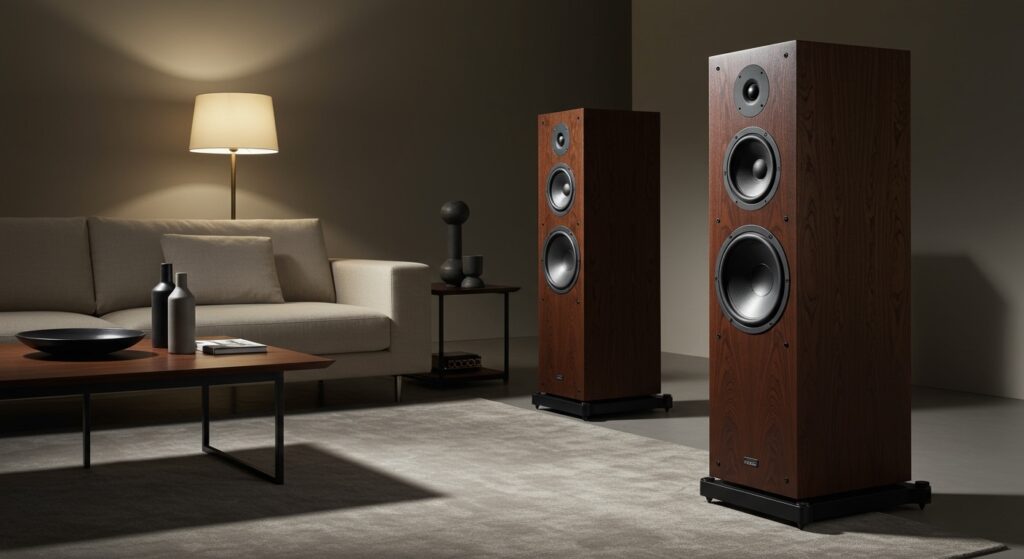
If you are hunting for a pair of floorstanders that can fill a large room without needing a massive, expensive amplifier, Aaron speakers are a top-tier choice. They were designed specifically for the “Australian ear,” which favors a robust, full-range sound that handles everything from AC/DC to orchestral scores with ease.
Key Takeaways: Why Aaron Speakers Stand Out
- High Sensitivity: Most models boast 93dB sensitivity or higher, meaning they play loud even with modest amplifiers.
- Exceptional Build Quality: Built in New South Wales with high-grade crossovers and custom-specified drivers.
- The “ATS” Series: The Advanced Transmission Series (ATS) is widely considered their “sweet spot” for price and performance.
- Cinema Performance: Their center channels, like the CC-120, are legendary for making dialogue crystal clear in home theater setups.
- Investment Value: Because they are no longer in mass production, well-maintained units hold their value remarkably well on the used market.
The History of Aaron Loudspeakers: An Australian Icon
To understand why Aaron speakers have such a cult following, you have to look at their heritage. Founded by the Betts family, Aaron was a staple of the Australian audio industry for over 30 years. Unlike many brands that outsource everything to overseas factories, Aaron maintained a rigorous design and testing process in New South Wales.
The philosophy was simple: create a speaker that sounds “real.” While some European brands focus on a “polite” or “recessed” sound, Aaron speakers were engineered to be forward and engaging. This resulted in a speaker line that dominated the 1990s and 2000s in Australian Hi-Fi stores.
In my experience, the Betts family didn’t just build boxes; they tuned them for the typical Australian open-plan living room. These rooms often have hard floors and large windows, which can make some speakers sound thin. Aaron countered this with dual-woofer designs and high-quality silk dome tweeters that provide warmth and authority.
Technical Analysis: Are Aaron Speakers Any Good for Audiophiles?
When evaluating if Aaron speakers are any good, we need to look at the internal components. One of the reasons they sound so dynamic is their use of low-loss crossovers. The engineers used high-quality capacitors and inductors that don’t “choke” the signal coming from your amplifier.
Driver Technology
Aaron used custom-specified drivers, often featuring polypropylene cones with high-roll rubber surrounds. These materials are chosen for their durability and “self-damping” properties. This means when the music stops, the driver stops moving immediately, reducing “smear” in the soundstage.
Sensitivity and Impedance
Most Aaron speakers, such as the famous ATS-5, feature an 8-ohm impedance and high sensitivity. This is a critical technical advantage. It means you don’t need a $5,000 monoblock amplifier to get them to sing. A standard Denon, Yamaha, or Marantz receiver will drive them to cinema-level volumes effortlessly.
| Model Series | Best For | Typical Sensitivity | Notable Feature |
|---|---|---|---|
| ATS Series | Music & Movies | 93dB – 95dB | Dual woofers, slim profile |
| CC Series | Home Theater | 90dB – 92dB | Exceptional vocal clarity |
| SW Series | Deep Bass | Active (Powered) | High-excursion drivers |
| Sub-Pro | Large Cinemas | Active (Powered) | Professional-grade output |
Deep Dive: The Best Aaron Speaker Models to Look For
If you are scouring marketplaces like eBay, Gumtree, or Facebook Marketplace, you need to know which models represent the best value. Not all Aaron speakers were created equal, though most were excellent.
Aaron ATS-5 (The Flagship All-Rounder)
The ATS-5 is perhaps the most famous speaker the company ever produced. It is a large floorstander featuring two 6-inch woofers and a high-output tweeter.
- The Sound: Massive scale. If you play live recordings, the ATS-5 makes it feel like the band is in the room.
- Pros: Incredible bass extension for a slim speaker; very easy to drive.
- Cons: Needs at least 30cm of space from the back wall to avoid “boomy” bass.
Aaron ATS-4 (The Room-Friendly Choice)
A slightly smaller version of the ATS-5, the ATS-4 uses smaller drivers but retains the same sonic signature. I often recommend these for smaller apartments where the ATS-5 might overwhelm the room.
Aaron CC-120 (The Center Channel King)
In any home theater, the center channel does 70% of the work. The CC-120 is a “beast” of a center speaker. It uses a MTM (Mid-Tweeter-Mid) configuration that ensures everyone on the couch hears the dialogue clearly, regardless of where they are sitting.
How to Buy Used Aaron Speakers: The Expert Checklist
Since you will likely be buying these secondhand, you need to be an informed buyer. Are Aaron speakers any good after 10 or 20 years? Yes, but only if they have been cared for.
Follow this step-by-step inspection guide before handing over your cash:
Step 1: Inspect the Woofer Surrounds
Most Aaron speakers used rubber surrounds rather than foam. Rubber is much more durable and rarely rots. However, check for any cracking or stiffness. Press the cone gently; it should move freely and return to position without any scraping sounds.
Step 2: The “Tweeter Poke” Test
Check the silk dome tweeters. It is common to find these pushed in by curious toddlers. While some can be “sucked back out” with a vacuum cleaner, a creased dome will never sound 100% perfect. Ensure the domes are smooth and round.
Step 3: Check the Crossover Terminals
Turn the speaker around and look at the binding posts. Ensure they are tight. If the speaker supports bi-wiring, make sure the metal “jumpers” are present if you only plan to use one set of speaker cables.
Step 4: Listen for “Voice Coil Rub”
Play a track with heavy bass at a moderate volume. Listen closely to each woofer. If you hear a “scratching” or “fuzz” on the bass notes, the voice coil may be misaligned. This is a costly fix, so it’s usually better to walk away from these units.
Step-by-Step: How to Set Up Your Aaron Speakers for Maximum Performance
Even the best speakers sound terrible if they are set up poorly. Because Aaron speakers are often rear-ported (the holes are in the back), they interact heavily with your walls.
- Placement: Start by placing your floorstanders 2 to 3 meters apart.
- Distance from Wall: Keep them at least 30cm away from the rear wall. This prevents the bass from becoming “muddy” or “one-note.”
- Toe-In: Angle the speakers slightly toward your main sitting position. This improves the “imaging”—the ability to pinpoint where instruments are located.
- Leveling: Use the floor spikes if you have carpet. This “couples” the speaker to the floor and tightens up the bass response significantly.
- Cable Choice: You don’t need “snake oil” cables, but avoid thin “bell wire.” Use at least 14-gauge oxygen-free copper (OFC) wire to ensure the high sensitivity isn’t wasted.
Aaron vs. The Competition: How They Rank
In the Australian market, Aaron had several main rivals: Krix, Richter, and VAF Research. Here is how they generally compare:
- Aaron vs. Krix: Krix speakers (like the Phoenix) tend to be more “clinical” and accurate, often used in professional cinemas. Aaron speakers are generally more “fun” and forgiving of poor-quality recordings.
- Aaron vs. Richter: Richter (known for the Wizard series) has a very warm, “tubey” sound. Aaron is more “dynamic” and “punchy” compared to the smoother Richter sound.
- Aaron vs. VAF: VAF Research produces high-end “time-aligned” speakers. They are technically superior but often cost 3-4 times what a used pair of Aarons will cost you.
Maintenance: Keeping Your Aaron Speakers Alive
If you already own a pair and are wondering “are Aaron speakers any good for the long haul,” the answer is a resounding yes. They are built like tanks. However, like any vintage or legacy gear, they benefit from occasional maintenance.
Grille Care
The cloth grilles on Aaron speakers can collect dust, which eventually settles into the driver. Use a soft brush attachment on a vacuum to gently clean the grilles every few months.
Cabinet Care
Aaron used high-quality veneers and laminates. Use a non-silicone furniture polish and a microfiber cloth to keep the “real wood” look. Avoid placing them in direct Australian sunlight, as the UV rays can fade the finish and eventually dry out the driver surrounds.
Capacitor Upgrades
If you have a pair from the early 90s, the electrolytic capacitors in the crossover may have drifted in value. If you are handy with a soldering iron, replacing these with modern polypropylene capacitors can “wake up” the speakers, bringing back the treble sparkle they had when new.
Frequently Asked Questions
Are Aaron speakers still being made?
The original Aaron Loudspeakers company has ceased large-scale manufacturing. While there is occasional talk of a brand revival or limited runs, they are currently most prevalent as a high-value secondhand brand.
What amplifier is best for Aaron speakers?
Because they are highly efficient (93dB+), they pair well with almost anything. For a warm sound, try a Marantz or NAD integrated amp. For pure power and cinema impact, Yamaha Adventage or Denon X-Series receivers are excellent matches.
How much should I pay for used Aaron ATS-5s?
Depending on condition, a pair of Aaron ATS-5 floorstanders typically sells for between $400 and $750 AUD. If they are in “mint” condition with original boxes, they can fetch more.
Can I get replacement parts for Aaron speakers?
Standard parts like capacitors and generic driver surrounds are easy to find. However, finding an “original” replacement tweeter or woofer can be difficult. Many owners look for “donor” speakers on the used market if they need a specific driver replacement.
Final Verdict: Should You Buy Aaron Speakers?
In the world of high-fidelity audio, you often pay a premium for a brand name. With Aaron speakers, you are paying for engineering and raw performance.
Are Aaron speakers any good? They aren’t just good; they are one of the best kept secrets for budget-conscious audiophiles. They offer a “big” sound that modern, tiny Bluetooth speakers simply cannot replicate. If you want a speaker that can handle a Friday night movie and a Saturday night party with equal composure, a pair of Aaron ATS-5s or ATS-4s should be at the top of your shopping list.
**
**
**
**