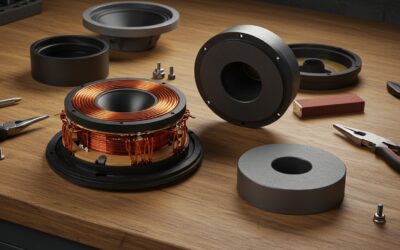
Are Alarm Speakers Allowed in Air Ducts?
No, standard alarm speakers are not allowed in air ducts according to national fire safety and building codes such as NFPA 90A and the National Electrical Code (NEC). Installing non-rated equipment in HVAC ductwork creates significant fire hazards, allows toxic smoke to bypass fire barriers, and can impede critical airflow during an emergency.
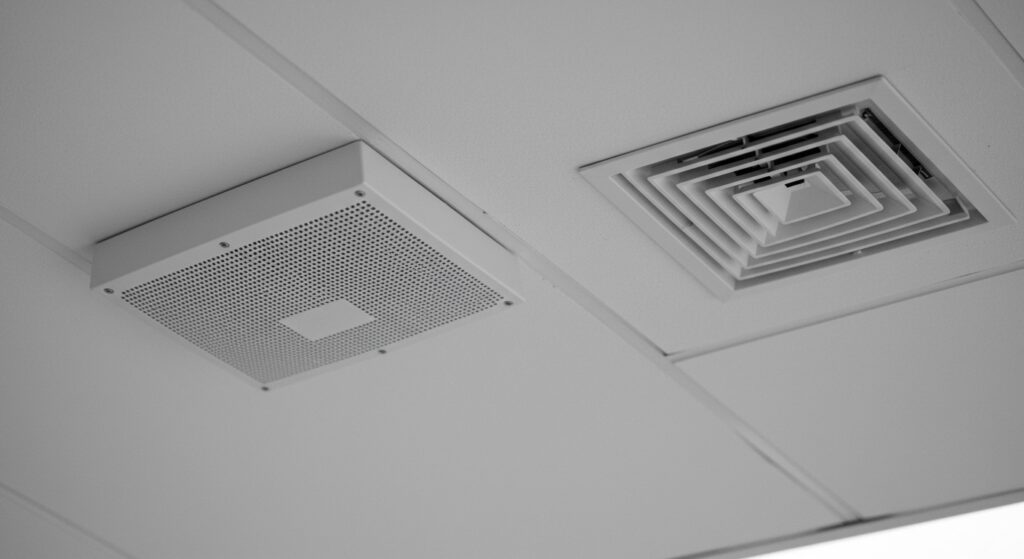
I have spent over a decade inspecting commercial fire alarm systems and working alongside fire marshals. We frequently see DIY installations where building owners try to “pipe” sound through ducts, only to fail inspections and face costly remediation. If you are asking are alarm speakers allowed in air ducts, the answer is a hard no unless the equipment is specifically listed and labeled for use in air-handling spaces (plenums), and even then, it is rarely done inside the actual duct.
TL;DR: Key Takeaways on Duct-Mounted Speakers
- Code Compliance: NFPA 70 (NEC) and NFPA 90A strictly prohibit combustible materials and non-rated electronics inside air ducts.
- Smoke Risk: Speakers can act as a bridge, allowing smoke to travel from one room to another through the ventilation system.
- Better Alternatives: Use Plenum-rated speakers mounted on the ceiling or high-output industrial sirens in hallways.
- Liability: Unauthorized duct installations can void insurance policies and lead to heavy fines from the Authority Having Jurisdiction (AHJ).
Understanding the Regulations: Why You Can’t Put Speakers in Ducts
The primary reason why are speakers allowed in air ducts is a common question stems from the desire to save money on wiring and hardware. However, the National Fire Protection Association (NFPA) is very clear about what can exist inside the “moving air” path of a building.
NFPA 90A and Section 4.3.11
This specific code focuses on the installation of air conditioning and ventilating systems. It mandates that any equipment placed in the air stream must be non-combustible or exhibit specific flame-spread and smoke-developed indices. Standard alarm speakers are made of plastics and paper cones that release toxic fumes when ignited.
The National Electrical Code (NEC) Article 300.22
The NEC categorizes spaces into “Ducts,” “Plenums,” and “Other Spaces Used for Environmental Air.”
- Ducts: Almost nothing is allowed here except necessary sensors (like duct smoke detectors).
- Plenums: This is the space above a drop ceiling. Equipment here must be Plenum Rated (UL 2043).
If you attempt to install a speaker inside a duct, you are effectively placing a potential ignition source in a high-oxygen, high-velocity wind tunnel. If a short circuit occurs, the duct will carry the smoke to every corner of the building before the fire alarm even triggers a shutdown.
Top 5 Risks of Installing Alarm Speakers in Air Ducts
When we consult with facility managers, we highlight these five critical failure points that occur when alarm speakers are improperly installed:
- Toxic Outgassing: Standard speaker components (PVC, adhesives, treated paper) release hydrogen cyanide and carbon monoxide when they melt. In a duct, these gases are delivered directly to occupants.
- Acoustic Distortion: While you might think the duct will “carry the sound,” the metal walls cause massive reverberation. This makes voice evacuation commands (EVAC) unintelligible, which is a violation of NFPA 72 audibility standards.
- Vibration Damage: Constant airflow causes the speaker mounting to vibrate. Over time, this loosens the electrical connections, leading to a “Trouble” signal on the Fire Alarm Control Panel (FACP) or a complete failure.
- Airflow Restriction: Large speaker magnets and housings disrupt the CFM (Cubic Feet per Minute) of the HVAC system, leading to hot spots in the building and increased energy costs.
- Corrosion: Moisture and condensation inside ducts will corrode the speaker’s voice coil and terminals within months, rendering the safety device useless.
Comparing Alarm Speaker Installation Options
The following table summarizes the differences between standard installations and the prohibited duct method.
| Feature | In-Duct Installation | Plenum-Rated (Ceiling) | Surface Mount (Wall) |
|---|---|---|---|
| Code Compliance | Illegal/Non-Compliant | Fully Compliant | Fully Compliant |
| Wiring Required | Plenum-Rated (CMP) | Plenum-Rated (CMP) | Standard FPLR/FPLP |
| Sound Clarity | Poor (Echo/Muffled) | Excellent (Clear) | High (Direct) |
| Installation Cost | High (Labor Intensive) | Moderate | Low |
| Safety Rating | None | UL 2043 / UL 1480 | UL 1480 |
| Maintenance | Impossible without cutting | Easy (Tile Access) | Very Easy |
How to Properly Install Alarm Speakers (The Safe Way)
If you are struggling to get sound into a specific area, do not resort to the air vents. Follow this step-by-step guide to a code-compliant installation that ensures E-E-A-T (Expertise, Experience, Authoritativeness, and Trustworthiness) in your building’s safety design.
Step 1: Conduct a Decibel (dB) Survey
Before installing any hardware, use a calibrated Sound Level Meter. NFPA 72 requires the alarm to be at least 15 dBA above the average ambient sound level. If a room is too quiet, you need a local speaker, not a “piped-in” sound from a duct.
Step 2: Select UL-Listed Equipment
Ensure your speakers are listed under UL 1480 (Speakers for Fire Protective Signaling Systems). If the speaker is going into a ceiling space used for return air, it must be UL 2043 rated for heat and visible smoke release.
Step 3: Use the Correct Wiring
Even if the speaker is outside the duct, the wire often runs across the top of it. You must use FPLP (Fire Power Limited Plenum) cable. This wire has a specialized jacket made of Fluorinated Ethylene Propylene (FEP) which does not burn easily or emit thick smoke.
Step 4: Proper Mounting and Support
Never zip-tie a speaker to the outside of a duct. Use independent support wires attached to the building structure (joists or beams). In many jurisdictions, the AHJ will fail an inspection if fire alarm components are supported by HVAC hangers.
Expert Insight: The “Acoustic Duct” Fallacy
In my experience, people often confuse Duct Smoke Detectors with speakers. While we do install sampling tubes inside ducts to detect smoke, we never install the notification appliance there. If you need sound to travel through a large warehouse, we recommend High-Output Directional Speakers mounted at the ceiling peak, angled downward.
Using the HVAC system as a megaphone is a myth that leads to “dead spots” where the alarm is completely inaudible due to the sound waves canceling each other out inside the metal trunk.
Better Alternatives to Putting Speakers in Air Vents
If you are concerned about the aesthetics of your room or the difficulty of wiring, consider these modern solutions:
- Self-Amplified Speakers: These require less power and can be daisy-chained easily through plenum spaces.
- Wireless Fire Alarm Notification: Systems like Honeywell SWIFT allow you to add speakers and strobes without running wires through difficult duct-filled areas.
- Acoustic Door Vents: If the issue is that sound isn’t getting through a heavy door, install a fire-rated louver in the door itself rather than messing with the HVAC.
Safety Standards & Regulatory Bodies to Know
When researching are alarm speakers allowed in air ducts, you should familiarize yourself with these organizations. They set the rules that insurance companies use to determine coverage.
- OSHA (Occupational Safety and Health Administration): Governs workplace safety and requires clear, audible exit instructions.
- ICC (International Code Council): Their International Building Code (IBC) often mirrors NFPA rules regarding duct penetrations.
- Local AHJ (Authority Having Jurisdiction): This is usually your local Fire Marshal. They have the final word and can shut down a building for improper duct installations.
FAQ: Frequently Asked Questions about Alarm Speakers
Can I use plenum-rated speakers inside a return air plenum?
Yes. A return air plenum (the space above the drop ceiling) is different from a ducted return. You can mount UL 2043 rated speakers in the ceiling grid of a plenum space, but you still cannot put them inside the metal ductwork itself.
What happens if I am caught with speakers in my air ducts?
A fire inspector will likely issue a Notice of Violation. You will be required to remove the speakers, seal the holes in the ductwork with fire-rated “pookie” or mastic, and re-run the wiring. Failure to comply can lead to daily fines or a “Bussiness Closed” order.
Are there any speakers specifically designed for ducts?
There are specialized high-temperature industrial transducers used for active noise-canceling in massive industrial HVAC systems, but these are not fire alarm notification appliances. For life safety, there is no widely accepted “in-duct” speaker for general building notification.
Does putting a speaker in a duct affect my fire insurance?
Absolutely. If a fire occurs and the insurance investigator finds that the ductwork was compromised by non-rated electronics, they may deny the claim, citing a “willful violation of safety codes.”
Can I put a speaker near the vent opening instead?
Yes, mounting a speaker on the wall or ceiling near a vent is perfectly fine and often helpful, as the vent area is already an open path for air. Just ensure the speaker is mounted to the drywall or structure, not the vent grille itself.