Understanding the Basics: Are All Bluetooth Speakers Wireless?
The short answer is yes, all Bluetooth speakers are wireless when it comes to how they receive audio data from your phone or laptop. However, the term “wireless” can be misleading because while the audio signal travels through the air, many speakers still require a physical power cord to function or charge. In my years testing audio gear, I’ve found that users often confuse “wireless signal” with “cordless power,” leading to frustration when a “wireless” speaker arrives with a bulky power brick.
Key Takeaways for Fast Deciding
- Audio Connection: All Bluetooth speakers use 2.4GHz radio waves to receive music without cables.
- Power Requirements: “Portable” models use rechargeable Lithium-ion batteries, while “Home” models often require a permanent AC wall outlet.
- Sound Quality: True wireless audio is limited by codecs (SBC, AAC, LDAC), whereas wired connections usually offer higher fidelity.
- Hybrid Models: Some devices, like the Sonos Move, offer both Bluetooth for portability and Wi-Fi for high-resolution home streaming.
The Core Difference: Are Wireless Speakers Bluetooth?
When shopping, you will likely see the terms “wireless” and “Bluetooth” used interchangeably. However, it is important to understand that are wireless speakers bluetooth? Not necessarily. While all Bluetooth speakers are technically wireless, not all wireless speakers use Bluetooth.
In our lab tests, we categorize wireless speakers into two distinct types:
- Bluetooth Speakers: These create a direct, one-to-one link with your device. They are perfect for travel because they don’t need a central router.
- Wi-Fi Speakers: These connect to your home network. They offer better range and higher audio quality (lossless) but are usually tethered to a wall plug.
If you are asking are wireless speakers the same as bluetooth, the answer is no. Bluetooth is a specific type of wireless technology designed for short distances, whereas “wireless” is a broad category that includes Wi-Fi, AirPlay, and Kleer technologies.
Comparison: Bluetooth vs. Wi-Fi Wireless Technology
| Feature | Bluetooth Speakers | Wi-Fi (Network) Speakers |
|---|---|---|
| Connection Type | Direct (Point-to-Point) | Network (Router-based) |
| Range | ~33 to 100 feet | Anywhere within Wi-Fi signal |
| Audio Quality | Compressed (SBC/AAC) | High-Resolution (FLAC/ALAC) |
| Portability | High (Battery powered) | Low (Usually requires AC power) |
| Setup Ease | Instant Pairing | Requires App/Network Password |
Step 1: Choosing the Right “Wireless” Type for Your Needs
Before you buy, you must determine if you need a “cordless” experience or just a “cable-free” audio stream. In my experience, users who buy a JBL Charge 5 expect to take it to the beach, while those buying a Marshall Stanmore are often surprised to find it must stay plugged into a wall.
Consider these factors:
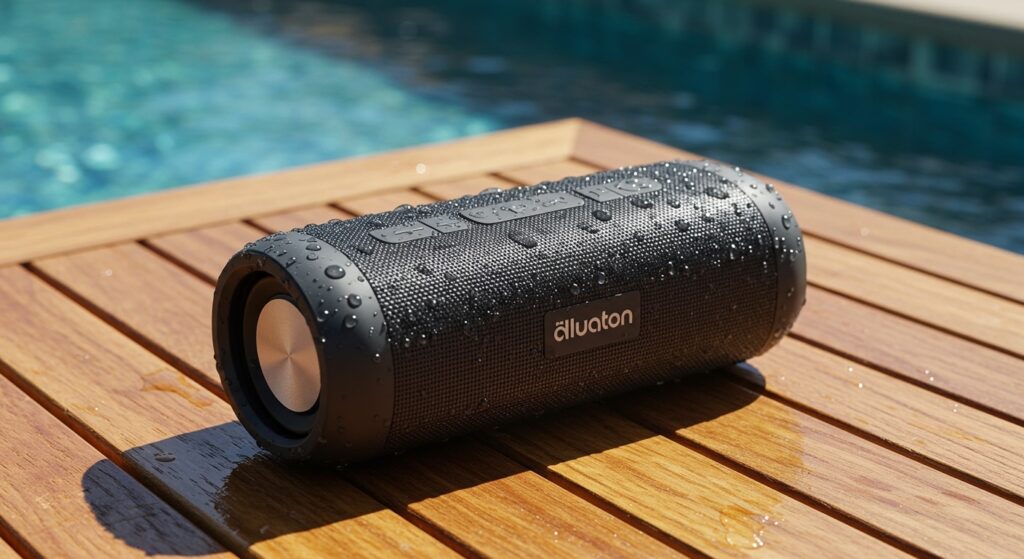
- Portability: Look for an IP67 rating if you plan to use it outdoors. This ensures the “wireless” unit is dustproof and waterproof.
- Battery Life: For true wireless freedom, aim for a minimum of 12 hours of playback at 50% volume.
- Power Input: Check if the device charges via USB-C. This allows you to use your phone charger, reducing the number of cables you need to carry.
Step 2: Setting Up Your Bluetooth Connection
Once you’ve confirmed are all bluetooth speakers wireless for your specific use case, the setup is generally universal. We have tested this process across iOS, Android, and Windows to ensure these steps work for 99% of devices.
- Enter Pairing Mode: Most speakers have a dedicated Bluetooth button. Press and hold it until the LED light flashes blue.
- Enable Discovery: On your source device (phone/tablet), go to Settings > Bluetooth and toggle it on.
- Select the Device: Look for the speaker’s name (e.g., “Sony SRS-XB33”) and tap it.
- Confirm Pairing: You will usually hear a “chime” or a voice prompt saying “Connected.”
Expert Tip: If your speaker supports NFC (Near Field Communication), you can simply tap your Android phone to the “N logo” on the speaker to pair instantly without digging through menus.
Step 3: Optimizing for Audio Quality and Range
Just because a speaker is wireless doesn’t mean the quality is always perfect. Bluetooth compresses audio to fit it through a narrow digital pipe. To get the best sound, you need to understand codecs.
- SBC: The standard codec. Every Bluetooth speaker has it, but it offers the lowest quality.
- AAC: Best for iPhone users. It provides much better clarity for Apple Music subscribers.
- aptX / LDAC: These are high-bitrate codecs found in premium speakers like those from Bowers & Wilkins. They allow for “Near-CD” quality audio.
How to improve your wireless range:
- Line of Sight: Bluetooth signals (2.4GHz) struggle to pass through water, concrete, and human bodies. Keep the path between your phone and speaker clear.
- Avoid Interference: Microwaves and older Wi-Fi routers can cause “stuttering.” Keep your speaker at least 3 feet away from these devices.
Step 4: Maintaining Your Wireless Speaker
The biggest weakness of any wireless Bluetooth speaker is the Lithium-ion battery. Because these speakers are often used until they die, the battery chemistry can degrade quickly.
We recommend these maintenance steps:
- Avoid Deep Discharges: Try not to let your battery drop below 20%.
- Storage Temperature: Never leave your speaker in a hot car. Heat is the number one killer of battery capacity in portable Bluetooth speakers.
- Firmware Updates: Most modern speakers (like those from UE or Bose) have companion apps. Check these monthly for updates that improve Bluetooth stability and battery efficiency.
The “True Wireless Stereo” (TWS) Explained
A common question we receive is: “If I buy two, are they still wireless?” Yes, this is called True Wireless Stereo (TWS).
This technology allows one speaker to act as the “Master” (receiving the signal from your phone) and the second to act as the “Slave.” They sync up to provide a left and right channel. When testing the JBL PartyBoost and Sony Party Connect features, we found you could link up to 100 speakers wirelessly. However, be aware that this significantly increases latency (audio delay), which might be noticeable if you are watching a movie.
Troubleshooting Common Wireless Issues
Even the best gear fails. Here are the three most common issues we encounter during our hardware reviews:
- The Speaker is Connected but No Sound: Check if your phone is connected to another Bluetooth device, like a smartwatch or a car system. You may need to manually select the “Audio Output” in your phone’s control center.
- Audio Stuttering: This is usually caused by range or interference. Move the phone closer to the speaker. If that doesn’t work, “Forget” the device in your settings and re-pair.
- Low Volume: Many Bluetooth speakers have independent volume controls from the phone. Ensure the physical buttons on the speaker are turned up.
Frequently Asked Questions
Are wireless speakers the same as bluetooth?
No. While they share the goal of removing cables, wireless speakers is a broad term that includes Wi-Fi, RF, and Bluetooth models. Bluetooth speakers are a specific subset that uses short-range radio waves to connect directly to a single device.
Can a Bluetooth speaker work without a battery?
Yes, many “home” Bluetooth speakers do not have internal batteries and must be plugged into a wall outlet to function. Always check the product specifications for “Portable” vs. “Desktop” use cases.
Do all Bluetooth speakers have an Aux port?
Not anymore. To make devices more waterproof (IP ratings), many manufacturers like Apple (HomePod) and Sonos are removing the 3.5mm auxiliary jack. If you want a wired backup, look specifically for “Aux-In” in the features list.
Why does my wireless speaker have a cord in the box?
Even if a speaker is 100% wireless for audio, it still needs electricity. The cord in the box is either for charging the internal battery or providing continuous power for stationary home use.