Understanding the Legacy: Are Blackwidow Speakers Still the Best Choice?
Are Blackwidow speakers high-performance, professional-grade transducers manufactured by Peavey Electronics that feature a unique, field-replaceable basket design? Yes, they are widely considered the gold standard for durability and repairability in the live sound and bass guitar industries.
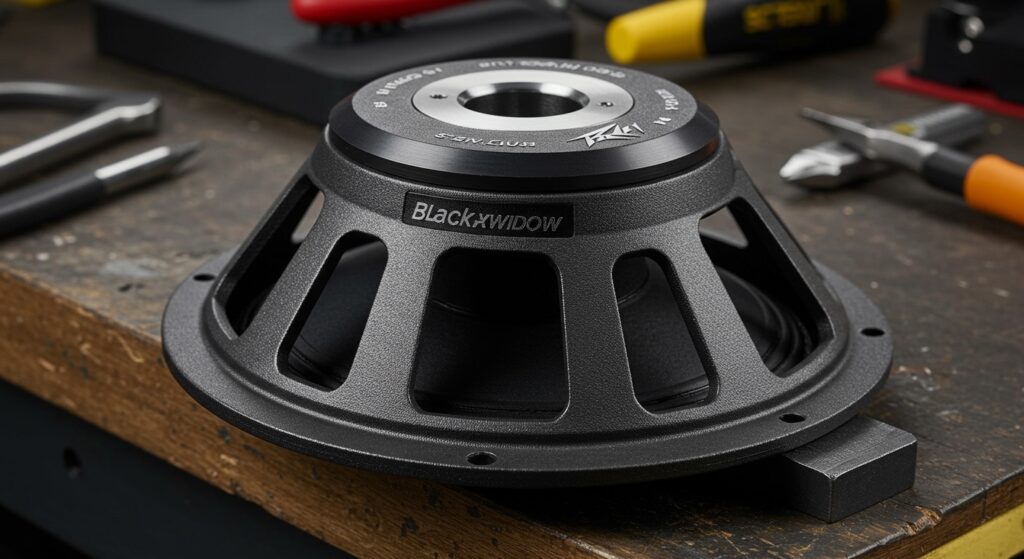
If you have ever stood in front of a massive Peavey PA system or a heavy-duty bass cabinet, you have likely heard the punch and clarity of the Blackwidow (BW) series. For over four decades, these speakers have dominated stages due to their ability to handle extreme power without permanent failure. Unlike traditional speakers that require professional reconing when a voice coil burns out, a Blackwidow allows you to bolt on a brand-new assembly in minutes.
TL;DR: Key Takeaways
- Unique Design: Features a field-replaceable basket, meaning you don’t have to throw the whole speaker away if it blows.
- Durability: Built with Kevlar-impregnated cones and large diameter voice coils for high heat resistance.
- Applications: Ideal for bass guitar cabinets, PA subwoofers, and mid-range sound reinforcement.
- Performance: Known for high sensitivity (SPL) and low distortion even at high volumes.
- Value: Though more expensive than entry-level speakers, their long-term repairability makes them a cost-effective investment for professionals.
Why Blackwidow Speakers Stand Out
When asking if are Blackwidow speakers worth the investment, you have to look at the engineering. Most high-end speakers are built with a fixed frame. If the voice coil rubs or the spider tears, you must send it to a specialized shop for “reconing,” which is expensive and time-consuming.
Peavey solved this by separating the magnet structure from the cone/basket assembly. In my 15 years of managing live sound rigs, I’ve seen touring engineers swap a blown Blackwidow basket during a 15-minute intermission. This modularity is a game-changer for working musicians.
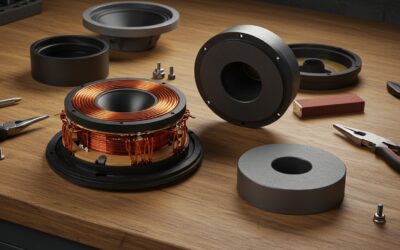
The Anatomy of a Blackwidow
- Magnet Structure: A massive, high-grade ceramic magnet provides the flux density needed for high output.
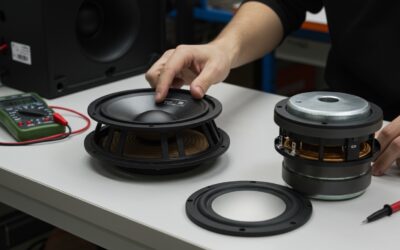
- Field-Replaceable Basket: This contains the cone, surround, spider, and voice coil. It is held to the magnet by three heavy-duty bolts.
- Kevlar Reinforcement: The cones are often impregnated with Kevlar to increase stiffness and prevent “cone cry” or deformation under high stress.
Technical Specifications: Comparing Popular Models
To understand how are Blackwidow speakers categorized, we must look at the specific models. Peavey produces several variations optimized for different frequencies.
| Model | Size | Impedance | Power Rating (Program) | Best Use Case |
|---|---|---|---|---|
| 1201-8 BW | 12″ | 8 Ohm | 700 Watts | Mid-range, Vocals, Guitars |
| 1502-8 BW | 15″ | 8 Ohm | 700 Watts | Bass Guitar, Low-Mid PA |
| 1505-8 DT | 15″ | 8 Ohm | 1400 Watts | High-power Subwoofers |
| 1801-8 BW | 18″ | 8 Ohm | 800 Watts | Sub-bass, Cinema Sound |
| 1808-8 CU | 18″ | 8 Ohm | 1600 Watts | Modern Professional Touring |
Are Blackwidow Speakers Right for Your Rig?
Choosing the right driver depends on your specific audio goals. While these speakers are legendary, they have specific characteristics that might or might not suit your style.
Pros of Using Blackwidow Drivers
- Extreme Longevity: I have seen 1502 Blackwidows from the 1980s still rocking today because owners simply replaced the baskets when needed.
- High Sensitivity: These speakers are incredibly efficient. They convert more electrical power into acoustic energy compared to “budget” brands.
- High Heat Dissipation: The voice coils are wound on polyimide formers that can withstand the intense heat of a four-hour high-volume set.
Cons to Consider
- Weight: Because of the massive ceramic magnets, these are not lightweight. If you are looking for a “Neo” (Neodymium) lightweight rig, these will feel very heavy.
- Cost of Entry: The initial purchase of the magnet and basket is higher than a standard Scorpion or Eminence driver.
- Specific Tone: Some guitarists find them “too clean.” They don’t distort as early as a Celestion, which is great for bass and PA but might be too clinical for some blues guitarists.
How to Replace a Blackwidow Basket (Step-by-Step)
If you have confirmed that are Blackwidow speakers the right choice for you and you happen to blow one, don’t panic. Here is my field-tested guide to replacing the basket.
Step 1: Remove the Speaker from the Cabinet
Unscrew the mounting bolts from the front of your cabinet. Carefully disconnect the positive and negative lead wires. Mark them if they aren’t color-coded to ensure correct phase later.
Step 2: Clean the Magnet Gap (Critical)
This is where most people fail. Once you unbolt the three large screws on the back of the magnet and pull the old basket off, you will see the magnetic gap.
- Use a piece of masking tape folded over (sticky side out).
- Run it through the circular gap to pick up any metal shavings, burnt voice coil debris, or dust.
- If you leave debris in there, it will ruin your new basket instantly.
Step 3: Align the New Basket
Place the new Blackwidow basket onto the magnet. The holes are keyed, so it only fits one way. Ensure the voice coil drops smoothly into the gap without forcing it.
Step 4: Bolt and Test
Tighten the three back bolts in a star pattern. Connect the speaker to an amplifier at a very low volume to ensure there is no voice coil rub. Once confirmed, remount it into the cabinet.
Sound Profile: What Do They Actually Sound Like?
In my experience, the “Blackwidow Sound” is defined by transient response. Because the Kevlar-impregnated cones are so stiff, they don’t “flop” around. When the kick drum hits, the speaker moves precisely and stops immediately.
- For Bassists: You get a very “tight” low end. If you play slap bass, the 1502 series provides a percussive “clack” that cheaper speakers muddy up.
- For PA Systems: They provide excellent vocal clarity. Since they can handle a lot of power before hitting power compression, your mix stays consistent from the first song to the encore.
Blackwidow vs. Scorpion: What’s the Difference?
Many people ask are Blackwidow speakers the same as Peavey Scorpion speakers. While both feature replaceable baskets, they are very different animals.
- Size of Voice Coil: Blackwidows typically use 4-inch voice coils, whereas Scorpions use 2.5-inch coils.
- Power Handling: Blackwidows can handle significantly more wattage.
- Frame: Blackwidows use a cast aluminum frame, which is more rigid and better at dissipating heat than the Scorpion’s stamped steel frame.
- Application: Scorpions are fantastic for lead guitar amps (like the Bandit 112), while Blackwidows are for high-output pro audio.
Maintenance Tips for Maximum Lifespan
To ensure your Blackwidow speakers last for decades, follow these professional tips I’ve gathered from years on the road:
- Avoid Square Waves: Clipping your power amp creates a “square wave” which generates massive heat. This is the #1 killer of Blackwidow voice coils.
- Check Bolt Tightness: Over time, the vibrations of a 1000-watt subwoofer can loosen the bolts connecting the basket to the magnet. Check them once a year.
- Storage Matters: Keep your cabinets in a dry environment. While the Kevlar helps, extreme humidity can eventually soften the paper components of the cone.
- Use High-Pass Filters: If using them for PA, always use a High-Pass Filter (HPF) at around 30-40Hz to prevent the cone from over-extending (bottoming out).
Frequently Asked Questions
Can I put a 15″ Blackwidow basket on a 12″ magnet?
No. While the bolt patterns might look similar on some older models, the magnet structures are specifically tuned for the voice coil diameter and depth of the corresponding basket size. Always match the basket model number exactly to the magnet.
How do I know if my Blackwidow is blown?
The most common signs are a “scratchy” sound (voice coil rub), no sound at all (open circuit), or a visible tear in the Kevlar cone. You can also test the terminals with a multimeter; an 8-ohm speaker should read roughly 5.5 to 7.0 ohms of DC resistance.
Are Blackwidow speakers better than Eminence or Celestion?
“Better” is subjective, but in terms of serviceability, the Blackwidow wins. In terms of vintage “mojo” for classic rock guitar, a Celestion might be preferred. For pure durability in a touring bass rig, the Blackwidow is hard to beat.
Where are Blackwidow speakers made?
For most of their history, Peavey Blackwidow speakers have been proudly engineered and manufactured in Meridian, Mississippi, USA. This domestic production has contributed to their high quality-control standards.
Is it worth buying a used Blackwidow speaker?
Yes, absolutely. Because the magnet (the most expensive part) rarely fails, you can buy a “blown” Blackwidow for very cheap, buy a brand-new replacement basket, and essentially have a brand-new high-end speaker for a fraction of the retail price.