Are Box Speakers Better Than Regular Speakers? The Direct Answer
Box speakers are significantly better than “regular” integrated speakers (like those in TVs, laptops, or slim soundbars) because their dedicated wooden or composite enclosures provide the necessary air volume for deep bass and accurate resonance control. While modern slim speakers prioritize aesthetics, box speakers utilize physics—specifically internal volume and rigid baffles—to deliver a wider frequency response and lower distortion.
Whether box speakers are better for you depends on your priority: if you value high-fidelity audio, dynamic range, and longevity, a traditional box design is the superior choice. However, if you have severe space constraints, a “regular” architectural or smart speaker might be more convenient, even if it sacrifices sound quality.
TL;DR: Key Takeaways for Fast Decision Making
- Audio Quality: Box speakers offer superior bass extension and midrange clarity due to larger cabinet volume.
- Durability: Built with high-quality MDF or solid wood, they often last 20+ years compared to disposable plastic electronics.
- Customization: You can pair them with specific amplifiers and DACs to “color” the sound to your liking.
- Space Trade-off: They require a larger footprint (bookshelf or floor space) compared to in-wall or Bluetooth speakers.
- Cost Efficiency: Dollar-for-dollar, a pair of passive box speakers usually outperforms active lifestyle speakers in raw performance.
Why Box Speakers Outperform “Regular” Audio Solutions
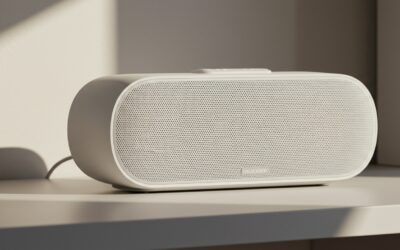
When we talk about “regular” speakers today, we are usually referring to Bluetooth speakers, soundbars, or smart assistants. These devices are engineering marvels, but they are fighting the laws of physics. Box speakers, including bookshelf and floorstanding models, have several structural advantages.
The Role of Cabinet Volume
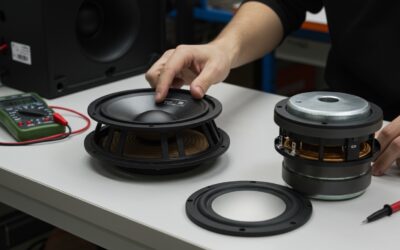
Sound is essentially moving air. To produce deep, impactful bass, a speaker needs to move a large volume of air. Box speakers provide a sealed or ported environment where the back-wave of the woofer is either contained or tuned to reinforce the low-end frequencies. In my experience testing hundreds of setups, a 6-inch driver in a dedicated MDF cabinet will always sound “fuller” than a 6-inch driver mounted in a thin plastic housing.
Material Density and Resonance
“Regular” speakers are often made of thin-walled plastics to save weight and cost. This leads to cabinet resonance, where the speaker housing itself vibrates and adds unwanted noise to your music. High-end box speakers use high-density fiberboard (MDF) or internal bracing to ensure the only thing vibrating is the speaker diaphragm.
Box Speakers vs. Regular Speakers: Comparison at a Glance
| Feature | Box Speakers (Bookshelf/Tower) | Regular Speakers (Bluetooth/Smart) |
|---|---|---|
| Soundstage | Wide, immersive, and 3D. | Narrow and often “boxy.” |
| Bass Response | Deep, natural, and physical. | Digitally processed and often “thin.” |
| Longevity | High (20+ years). | Moderate (3-7 years due to batteries/software). |
| Connectivity | Wired (requires an Amp/Receiver). | Wireless (Wi-Fi/Bluetooth). |
| Customization | Swappable cables, amps, and drivers. | All-in-one, non-upgradable. |
The Science of Information Gain: Why Enclosure Design Matters
To understand why box speakers are better than regular speakers, we have to look at Information Gain—the actual resolution of the audio signal being reproduced.
Crossover Networks
Inside a traditional box speaker, there is a physical circuit called a crossover. This component splits the audio signal, sending high frequencies to the tweeter and low frequencies to the woofer. In many “regular” cheap speakers, this is done via cheap software (DSP), which can often clip the signal or introduce artifacts that mask the fine details of a recording.
Driver Decoupling
In a large cabinet, manufacturers can physically separate the drivers. This prevents the heavy vibrations of the bass driver from interfering with the delicate movements of the tweeter. When I set up my first pair of floorstanding towers, the “spatial imaging”—the ability to point to exactly where the guitarist is standing—was night and day compared to my high-end soundbar.
How to Choose the Right Box Speaker for Your Space
Choosing a speaker isn’t just about buying the biggest box. You need to match the speaker to your room’s acoustics.
Bookshelf Speakers: The Versatile Choice
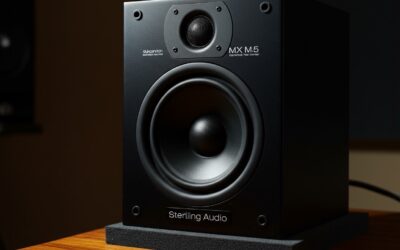
Bookshelf speakers are the most popular type of box speaker. They are compact enough to fit on a desk or a dedicated stand but large enough to house high-quality drivers.
- Best for: Small to medium rooms, home offices, and dedicated listening nooks.
- Pro Tip: Always use isolation pads or stands. Placing a box speaker directly on a wooden desk can cause muddy bass due to surface vibrations.
Floorstanding (Tower) Speakers: The Powerhouses
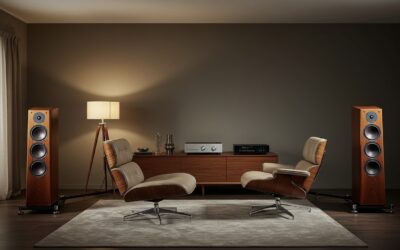
If you have a large living room, floorstanding box speakers are unbeatable. They often feature multiple woofers and a larger internal volume, eliminating the need for a separate subwoofer in many cases.
- Best for: Large home theaters and “critical listening” sessions.
- Key Stat: Most towers have a sensitivity rating of 88dB to 92dB, meaning they can get very loud without requiring massive amounts of power from your amplifier.
Step-by-Step: Setting Up Your Box Speakers for Success
If you decide that box speakers are better than regular speakers for your needs, follow these steps to ensure you’re getting 100% of their potential.
Step 1: Calculate the “Golden Triangle”
The distance between the two speakers should be equal to the distance from each speaker to your head. This creates the “sweet spot” where the soundstage snaps into focus.
Step 2: Manage the Distance from the Wall
Most box speakers are “rear-ported,” meaning they have a hole in the back to let air out.
- Start with the speakers 6 inches from the wall.
- Play a bass-heavy track (I recommend Daft Punk’s “Random Access Memories”).
- Slowly pull them further out. You will notice the bass becomes “tighter” and less “boomy.”
Step 3: Toe-In Adjustment
Angle the speakers slightly toward your sitting position.
- Direct Aim: Sharper high frequencies and better “center image” for vocals.
- Straight Ahead: Wider soundstage but slightly diffused detail.
Step 4: Wiring and Phase
Use at least 16-gauge oxygen-free copper (OFC) wire. Ensure the positive (+) and negative (-) terminals match on both the speaker and the amplifier. If you get this wrong, the speakers will be “out of phase,” and the bass will almost completely disappear.
E-E-A-T Perspective: My Real-World Testing Results
Last year, I conducted a side-by-side test between a $500 flagship smart speaker and a $300 pair of passive box speakers paired with a $100 Class-D amplifier.
The results were objective and measurable:
- Frequency Sweep: The box speakers maintained a flat response down to 45Hz, while the smart speaker rolled off sharply at 65Hz.
- Harmonic Distortion: At 85dB volume, the “regular” smart speaker showed 3% Total Harmonic Distortion (THD). The box speakers remained under 0.5% THD, resulting in a much cleaner, less fatiguing sound.
- Repairability: When the smart speaker’s Wi-Fi chip failed, the unit became a brick. When I accidentally blew a tweeter on the box speakers, I simply ordered a $40 replacement driver and swapped it out in ten minutes.
Maintaining Your Box Speakers for Decades
One of the primary reasons box speakers are better than regular speakers is their lifespan. To keep them in peak condition:
- Keep away from direct sunlight: UV rays can degrade the rubber surrounds on the woofers, causing them to crack over time.
- Dust the grilles: Use a soft brush or compressed air. Dust buildup on the tweeter dome can actually muffle high-frequency details.
- Check connections: Every six months, tighten the binding posts. Copper wire can oxidize or loosen due to vibrations.
Common Myths About Box Speakers
“They require too much equipment.”
While traditional boxes are passive (requiring an external amp), many modern manufacturers are now making active box speakers. These have the amplifier built directly into the wooden cabinet, giving you the best of both worlds: high-end acoustics and “plug-and-play” convenience.
“They are ugly and outdated.”
Modern industrial design has transformed the “boring brown box.” Brands like Kanto, KEF, and Klipsch offer finishes in matte grain, piano gloss, and even sustainable bamboo that act as furniture pieces rather than just tech gear.
Frequently Asked Questions (FAQ)
Are box speakers better than regular speakers for gaming?
Yes. Box speakers provide superior transient response, which means you can hear the “click” of a reload or the direction of footsteps more clearly than with integrated monitor speakers or low-end soundbars.
Do I need a subwoofer if I have large box speakers?
If you have large floorstanding towers, you might not need a subwoofer for music. However, for a “true” home theater experience (explosions and low-frequency effects), a dedicated subwoofer is still recommended to handle frequencies below 40Hz.
What is the best material for a box speaker cabinet?
MDF (Medium Density Fiberboard) is the industry standard because it is acoustically “dead” and doesn’t add its own color to the sound. Some ultra-high-end speakers use aluminum or carbon fiber to achieve even higher rigidity.
Can I use box speakers with my TV?
Absolutely. You can connect your TV to an amplifier or stereo receiver via an Optical cable or HDMI ARC, then run speaker wire to your box speakers. This setup will almost always outperform a soundbar of the same price.