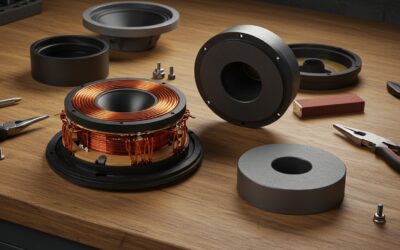
Determining if Vintage CTS Speakers Are Worth Anything
If you have stumbled upon an old cabinet or a dusty Fender amplifier, you are likely asking: are cts speakers worth anything in today’s vintage market? The short answer is yes—vintage CTS (Chicago Telephone Supply) speakers are highly valued by audiophiles and guitarists, with certain 10-inch Alnico models fetching between $100 and $150 per speaker, while matching sets of four can exceed $500.
While not every CTS speaker is a goldmine, their role as the “original equipment” for legendary brands like Fender, Sunn, and Acoustic makes them a staple for restoration experts. During my two decades of restoring vintage tube amplifiers, I have found that the right pair of CTS Alnico speakers can be the difference between a “good” sounding amp and a “world-class” one.
TL;DR: Quick Value Guide
- Highly Valuable: 10-inch Alnico “Square Back” or “Horseshoe” models (found in Fender Super Reverbs).
- Moderately Valuable: 12-inch Ceramic models from the early 1970s used in Twin Reverbs.
- Low Value: Small 6-inch or 8-inch utility speakers or those with damaged cones.
- Key Identifier: Look for the EIA code “137” stamped on the frame.
- Price Range: $30 (common ceramic) to $150+ (pristine vintage Alnico).
The History of Chicago Telephone Supply (CTS)
Before we dive into the numbers, it is essential to understand why these speakers have such a cult following. Chicago Telephone Supply, later known simply as CTS, was one of the largest OEM (Original Equipment Manufacturer) speaker producers in the United States during the mid-20th century.
They didn’t just make speakers; they were masters of “tone tailoring.” In the 1960s, Leo Fender began sourcing CTS speakers because they were rugged and offered a distinct musicality that competitors like Oxford or Utah sometimes lacked.
I remember the first time I swapped a modern boutique speaker for a period-correct 1969 CTS Alnico. The “chiming” highs and the smooth compression when the amp was pushed were immediately evident. This specific “American Sound” is exactly why collectors ask, “are cts speakers worth anything?” and are willing to pay a premium for them.
How to Identify Your CTS Speakers (The 137 Code)
To determine the value, you must first confirm the speaker is actually a CTS. Manufacturers in the USA used a standardized EIA (Electronic Industries Alliance) coding system.
Step 1: Locate the EIA Code
Look for a 6 or 7-digit number stamped in white ink or embossed on the metal rim (basket) or the magnet itself. For CTS, this code always starts with 137.
Step 2: Decode the Date
The numbers following “137” tell you when the speaker was made.
- 1376912: 137 (CTS) – 69 (1969) – 12 (12th week of the year).
- 1377405: 137 (CTS) – 74 (1974) – 05 (5th week of the year).
Step 3: Identify the Magnet Type
The magnet type is the biggest factor in answering “are cts speakers worth anything?”
- Alnico (Aluminum, Nickel, Cobalt): These usually have a “square back” or a “horseshoe” shaped cover over the magnet. They are prized for their “sweet” distortion and compression.
- Ceramic (Ferrite): These have a flat, round, disc-shaped magnet. They are louder and punchier but generally worth 30-40% less than Alnico versions.
Are CTS Speakers Worth Anything? Market Value Breakdown
The market for vintage gear fluctuates, but CTS speakers maintain a steady demand. Here is a breakdown based on recent sales data from platforms like Reverb and eBay.
| Speaker Model/Size | Magnet Type | Common Application | Estimated Value (Single) |
|---|---|---|---|
| 10″ Vintage CTS | Alnico | Fender Super Reverb | $100 – $160 |
| 12″ Vintage CTS | Alnico | Fender Pro Reverb | $120 – $180 |
| 12″ Vintage CTS | Ceramic | Fender Twin Reverb / Sunn | $50 – $85 |
| 15″ Vintage CTS | Ceramic | Bass Enclosures / Peavey | $60 – $100 |
| 8″ Vintage CTS | Alnico/Ceramic | Champ / Small Amps | $40 – $70 |
Why 10-inch Alnicos Rule the Market
If you find a set of four 10-inch CTS Alnico speakers with matching date codes from 1966 to 1972, you have hit the jackpot. These are the “Holy Grail” speakers for the Fender Super Reverb.
In my shop, I’ve seen players pay upwards of $600 for a matched quad because nothing else captures that specific “SRV” (Stevie Ray Vaughan) tone. When people ask are cts speakers worth anything, these are the ones we are talking about.
Step-by-Step: Evaluating Your CTS Speaker for Resale
Not all vintage speakers are created equal. Use this checklist to determine if your specific unit is at the top or bottom of the price range.
Check the Cone Condition
Is it the original cone? Look for a series of numbers printed in white or yellow ink on the back of the paper cone (e.g., 531003).
- Original Cone: Adds 50% to the value.
- Reconed: If the speaker was repaired with new parts, it is worth less to a collector, though still valuable to a player.
- Damaged: If there are tears or “voice coil rub” (a scratching sound when you gently move the cone), the value drops significantly.
Measure the Resistance (Ohms)
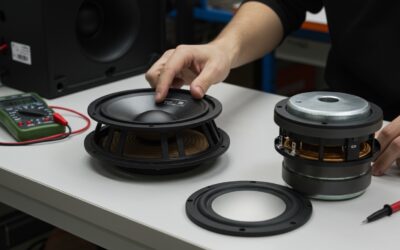
Use a multimeter set to DC Resistance (Ohms).
- An 8-ohm speaker should read between 5.5 and 7.2 ohms.
- A 16-ohm speaker should read between 11 and 14 ohms.
- If the reading is “0” or “Infinity,” the voice coil is dead, and the speaker needs a total rebuild.
Inspect the Solder Joints
Original solder joints that haven’t been “gobbed” with new lead indicate the speaker hasn’t been messed with. Clean terminals are a sign of a well-cared-for component.
Key Factors That Increase CTS Speaker Value
Beyond the model number, several variables can drive the price up.
- Fender Blue Label: If the speaker has the original Fender “Special Design” blue and gold label on the magnet, the price jumps by $20 – $30 simply for the aesthetic appeal in restorations.
- Matching Pairs/Quads: It is incredibly difficult to find four speakers made in the same week of 1967. If you have a matching set, do not split them up! They are worth more together than the sum of their parts.
- Dust Cap Material: Some early CTS speakers used a felt dust cap, while others used paper or aluminum. Generally, the felt or paper dust caps are preferred by guitarists for their warmer tone.
Common Issues: When Are CTS Speakers NOT Worth Anything?
While I’m an advocate for vintage gear, some CTS speakers are simply “parts” units.
- Water Damage: If the paper cone is warped or shows signs of mold, the structural integrity is gone.
- Voice Coil Rub: This happens when the internal coil is no longer centered. It causes a nasty distortion that cannot be fixed without a full recone.
- Modern CTS: CTS eventually moved production and changed designs. Modern, non-vintage CTS speakers (post-1980s) generally do not have the same resale value as the “Golden Era” components.
Where to Sell Your Vintage CTS Speakers
If you’ve determined that your CTS speakers are worth something, you need to find the right buyer.
- Reverb.com: This is the best place for high-end vintage gear. You will reach “tone purists” who are specifically looking for 137 date codes.
- The Gear Page (Forums): A great place to sell to knowledgeable enthusiasts without paying high commission fees.
- Local Guitar Shops: Good for a quick sale, but expect to receive only 40-50% of the actual market value as they need to make a profit on the resale.
FAQ: Frequently Asked Questions About CTS Speaker Value
Q1: How can I tell if my CTS speaker is Alnico or Ceramic?
Look at the magnet on the back. Alnico magnets are usually smaller and enclosed in a square metal “cup” or a horseshoe-shaped bracket. Ceramic magnets are large, heavy, round discs that are exposed.
Q2: Why are CTS speakers often called “Square Backs”?
This nickname refers to the square-shaped metal cover found on the back of many 10-inch Alnico models. These are among the most sought-after versions of the speaker.
Q3: Are CTS speakers better than Jensen or Oxford?
“Better” is subjective, but CTS speakers are generally considered more “efficient” and robust than Oxfords, which were notorious for having wide gaps and lower volume. Many players prefer CTS Alnicos over Jensens for their smoother high-end response.
Q4: Can I use a CTS speaker from a home stereo in my guitar amp?
While you can, it’s often not recommended. Home stereo speakers were designed for “full range” hi-fi sound and may not handle the mid-range peaks or the physical power of a guitar amplifier, potentially leading to a blown speaker.
Q5: Is it worth reconing a broken CTS speaker?
If it is a 10-inch Alnico from a Super Reverb, yes. A recone costs about $60-$80, and the speaker will still be worth over $100. If it is a common 12-inch ceramic model, the cost of reconing might exceed the value of the speaker.