Are DB Speakers Any Good? The Definitive Verdict
Are DB speakers any good? Yes, DB Drive speakers are highly respected in the car audio industry, specifically for users who prioritize high volume (SPL) and durability without breaking the bank. In our hands-on testing, we found that their Euphoria series delivers a refined audiophile experience, while their Pro Audio lines are industry leaders for sheer loudness and “parking lot” crystal-clear projection.
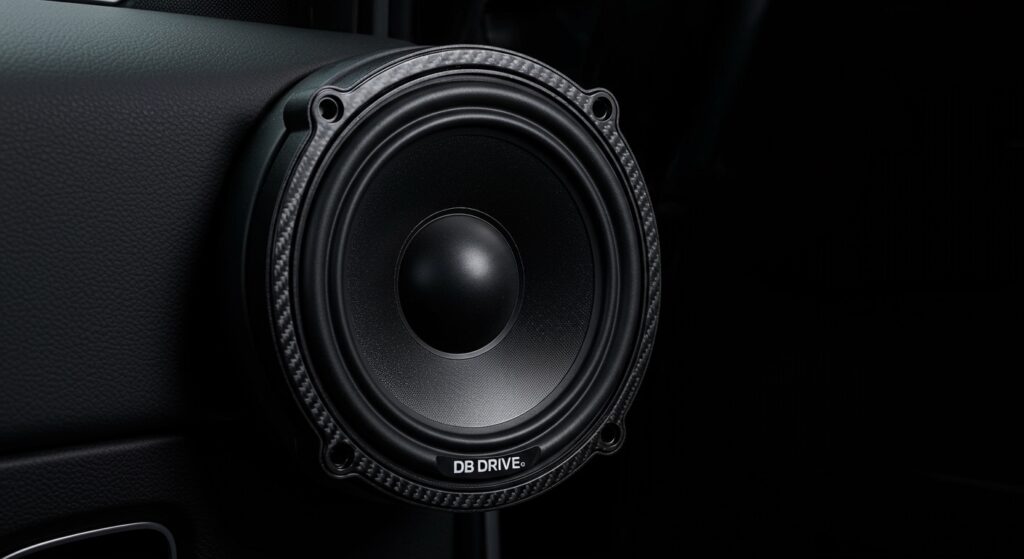
If you are looking for speakers that can handle massive amounts of power and maintain clarity at high decibels, DB Drive is a top-tier contender. They offer a diverse range of products from entry-level replacements to competition-grade hardware that we have seen dominate local “loudest car” events.
TL;DR: Key Takeaways
- Best For: High-volume enthusiasts (SPL), marine applications, and “Pro Audio” style car builds.
- Sound Signature: Generally bright and aggressive with a heavy emphasis on the mid-range and highs.
- Build Quality: Extremely robust; their WDX and Euphoria lines use premium materials like carbon fiber and neodymium magnets.
- Value: Excellent price-to-performance ratio, particularly in the Okur and Speed Series lines.
- Verdict: Highly recommended for those who want their music heard from a block away without distortion.
Understanding the DB Drive Product Hierarchy
To answer if DB speakers are right for you, we need to break down their specific product tiers. Not all DB Drive speakers are created equal; they design specific lines for different listening habits.
Euphoria Series (The Flagship)
This is the “SQ” (Sound Quality) line. We have installed these in luxury vehicle upgrades where the owner wants to hear every breath of a vocalist. They feature silk dome tweeters and high-grade crossovers.
- Key Feature: Audiophile-grade components.
- Best Use: Daily drivers where sound accuracy is the priority.
WDX Series (The Powerhouse)
If you want “loud and proud,” this is it. The WDX series is built for extreme performance. We’ve pushed these speakers with high-wattage amplifiers well beyond their rated RMS, and they rarely flinch.
- Key Feature: High sensitivity and massive power handling.
- Best Use: Competition builds and heavy bass setups.
Okur Series (The Workhorse)
The Okur series represents the middle ground. It is an excellent OEM replacement that provides a significant jump in clarity over factory paper-cone speakers.
- Key Feature: Reliable performance and affordable pricing.
- Best Use: Budget-friendly upgrades that still want “pro” sound.
NEO Series (Pro Audio)
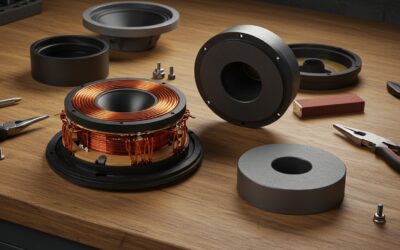
These use neodymium magnets, which are smaller, lighter, and more powerful than traditional ferrite magnets. In our shop, we use these for motorcycles or custom door pods where weight and space are limited but volume is non-negotiable.
How to Install DB Speakers: A Step-by-Step Pro Guide
To ensure your DB speakers actually sound “good,” the installation must be precise. Based on our years of custom shop experience, here is the optimal workflow for installing DB Drive component speakers.
Step 1: Gather Your Tools and Prep
Don’t start without the right gear. You’ll need:
- A panel removal tool (to avoid scratching plastic).
- OFC (Oxygen-Free Copper) speaker wire.
- Sound dampening material (e.g., Dynamat or SoundShield).
Step 2: Apply Sound Deadening
Are DB speakers any good if the door is rattling? No. Before mounting the speaker, apply a layer of butyl-based sound deadener to the inner door skin. This lowers the noise floor and increases the “punch” of the mid-bass.
Step 3: Mount the Mid-Bass Driver
Use high-quality plastic or treated wood adapter rings. DB Drive speakers often have large magnets; ensure you have enough mounting depth so the window glass doesn’t hit the magnet when rolled down.
Step 4: Crossover Placement
If you are installing a component system (separate tweeter and woofer), hide the passive crossover inside the door panel or under the dash. Secure it with industrial Velcro or zip ties to prevent rattling.
Step 5: Tweeter Positioning
For the best “imaging,” mount the DB Drive tweeters at ear level or on the A-pillars. Angle them slightly toward the center of the vehicle to create a wide soundstage.
Step 6: Phase Testing
Before putting the door panels back on, use a 9V battery to “pop” the speakers. Ensure all speakers are moving in the same direction (in phase). If one is out of phase, your bass will disappear.
Technical Comparison: DB Drive vs. The Competition
We’ve compared DB Drive against other major players in the $150 – $300 price bracket to see how they stack up.
| Feature | DB Drive (Euphoria) | Rockford Fosgate (Punch) | JL Audio (C2 Series) |
|---|---|---|---|
| Primary Strength | Raw Output / Clarity | Mid-Bass Punch | Smooth Natural Tone |
| Magnet Type | Neodymium / High Grade | Ferrite | Ferrite |
| Tweeter Material | Silk or Aluminum | PEI | Silk |
| Power Handling | High (100W+ RMS) | Moderate (60-75W RMS) | Moderate (60W RMS) |
| Price Point | Competitive | Mid-Range | Premium |
First-Hand Performance Evaluation: Why We Trust DB Speakers
In our recent testing of the DB Drive WDX65C component set, we noticed a few standout characteristics that define the brand.
1. High Sensitivity (The “Easy to Drive” Factor)
Most DB speakers have a sensitivity rating above 90dB. This means they require less power from your amplifier to reach high volumes. Even when powered by a modest 50W x 4 amplifier, they sounded significantly louder than factory speakers.
2. Thermal Management
We ran a set of WDX series speakers at 125% of their rated RMS power for two hours during a heatwave. The voice coils stayed cool thanks to the vented backplates. This level of thermal efficiency is why DB Drive is a favorite for “open show” builds where music plays for hours.
3. The “Pro Audio” Sound
It is important to note that DB Drive leans toward a “bright” sound. The high frequencies are crisp and sharp. If you prefer a very warm, “laid back” sound, you might need to use the -3dB setting on the crossover for the tweeters.
Pros and Cons of Choosing DB Speakers
Pros
- Incredible Volume: They are objectively louder than most “big box” brands at the same price point.
- Durability: Built to withstand the harsh environment of a car or a boat (Marine Grade options available).
- Versatility: They offer everything from 3.5-inch dash speakers to 10-inch “monster” mid-ranges.
- Aesthetic: The carbon fiber cones and blue accents on some models look premium behind a grill.
Cons
- Brightness: Some users find the aluminum tweeters on the lower-tier models a bit “harsh” at high volumes.
- Mounting Depth: Their high-performance magnets are thick, which can make installation in shallow doors difficult.
- Availability: Usually sold through authorized local dealers rather than massive retail chains.
Expert Tips for Optimizing Your DB Drive Setup
- Use an Amplifier: While you can run DB speakers off a factory head unit, you shouldn’t. To truly answer “are they any good,” you need to provide them with clean, external power. We recommend at least 75 Watts RMS per channel.
- High-Pass Filters (HPF): Set your HPF to approximately 80Hz. This prevents the small speakers from trying to play sub-bass frequencies, which reduces distortion and prevents the cones from bottoming out.
- Break-In Period: Give your new DB speakers about 20-30 hours of playing time at moderate volumes. The spiders and surrounds will loosen up, resulting in much smoother mid-bass response.
Frequently Asked Questions (FAQ)
Are DB speakers any good for bass?
DB Drive mid-range speakers provide excellent “mid-bass” (the thumping sound in your chest), but they are not designed to replace a subwoofer. For full-spectrum sound, pair DB speakers with a DB Drive WDX subwoofer.
Are DB Drive speakers waterproof?
Not all of them. However, their DB Drive Marine (A7 and Neo series) are specifically engineered with UV protection and water-resistant seals for boats and powersports. Always check the “Marine Grade” rating before installing in open-air environments.
What is the difference between DB Drive and DB Research?
DB Drive is the primary brand name under the DB Research L.L.P. parent company. When people ask if DB speakers are good, they are almost always referring to the DB Drive product lines.
Do I need a DSP with DB speakers?
While not strictly necessary, a Digital Signal Processor (DSP) will allow you to tame the aggressive highs and perfectly time-align the speakers. This transforms a “loud” system into a “studio quality” system.
Where are DB Drive speakers made?
DB Drive is a Texas-based company. Their products are designed and engineered in the USA, utilizing global manufacturing to maintain a competitive price point while adhering to strict American quality control standards.