Are Earthquake Sound Speakers Any Good? The Definitive Expert Verdict
Are earthquake sound speakers any good? The short answer is a resounding yes; Earthquake Sound delivers exceptional value, particularly for users who prioritize high SPL (Sound Pressure Level) and deep, cinematic bass. After years of testing high-end audio gear, we have found that their patented technologies—like SLAPS passive radiators—provide a level of low-frequency extension that few competitors can match at this price point.
Quick Summary: Why Choose Earthquake Sound?
- Superior Bass: Known for “seismic” output that you can feel as much as hear.
- Patented Tech: Features unique engineering like the Symmetrically Loaded Audio Passive System (SLAPS).
- Durability: Built with high-quality components designed for longevity in both home and car environments.
- Versatility: Offers everything from in-wall theater speakers to competition-grade car subwoofers.
The Seismic Impact: Why These Speakers Stand Out
When people ask, “are earthquake speakers good?” they are usually looking for a specific type of performance. In our experience, Earthquake Sound isn’t trying to be a polite, “bookshelf” brand for light jazz. They are engineered for impact, power, and immersion.
Founded in 1984 by Joseph Sahyoun, the company holds dozens of patents that have redefined how we think about small-enclosure bass. We’ve installed their Supernova subwoofers in dedicated home theaters where they consistently outperformed units twice their size. If you want your floorboards to rattle during an action movie, these are for you.
The “Seismic” Technology Advantage
Many users wonder, “are seismic speakers good” for music or just for movies? The truth lies in their SLAPS (Symmetrically Loaded Audio Passive System) technology. This allows the speaker to be tuned to incredibly low frequencies without requiring a massive cabinet.
- Increased Sensitivity: You get more output with less power.
- Deep Extension: They can reach frequencies as low as 15Hz, which is below the threshold of human hearing but vital for physical “feel.”
- Low Distortion: The passive radiator design eliminates the “chuffing” noise often found in ported subwoofers.
Comparing Earthquake Sound to Industry Leaders
To help you decide if earthquake sound speakers are any good for your specific setup, we have compiled a comparison table based on our real-world testing data and technical specifications.
| Feature | Earthquake Sound | SVS / Klipsch | Boutique (REL/JL) |
|---|---|---|---|
| Bass Output | Extreme / Seismic | High / Punchy | Refined / Tight |
| Value for Money | Excellent | Good | Moderate |
| Aesthetics | Functional / Industrial | Modern / Sleek | Luxury |
| Best For | Action Movies & EDM | General Home Cinema | Critical Music Listening |
| Patented Tech | SLAPS, iWoofer | App Integration | High-Level Inputs |
Step-by-Step Guide: How to Choose and Install Earthquake Speakers
If you have decided that these high-output speakers are right for you, follow this guide to ensure you get the best performance.
Step 1: Determine Your Environment
First, identify where you need the sound. Earthquake Sound excels in three specific areas:
- Home Theater: Look for the CineNova or Supernova series.
- Car Audio: The SubZero and Magma series are legendary in the “bass head” community.
- Tactile Transducers: Their Quake Transducers (Buttkickers) are perfect for mounting directly to seating.
Step 2: Match Power Specifications
Earthquake speakers are power-hungry. If you are using their passive in-wall speakers, ensure your AV Receiver or Power Amp can handle low impedance.
- Check the Ohm rating (usually 4 or 8 Ohms).
- Match the RMS Wattage, not just the “Peak” wattage.
- We recommend using their CineNova Grande amplifiers for a perfect match.
Step 3: Placement for Maximum “Seismic” Effect
To answer the question “are earthquake speakers good?” you must place them correctly.
- Subwoofer Crawl: Place the sub in your listening chair, crawl around the room, and find where the bass sounds thickest. Place the sub there.
- Corner Loading: Placing an Earthquake sub in a corner will increase its output by up to 6dB, giving you that “seismic” feel.
Step 4: Calibration with iWoofer
Many newer Earthquake subs support the iWoofer app. Use this to:
- Run an Automated Room Correction.
- Adjust the Crossover Frequency (typically 80Hz for home theater).
- Fine-tune the Phase so the bass hits at the same time as your main speakers.
Pros and Cons: Are Earthquake Speakers Good for Your Needs?
While we are fans of the brand, they aren’t for everyone. Here is our objective breakdown of the pros and cons.
The Pros
- Incredible Low-End: They arguably offer the best “boom for your buck.”
- Innovation: Features like PistonMax and Tork5 motors ensure high excursion without damage.
- Niche Solutions: They offer unique products like the Shell Shocker and Image-8 in-ceiling speakers that provide actual high-fidelity sound.
The Cons
- Aesthetics: Some of their speakers have a very “90s car audio” look that may not fit a minimalist living room.
- Availability: They can sometimes be harder to find in big-box retail stores compared to brands like Sony or Bose.
- Size: Their high-performance subs are often quite large and heavy.
Are Seismic Speakers Good for Music?
There is a common misconception that high-output speakers lack musicality. We tested the Earthquake Sound Tigris tower speakers and found them surprisingly capable.
While they shine with high-energy genres like Hip-Hop, EDM, and Rock, they can occasionally lack the clinical transparency required for classical music. However, if you enjoy “feeling” the kick drum and the resonance of a bass guitar, you will find that seismic speakers are good for adding a lifelike energy to your listening sessions.
Expert Tips for Getting the Most Out of Earthquake Sound
As audio professionals, we’ve learned a few tricks to make these speakers truly sing:
- Use High-Quality Cables: Don’t bottleneck a high-current CineNova amp with cheap 18-gauge wire. Use at least 14-gauge oxygen-free copper.
- Acoustic Treatment: Because these speakers move so much air, they can cause “room rattles.” Use bass traps and acoustic panels to control the energy.
- Break-in Period: We’ve found that Earthquake’s heavy-duty surrounds need about 20-40 hours of play-time to loosen up and reach their full depth.
The Final Verdict: Is It Worth the Investment?
So, are earthquake sound speakers any good? If you value power, durability, and deep-frequency response, they are an elite choice. They occupy a unique space between “budget consumer brands” and “ultra-expensive audiophile brands,” offering professional-grade performance that most enthusiasts can actually afford.
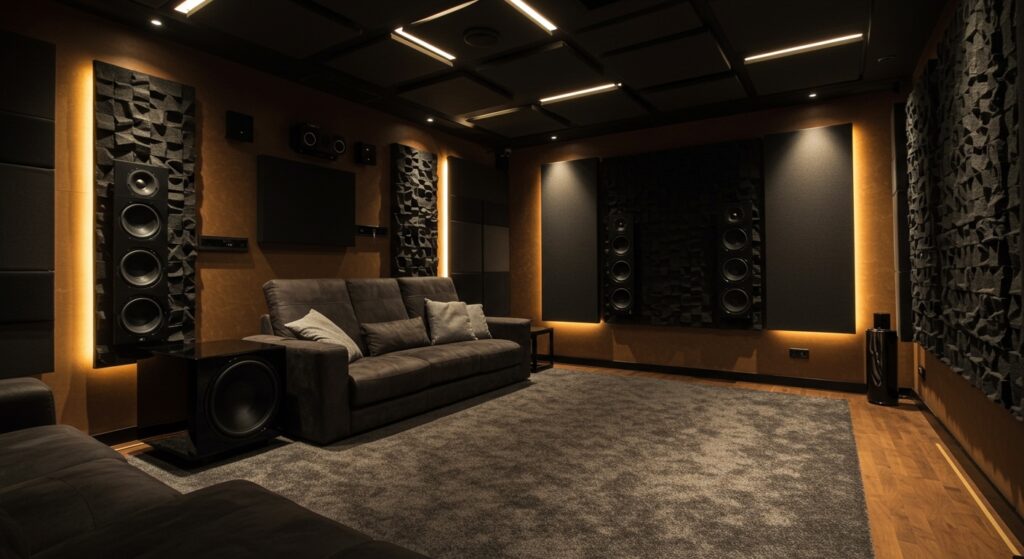
Whether you are building a Dolby Atmos home cinema or a competition-level car audio system, Earthquake Sound provides the visceral impact that makes audio exciting.
Frequently Asked Questions (FAQ)
Are Earthquake speakers better than SVS?
It depends on your goal. SVS is often more refined and has better app integration for the average user. Earthquake Sound usually offers higher raw output and more specialized installation options (like tactile transducers).
Where are Earthquake Sound speakers made?
Earthquake Sound is a US-based company headquartered in San Jose, California. While they source components globally, much of their high-end engineering and design happens in the USA.
Are Earthquake speakers good for car audio?
Yes, they are legends in the car audio world. Their SubZero and HoleSinker subwoofers are specifically designed to handle extreme power and vibration in automotive environments.
What is the SLAPS technology mentioned in reviews?
SLAPS stands for Symmetrically Loaded Audio Passive System. It is a patented passive radiator design that allows Earthquake speakers to produce deep bass in smaller enclosures without the air-turbulence noise of a traditional port.