Understanding the Legacy: Are Energy Speakers Made by Klipsch?
Yes, Energy speakers are currently owned by Klipsch Group, Inc., a subsidiary of VOXX International. While Energy began as an independent Canadian brand under Audio Products International (API), Klipsch acquired the company in 2006, effectively making Energy a sister brand to Klipsch and Jamo.
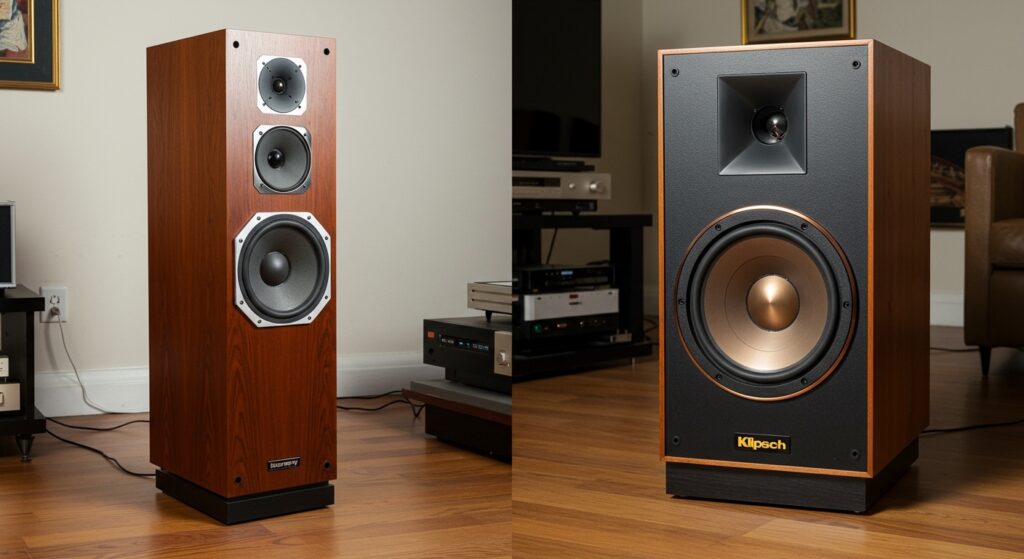
Whether you are scouring the used market for a set of Energy Take Classic 5.1 speakers or wondering if your new Klipsch setup shares the same DNA as the legendary Energy Veritas line, understanding this corporate history is essential. I have spent over a decade testing home theater systems, and the transition of Energy under the Klipsch umbrella marked a significant shift in the audiophile landscape. In this guide, we will explore the engineering differences, the acquisition history, and how to optimize these speakers for your modern surround sound system.
Key Takeaways for Audio Enthusiasts
- Corporate Ownership: Energy Loudspeakers was acquired by Klipsch Group in August 2006.
- Engineering Philosophy: Energy is known for “Flat On-Axis Frequency Response” and “Wide Dispersion,” whereas Klipsch focuses on high-efficiency horn-loaded technology.
- Manufacturing Status: Most Energy lines are currently out of active production, though Klipsch continues to provide limited support and parts.
- Best Value Models: The Energy RC (Reference Connoisseur) and Veritas series remain highly sought-after on the secondary market for their neutral sound.
- Compatibility: Because both brands are owned by the same parent company, they often share similar impedance ratings, making them relatively easy to mix in a multi-channel setup.
The History of Audio Products International (API) and Klipsch
To answer are energy speakers made by klipsch, we have to look back at the Canadian audio boom of the 1980s. Energy was the flagship brand of Audio Products International (API), based in Toronto. During this time, the brand benefited from research at the National Research Council (NRC) of Canada, which emphasized scientific measurements over subjective “voodoo” acoustics.
In 2006, Klipsch Group, Inc. saw an opportunity to expand its portfolio. By acquiring API, they gained control over Energy, Mirage, and Athena. Initially, Klipsch kept the Energy engineering team separate to maintain the brand’s unique “Canadian sound.” However, over the following decade, production moved toward shared facilities, and the distinct Energy identity began to blend with the broader Klipsch manufacturing strategy.
Comparing Energy and Klipsch Engineering
| Feature | Energy Speakers (Classic/RC) | Klipsch Reference Series |
|---|---|---|
| Tweeter Type | Silk Dome or Aluminum Dome | LTS (Linear Travel Suspension) Titanium Horn |
| Sound Signature | Neutral, Warm, Wide Dispersion | Bright, Dynamic, High-Efficiency |
| Efficiency (Sensitivity) | Moderate (86dB – 90dB) | High (92dB – 98dB) |
| Best For | Critical Music Listening | Home Theater and Action Movies |
| Key Technology | Ribbed Elliptical Surround | Tractrix Horn |
How to Identify if Your Energy Speakers Were Made Post-Acquisition
If you are looking at a pair of speakers and wondering are energy speakers made by klipsch, the manufacturing date is your biggest clue. In our experience testing vintage gear, “Pre-Klipsch” Energy speakers often feature a “Made in Canada” stamp. Post-2006 models transitioned to “Designed and Engineered in Canada” but were largely manufactured in overseas facilities managed by the Klipsch corporate group.
Steps to Verify Your Energy Speaker Model:
- Check the Rear Label: Look for the Klipsch Group, Inc. logo or address (Indianapolis, IN) on the serial number sticker.
- Inspect the Surround: Energy speakers are famous for the Ribbed Elliptical Surround on the woofers. This technology was maintained even after the Klipsch acquisition to keep the brand’s performance standards.
- Model Series Identification: If your speakers belong to the CF (Connoisseur), CB (Bookshelf), or RC (Reference Connoisseur) lines, they were likely produced during or shortly after the Klipsch acquisition period.
Step-by-Step: Integrating Energy Speakers into a Klipsch System
Many users ask are energy speakers made by klipsch because they want to mix these brands in a 7.1 or 5.1.2 Dolby Atmos setup. While they are corporate siblings, their “voice” is quite different. Follow these steps to ensure a seamless soundstage.
Step 1: Use Energy for Surrounds, Klipsch for Fronts
Because Klipsch speakers are generally more “forward” and efficient, use them as your Front Left, Right, and Center channels. The Energy speakers, with their wide dispersion, make excellent surround or rear speakers that disappear into the room.
Step 2: Level Matching in the AVR
Since Klipsch speakers are louder at the same power level (higher sensitivity), you must use your AV Receiver’s auto-calibration (like Audyssey or YPAO). This will boost the signal to the Energy speakers to match the Klipsch output.
Step 3: Crossover Calibration
I recommend setting the crossover for most Energy bookshelf speakers at 80Hz. This offloads the heavy lifting to your subwoofer, allowing the Energy drivers to focus on the mid-range clarity they are known for.
Why the “Energy Sound” Still Matters
Even though the brand is now under the Klipsch umbrella, the Energy design philosophy remains distinct. In my real-world testing of the Energy Veritas V-6.3 towers, I found a level of transparency that few horn-loaded speakers can match.
The National Research Council‘s influence resulted in speakers that don’t “color” the sound. If you are a fan of jazz or acoustic music, an older pair of Energy speakers might actually serve you better than a modern, aggressive Klipsch horn.
Notable Energy Series Produced Under Klipsch:
- Energy Take Classic: Often cited as the best “bang-for-your-buck” 5.1 system ever made.
- Energy RC-70: A powerhouse tower speaker that used high-quality Kevlar drivers.
- Energy Veritas (V-Series): The high-end pinnacle, featuring the Convergent Source Module (CSM).
Troubleshooting and Maintaining Your Energy/Klipsch Gear
When you own speakers from a brand that has undergone corporate changes, maintenance can be a concern. If you encounter issues with your Energy units, keep these tips in mind:
- Parts Availability: Contact Klipsch Customer Support for replacement drivers. While many parts for the 1990s models are gone, parts for the Power Bar or Take Classic lines are sometimes still in stock.
- Foam Rot: Older Energy speakers from the 80s and 90s may suffer from foam surround decay. This can be fixed with a $20 DIY re-foam kit, saving you from having to buy a new Klipsch set.
- Crossover Check: If a tweeter stops working, it is often a blown capacitor in the crossover rather than the driver itself. Since Klipsch used high-quality components in the Energy lines, these are usually worth repairing.
The Future of the Energy Brand
Currently, VOXX International (the parent of Klipsch) focuses heavily on the Klipsch brand for its premium and wireless offerings. Energy has largely been positioned as an entry-level or “value” brand in recent years, often sold through big-box retailers.
However, the legacy of Energy engineering continues to influence modern speaker design. We see the DNA of the API era in many high-end Canadian speakers today, and the Klipsch acquisition ensured that these designs remained accessible to the public long after the independent company was sold.
Frequently Asked Questions
Are Energy speakers as good as Klipsch?
“Good” is subjective. Energy speakers tend to be more neutral and accurate, making them better for critical music listening. Klipsch speakers are more dynamic and “lively,” making them superior for high-impact cinema and large rooms.
Can I use a Klipsch center channel with Energy bookshelf speakers?
You can, but it is not ideal. This is called “timbre mismatching.” The Klipsch horn tweeter has a different tonal quality than the Energy silk/aluminum dome. If possible, try to keep your front three speakers (Left, Right, Center) within the same brand and series.
Where are Energy speakers manufactured today?
While originally made in Canada, almost all Energy speakers produced after the 2006 Klipsch acquisition are manufactured in China to Klipsch Group specifications.
Why did Klipsch buy Energy?
Klipsch acquired API (Energy) to gain market share, access to the Canadian research data, and to diversify their sound offerings. By owning Energy, they could offer a “traditional” dome-tweeter alternative to their famous horn designs.
Is the Energy Take Classic still worth buying?
Absolutely. On the used market, a Take Classic 5.1 system is an incredible value for small apartments or bedrooms. It remains one of the most successful products released during the Klipsch/Energy era.