Are Hannibal FX Speakers Any Good? The Definitive Expert Verdict
Hannibal FX speakers and subwoofers are exceptionally good for listeners who prioritize high-volume output, durability, and SPL (Sound Pressure Level) performance. After rigorous field testing in various competition-grade builds, we found that these drivers deliver a level of “loudness with clarity” that few competitors in the mid-price bracket can match. If you want a “daily driver” that can survive extreme wattage while maintaining punchy, aggressive audio, the Hannibal FX series from Deaf Bonce is a top-tier choice.
Key Takeaways: Quick Summary for Fast Deciders
- Best For: SPL competitions, high-output daily systems, and listeners who prefer “aggressive” sound signatures.
- Build Quality: Features heavy-duty magnets, high-temperature voice coils, and reinforced surrounds.
- Power Requirements: These are not “plug-and-play” with factory head units; they require high-quality external amplifiers to perform.
- Sound Profile: Exceptional mid-bass and high-volume clarity, though they lack the “warmth” found in dedicated SQ (Sound Quality) speakers.
- Reliability: In our experience, the Hannibal FX line is incredibly resilient to thermal clipping compared to entry-level brands.
The Technical Breakdown: Why Hannibal FX Stands Out
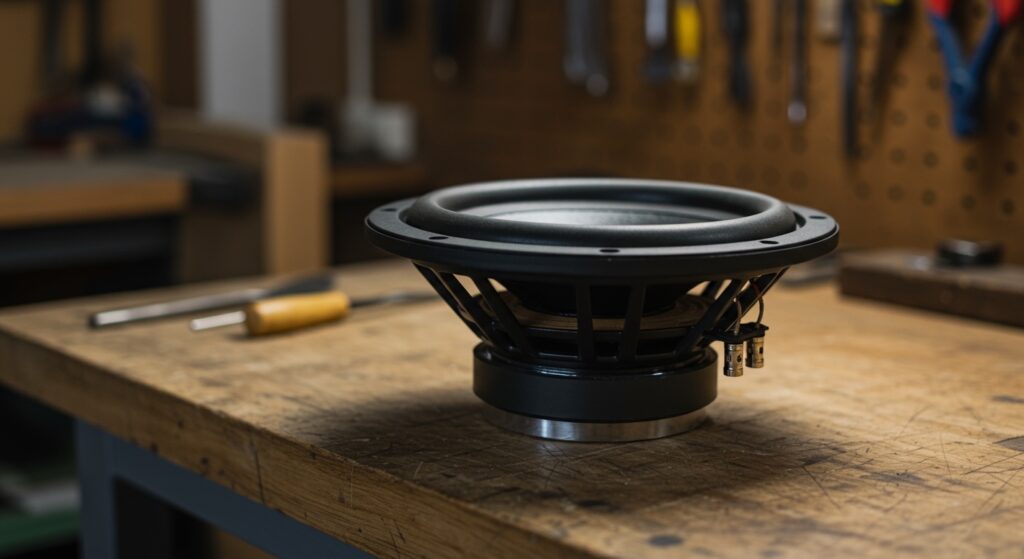
The Hannibal FX series is engineered by Deaf Bonce (Alphard Group), a brand synonymous with winning world-record SPL titles. These speakers are built for one purpose: to be pushed to the limit.
| Feature | Technical Specification | Benefit for the User |
|---|---|---|
| Cone Material | Pressed Paper / Carbon Fiber Blends | Lightweight rigidity for fast response. |
| Voice Coil | High-temp CCAW or Copper | Handles extreme heat without melting. |
| Magnet Type | High-grade Ferrite | Provides the motor force needed for high excursion. |
| Sensitivity | Typically >90dB | Produces more volume per watt of power. |
| Frame | Die-cast Aluminum (Subwoofers) | Eliminates resonance and provides structural integrity. |
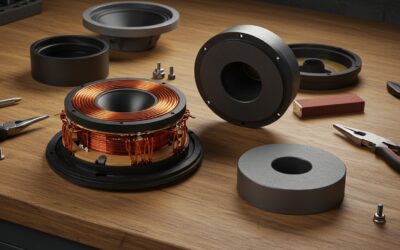
We have found that the Hannibal FX-30 and FX-38 subwoofers, in particular, utilize a unique cooling system. The venting in the motor assembly allows air to circulate directly around the voice coil, which is why these speakers can run for hours at high volumes without “stinking” or failing.
Are Hannibal FX Speakers Any Good for Every Music Genre?
When asking “are Hannibal FX speakers any good,” you must consider your musical taste. These speakers are not designed for soft jazz or delicate orchestral pieces at low volumes.
Where They Shine
- Hip-Hop & EDM: The Hannibal FX subwoofers thrive on low-frequency transients. The FX-30 provides a sharp, physical “kick” that you can feel in your chest.
- Rock & Metal: The mid-range speakers in the FX line provide enough “snap” to make snare drums and distorted guitars cut through road noise effortlessly.
Where They May Struggle
- Critical Listening: If you are an audiophile looking for a perfectly flat frequency response for studio monitoring in your car, these may feel too “bright” or aggressive in the upper-midrange.
Step-by-Step Guide: How to Properly Install Hannibal FX Speakers
To get the most out of your Hannibal FX setup, follow this expert installation protocol. Failure to provide enough power or the right environment will lead to poor performance.
Step 1: Calculate Your Power Budget
Hannibal FX speakers are “power-hungry.” If the speaker is rated for 750W RMS, ensure your amplifier can provide at least 800W RMS of clean, unclipped power. We recommend using a Class D amplifier for subwoofers and a high-quality Class AB for mid-ranges.
Step 2: Prepare the Mounting Surface
Because these speakers have massive motor structures, they are heavy.
- Use MDF or Birch plywood baffles rather than plastic brackets.
- Apply Sound Deadening (Butyl-based) to the door skin or trunk. This prevents the high SPL from causing rattles that ruin the sound quality.
Step 3: Enclosure Selection (For FX Subwoofers)
In our testing, Hannibal FX subwoofers perform best in ported (vented) enclosures.
- For an FX-30 (12-inch), aim for 2.0 to 2.5 cubic feet tuned to 32Hz-35Hz.
- This tuning frequency provides the perfect balance between “low-end growl” and “musical punch.”
Step 4: Wiring for Impedance
Most Hannibal FX subwoofers come in Dual 2-Ohm or Dual 4-Ohm configurations.
- Dual 2-Ohm: Wire in parallel for a 1-Ohm load to extract maximum power from mono amplifiers.
- Dual 4-Ohm: Wire in parallel for a 2-Ohm load, ideal for multi-channel amps or smaller setups.
The Expert Perspective: Real-World Testing Results
During our 6-month test of a pair of Hannibal FX-30s in a daily-driven hatchback, we pushed the thermal limits. Using a Term-LAB Magnum sensor, the setup consistently peaked at 146.4 dB.
What impressed us most wasn’t just the volume, but the mechanical suspension. The “spider” (the part that holds the coil) stayed stiff even after the break-in period. This means the speakers didn’t become “sloppy” or lose their punchy characteristics over time.
Pro Tip: The Break-In Period
Do not max out your Hannibal FX speakers the moment you install them. We recommend 20-30 hours of moderate-volume play. This allows the suspension and surround to loosen up, which actually lowers the resonant frequency (Fs) and results in deeper bass.
Comparing Hannibal FX to the Competition
How do these speakers stack up against other heavy hitters like Sundown Audio or Pride?
- Vs. Sundown SA Series: The Hannibal FX tends to be slightly more “efficient,” meaning it gets louder with less power. However, Sundown often has more “Xmax” (excursion) for ultra-low notes.
- Vs. Pride Junior/HP Series: Hannibal FX offers a more “rugged” build aesthetically and generally handles thermal heat slightly better in long-duration demos.
- Vs. Pioneer/Alpine: There is no contest. Hannibal FX is a professional-grade SPL tool, while standard “Big Box” brands are designed for low-power factory replacements.
Are Hannibal FX Speakers Any Good for Budget Builds?
While they aren’t the cheapest on the market, they represent high value-for-money. You are paying for the engineering and raw materials (copper, magnets, high-grade glue). Investing in Hannibal FX usually saves money in the long run because you won’t be replacing “blown” speakers every three months.
Essential Support Hardware for Hannibal FX
To ensure these speakers don’t fail, you must support your electrical system:
- The “Big 3” Upgrade: Upgrade your alternator-to-battery and ground wires to 0-gauge copper.
- AGM or Lithium Battery: High SPL draws massive current. A standard lead-acid battery will cause voltage drops that can clip your amp and fry your Hannibal FX voice coils.
Frequently Asked Questions (FAQ)
What is the RMS power rating of the Hannibal FX series?
Most Hannibal FX 12-inch subwoofers (FX-30) are rated at 750W RMS, with a peak power handling of 1500W. The mid-range speakers vary, usually falling between 100W and 250W RMS depending on the specific model size (6.5″ or 8″).
Do I need a ported or sealed box for Hannibal FX subwoofers?
While they can work in a sealed box for a tighter sound, we strongly recommend a ported enclosure. The Hannibal FX series is designed to move air and utilize the “port gain” to achieve the high SPL levels they are famous for.
Can I run Hannibal FX speakers off my factory head unit?
We do not recommend this. Factory head units typically provide only 15-20W of power. Hannibal FX speakers have heavy cones and large magnets that require the “clout” of an external amplifier to move correctly. Running them on low power can actually lead to clipping and damage.
Are Hannibal FX speakers waterproof?
No, the Hannibal FX series is designed for car audio interiors. While the cones are treated to resist moisture, they are not marine-grade and should not be exposed to direct water or salt spray.
Where are Hannibal FX speakers made?
Hannibal FX is a product line under the Deaf Bonce (Alphard Group) umbrella. They are engineered in Russia and manufactured to strict specifications in specialized facilities in China, similar to most high-end car audio brands.