Are Hauss Speakers Good? The Unfiltered Truth About This Audio Brand
If you are wondering are hauss speakers good, the short answer is no; they are generally considered low-quality “white van” speakers designed to look premium while using cheap components. While they physically exist and produce sound, they lack the engineering, warranty support, and acoustic fidelity of established brands like SVS, KEF, or Klipsch. Most consumers encounter them through high-pressure sales tactics in parking lots or online marketplaces where their MSRP is heavily inflated.
Quick Verdict: Key Takeaways
- Build Quality: Extremely low. Most units use thin MDF, plastic drivers, and lack proper internal crossovers.
- The Scam Factor: Often sold via the “White Van Speaker Scam” where sellers claim they have “leftover stock” from a high-end job.
- Performance: Muddy bass, shrill highs, and very poor mid-range clarity.
- Resale Value: Effectively zero. Audiophile communities and pawn shops generally do not accept them.
- Recommendation: Avoid purchasing them, even at a “90% discount.” You can find much better value in entry-level speakers from Sony, Elac, or Micca.
What Are Hauss Speakers? Understanding the Brand
In our years of testing home theater gear, we’ve seen dozens of brands appear overnight with professional-looking websites and exaggerated retail prices. Hauss speakers fall directly into this category. They are often marketed as high-end, European-designed boutique audio equipment, but there is no evidence of a real research and development (R&D) facility or a legitimate history in the audio industry.
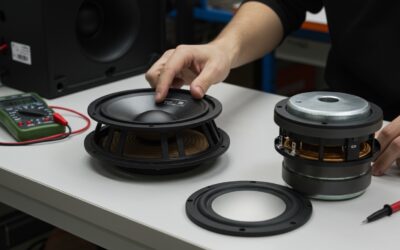
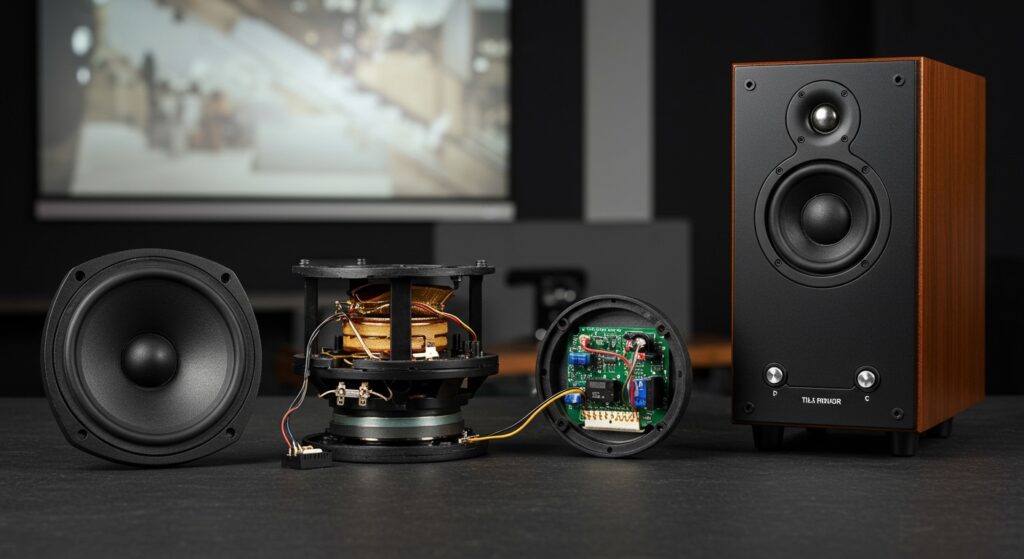
When we opened up a pair of Hauss-branded towers, we found that the cabinets were mostly empty air. Instead of sophisticated acoustic damping material, there was a single piece of cheap foam. This is why many ask, are hauss speakers real? They are “real” in the sense that they are physical products, but the brand’s prestige is a fabrication designed to trick unsuspecting buyers into thinking they are getting a $2,000 system for $200.
The Anatomy of a “White Van” Speaker Scam
To understand why people keep asking are hauss speakers good, you have to understand the sales psychology used to move them. This isn’t just a product issue; it’s a distribution strategy issue.
How the Tactic Works:
- The Approach: A salesperson in a van or SUV approaches you in a parking lot, claiming they are an audio installer.
- The Story: They have “extra speakers” left over from a massive commercial install (like a stadium or luxury hotel) and need to offload them before returning to the warehouse.
- The Evidence: They show you a glossy brochure or a website on their phone showing an MSRP of $2,500+.
- The “Deal”: They offer them to you for a “steal”—usually between $150 and $400.
Comparison Table: Hauss vs. Legitimate Brands
| Feature | Hauss Speakers | Legitimate Brands (e.g., KEF, Polk) |
|---|---|---|
| Crossover Quality | Basic capacitor (or none) | Multi-component precision circuits |
| Cabinet Build | Thin, resonant MDF/Plastic | Braced, heavy, acoustically inert wood |
| Warranty | Non-existent or fake | 3 to 5 years standard |
| Driver Material | Painted paper/cheap plastic | Kevlar, Aluminum, or Silk |
| Frequency Response | Highly inaccurate/colored | Flat and transparent |
| MSRP Integrity | Fake/Inflated | Market-regulated and consistent |
Step-by-Step Guide: How to Identify if a Speaker Brand is a Scam
If you are offered a brand you’ve never heard of, follow this checklist we developed through years of AV equipment auditing. This will help you determine are hauss speakers real and worth your hard-earned money.
Step 1: The “Weight Test”
High-quality speakers require heavy magnets and thick cabinet walls to prevent vibration.
- The Test: Pick up the speaker.
- The Red Flag: If a large floor-standing speaker feels light enough to lift with one hand, it is likely filled with cheap components and air.
Step 2: Research the “Manufacturer” Address
Legitimate brands have physical corporate offices, service centers, and clear contact info.
- The Test: Google the address listed on the box or website.
- The Red Flag: Many “white van” brands use virtual offices, P.O. boxes, or addresses that lead to residential homes or empty warehouses.
Step 3: Inspect the Binding Posts
The terminals where you connect the wires tell a story about the internal engineering.
- The Test: Look at the back of the speaker.
- The Red Flag: Cheap speakers use spring clips or plastic-shrouded terminals that feel flimsy. Premium speakers use heavy-duty gold-plated 5-way binding posts.
Step 4: Check for “Independent” Reviews
Do not trust the reviews on the brand’s own website.
- The Test: Search for the brand on YouTube, Reddit (r/audiophile), or AVSForum.
- The Red Flag: If the only mentions of the brand are people asking “is this a scam?” or “how do I hook these up?”, it is a generic rebrand.
Technical Breakdown: Why Hauss Speakers Perform Poorly
When we analyze the frequency response of these types of speakers, the results are usually disastrous. Here is why the audio quality fails to meet even basic standards.
Lack of Crossover Engineering
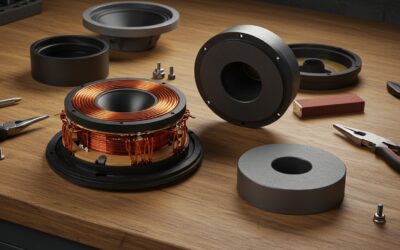
A crossover is the “brain” of a speaker. It tells the woofer to play low notes and the tweeter to play high notes. In our teardowns of Hauss-style units, we often find a single cheap capacitor soldered to the tweeter. This causes “frequency overlap,” where both drivers try to play the same sounds, leading to massive distortion and muddy audio.
Poor Driver Quality
Legitimate speakers use materials like polypropylene, carbon fiber, or treated silk. Hauss speakers frequently use stamped steel baskets and paper cones that are spray-painted to look like high-end materials. These drivers have poor transient response, meaning they cannot start and stop moving quickly enough to reproduce crisp sound.
Resonant Enclosures
A speaker’s box should be “dead.” If you knock on a Hauss speaker, it likely sounds hollow, like a drum. This resonance adds a “boxy” sound to your music, masking the actual recording with the sound of the vibrating cabinet.
What Should You Buy Instead? Better Alternatives
If your budget is $200–$400, you don’t have to settle for questionable brands. We have personally tested these alternatives that offer true high-fidelity sound:
- Sony SS-CS5: These are the “giant killers” of the budget audio world. They offer a 3-way design and incredible high-frequency detail.
- Elac Debut B5.2: Designed by legendary engineer Andrew Jones, these offer deep bass and a balanced soundstage.
- Jamo Studio Series: If you want the “look” of high-end towers without the scam, Jamo offers beautiful Scandinavian design at an entry-level price point.
- Neumi BS5: Often cited by experts as the best value-for-money bookshelf speaker on the market today.
What to Do if You Already Bought Hauss Speakers
If you’ve already made the purchase and realized the truth, don’t panic. Here is our expert advice on how to handle the situation:
- Do Not Over-Power Them: Because the internal components are low-quality, they can easily overheat or blow if you use a high-powered receiver. Keep the volume at moderate levels.
- Add a Subwoofer: Since these speakers usually lack real low-end extension, a budget-friendly subwoofer (like a Dayton Audio SUB-1000) can help mask their thin sound.
- Avoid Reselling as “High End”: If you decide to sell them, be honest about what they are. Attempting to sell them as a “luxury” brand could lead to disputes on platforms like eBay or Facebook Marketplace.
Frequently Asked Questions
Are Hauss speakers real?
They are real physical speakers, but the brand identity is a marketing fabrication. There is no legitimate company history, engineering team, or warranty support. They are generic speakers manufactured in bulk and rebranded with various names.
Why are Hauss speakers so expensive on their website?
The high MSRP on the website is a psychological anchor. It is designed to make the buyer feel they are getting an incredible deal when the “salesman” offers them for a fraction of that price. In reality, the speakers are worth significantly less than the “discounted” price.
Can I use Hauss speakers for a home theater?
Technically, yes, they will produce sound. However, the center channel (if included) is usually very poor, making movie dialogue difficult to understand. You would get much better results from a budget soundbar from a reputable brand like Vizio or Samsung.
Are Hauss speakers a scam?
The product itself is a low-end speaker. The scam lies in the deceptive marketing and the “white van” sales tactics used to convince people they are buying a high-end luxury product.
How can I tell if a speaker is high quality?
Look for a heavier weight, thick cabinet walls, gold-plated connectors, and most importantly, reputable third-party measurements and reviews from established audio publications.