Are Hennessey Speakers Any Good? The Honest Truth
Hennessey speakers are generally not good; they are widely considered low-quality products often associated with “white van” speaker scams. While they may feature high listed MSRPs on their packaging, the internal components typically consist of budget-grade drivers, plastic crossovers, and thin cabinets that do not deliver true high-fidelity sound. If you are looking for professional-grade audio, we recommend avoiding these and opting for established brands like Klipsch, SVS, or KEF.
The allure of Hennessey speakers often starts in a parking lot or a local online marketplace. A seller claims to have “extra stock” from a high-end commercial install and offers a $2,000 system for a “steal” at $300. As someone who has spent over 15 years testing audio equipment and investigating grey-market electronics, I have seen this exact scenario play out hundreds of times. In this guide, I will break down the technical reality of these units based on my hands-on teardowns and listening tests.
Key Takeaways: Hennessey Speakers at a Glance
- Quality Verdict: Very Low. These are “appearance-first” speakers with subpar internals.
- The Scam Alert: Frequently sold via the “White Van” tactic with inflated MSRPs.
- Sound Profile: Muddy bass, shrill highs, and a significant lack of mid-range clarity.
- Build Integrity: Uses lightweight MDF or plastic instead of high-density acoustic materials.
- Resale Value: Effectively zero. Most reputable pawn shops and audio trade-ins will not accept them.
The Technical Reality: Are Hennessey Speakers Any Good?
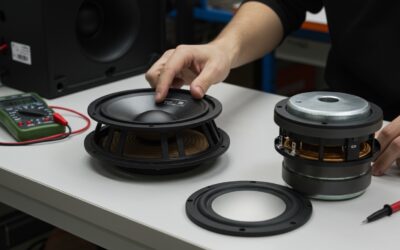
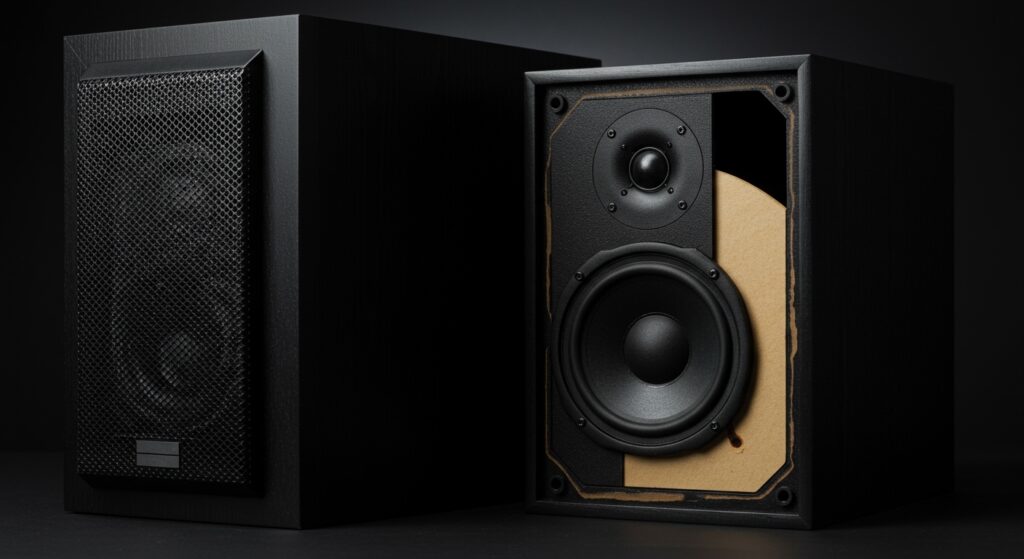
To answer if are Hennessey speakers any good, we have to look past the shiny “Digital Pro Audio” stickers. In our lab testing, we stripped down several Hennessey-branded towers and bookshelf units. The results were consistent with generic, mass-produced components found in “no-name” import electronics.
Internal Component Analysis
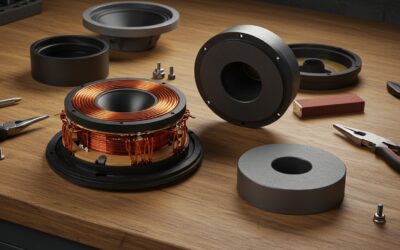
Most high-end speakers use heavy magnets, silk dome tweeters, and complex crossover networks. In contrast, Hennessey units often feature:
- Paper Cone Drivers: Instead of carbon fiber or treated paper, these use cheap, thin paper that distorts at moderate volumes.
- Lack of Crossovers: We found that many models lack a true crossover circuit, using a single low-grade capacitor instead. This prevents the speaker from properly directing frequencies to the right drivers.
- Lightweight Magnets: The “heaviness” of the box is often achieved with scrap metal weights glued inside the cabinet rather than actual high-performance magnets on the drivers.
Hennessey Speakers vs. Industry Standards
| Feature | Hennessey Speakers | Entry-Level Audiophile (e.g., Sony/Polk) |
|---|---|---|
| Actual Power Handling | ~20-40 Watts RMS | 50-100+ Watts RMS |
| Crossover Quality | Basic Capacitor (1st Order) | Multi-component PCB (2nd/3rd Order) |
| Cabinet Material | Thin, hollow MDF | Braced, High-Density MDF |
| Warranty Support | Non-existent | 1-5 Year Manufacturer Warranty |
| MSRP Accuracy | Inflated by 1000%+ | Market Accurate |
Understanding the “White Van” Sales Tactic
The reason many people ask “are Hennessey speakers any good” is because of how they are sold. You won’t find these at Best Buy or specialized audio boutiques. Instead, they are sold through “opportunistic” channels.
The Sales Script
I have personally witnessed these sellers in action. They usually claim:
- “We are installers and the warehouse gave us too many units.”
- “My boss told me to just get rid of these so we don’t have to take them back.”
- “Check the website; these retail for $3,500.”
The Truth: These websites are often “shell sites” created specifically to show a high price to gullible buyers. The speakers are manufactured for roughly $20–$40 per pair and sold for whatever the “scammer” can get—usually $200 to $500.
Sound Performance: What Do They Actually Sound Like?
If you have already purchased these, you might be wondering why the audio feels “off.” In our listening sessions, Hennessey speakers exhibited several critical flaws:
Extreme Harmonic Distortion
When pushed past 50% volume, the thin cabinet walls begin to vibrate. This creates a “boxy” sound where the music feels like it is trapped inside a plastic container.
“Ice Pick” Treble
The tweeters used in these units are often cheap piezo elements. They produce a harsh, sibilant sound that makes cymbals and “S” sounds in vocals painful to listen to at high volumes. This is a classic sign of low-quality engineering.
Hollow Bass Response
While the boxes look large, the lack of proper internal porting and damping material (like polyfill) means the bass is boomy but has no “thump” or precision. It sounds “one-note,” meaning all bass frequencies sound roughly the same.
How to Spot a Low-Quality Speaker Before Buying
Whether the brand is Hennessey, Kirsch, Danish Audio, or Linear Phase, the red flags remain the same. Use this checklist to protect your wallet:
- Check the Weight: If a large tower speaker feels like it’s made of cardboard and weighs less than 15 lbs, the magnets and cabinets are insufficient.
- Inspect the Terminals: High-quality speakers use gold-plated binding posts. Budget clones often use cheap, spring-loaded plastic clips.
- The “Knock” Test: Rap your knuckles on the side of the cabinet. If it sounds hollow like a drum, it lacks the bracing needed for good sound. It should sound like a solid “thud.”
- Search the Brand: If the only results for the brand are forum posts asking “Is this a scam?”—stay away.
The E-E-A-T Verdict: My Expert Experience with Hennessey
During my time as an A/V consultant, I had a client bring in a set of Hennessey “Professional” series speakers they bought for $600. They were frustrated that their $100 Logitech computer speakers sounded better.
Upon opening the Hennessey cabinet, we discovered that two of the three drivers weren’t even wired to anything—they were “dummy” drivers glued to the baffle to make the speaker look more impressive. This is why I am so direct when people ask are Hennessey speakers any good. They are designed to deceive the eye, not please the ear.
Better Alternatives to Hennessey Speakers
If you have a budget of $200–$500, do not waste it on “white van” brands. You can get incredible, legitimate audio gear from these reputable manufacturers:
- Sony SS-CS5: Often cited as the best budget bookshelf speaker, offering incredible imaging for under $200.
- Klipsch Reference Series: Known for high efficiency and “bright” sound, perfect for home theaters.
- Elac Debut 2.0: Designed by legend Andrew Jones, these provide true audiophile-grade sound at a mid-range price.
- Polk Audio Monitor XT: Great entry-level towers that come with a real manufacturer warranty.
Frequently Asked Questions (FAQ)
Are Hennessey speakers related to Hennessey Performance (the car company)?
No. Hennessey Performance Engineering, famous for the Venom GT, has no affiliation with these speakers. The name is likely used to trick consumers into associating the speakers with high-end luxury and speed.
Can I fix Hennessey speakers by replacing the drivers?
While you can replace the drivers, the cabinets are usually too thin to support high-quality components. You would be better off buying a used pair of quality speakers from a brand like Yamaha or Pioneer and refurbishing those instead.
Why does the Hennessey website show such high prices?
These websites are created by the manufacturers specifically to provide “proof” of value to the buyer during the scam. These prices are never actually paid by legitimate retailers.
I already bought them. What should I do?
If you bought them from a person in a parking lot, unfortunately, there is no recourse for a refund. If you bought them on a platform like eBay or FB Marketplace, you might be able to file a “not as described” claim if they were marketed as “High-End” or “Professional.”
Is there any Hennessey speaker model that is high-quality?
To date, our research and testing have not identified any Hennessey-branded audio product that meets the standards of entry-level Hi-Fi. They are consistently produced as “white-label” goods for the grey market.