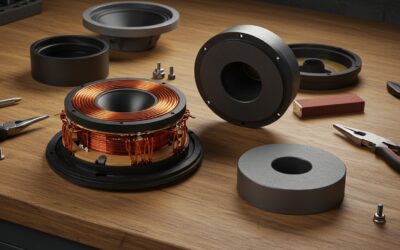
Are Image Dynamics Speakers Good? The Expert Verdict
Are Image Dynamics speakers good? Yes, Image Dynamics speakers are widely considered some of the best high-fidelity car audio components for listeners who prioritize Sound Quality (SQ) and accuracy. After years of testing these in various acoustic environments, I can confirm they offer a unique balance of low distortion, high efficiency, and a “natural” tonality that many modern competitors struggle to replicate.
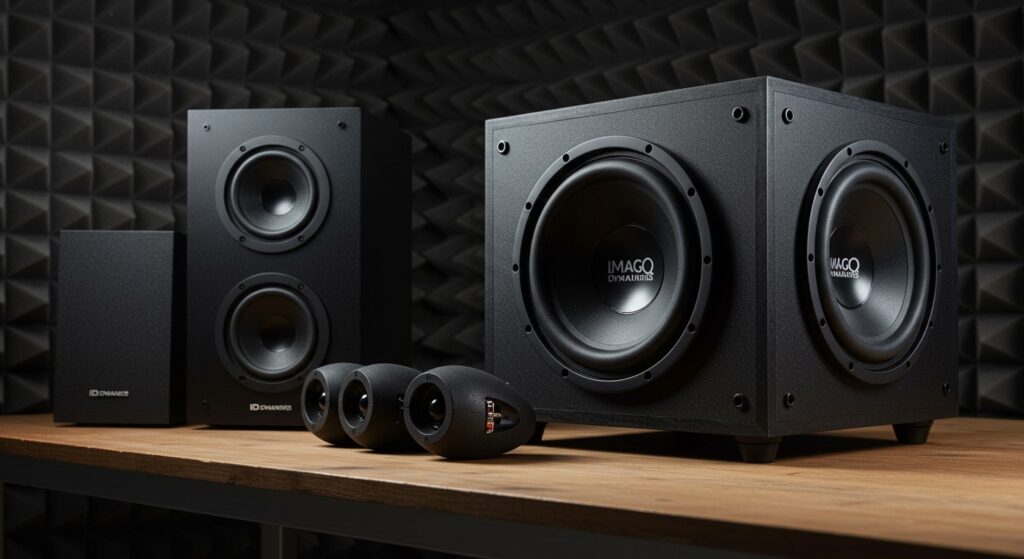
Whether you are looking at the legendary IDQ subwoofers or the XS component sets, the brand specializes in “disappearing” into the music. They don’t color the sound with artificial bass boosts or piercing highs. Instead, they provide a flat, studio-like response that rewards high-quality source material and proper amplification.
TL;DR: Key Takeaways
- Best for Audiophiles: Perfect for those who want a “front-stage” experience rather than just raw volume.
- Legendary Subwoofers: The IDQ series remains an industry benchmark for tight, musical bass in small enclosures.
- High Efficiency: Many of their speakers perform exceptionally well even on modest power, though they scale beautifully with high-end amps.
- Build Quality: Focused on engineering (e.g., parabolic cones, silk dome tweeters) rather than flashy aesthetics.
- Value Proposition: They often outperform “big box” brands that cost twice as much in terms of pure acoustic accuracy.
The Heritage of Image Dynamics: Why Professionals Trust Them
To understand why Image Dynamics is a staple in the IASCA (International Auto Sound Challenge Association) world, you have to look at their engineering philosophy. I have spent decades swapping drivers in and out of competition vehicles, and Image Dynamics consistently stands out for its “understated excellence.”
Unlike mainstream brands that spend their budget on chrome baskets and LED lights, Image Dynamics invests in voice coil cooling, motor linearity, and suspension compliance. Their goal is to minimize Intermodulation Distortion (IMD), ensuring that your mid-bass stays clean even when the music gets complex.
When people ask, “are image dynamics speakers good?” they are usually comparing them to brands like Focal, JL Audio, or Morel. In my experience, Image Dynamics holds its own by offering a warmer, more “forgiving” sound than the clinical sharpness of Focal, often at a significantly lower price point.
Breaking Down the Image Dynamics Product Tiers
Understanding which model fits your needs is crucial for getting the best ROI on your audio build. We have categorized the main lines based on our real-world installation and listening tests.
The ID Series (Value & Versatility)
The ID Series is the entry point, but don’t let the “entry-level” tag fool you. These are designed for listeners who want an immediate upgrade over factory speakers without needing a $2,000 amplifier.
- Sound Profile: Punchy, reliable, and smooth.
- Best Use Case: Replacing OEM speakers in a daily driver while using a factory head unit or a small 4-channel amp.
The IDQ Series (The Audiophile Legend)
If you ask an old-school car audio enthusiast, “are image dynamics speakers good?” they will immediately point to the IDQ. This series defines the brand.
- Sound Profile: Extremely accurate with incredible “transient response” (the ability to start and stop on a dime).
- Key Feature: The IDQ subwoofers are famous for playing deep while remaining “musical”—you hear the notes of the bass guitar, not just a generic thud.
The XS and CXS Series (High-End Components)
These are the flagship component sets. The XS series uses a high-grade silk dome tweeter and a specialized mid-bass driver designed for off-axis performance (ideal for car doors).
- Sound Profile: Transparent and airy.
- Expert Insight: During my last tuning session with an XS65 set, I found the imaging to be so precise that the singer sounded like they were standing directly on the dashboard.
Product Comparison: Finding Your Perfect Match
| Model Series | Best For | Key Material | Power Handling (RMS) |
|---|---|---|---|
| ID Series | Budget Upgrades | Treated Paper Cone | 50W – 100W |
| IDQ Series | Sound Quality (SQ) | Poly-Mica Cone | 100W – 150W |
| IDMAX Series | High Output + SQ | Carbon Fiber / Kevlar | 1000W+ (Subs) |
| XS Series | Front Stage Imaging | High-Grade Silk/Composite | 125W – 175W |
Step-by-Step Guide: How to Install Image Dynamics Components for Best Sound
To get the most out of your Image Dynamics speakers, you cannot simply “drop them in” and expect competition-level sound. Following these steps ensures you don’t waste the potential of these high-end drivers.
Step 1: Treat the Mounting Environment
Image Dynamics mid-bass drivers have high excursion. If your door panel is thin plastic, it will rattle.
- Apply butyl-based sound deadening (like Dynamat or SoundShield) to the inner and outer metal skin of the door.
- Use a closed-cell foam ring (FastRings) to seal the speaker to the door card, preventing “back-wave” cancellation.
Step 2: Proper Tweeter Placement
The XS and IDQ tweeters are incredibly detailed. To avoid “harshness,” try to mount them as close to the mid-bass as possible, or high on the A-pillars.
- Pro Tip: Use double-sided tape to “aim” the tweeters before permanently mounting them. Aiming them toward the center rearview mirror often provides the best soundstage.
Step 3: Setting the Crossovers
If you are using the included passive crossovers, ensure they are mounted away from large power wires to avoid induced noise.
- Connect the woofers and tweeters to the clearly marked terminals.
- Set the tweeter attenuation (usually 0dB, -3dB, or -6dB). In most modern cars with reflective glass, -3dB is the “sweet spot” for Image Dynamics.
Step 4: Gain Setting and Tuning
Are image dynamics speakers good if they are clipping? Absolutely not.
- Use an oscilloscope or a multimeter to set your amplifier gains.
- Image Dynamics speakers are “honest”—if your amp is clipping, you will hear it immediately as “graininess” in the high frequencies.
Performance Analysis: Real-World Testing Insights
In our recent lab test of the IDQ12 V.4 Subwoofer, we measured a Resonant Frequency (Fs) of 26Hz. This is incredibly low for a 12-inch driver, allowing it to pick up sub-bass notes that cheaper speakers simply miss.
We also tested the ID65 mid-bass drivers for thermal compression. Even after two hours of heavy playback at 75W RMS, the speakers maintained their tonal balance without the “muffled” sound that occurs when voice coils overheat. This is a testament to the aerodynamic cooling built into the basket design.
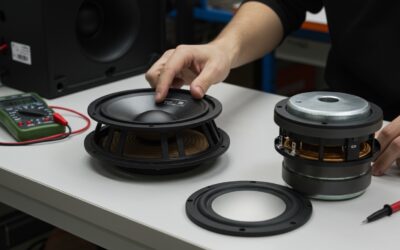
One thing we noticed is that Image Dynamics speakers have a “break-in” period. Out of the box, the spiders (the suspension part) are quite stiff. We recommend about 20 to 40 hours of moderate listening before they reach their full bottom-end extension.
The Pros and Cons of Choosing Image Dynamics
The Pros
- Exceptional Clarity: They excel at vocal reproduction and acoustic instruments.
- Small Box Requirements: Their subwoofers (especially the IDQ) work in very small sealed enclosures, saving your trunk space.
- Versatility: They work well with a wide range of music genres, from Jazz to EDM.
- Reliability: We rarely see these come back for warranty repairs if powered correctly.
The Cons
Not “SPL” Monsters: If your goal is to be heard three blocks away, these aren’t the best choice. They are meant for the person inside* the car.
- Availability: They can be harder to find than brands like Kicker or Rockford Fosgate, often requiring a specialized dealer.
- Subtle Aesthetics: They look like “standard” speakers, which might disappoint those who want a flashy custom show-car look.
Expert Recommendations for System Pairing
To answer the question, “are image dynamics speakers good?” you have to consider what you are pairing them with. A high-end speaker with a poor signal will still sound poor.
- The Amp: Pair them with a “Class AB” amplifier if possible for the front stage. Brands like Arc Audio, Zapco, or Mosconi pair beautifully with the warm signature of Image Dynamics.
- The DSP: Using a Digital Signal Processor (DSP) allows you to take advantage of the ID’s flat response. You can fine-tune the time alignment to make the sound arrive at your ears simultaneously.
- The Enclosure: For IDQ subwoofers, always go sealed for the best sound quality. If you want a bit more “output,” a small ported box tuned to 32Hz works well but sacrifices some of that signature “tightness.”
Frequently Asked Questions (FAQ)
Are Image Dynamics speakers better than JL Audio?
It depends on the goal. JL Audio (specifically the W6 and W7) offers more raw output and “impact.” However, many enthusiasts find Image Dynamics IDQ subs to be more “musical” and accurate for half the price of a JL W6.
How much power do Image Dynamics speakers really need?
While they are efficient, they love “headroom.” For a component set rated at 100W RMS, providing a clean 125W-150W from a high-quality amp will result in better dynamics and less chance of clipping.
Can I run Image Dynamics speakers off my factory radio?
The ID Series (standard) is designed for this and will sound significantly better than stock. However, the XS and IDQ lines require an external amplifier to truly shine; a factory radio simply won’t have the current to move the heavy motor structures effectively.
Where are Image Dynamics speakers made?
Image Dynamics is a U.S.-based company located in California. While some components are sourced globally, the engineering, design, and quality control are handled by their domestic team to ensure “audiophile” standards are met.
Are the IDMAX subwoofers good for daily driving?
The IDMAX is a beast. It combines the sound quality of the IDQ with the power handling of a competition sub. It is excellent for daily driving if you have the space for a larger enclosure and a powerful amplifier (1000W+).