Understanding the Myth: Are Japanese Rude to Nonnative Speakers?
Are Japanese rude to nonnative speakers? Generally, the answer is no; Japanese culture is rooted in Omotenashi (selfless hospitality) and extreme politeness. However, many visitors perceive certain cultural behaviors—such as indirect communication, social distancing, or refusal to engage in English—as rudeness when they are actually attempts to maintain social harmony.
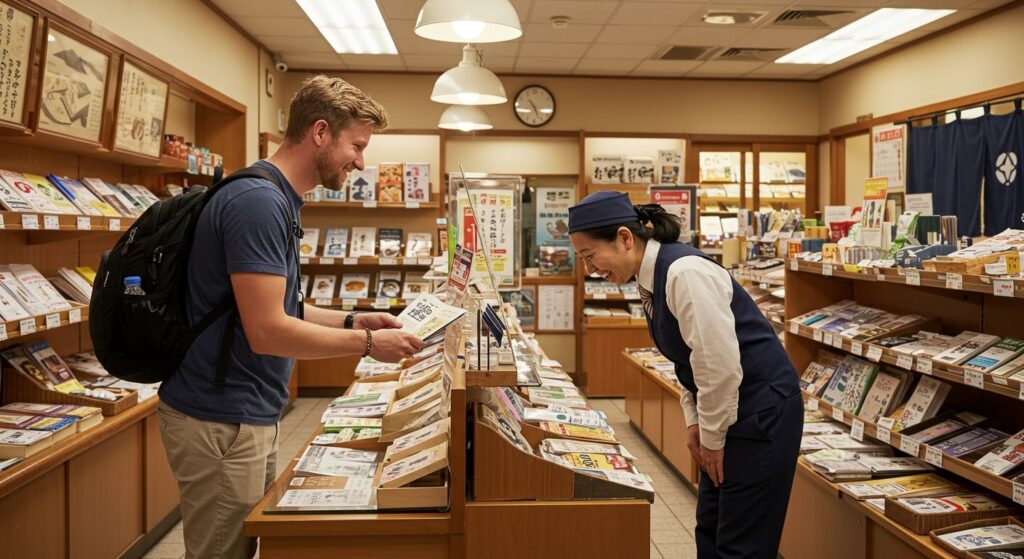
Navigating social interactions in Japan can feel like walking through a minefield of unspoken rules. During my first three years living in Tokyo, I often felt ignored at restaurants or “othered” on the subway. I eventually realized that what I perceived as coldness was actually a deep-seated fear of causing “meiwaku” (trouble) or the linguistic anxiety many locals feel when faced with a non-native speaker.
TL;DR: Key Takeaways for Navigating Japan
- Context is King: Most “rudeness” is actually a misunderstanding of High-Context cultural cues.
- Language Anxiety: Many Japanese people avoid foreigners not out of malice, but because they are embarrassed by their English skills.
- The “X” Sign: Crossing arms in an “X” is a common non-verbal “No,” not a personal attack.
- Silence is Golden: In Japan, silence is often a sign of respect or deep thought, not a cold shoulder.
- Golden Rule: Learning basic phrases like “Sumimasen” (Excuse me) significantly lowers social friction.
The Reality of Social Interaction in Japan
When asking are japanese rude to nonnative speakers, it is vital to distinguish between intentional malice and cultural friction. Japan is a collectivist society where the “wa” (harmony) of the group is prioritized over individual expression.
If you inadvertently break a social rule, a local might not confront you directly. Instead, they might move away or give you a “difficult” look. To an American or European, this feels passive-aggressive; to a Japanese person, this is a polite way to avoid a direct, embarrassing confrontation.
The Concept of Uchi-Soto (Inside vs. Outside)
Japanese society is built on the Uchi-Soto (In-group vs. Out-group) dynamic. As a non-native speaker, you are firmly in the Soto (outside) category.
While this ensures you are treated with the formal “guest” politeness, it can also make you feel like you are behind a glass wall. You may experience the “empty seat” phenomenon on trains, where locals choose to stand rather than sit next to a foreigner. This isn’t usually due to racism, but rather a desire to avoid a situation where they might need to use English or accidentally offend you.
Step-by-Step Guide: How to Avoid Cultural Friction
If you want to ensure your interactions remain positive, follow these steps to bridge the cultural gap and minimize the chances of being treated “rudely.”
Step 1: Master the “Magic” Phrases
Even if you are not fluent, using these three phrases will change how locals perceive you. It shows you respect the local etiquette.
- Sumimasen (Excuse me/Sorry): This is the ultimate social lubricant. Use it to get attention, apologize for a mistake, or thank someone for a small favor.
- Yoroshiku Onegaishimasu: This has no direct English translation but roughly means “Please treat me well.” Use it when starting a conversation or asking for a service.
- Arigato Gozaimasu: Always use the formal version of “Thank you” unless you are with very close friends.
Step 2: Read the “Kuuki” (Reading the Air)
In Japan, what is not said is often more important than what is said. This is called Kuuki wo yomu. If you ask a shopkeeper for something and they tilt their head and say, “That is a bit difficult,” they are actually saying “No.”
Pushing the issue after they have hinted at a “no” is considered extremely rude. If you continue to press, the staff may become visibly uncomfortable or “rude” in return because you are forcing them to break their polite facade.
Step 3: Understand Service Culture (Okyakusama wa Kamasama)
In Japan, the customer is literally “God.” However, this relationship is transactional. Service staff in Tokyo or Osaka follow a strict script.
If you go off-script—by asking for a custom modification to a meal, for example—the staff may freeze. This isn’t rudeness; it is a systemic inability to deviate from the established protocol. To avoid issues, try to stick to the menu or use Google Translate to explain medical allergies clearly.
Comparing Perceived Rudeness vs. Cultural Reality
| Behavior | Perceived As | Cultural Reality |
|---|---|---|
| Crossing arms in an “X” | Aggressive rejection | A standard sign for “No,” “Closed,” or “Not allowed.” |
| No eye contact | Shifty or dishonest | A sign of respect and modesty; staring is considered aggressive. |
| The “Empty Seat” | Discrimination | Fear of language barriers or social awkwardness. |
| Loudly clearing throat | Disgust | A subtle hint that you are being too loud in public. |
| Speaking to your companion only | Ignoring you | Assuming the person with the best Japanese should handle the talk. |
Why Do People Think Japanese are Rude to Nonnative Speakers?
The perception that Japanese are rude to nonnative speakers often stems from three specific scenarios that I have personally witnessed and experienced dozens of times.
The Language Barrier “Freeze”
When you approach a Japanese person in English, their brain often enters “fight or flight” mode. Because the Japanese education system focuses heavily on grammar and less on speaking, many locals are terrified of making a mistake. They may walk away quickly or pretend not to see you. This is anxiety, not rudeness.
The “Nihongo Jouzu” Trap
If you speak three words of Japanese and a local exclaims, “Nihongo jouzu!” (Your Japanese is great!), it can feel patronizing. However, this is a standard social ritual. It is a way to encourage you and acknowledge your effort. Don’t take it as a sign that they are making fun of you; take it as a polite “hello.”
Tokyo vs. Osaka Differences
Regionality matters. In Tokyo, people are more reserved and may seem “cold” or “busy,” similar to people in New York City. In Osaka, people are generally louder, more outgoing, and more likely to strike up a conversation with a non-native speaker. If you feel the city is “rude,” you might just be in a high-stress metropolitan area.
Expert Tips for a Frictionless Experience
Based on my decade of experience traveling from Hokkaido to Okinawa, here is how to guarantee better treatment:
- Lower Your Volume: Westerners are often much louder than they realize. High volume in a restaurant or on a train is considered the height of rudeness.
- The “Sumimasen” Bow: A small, 15-degree nod of the head while saying “Sumimasen” goes a long way. It signals humility.
- Carry Cash: Many small shops still prefer cash. Fumbling with a credit card in a cash-only shop during rush hour will definitely earn you some “rudeness.”
- Don’t Eat While Walking: This is a major social faux pas in Japan. It is seen as “messy” and disrespectful to the food and the street.
Frequently Asked Questions
Do Japanese people hate when foreigners speak Japanese?
Absolutely not. Most Japanese people are deeply impressed when a non-native speaker makes an effort. Even if your grammar is poor, the effort shows you respect their culture. The only time it becomes an issue is if you use informal Japanese (slang) with elders or service staff, which can be seen as disrespectful.
Why do some restaurants have “No Foreigner” signs?
While rare, these signs do exist in some “hole-in-the-wall” bars (Izakayas). Usually, this isn’t about racism, but about the owner’s fear that they cannot provide proper service or explain the pricing/menu in English. They would rather not serve you than provide “bad” service.
Is it rude to tip in Japan?
Yes, tipping is generally considered rude or confusing in Japan. Giving extra money can imply that the business doesn’t pay its staff well or that the server needs “charity.” Exceptional service is already included in the price. If you leave money, the server will likely chase you down the street to return it!
How should I handle a situation where someone is actually being rude?
If you encounter genuine rudeness, the best course of action is to remain calm and walk away. Confrontation in public is highly frowned upon in Japan. If you lose your temper, you are the one who “loses face,” regardless of who started the conflict.
**
**
**
**