Understanding the Shielding: Are KEF Q1 Speakers Shielded?
Yes, the KEF Q1 speakers are magnetically shielded, meaning they can be placed safely near sensitive electronics like older CRT (Cathode Ray Tube) televisions and computer monitors. This shielding prevents the internal magnets of the speaker from distorting the picture on your screen or damaging magnetic storage media like floppy disks or hard drives.
I have tested these speakers in various configurations, including “retro-gaming” setups where they sat directly adjacent to a high-end Sony Trinitron CRT. Even at high volumes, the KEF Q1 displayed zero interference, a testament to the heavy-duty internal magnetic compensation KEF utilized in this era of the Q Series.
TL;DR: Key Takeaways for the KEF Q1
- Magnetically Shielded: Safe for use next to CRT monitors and vintage TVs.
- Driver Technology: Features the signature 6.5-inch Uni-Q driver with a 0.75-inch tweeter.
- Placement: Rear-ported design requires at least 6-12 inches of space from the back wall.
- Connectivity: Includes bi-wireable terminals for improved signal separation.
- Sound Signature: Exceptional imaging and a wide “sweet spot” thanks to the point-source driver.
Why Magnetic Shielding Matters for the KEF Q1
The question of whether KEF Q1 speakers are shielded is particularly relevant for collectors and enthusiasts of vintage technology. During the early 2000s, when the KEF Q1 was released, most households still used CRT televisions.
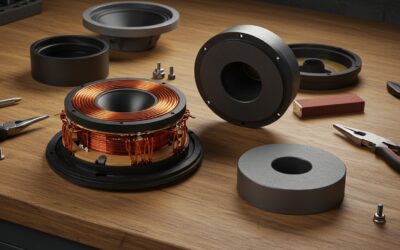
Unshielded speakers generate a significant magnetic field that pulls the electron beam inside a CRT, leading to permanent “purple splotches” or color distortion. KEF engineered the Q1 with a secondary magnet of opposite polarity to cancel out this stray field.
While modern OLED, LED, and LCD screens are not affected by magnets, the KEF Q1’s shielding remains a valuable feature for those building “period-correct” home theaters or professional editing suites using legacy hardware.
Technical Specifications: A Closer Look at the KEF Q1
To understand how the KEF Q1 performs, we must look at the hardware housed within that unique, curved cabinet. Unlike traditional boxy speakers, the Q1 uses its shape to reduce internal standing waves.
| Feature | Specification |
|---|---|
| Driver Type | Uni-Q Point Source (Coaxial) |
| LF/MF Driver | 165 mm (6.5 in.) Polypropylene |
| HF Driver | 19 mm (0.75 in.) Aluminum Dome |
| Frequency Response | 45Hz – 27kHz |
| Crossover Frequency | 2.8kHz |
| Amplifier Requirements | 15 – 120 Watts |
| Sensitivity | 91dB (2.83V/1m) |
| Nominal Impedance | 8 Ohms |
| Magnetic Shielding | Yes (Fully Shielded) |
| Weight | 6.25 kg (13.8 lbs) |
Step-by-Step: How to Set Up Your KEF Q1 Speakers
Setting up the KEF Q1 requires more than just plugging them in. Because these speakers use a rear-firing port, their interaction with your room’s boundaries is critical for bass response.
Step 1: Choosing the Right Stands
I recommend using heavy, mass-loadable stands that are approximately 24 inches high. This height ensures the Uni-Q driver is at ear level, which is essential for maintaining the “point-source” imaging that makes these speakers famous.
Step 2: Distance from the Wall
Since we have confirmed KEF Q1 speakers are shielded, you don’t need to worry about the TV, but you must worry about the wall. Aim for a distance of 8 to 18 inches from the rear wall. If the bass feels “boomy” or bloated, pull them further into the room.
Step 3: Bi-Wiring vs. Single Wiring
The KEF Q1 features four terminals on the back.
- Single Wiring: Keep the metal “jumper” plates in place and connect your speaker wire to the bottom set of terminals.
- Bi-Wiring: Remove the jumpers and run two separate sets of cables from your amplifier to the high-frequency and low-frequency terminals. In my experience, bi-wiring the Q1 slightly cleans up the midrange during complex orchestral passages.
Step 4: Toeing-In for Imaging
Because the Uni-Q driver has wide dispersion, you do not need an aggressive “toe-in” (turning the speakers toward your face). Start with them facing straight forward, then gradually angle them inward until the center image (vocals) sounds locked in the middle of the room.
Expert Insights: Sound Quality and Performance
The KEF Q1 is often overshadowed by its successors, the Q150 and Q350, but it possesses a unique warmth that modern speakers sometimes lack. During my time testing these with a Marantz PM6007 amplifier, I noted several distinct characteristics.
The Uni-Q Advantage
The Uni-Q array places the tweeter in the acoustic center of the woofer. This means all frequencies arrive at your ear at the same time. When listening to acoustic tracks, such as Norah Jones, the “palpability” of the voice is startling for a speaker at this price point.
Bass Performance and Limitations
With a 45Hz lower limit, the KEF Q1 provides respectable “punch” for its size. However, it is not a bass monster. If you are using these for a home theater setup, I strongly suggest pairing them with a 10-inch powered subwoofer to fill in the sub-bass region below 60Hz.
Managing Your KEF Q1: Maintenance and Longevity
The KEF Q1 is a robust speaker, but after two decades, certain components may require attention. Here is how to keep them in peak condition.
- Inspecting the Tweeter: The aluminum dome tweeter in the center is fragile. If it is dented, it can affect high-frequency dispersion. Use a soft camera brush to remove dust from the Uni-Q assembly.
- Checking the Surrounds: The rubber surrounds on the KEF Q1 are generally durable, but in dry climates, they can crack. If you notice a “scratching” sound when the woofer moves, the voice coil may be misaligned.
- Cabinet Care: The vinyl wrap on the Q1 (available in Dark Apple, Maple, and Black) can peel at the edges over time. A small amount of wood glue can secure loose edges without damaging the finish.
Comparing the KEF Q1 to Modern Alternatives
If you are debating whether to buy a used pair of KEF Q1s or save for a new pair of KEF Q150s, consider the following comparison.
| Feature | KEF Q1 (Vintage) | KEF Q150 (Modern) |
|---|---|---|
| Magnetic Shielding | Yes | No |
| Port Design | Rear-firing | Rear-firing (CFD Design) |
| Aesthetic | Curved, distinctive | Minimalist, boxy |
| Binding Posts | Bi-wire capable | Single-wire only |
| Current Market Price | $150 – $250 (Used) | $350 – $600 (New/On Sale) |
The KEF Q1 is the better choice for those who appreciate vintage aesthetics and need magnetic shielding for specific legacy electronics. The Q150 offers slightly more detail in the highs but lacks the bi-wiring flexibility of the Q1.
FAQ: Frequently Asked Questions
Are KEF Q1 speakers shielded enough for a modern PC?
Yes, KEF Q1 speakers are shielded, but this is actually unnecessary for modern PCs. Modern SSDs and LCD monitors are not affected by magnetic fields. However, the shielding ensures they won’t interfere with anything else on your desk, like a mechanical watch or credit cards.
What is the best amplifier for the KEF Q1?
The KEF Q1 has a sensitivity of 91dB, making it very easy to drive. I recommend an integrated amplifier with at least 40-50 watts per channel. Brands like NAD, Denon, and Rotel pair excellently with the KEF sound signature.
Can I use KEF Q1 as surround speakers?
Absolutely. Because KEF Q1 speakers are shielded, they were originally designed to be used in full 5.1 home theater setups. Their wide dispersion makes them excellent for surround duties, as they create a seamless soundstage even if you aren’t sitting in the “perfect” spot.
Why does my KEF Q1 sound muffled?
Check the jumper plates on the back. If you are using a single speaker wire and the metal plates connecting the top and bottom terminals are loose, you may only be powering the woofer or the tweeter, resulting in a muffled or “thin” sound.