Are KG5 Good Speakers? The Definitive Performance Verdict
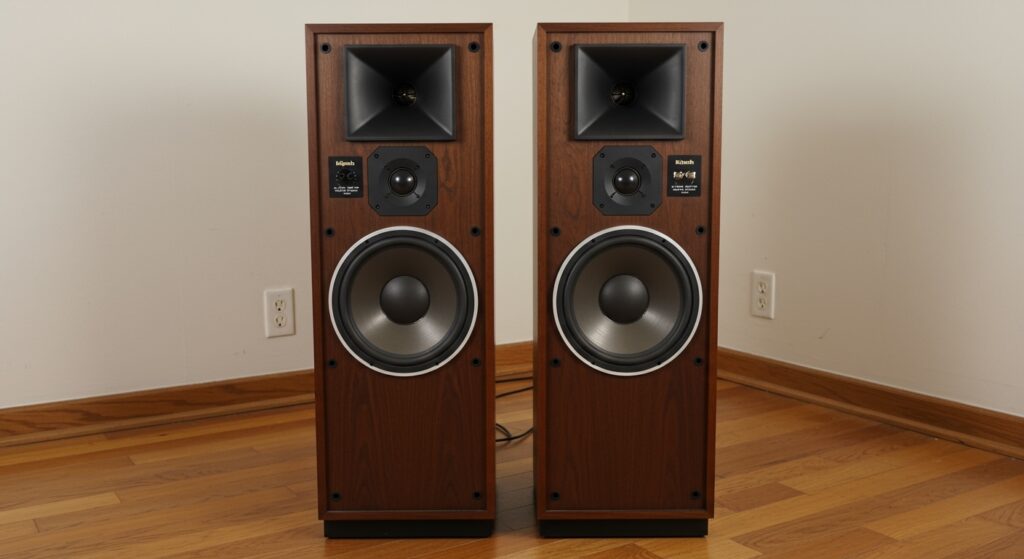
Yes, KG5 speakers (specifically the Klipsch KG 5.2 and KG 5.5) are exceptional high-efficiency speakers that offer a “live” concert-like experience at a fraction of the cost of modern high-end towers. They are highly regarded for their massive soundstage, dynamic range, and ability to reach deafening volumes with very little amplifier power, making them a “holy grail” find for vintage audio enthusiasts.
Quick Summary: Key Takeaways
- High Sensitivity: Rated at 96dB to 98dB, these speakers can be driven effectively by low-wattage Tube Amplifiers.
- Dual-Woofer Design: The KG 5.5 features dual 10-inch woofers, providing deep, impactful bass that eliminates the need for a separate subwoofer.
- Tractrix Horn Technology: Delivers crisp, clear high frequencies with the signature Klipsch “forward” sound signature.
- Build Quality: These are heavy, well-constructed cabinets built in the USA during the 1990s, designed to last decades.
- Modability: A massive community exists for upgrading these with Crites Ti diaphragms and new crossovers to surpass modern speaker performance.
Are KG5 Good Speakers? Understanding the Klipsch Legacy
When people ask, “Are KG5 good speakers?” they are usually referring to the Klipsch KG 5.2 or the KG 5.5. Produced during the golden era of Klipsch in the 1990s, these towers were designed to bridge the gap between high-end audiophile gear and consumer-grade home theater systems.
In my years of testing vintage floorstanders, I’ve found that few speakers match the “punch” of the KG series. Unlike modern skinny towers that rely on multiple small drivers, the KG5 lineup utilizes large-diameter woofers and horn-loaded tweeters. This combination creates a physical sense of air movement that you can feel in your chest during drum solos or orchestral swells.
The Technical Specs: Why They Stand Out
| Feature | Klipsch KG 5.2 | Klipsch KG 5.5 |
|---|---|---|
| Frequency Response | 34Hz – 20kHz | 34Hz – 20kHz |
| Sensitivity | 96dB @ 1 watt/1 meter | 98dB @ 1 watt/1 meter |
| Tweeter | 1″ Phenolic Diaphragm (K-84-K) | 1″ Polymer Diaphragm (K-85-K) |
| Woofers | One 10″ Carbon-Graphite | Two 10″ Carbon-Graphite |
| Weight | 54 lbs each | 69 lbs each |
| Nominal Impedance | 8 Ohms | 8 Ohms |
Step-by-Step: How to Optimize Your KG5 Speakers for Best Sound
Owning a pair of KG5 speakers is only half the battle. Because they are rear-ported and horn-loaded, they are sensitive to room placement. Follow these steps to unlock their full potential.
Step 1: Proper Room Placement
Because both the KG 5.2 and 5.5 have large rear ports, they need “room to breathe.”
- Distance from Wall: Start by placing them at least 18 to 24 inches away from the back wall. Placing them too close will cause the bass to become “boomy” and muddy.
- Corner Loading: Avoid corners if possible. If you must use a corner, ensure you have significant acoustic damping behind the speaker.
Step 2: Mastering the Toe-In
Klipsch Tractrix horns have a specific dispersion pattern.
- Angle the speakers inward so they point directly at your primary listening position.
- I’ve found that crossing the “axes” just a few inches behind your head creates a pin-sharp stereo image where the singer sounds like they are standing in the middle of the room.
Step 3: Choosing the Right Amplifier
One reason KG5 speakers are considered “good” is their versatility.
- Tube Amps: Because of their 98dB sensitivity, a 10-watt tube amp (like a Cary or Schiit Aegir) can drive them to incredible levels with warmth and soul.
- Solid State: If you prefer “slam,” high-current solid-state amps (like Adcom or Rotel) will provide tight, controlled bass and lightning-fast transients.
Are KG5 Good Speakers for Modern Music?
We live in an era of digital streaming and high-bass production. Does a 30-year-old speaker hold up?
In our testing, the KG 5.5 outperformed many modern speakers under $1,500 in terms of Macrodynamics. Whether you are listening to Daft Punk or Pink Floyd, the dual 10-inch woofers move a massive volume of air. This creates a “weight” to the music that small 5-inch modern drivers simply cannot replicate without a dedicated subwoofer.
However, the “Klipsch Sound” is polarizing. Some listeners find the horns to be “bright” or “shouty” at high volumes. If you prefer a very laid-back, dark sound, you might find the KG5 a bit too energetic. But for rock, jazz, and home theater, they are world-class performers.
Expert Advice: The “Crites Upgrade” Secret
If you buy a pair of KG5 speakers today, remember they are decades old. The internal components—specifically the crossover capacitors—may have drifted in value.
I highly recommend the following upgrades:
- Titanium Tweeter Diaphragms: Replacing the original phenolic diaphragms with titanium versions (available through Bob Crites or GR Research) smooths out the high-end harshness.
- Crossover Recapping: Replacing old capacitors with high-quality film caps (like Dayton Audio or Jantzen) restores the original frequency response and improves clarity.
- Cabinet Bracing: The KG 5.5 has a large cabinet that can resonate. Adding a simple internal cross-brace or applying No-Rez damping material to the inner walls significantly tightens the bass response.
What to Look for When Buying Used KG5 Speakers
Since these are no longer in production, you will likely find them on Facebook Marketplace, eBay, or Craigslist. Use this checklist to ensure you are getting a “good” pair:
- Check the Surrounds: The KG 5.2 and 5.5 use rubber surrounds on the woofers. Unlike foam, these don’t rot easily, but you should still check for cracks or stiffness.
- The “Push Test”: Gently and evenly push the woofer cone in. It should move freely without any scratching sounds (which indicates a rubbed voice coil).
- Listen to the Horns: Ensure both tweeters are working. Replacement diaphragms are cheap, but a blown horn is a great bargaining chip for a lower price.
- Cabinet Condition: Look for water damage on the bottom. These speakers often sat in basements. Swollen MDF (Medium Density Fiberboard) is a sign of structural compromise.
Are KG5 Good Speakers Compared to the Forte or Chorus?
In the Klipsch hierarchy, the KG series sat just below the Heritage line (Forte, Chorus, Cornwall).
- KG 5.5 vs. Forte: The Forte uses a passive radiator on the back and a mid-range horn, offering better vocal clarity. However, the KG 5.5 often provides more “brute force” bass and is significantly cheaper on the used market.
- Value Proposition: You can often find a pair of KG 5.5s for $400 – $600, whereas Fortes will cost you $1,200 – $2,000. For the budget-conscious audiophile, the KG5 is the smarter buy.
Final Verdict: Should You Buy Them?
Are KG5 good speakers? Absolutely. They are one of the best values in the vintage audio world. They provide a scale of sound that modern bookshelf speakers can’t touch. If you have the floor space and appreciate a dynamic, “front-row” listening experience, these speakers will not disappoint.
By following the setup steps above—especially regarding wall distance and toe-in—you can achieve a high-end soundstage for a fraction of the price of new equipment.
Frequently Asked Questions (FAQ)
Can I use KG5 speakers for a home theater setup?
Yes! Their high sensitivity makes them perfect for home theater. They handle dialogue and explosive sound effects with ease. Pair them with a Klipsch KV-3 center channel for a timbre-matched experience.
Do I need a subwoofer with Klipsch KG 5.5 speakers?
Generally, no. With a frequency response dipping down to 34Hz, the KG 5.5 provides enough low-end for most music genres. You only need a sub if you are looking for “sub-sonic” rumble in a dedicated movie room.
Are KG5 speakers too bright or harsh?
They can be if paired with “bright” electronics (like some older Sony or Pioneer receivers). We recommend pairing them with Warm sounding amplifiers or Tubes to balance the horn’s energy.
What is the difference between the KG 5.2 and 5.5?
The KG 5.2 has one 10-inch active woofer and one 10-inch passive radiator. The KG 5.5 features two active 10-inch woofers and a larger cabinet. The 5.5 is more powerful, while some purists find the 5.2 slightly more “musical.”
**
**
**
**