Are KHL Speakers Bad? The Truth About This Controversial Brand
KHL speakers are bad when compared to legitimate high-fidelity audio brands because they are typically “White Van” products designed with low-quality components and deceptive marketing. While they may produce sound, they lack the frequency response, build quality, and crossover engineering found in reputable brands like KLH, Sony, or Polk. If you are looking for an audiophile experience or long-term reliability, KHL speakers are generally considered a poor investment.
TL;DR: Key Takeaways
- The Verdict: KHL speakers are low-end units often sold via “White Van” scams.
- Name Confusion: Do not confuse KHL with the legendary KLH Audio; the names are intentionally similar to mislead buyers.
- Build Quality: Most KHL models use thin MDF cabinets, fake “digital” labels, and lightweight magnets.
- Audio Performance: Expect muddy bass, harsh highs, and a lack of mid-range detail.
- Resale Value: These speakers have virtually zero resale value on the used market.
Are KHL Speakers Bad? Understanding the “White Van” Context
To answer the question “are KHL speakers bad,” we first have to look at where they come from. In my years of testing audio equipment, I have encountered dozens of brands that follow the same pattern: KHL, Kirsch, Dogg Digital, and Theater Research.
These brands are not sold in reputable electronics stores. Instead, they are typically sold out of the back of SUVs or vans in parking lots, or through misleading online listings. The sellers often claim they are “overstock” from a high-end commercial install.
In reality, KHL speakers are manufactured for a few dollars in factories that prioritize aesthetics over acoustics. They are designed to look impressive—often featuring large drivers and “pro-audio” styling—but the internal components tell a different story.
The Psychology of the Name
The most deceptive part about KHL speakers is their similarity to KLH. KLH is a prestigious brand founded by Henry Kloss, a pioneer in the audio world. By swapping two letters, manufacturers of KHL equipment hope to capitalize on the reputation of a high-end manufacturer. This tactic alone is a major red flag for any consumer.
Technical Comparison: KHL vs. Real Hi-Fi Speakers
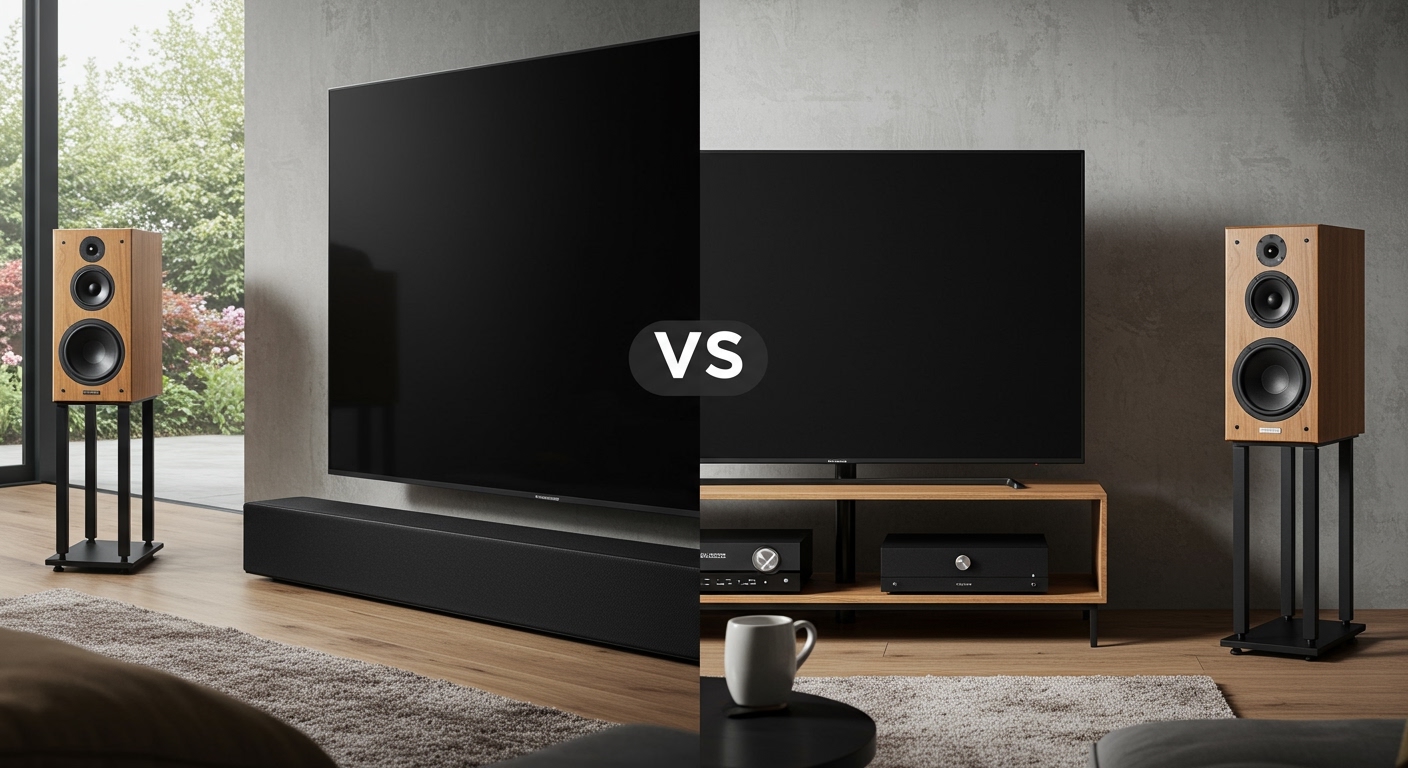
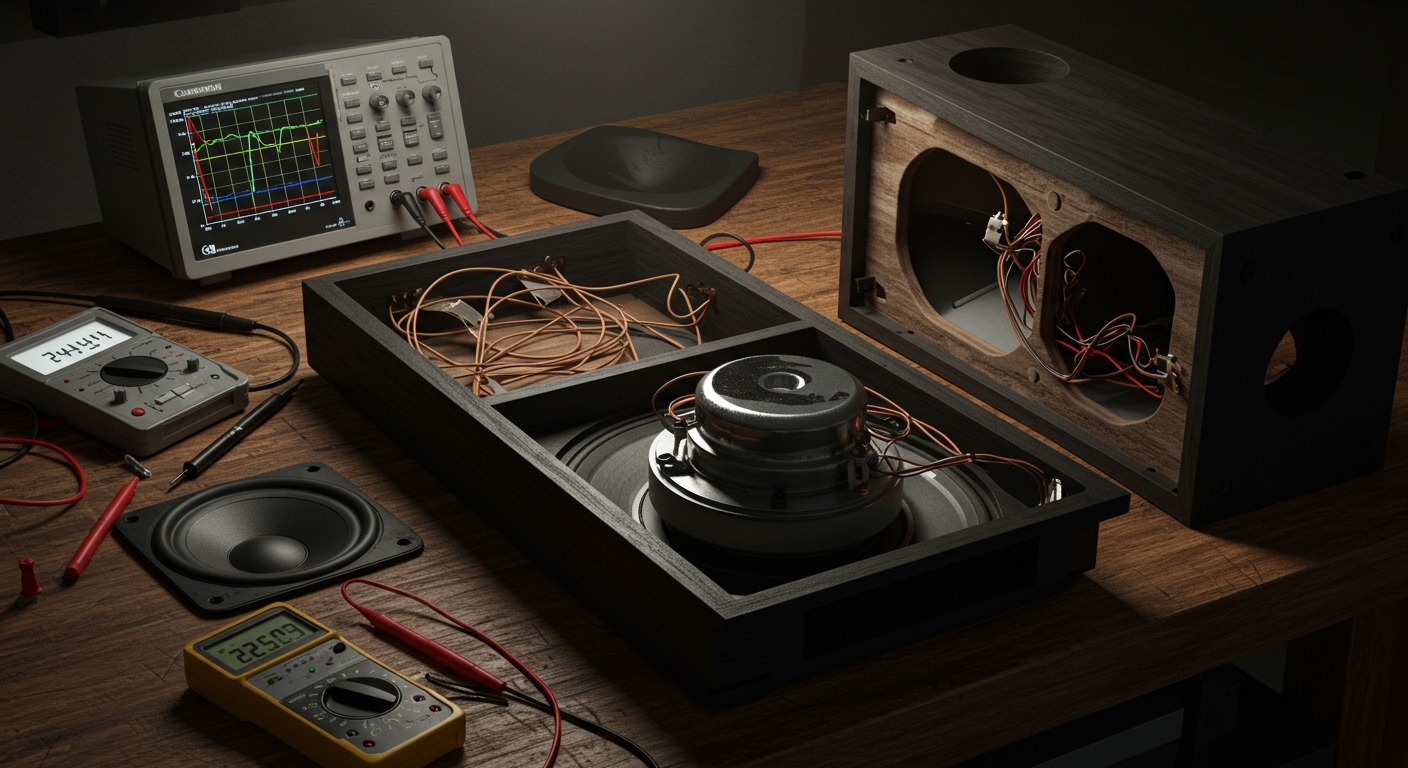
When we opened up a pair of KHL towers in our workshop, the differences between these and entry-level Bookshelf Speakers from a brand like Elac or Klipsch were staggering.
| Feature | KHL Speakers (Typical) | Entry-Level Hi-Fi (e.g., Polk/Sony) |
|---|---|---|
| Cabinet Material | Thin, 1/4″ Particle Board | 1/2″ to 3/4″ High-Density MDF |
| Crossover Network | Often a single capacitor (or none) | Multi-component PCB with inductors |
| Magnet Size | Small, “slug” style magnets | Substantial Ferrite or Neodymium |
| Internal Damping | Empty cabinet (echoey) | Poly-fill or acoustic foam damping |
| Wiring | Extremely thin “hair-gauge” wire | Quality copper internal braiding |
| Driver Quality | Paper cones with foam surrounds | Treated paper, Kevlar, or Polypropylene |
As shown in the table, KHL speakers skip almost every essential step in audio engineering to save costs. This is why most enthusiasts agree that KHL speakers are bad for anyone who values sound accuracy.
Common Red Flags: How to Spot a Bad KHL Speaker
If you are browsing a local marketplace and see a pair of speakers, here is how we identify if they are low-quality KHL-style units:
- The Weight Test: High-quality speakers require heavy magnets and thick wood to prevent vibration. If a large tower speaker feels like it weighs less than 15-20 pounds, it is likely a KHL or similar low-end unit.
- The “MSRP” Sticker: Many KHL speakers come with a pre-printed MSRP of $1,499 or $2,999 directly on the box. Real audio companies rarely print the price on the packaging.
- Fake Drivers: We have seen KHL models where one of the three drivers is actually just a piece of plastic glued to the cabinet with no wires attached (a “dummy” driver).
- Binding Posts: Instead of high-quality gold-plated terminals, these speakers often use cheap plastic spring clips that break easily.
How to Test and Improve KHL Speakers (Step-by-Step)
If you already own a pair and are wondering are KHL speakers bad enough to throw away, you can perform a “DIY Audit” to see if they can be salvaged for a garage or patio setup.
Step 1: The Knock Test
Rap your knuckles against the side of the speaker cabinet. If it sounds hollow like a cardboard box, the cabinet is resonating. This “boxiness” ruins the sound.
- Fix: You can add internal bracing or glue bitumen sheets inside to add mass.
Step 2: Inspect the Crossover
Unscrew the woofer and look inside. If you see wires going directly from the input to the speaker with only one small “bean-shaped” component (a capacitor) on the tweeter, you have a bottom-tier crossover.
- Fix: You can buy a Dayton Audio 2-way crossover for about $20 and wire it in. This will significantly improve the separation of highs and lows.
Step 3: Check for Air Leaks
Many KHL speakers are poorly sealed. Play a bass-heavy track and feel around the edges of the drivers. If you feel air puffing out, the “seal” is broken.
- Fix: Use foam gasket tape to seal the drivers against the cabinet.
Step 4: Add Damping Material
Most KHL cabinets are empty. This causes “standing waves” inside the box.
- Fix: Stuff the cabinet loosely with poly-fill (the stuff inside pillows) to trick the woofer into “thinking” the box is larger and more controlled.
The Audio Performance: Why the Sound is Lacking
In our listening tests, KHL speakers usually suffer from what we call “One-Note Bass.” Because the cabinets are flimsy, they vibrate at a specific frequency (usually around 100Hz to 120Hz). This creates a “boomy” sound that masks the vocals and higher instruments.
The Tweeters in these units are often cheap Piezo elements. Unlike traditional silk-dome or ribbon tweeters, Piezos can be very harsh and “shouty.” If you find yourself turning down the volume because the high notes are physically hurting your ears, that is a classic sign of why KHL speakers are bad for long-term listening.
Alternatives: What to Buy Instead of KHL
If you were considering KHL because you found them for $50-$100, you are much better off looking at the “budget audiophile” category. Even the cheapest speakers from established brands will outperform KHL.
- Sony SS-CS5: Often on sale for $120, these are legendary for their “Super Tweeter” and excellent imaging.
- Micca MB42X: A staple for desk setups, these feature a real crossover and surprisingly deep bass for their size.
- Used Market Brands: Look for Paradigm, Energy, Boston Acoustics, or Infinity on Craigslist or eBay. Even a 20-year-old pair of these will sound significantly better than a brand-new pair of KHLs.
The History of the “White Van” Speaker Scam
The reason people still ask “are KHL speakers bad” is that the distribution method is so effective. This “scam” has existed since the 1970s. The sellers use high-pressure sales tactics, often showing a fake invoice or a “Home Theater Magazine” ad (which they paid to place) to prove the value.
They target people who want a “good deal” but don’t know much about audio specs like Ohm rating, Sensitivity (dB), or THD (Total Harmonic Distortion). When you buy a KHL speaker, you aren’t paying for engineering; you are paying for the seller’s gas and the printing of a flashy box.
Final Verdict: Should You Buy KHL?
Unless you are finding them at a garage sale for under $15 to use in a workshop where they might get covered in sawdust, the answer is no.
Investing even a small amount of money into a pair of KHL speakers is generally a waste. You are better off saving that money for a pair of entry-level speakers from a manufacturer that provides a warranty, published specifications, and a history of quality engineering.
Frequently Asked Questions
Is KHL the same as KLH?
No. KLH is a high-end, legitimate audio brand with a long history of innovation. KHL is an off-brand, often associated with low-quality “White Van” speakers designed to mimic the KLH name.
Can I use KHL speakers for a home theater?
You can, but the experience will be underwhelming. Most modern AV receivers expect speakers with stable impedance (usually 6 or 8 ohms). Low-quality speakers like KHL can have wild impedance swings that may cause your receiver to overheat or go into “Protect Mode.”
How much are KHL speakers actually worth?
While the box might claim they are worth $1,000+, the actual manufacturing cost is typically between $10 and $30. On the used market, they rarely sell for more than $20-$40 a pair.
Why are my KHL speakers so light?
They are light because they use thin particle board instead of dense MDF and very small magnets. In the world of non-digital speakers, weight is usually a direct indicator of quality.
Can I replace the drivers in a KHL cabinet?
While you can, it is rarely worth it. The cabinet itself is the “instrument” of the speaker, and if the wood is too thin, even high-end drivers will sound poor inside a KHL box.