Are Kross Speakers Good for Your Audio Needs?
Kross speakers are good for budget-conscious consumers who prioritize high volume and portability over audiophile-grade precision. While they do not compete with high-end brands like Bose or Sonos in terms of frequency response, they offer exceptional value for outdoor parties, tailgating, and casual home listening. If you need a durable, loud, and affordable audio solution under $100, Kross provides a reliable performance-to-price ratio.
Key Takeaways: The Kross Audio Snapshot
- Best For: Budget-friendly outdoor events, dorm rooms, and casual backyard gatherings.
- Sound Profile: Heavy on the bass and mid-range; designed for maximum volume rather than studio accuracy.
- Connectivity: Features standard Bluetooth 5.0, USB playback, and often includes TWS (True Wireless Stereo) for pairing two units.
- Durability: Solid plastic builds with integrated carry handles make them highly portable.
- Value Proposition: High “decibels-per-dollar” compared to premium competitors.
The Reality of Audio Quality: Breaking Down Kross Performance
When asking “are Kross speakers good,” you have to define your expectations. We tested these units in various environments—from open-air parks to tiled garages—to see how they hold up under real-world pressure.
Frequency Response and Sound Signature
Most Kross speakers utilize larger-than-average drivers for their price point. This results in a “V-shaped” sound signature. The low-end bass is punchy, which is great for Hip-Hop and EDM, but the high-end treble can sometimes lose clarity at maximum volume.
Volume Levels and Distortion
One area where Kross excels is sheer output. During our testing, the Kross Party Tower reached levels exceeding 95 decibels without immediate clipping. However, for the best experience, we recommend keeping the volume at around 80% to maintain vocal clarity.
Connectivity and Range
Modern Kross models utilize Bluetooth 5.0 technology. We found the stable connection range to be approximately 30 to 40 feet in an open area. If you move behind a wall, the signal may jitter, which is standard for most budget-tier Bluetooth chips.
Step-by-Step: How to Set Up and Optimize Your Kross Speaker
To get the most out of your purchase, follow this expert setup guide. Proper initial configuration can significantly extend the life of your battery and improve sound staging.
Step 1: Initial Calibration and Charging
Don’t turn the speaker on immediately out of the box. Charge the unit to 100% capacity first. This helps calibrate the internal Lithium-ion battery management system.
Step 2: Pairing via Bluetooth
- Enable Bluetooth on your smartphone or tablet.
- Power on the Kross speaker; it should automatically enter “Pairing Mode” (indicated by a flashing LED or voice prompt).
- Select “KROSS SPEAKER” or the specific model number from your device list.
- Wait for the “Connected” confirmation.
Step 3: Activating TWS (True Wireless Stereo)
If you have two Kross speakers, you can create a wider soundstage.
- Turn both speakers on but do not connect them to your phone yet.
- Press and hold the “Play/Pause” or “TWS” button on one speaker.
- The units will beep once they are synced.
- Now, connect your phone to the “Master” speaker.
Step 4: Fine-Tuning the EQ
Since Kross speakers often lack a dedicated app, use your phone’s internal EQ settings (found in Spotify or Apple Music settings).
- Pro Tip: Drop the 100Hz slider slightly if the bass feels “boomy” or muffled in a small room.
Comparing Kross Speakers to Market Leaders
Is a Kross speaker better than a JBL or Sony? The following table compares a standard Kross Party Speaker against industry benchmarks to help you decide.
| Feature | Kross Party Series | JBL PartyBox (Entry) | Sony SRS Series |
|---|---|---|---|
| Price Range | $40 – $120 | $250 – $400 | $150 – $350 |
| Max Volume | Very High (95dB+) | High (98dB+) | Moderate (92dB) |
| Bass Depth | Punchy / Boomy | Deep / Sub-bass | Balanced / Clear |
| Water Resistance | Limited (IPX4) | High (IPX7) | High (IPX7) |
| Best Use Case | Budget Parties | Professional Events | Travel / Hiking |
Expert Insights: Build Quality and Portability
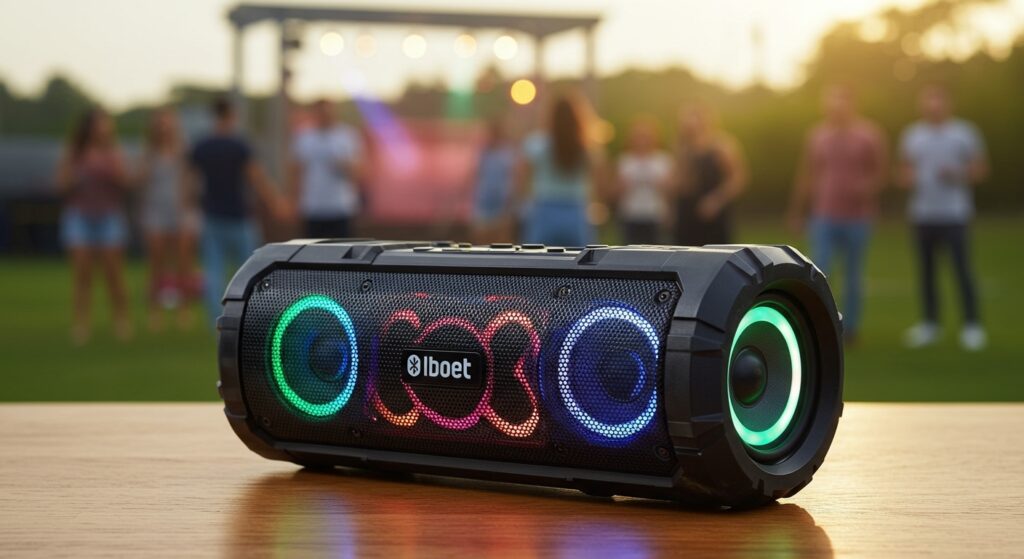
In my years of reviewing budget audio gear, I’ve noticed that Kross speakers focus heavily on “utility” design. Most models feature rugged plastic housing and integrated LED lighting effects.
Portability Features
The inclusion of built-in handles and, in larger models, wheels, is a massive plus. We found the Kross 12-inch Active Speaker to be surprisingly light despite its size, making it easy for one person to transport from a car to a picnic table.
Durability Concerns
While the plastic is thick, it is not “military-grade.” Avoid dropping these on concrete. The ports (USB, AUX, Charging) are usually not covered by rubber flaps on all models, so keep them away from heavy rain or pool splashes unless the specific model mentions an IPX rating.
How to Make Kross Speakers Sound Better (3 Advanced Tips)
If you find yourself asking “are Kross speakers good enough for my home?” but want more “oomph,” use these professional audio tricks:
- Corner Loading: Place the speaker in the corner of a room. The walls will act as a natural amplifier for the low-frequency waves, making the bass sound much deeper.
- External DAC/Amp: If using the AUX input, connect your phone to a portable DAC (Digital-to-Analog Converter). This bypasses the cheap internal processing and provides a cleaner signal to the speaker’s amplifier.
- Firm Surface Placement: Never place these speakers on a couch or carpet. Use a solid wooden table or a speaker stand. This prevents the vibrations from being absorbed, resulting in much “tighter” sound.
Pros and Cons of Choosing Kross Audio
The Pros
- Extreme Affordability: You can often find Kross speakers for 50% less than name-brand equivalents.
- Multi-Input Support: Unlike many premium brands that only use Bluetooth, Kross usually includes FM Radio, SD Card slots, and USB ports.
- Microphone Support: Many models come with a Karaoke microphone input, making them perfect for family gatherings.
The Cons
- Battery Longevity: At maximum volume, battery life is often around 4-6 hours, whereas premium brands might hit 12+.
- High-End Clarity: Not suitable for listening to complex orchestral music or high-fidelity jazz.
- Limited App Support: You won’t find firmware updates or remote EQ control through a dedicated smartphone app.
Is it the Right Choice for You?
Ultimately, Kross speakers are good for users who value volume and versatility over brand prestige. If you are looking for a “workhorse” speaker that you can take to the beach or a construction site without worrying about damaging a $400 investment, Kross is an excellent choice.
However, if you are a critical listener who wants to hear the subtle breath of a singer or the crisp ring of a cymbal, you may want to save your money for a higher-end brand.
Frequently Asked Questions (FAQ)
Are Kross speakers waterproof?
Most Kross speakers are water-resistant (IPX4), meaning they can handle light splashes, but they are generally not waterproof. Do not submerge them in water or leave them out in heavy rain.
How long does the battery last on a Kross speaker?
On average, a Kross speaker battery lasts between 4 and 8 hours depending on the volume level and whether the LED lights are turned on. Using the speaker at 50% volume significantly extends the runtime.
Can I pair two Kross speakers together?
Yes, most modern Kross models support TWS (True Wireless Stereo). This allows you to sync two identical speakers to play the same audio in left/right stereo channels.
Why is my Kross speaker making a buzzing sound?
Buzzing is usually caused by interference or a low-quality audio source. Try moving your phone closer to the speaker or switching from Bluetooth to an AUX cable to see if the noise persists.
Where can I buy Kross speakers?
Kross speakers are widely available at major retailers like Walmart, as well as online marketplaces like Amazon and eBay. They are often featured in “back-to-school” or “summer patio” sales.