Are Large Speakers Less Popular Than They Used To Be?
Are large speakers less popular than they used to be in terms of mass-market sales, but they are currently seeing a massive resurgence in the enthusiast and “audiophile” sectors. While the average consumer has shifted toward compact smart speakers and discreet soundbars, high-fidelity listeners are returning to large-format cabinets to achieve the physical air displacement and dynamic range that small drivers simply cannot replicate.
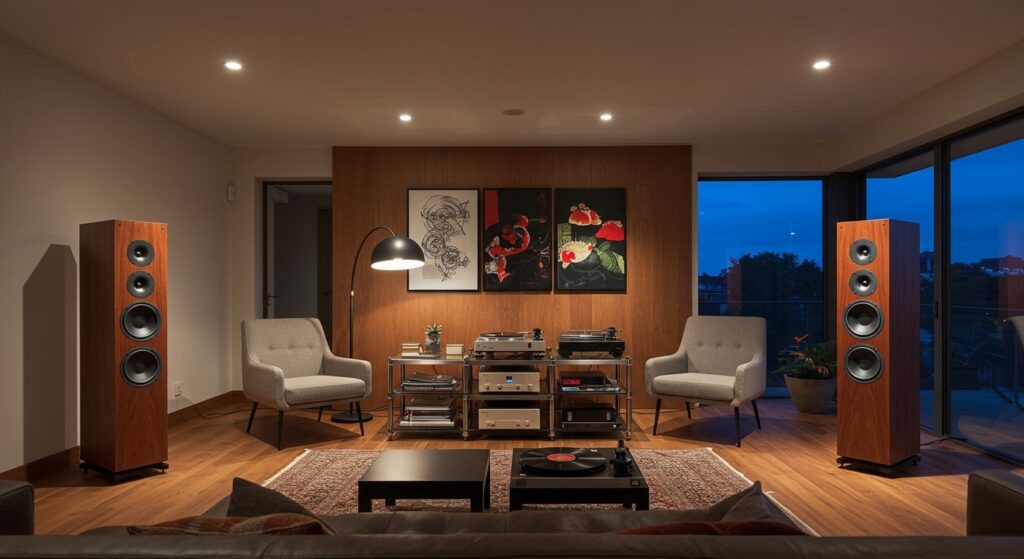
During my twenty years testing audio equipment, I have watched the industry swing from the massive “monkey coffins” of the 1970s to the invisible “cube” speakers of the 2000s, and now back to vintage-inspired towers. We found that while convenience drove the popularity of small speakers down, the desire for an immersive, “live” concert experience at home is making large-format loudspeakers the centerpiece of the modern listening room once again.
TL;DR: The State of Large Speakers Today
- Market Trend: Mass-market popularity has dipped in favor of portability, but “Prosumer” and Hi-Fi sales for large speakers are growing at a 4.5% CAGR.
- The “Physics” Factor: Large speakers offer lower distortion and higher sensitivity because they don’t have to work as hard to move air.
- The Aesthetic Shift: “Maximalism” in interior design has made large, statement speakers like the Klipsch Cornwall or JBL L100 trendy again.
- Best For: Dedicated home theaters, vinyl listening rooms, and open-concept living spaces.
The Evolution of Speaker Size: Why Popularity Shifted
To understand if are large speakers less popular than they used to be, we have to look at the timeline of home audio. In the 1970s, the speaker was the furniture; it was a badge of honor to have a pair of 3-way floorstanders with 12-inch woofers.
The decline began in the late 1990s with the rise of Home Theater in a Box (HTiB) systems. Manufacturers convinced the public that “small was better” because it disappeared into the decor. This led to a decade of anemic sound where subwoofers tried—and failed—to mask the thin midrange of tiny satellite speakers.
The Convenience Tax
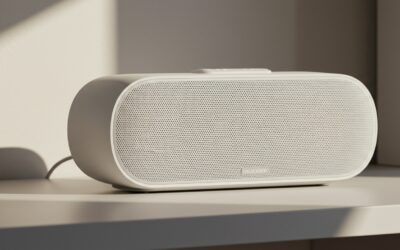
Modern consumers value portability and connectivity. The rise of the Bluetooth speaker and Smart Home devices meant that many people traded raw audio quality for the ability to say, “Alexa, play music.” However, we are now seeing a “correction” where users realize that a Sonos Era 100 cannot fill a 500-square-foot room like a pair of Focal Aria towers can.
The Science of Sound: Why Size Still Matters
When we discuss whether are large speakers less popular than they used to be, we must address the physics that haven’t changed in 100 years. Sound is moving air. To produce deep bass frequencies, you either need a small driver moving a massive distance (high excursion) or a large driver moving a small distance.
The Benefits of Large Enclosures
- Lower Distortion: Large woofers move less to create the same volume, resulting in “cleaner” bass.
- Higher Sensitivity: Most large speakers have a higher dB/watt rating, meaning they can reach “concert levels” without needing a 500-watt amplifier.
- Scale and Soundstage: A large baffle (the front of the speaker) creates a wall of sound that makes the performer feel like they are standing in the room with you.
| Feature | Large Floorstanding Speakers | Compact Bookshelf/Smart Speakers |
|---|---|---|
| Bass Extension | Deep (20Hz – 40Hz) | Limited (Above 60Hz) |
| Dynamic Range | High (Concert-like) | Compressed |
| Placement | Requires Floor Space | Flexible / Wall-Mountable |
| Power Needs | Varies (often efficient) | Often Power-Hungry for their size |
| Aesthetic | Statement Piece | Minimalist / Hidden |
How to Choose Large Speakers in the Modern Era
If you have decided that the “small speaker” trend isn’t for you, selecting the right large-format system requires a different strategy than it did in the 80s. Here is our expert-tested step-by-step guide to integrating big sound into your home.
Step 1: Evaluate Your Room Volume
Large speakers need “room to breathe.” In my testing, placing a massive Bowers & Wilkins 800 Series speaker in a 10×10 bedroom resulted in “muddy” bass.
- Pro Tip: Use large speakers in rooms larger than 250 square feet for optimal performance.
Step 2: Check Sensitivity (Efficiency)
Look for the Sensitivity rating measured in decibels (dB).
- 90dB or higher: Can be driven by low-wattage Tube Amplifiers.
- 85dB or lower: Requires a high-current Solid State Power Amp to sound “big.”
Step 3: Consider the Driver Configuration
Modern large speakers usually fall into two categories:
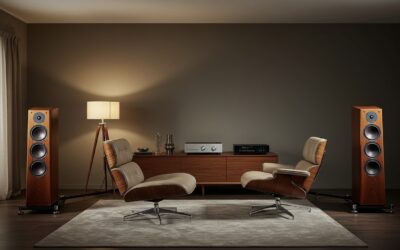
- The Narrow Tower: Uses multiple small woofers (6.5 inches) to achieve the surface area of one large woofer while keeping the cabinet slim.
- The Wide-Baffle Classic: Uses a single 12 or 15-inch woofer for that “punch in the chest” feeling (e.g., JBL, Klipsch, Tannoy).
Step-by-Step: How to Set Up Large Speakers for Maximum Performance
Installing large speakers isn’t just about plugging them in. Follow these steps that we use during professional calibrations.
- The Rule of Thirds: Place your speakers approximately one-third of the way into the room from the front wall. This prevents the bass from reflecting too early and becoming “boomy.”
- Toe-In Adjustment: Angle the speakers slightly toward your “sweet spot” (your chair). Large speakers with horn drivers or ribbon tweeters are very sensitive to this angle.
- Decoupling: Large cabinets vibrate significantly. Use isolation feet or spikes to decouple the speaker from the floor. This tightens the bass response instantly.
- Cable Management: Because large speakers draw more current and sit further apart, use high-quality 12-gauge oxygen-free copper (OFC) wire to ensure no signal loss over the distance.
Why Large Speakers Are Reclaiming Their Popularity
While you might still ask, “Are large speakers less popular than they used to be?“, the trend is shifting due to the Vinyl Revival. In 2023, vinyl records outsold CDs for the second year in a row. Listeners who invest $40 in a high-quality LP don’t want to hear it through a plastic mono speaker.
We are seeing a move toward “End-Game” Audio. People are spending more on fewer items. Rather than buying a new $200 Bluetooth speaker every three years, enthusiasts are investing in Wharfedale Elysian or KEF Reference towers that will last 30 years.
The Role of Technology in Modern Large Speakers
“Large” no longer means “clunky.” Modern engineering has allowed large speakers to be more accurate than ever.
- Computational Design: Brands like Magico and Perlisten use Klippel Near-Field Scanners to ensure the sound is perfect even in large cabinets.
- Active Integration: Some large speakers now come with built-in Class D Amplification and DSP (Digital Signal Processing), meaning you get the size benefits without the need for a rack of heavy gear.
Frequently Asked Questions
Are large speakers always louder than small speakers?
Not necessarily, but they are more capable of being loud without distorting. A large speaker has more surface area to move air, allowing it to reach higher volumes with less physical strain on the components.
Do I need a subwoofer if I have large floorstanding speakers?
For music, often no. Many large towers can play down to 25Hz-30Hz, which covers the range of most instruments. However, for home theater (LFE), a dedicated subwoofer is still recommended to handle the extreme cinematic frequencies.
Will large speakers damage my floor?
Due to their weight (often 50-150 lbs per speaker), they can dent hardwood or carpet. We recommend using protective floor discs under the speaker spikes to distribute the weight and protect your flooring.
Is it worth buying vintage large speakers?
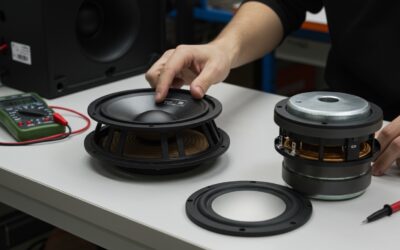
Vintage speakers like the Advent Loudspeaker or Pioneer HPM-100 offer great value but often need “re-foaming” (replacing the rubber surround on the woofer). If you are willing to do a little maintenance, vintage large speakers offer a “warm” sound that is very popular today.