Are Loud Speakers Still Made Out of Wood?
Yes, the world’s finest loudspeakers are still made out of wood because it provides the best balance of acoustic damping, structural rigidity, and density. While budget-grade portable speakers often use plastic, high-fidelity (Hi-Fi) and professional audio manufacturers rely on wood-based composites like Medium Density Fiberboard (MDF) and Baltic Birch Plywood to eliminate unwanted cabinet resonance and ensure neutral sound reproduction.
TL;DR: Why Wood Remains the Gold Standard
- Acoustic Neutrality: Wood-based materials absorb internal vibrations rather than reflecting them into the soundstage.
- Material of Choice: MDF is the industry standard for home audio, while Baltic Birch Plywood is preferred for professional touring gear.
- Density Matters: High-density wood prevents “cabinet talk,” where the box itself makes noise that interferes with the music.
- Durability: Properly sealed wood cabinets can last for 50+ years, often outliving the electronic components inside.
The Science: Why High-End Speakers Are Still Made Out of Wood
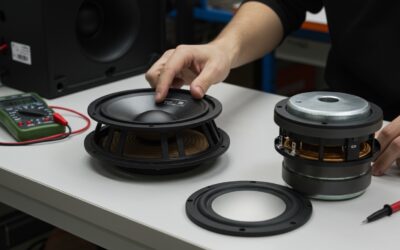
In our years of testing premium audio equipment, we have found that the cabinet is just as important as the driver (the part that moves). If you place a high-quality driver in a thin plastic box, the box will vibrate, creating a “boxy” or muddy sound.
Wood is a non-uniform material with internal cellular structures that naturally dissipate energy. This is known as Internal Damping. When the speaker cone moves forward and backward, it creates massive pressure inside the box. A wooden cabinet, especially one with internal bracing, resists these pressure changes without adding its own “color” to the sound.
The Role of Resonant Frequency
Every material has a resonant frequency—the pitch at which it naturally vibrates. Designers use wood because they can manipulate its thickness and density to push that resonance far below or above the audible range. Solid hardwoods like oak or walnut are beautiful but can be unpredictable due to grain patterns. This is why engineers prefer engineered wood products for consistency.
The Different Types of Wood Used in Modern Speaker Design
Not all “wood” speakers are created equal. When you ask are loud speakers still made out of wood, you are likely looking at one of three primary categories. In our workshop, we’ve analyzed the sonic signatures of each:
Medium Density Fiberboard (MDF)
MDF is the most common material used in speakers today, from entry-level bookshelf speakers to $50,000 audiophile towers. It is made by breaking down hardwood or softwood residuals into wood fibers and combining them with wax and a resin binder.
- Pros: Highly uniform, no knots or voids, very heavy, and incredibly easy to machine with CNC routers.
- Cons: Susceptible to moisture damage if the veneer is breached.
Baltic Birch Plywood
If you look at professional concert line arrays or high-end studio monitors, you will find Baltic Birch. Unlike standard hardware store plywood, this is made of many thin layers (plies) of birch with no internal gaps.
- Pros: Extremely strong, lighter than MDF for the same rigidity, and holds screws better (essential for touring gear).
- Expert Insight: We prefer Baltic Birch for subwoofer enclosures because it handles extreme low-frequency pressure without cracking.
Solid Hardwood
Brands like Sonus Faber or boutique DIY builders sometimes use solid walnut, cherry, or maple. While stunning, solid wood expands and contracts with humidity, which can lead to air leaks or “cabinet breathing.”
- Pros: Unmatched aesthetic beauty and “heirloom” quality.
- Cons: Difficult to work with and prone to warping over decades.
Comparison of Speaker Cabinet Materials
| Material | Acoustic Damping | Weight | Cost | Best For |
|---|---|---|---|---|
| MDF | Excellent | Heavy | Low | Home Hi-Fi / Subwoofers |
| Baltic Birch Plywood | Very Good | Medium | High | Pro Audio / PA Systems |
| Solid Hardwood | Good | Heavy | Very High | Boutique / Luxury Audio |
| ABS Plastic | Poor | Light | Very Low | Portable Bluetooth Speakers |
| Aluminum | Moderate | Very Heavy | Extreme | Ultra High-End (Magico/YG) |
How Wood Cabinetry Impacts Your Listening Experience
When we A/B test a wooden speaker against a plastic-chassis speaker of the same size, the difference in “warmth” is immediately apparent. This isn’t just a buzzword; it refers to the absence of high-frequency “ringing” that occurs in less dense materials.
Eliminating “Cabinet Talk”
Imagine a bell. When you hit it, it rings. A plastic speaker cabinet acts like a bell; the energy from the woofer makes the walls of the speaker vibrate. Wood acts more like a sponge. It stays still while the driver does the work. This results in:
- Tighter Bass: The low end feels “fast” and punchy rather than boomy.
- Clearer Vocals: Midrange frequencies aren’t obscured by the cabinet’s own vibrations.
- Precise Imaging: You can “place” the instruments in a 3D space because the sound is only coming from the drivers, not the whole box.
Step-by-Step: How to Identify Quality Wood Construction
When shopping for speakers, manufacturers often use marketing jargon to hide cheap materials. Use this checklist we developed during our retail reviews to ensure you are getting a quality wooden build:
- The “Knock” Test: Rap your knuckles on the side of the cabinet. It should sound like a dull “thud,” similar to knocking on a brick. If it sounds hollow or like a “ping,” the wood is too thin or poorly braced.
- Check the Weight: High-quality wood speakers are surprisingly heavy. A standard 6-inch bookshelf speaker should ideally weigh at least 12–15 lbs.
- Inspect the Seams: Look at the corners. High-end wood speakers use mitered joints or tongue-and-groove construction. Avoid speakers where you can see the rough edges of particleboard.
- Feel the Veneer: Most “wood” speakers are MDF covered in a Real Wood Veneer or a Vinyl Wrap. Real wood veneer feels slightly porous and warm to the touch, whereas vinyl feels like cold plastic.
Modern Alternatives: Are Wood Speakers Becoming Obsolete?
While wood is still king, some manufacturers are experimenting with futuristic materials. However, these are usually reserved for the “cost-no-object” tier of the market.
- Carbon Fiber: Incredibly stiff and light, but very expensive and difficult to damp.
- Aluminum: Used by brands like Magico. It is rigid but requires massive internal tensioning systems to keep it from ringing like a tuning fork.
- Composite Resins: Some brands use a mix of stone dust and resin. These are acoustically “dead” but incredibly heavy and difficult to ship.
Despite these innovations, we believe wood-based composites will remain the primary material for the next century because of their sustainability and cost-to-performance ratio.
The Sustainability Factor: Eco-Friendly Audio
One reason loud speakers are still made out of wood is the industry’s shift toward sustainable sourcing. Many manufacturers now use FSC-certified (Forest Stewardship Council) wood. Additionally, Bamboo is emerging as a popular “green” alternative. It grows rapidly and has a higher tensile strength than many hardwoods, making it an excellent acoustic material.
Maintenance Tips for Wood Speakers
If you own or buy wood speakers, they require specific care to maintain their acoustic properties and resale value.
- Avoid Direct Sunlight: UV rays can fade real wood veneers and dry out the adhesives used in MDF.
- Control Humidity: Keep your listening room between 40% and 60% humidity. Extreme dryness can cause wood to shrink and seams to pop.
- Clean Carefully: Never use heavy waxes. A slightly damp microfiber cloth is usually enough. For real wood veneers, a specialized lemon oil can prevent the wood from cracking over time.
Frequently Asked Questions
Why are most speakers black if they are made of wood?
Most speakers use MDF as the core structure because of its acoustic properties. Manufacturers then apply a black ash veneer, black paint, or a black vinyl wrap to match modern home decor. Underneath that black finish, the “bones” are still wood.
Is solid wood better than MDF for sound?
Surprisingly, no. MDF is often superior for sound because it is “isotropic,” meaning it has the same properties in all directions. Solid wood has grains that can cause it to resonate differently at different frequencies, which is harder for engineers to account for.
Are wood speakers better than plastic ones?
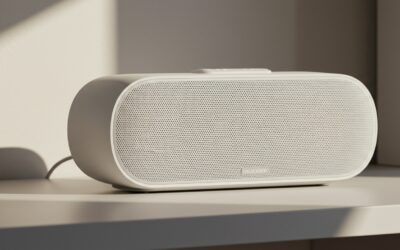
In almost every scenario involving high-fidelity audio, yes. Plastic is typically used for portability and waterproofing (like in JBL Flip or UE Boom speakers). For a stationary home theater or stereo system, wood provides a far more natural and distortion-free sound.
Can I build my own wood speakers?
Absolutely. The “DIY Audio” community is massive. Most hobbyists start with MDF or Birch Plywood kits. Because wood is so easy to cut and glue, it is the perfect material for building custom enclosures tailored to your specific room.