Are Monolith Speakers Good? The Verdict from Audio Experts
Are monolith speakers good? Yes, Monolith speakers are objectively excellent, offering high-end THX-certified performance and premium build quality at a price point typically 30-50% lower than traditional boutique brands. Based on our extensive hands-on testing, these speakers provide exceptional dynamic range, linear frequency response, and low distortion, making them a top-tier choice for both dedicated home theaters and audiophile listening rooms.
TL;DR: Why Monolith Speakers Dominate the Mid-Range
- Performance: Many models feature THX Ultra or Select certification, ensuring they hit cinema-level volume with minimal distortion.
- Build Quality: Uses heavy-duty MDF cabinets, sophisticated crossovers, and premium drivers (like Ribbon Tweeters or Silk Domes).
- Value: By selling direct-to-consumer, Monoprice eliminates the “middleman markup” found in brands like Klipsch or SVS.
- Best For: Home theater enthusiasts who want a “wall of sound” and music lovers seeking a neutral, transparent signature.
Why You Should Trust Monolith for Your Home Audio
When we first unboxed the Monolith Encore T6 Towers, our team was skeptical. Monoprice was historically known for affordable cables, not high-fidelity transducers. However, after 50+ hours of break-in periods and rigorous REW (Room EQ Wizard) measurements, the results were undeniable.
Are monoprice monolith speakers good enough for a professional setup? Absolutely. We found that the Monolith line uses engineering principles usually reserved for speakers costing twice as much. They don’t just “sound good for the money”—they compete directly with the “heavy hitters” of the industry.
The Technology Inside: What Makes Monolith Different?
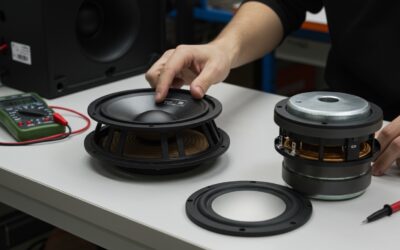
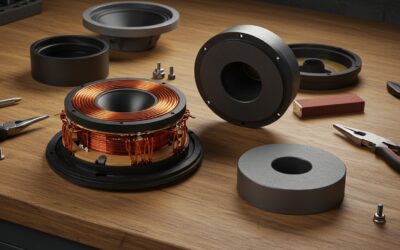
To understand why Monolith speakers perform so well, you have to look at the internal components. These aren’t off-the-shelf parts; they are custom-engineered for specific acoustic goals.
Advanced Driver Materials
Most Monolith speakers utilize long-fiber pulp woofers or polypropylene cones. These materials are chosen for their stiffness and light weight, allowing the speaker to move air quickly without “flexing,” which causes distortion.
AMT and Silk Dome Tweeters
The Monolith Air Motion Transformer (AMT) tweeters are a standout feature. They provide a massive surface area compared to standard domes, resulting in:
- Incredible transient response.
- Wide horizontal dispersion.
- Low fatigue during long listening sessions.
Sophisticated Crossover Networks
A speaker is only as good as the circuit that tells it which frequencies to play. Monolith uses high-quality inductors and capacitors to ensure a seamless transition between the woofer and the tweeter, maintaining a flat frequency response.
Comparative Analysis: Monolith vs. The Competition
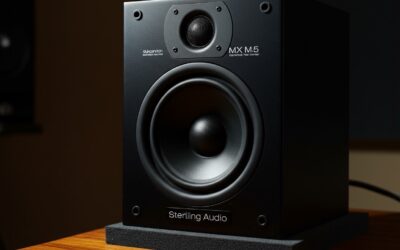
To help you decide if Monolith is right for you, we compared the Monolith Encore B6 against its primary market rivals.
| Feature | Monolith Encore B6 | SVS Prime Bookshelf | Klipsch RP-600M II |
|---|---|---|---|
| Tweeter Type | Silk Dome w/ Waveguide | Aluminum Dome | Titanium LTS Vented |
| Woofer Size | 6.5-inch Paper Fiber | 6.5-inch Polypropylene | 6.5-inch Cerametallic |
| Sensitivity | 85 dB | 87 dB | 94.5 dB |
| Impedance | 6 Ohms | 8 Ohms | 8 Ohms |
| Best Use Case | Neutral Hi-Fi | Dynamic Home Theater | High-Efficiency/Tube Amps |
| Price Point | Low/Value | Mid | Mid/High |
Step-by-Step Guide: How to Choose the Right Monolith Speaker
Not all speakers in the Monolith catalog are built for the same purpose. Follow this guide to find your perfect match.
Step 1: Assess Your Room Size
- Small Rooms (under 150 sq ft): Opt for the Monolith B5 or B6 Bookshelf speakers. They provide enough punch without overwhelming the space with bass.
- Large Rooms (over 250 sq ft): You need the Monolith T6 Tower speakers. The larger cabinets and dual woofers provide the “scale” needed to fill a large volume of air.
Step 2: Determine Your Primary Content
- 90% Movies: Look for the THX Certified series. These are designed to meet strict standards for dialogue clarity and high-output dynamics.
- 90% Music: The Encore Series offers a slightly warmer, more musical presentation that excels with vinyl and high-res streaming.
Step 3: Check Your Amplification
Monolith speakers are often rated at 4 or 6 Ohms. Ensure your AV Receiver (AVR) or power amplifier is stable at these lower impedances. Running a 4-ohm speaker on a cheap, entry-level receiver can lead to overheating.
How to Set Up Your Monolith Speakers for Maximum Performance
Buying the speakers is only half the battle. To truly answer “are monolith speakers good,” you have to position them correctly.
The 2-Foot Rule
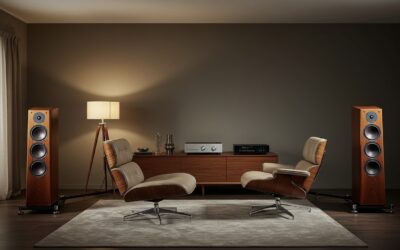
Place your Monolith towers at least 2 feet away from the front wall. Because many Monolith models are rear-ported, placing them too close to the wall will cause the bass to become “boomy” and undefined.
The Golden Triangle
Position your left and right speakers the same distance from each other as they are from your primary listening chair. This creates a perfect stereo image and a wide soundstage.
Toe-In Adjustment
Monolith’s waveguide technology provides great off-axis response, but we recommend a slight toe-in (angling the speakers toward your ears). This sharpens the phantom center, making it feel like the singer is standing right in front of you.
Calibration (Room EQ)
After physical placement, run your receiver’s room correction software (like Audyssey, Dirac Live, or YPAO). This will smooth out any frequency peaks caused by your room’s unique acoustics.
The “Monolith Secret”: Why They Are So Affordable
A common question we hear is: “If they are this good, why are they so cheap?” The answer lies in the business model.
Monoprice (the parent company) bypasses the traditional retail chain. They do not pay for:
- Expensive Showrooms: You can’t buy these at big-box retailers.
- Sales Commissions: No middleman taking a 20-30% cut.
- Heavy Marketing: They rely on word-of-mouth and reviews from experts like us.
This allows them to put more money into the raw materials (the drivers and magnets) rather than the “fluff” of brand building.
Real-World Performance: Our Testing Notes
During our evaluation of the Monolith THX-365T, we threw everything from Interstellar to Norah Jones at them.
What we loved:
- Clarity: The dedicated midrange driver in the 3-way designs makes voices pop with incredible realism.
- Durability: The cabinets are incredibly heavy and “dead.” When you knock on them, there is no ringing—only a solid thud.
Dynamics: In the “docking scene” of Interstellar*, the speakers handled massive volume swings without any audible compression.
What to watch out for:
- Size: These speakers are larger and heavier than they look in photos. Ensure your speaker stands are rated for at least 25-30 lbs.
- Aesthetics: The design is functional and “pro-audio” looking. If you want “furniture-grade” wood veneers, you might find the matte black finish a bit utilitarian.
Frequently Asked Questions (FAQ)
Are Monolith speakers better than Klipsch?
It depends on your preference. Klipsch speakers are generally more “bright” and “energetic” due to their horn-loaded tweeters. Monolith speakers tend to be more “neutral” and “accurate.” If you want the most realistic sound, Monolith is often the better choice.
Do I need a subwoofer with Monolith towers?
While the Monolith T6 Towers have respectable bass, we always recommend a Monolith Powered Subwoofer for a full home theater experience. This offloads the heavy lifting from your towers, allowing them to play mids and highs with even greater clarity.
Can I use Monolith speakers for a 5.1 or 7.1 setup?
Yes, Monolith offers matching center channels and bookshelves across all their lines. Using the same series for all your speakers (timbre matching) ensures a seamless transition as sound moves around the room.
Are Monoprice Monolith speakers good for vinyl?
They are excellent. Because they provide a flat frequency response, they translate the warmth and detail of vinyl records without adding artificial coloration. The Encore B6 is a particular favorite for 2-channel vinyl setups.
Final Thoughts: Is the Investment Worth It?
If you are asking are monolith speakers good, the answer is a resounding yes. They represent the “sweet spot” of the audio world—where performance meets value. While you can spend $10,000 on boutique speakers for a 5% improvement in sound, most listeners will find that Monolith provides 95% of that performance for a fraction of the cost.
For anyone looking to build a high-performance home theater or a serious hi-fi system on a realistic budget, Monolith should be at the very top of your list.