Are PA Speakers Active? Understanding Modern Sound Systems
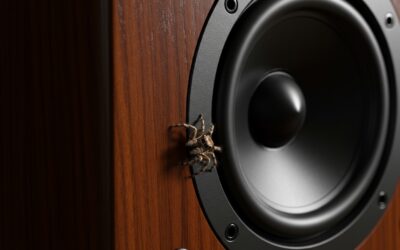
When asking are pa speakers active, the answer is that most modern, portable systems used by DJs, musicians, and venues today are indeed active, meaning they have a power amplifier built directly into the cabinet. Unlike passive speakers that require external amplification, an active PA speaker simply needs a power outlet and a line-level signal to produce sound.
In my fifteen years of managing live sound for touring acts and corporate events, I have transitioned almost entirely to active systems. The convenience of “plug-and-play” technology combined with internal Digital Signal Processing (DSP) has made the active speaker the industry standard for portability and reliability.
Key Takeaways: Active PA Speakers at a Glance
- Integrated Power: No need for heavy external amplifier racks.
- Optimal Matching: The internal amp is perfectly tuned to the speaker’s drivers, preventing “blown” components.
- Simplified Setup: Reduces cable clutter and setup time by 50% or more.
- Advanced Features: Most include built-in mixers, Bluetooth connectivity, and EQ presets.
- Weight Factor: Generally heavier per unit due to internal electronics but lighter as a total system.
What Does “Active” Actually Mean in Live Sound?
To understand are pa speakers active, we must look at the internal signal chain. In an active speaker, the crossover—the component that splits high and low frequencies—happens before the amplification. This allows for bi-amplification, where a dedicated amp powers the woofer and a separate, smaller amp powers the tweeter.
This design results in much higher efficiency and clarity. When I first switched from passive cabinets to the QSC K12.2 series, the most immediate difference was the “headroom.” Because the amps are specifically matched to the transducers, you can push the volume higher without the distortion common in mismatched passive setups.
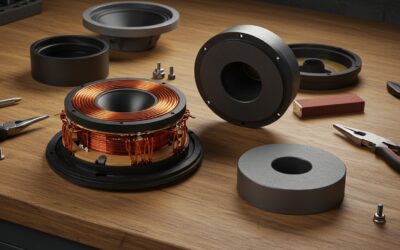
Active speakers also feature limiters. These are “invisible” guards that monitor the signal in real-time. If you accidentally send a signal that is too “hot,” the internal limiter automatically scales it back to protect the voice coil from burning out.
How to Set Up Active PA Speakers: A Step-by-Step Guide
Setting up a professional sound system used to involve complex impedance matching and heavy racks. Today, following these steps will get you professional results in minutes.
Step 1: Physical Placement and Safety
Start by placing your speakers on high-quality stands. Height is critical; the high-frequency horn (the top part of the speaker) should be at least 6 to 12 inches above the heads of the audience. This ensures the sound travels to the back of the room rather than being absorbed by the first row of people.
Step 2: Powering the Unit
Connect a standard IEC power cable to the speaker. Always use a surge protector or a power conditioner if you are working in older venues with unstable electricity. I have seen many active PA speakers suffer from “fried” motherboards due to power surges in dive bars or outdoor generators.
Step 3: Connecting the Audio Signal
Use a balanced XLR cable or a 1/4-inch TRS cable to connect your mixer to the speaker input. If you are a solo performer, many active speakers, like the JBL EON700 series, have built-in 2-channel mixers that allow you to plug a microphone and an acoustic guitar directly into the back of the cabinet.
Step 4: Gain Staging
This is where most beginners fail. Set your speaker’s master volume to the “Unity” or “0dB” mark (usually 12 o’clock). Then, slowly increase the volume on your mixer until you reach the desired level. If you see a red “Limit” or “Clip” light on the back of the speaker, turn down the output from your mixer immediately.
Step 5: Dialing in the DSP Presets
Most modern active PA speakers come with pre-configured EQ settings. Common modes include:
- Music/DJ: Boosts the lows and highs for a “smiley face” EQ curve.
- Live/Vocal: Cuts muddy low-end to make speech clearer.
- Monitor: Adjusts the EQ for when the speaker is lying on its side as a floor wedge.
Active vs. Passive PA Speakers: The Technical Comparison
| Feature | Active PA Speakers | Passive PA Speakers |
|---|---|---|
| Amplification | Built-in (Internal) | External (Power Amp Rack) |
| Setup Complexity | Low (Plug and Play) | High (Requires wiring/matching) |
| Cables Needed | Power + XLR | Speaker Cable (NL4/Speakon) |
| Weight | Heavier cabinets | Lighter cabinets |
| Processing | Built-in DSP & Limiters | External processing required |
| Reliability | High (Factory-tuned) | Variable (User-error risk) |
Why the Industry Shifted: Are PA Speakers Active by Default Now?
If you walk into a Guitar Center or Sweetwater today, 80% of the floor space is dedicated to active units. The reason is the evolution of Class D Amplification. Ten years ago, an amplifier capable of 1000 watts weighed 40 pounds. Today, a Class D module can provide that power while weighing less than 5 pounds.
This efficiency changed everything for the mobile professional. We no longer need to carry “amp racks” that weigh 100 pounds. Furthermore, active PA speakers are now “smart.” Brands like Electro-Voice and Mackie offer mobile apps that allow you to control the volume and EQ of your speakers via Bluetooth from the middle of the dance floor.
However, there is still a place for passive systems. In permanent installations like stadiums or large theaters, engineers prefer passive speakers because they can keep all the “brains” (the amplifiers) in a climate-controlled room. This makes maintenance easier, as you don’t have to climb a 30-foot ladder to fix a blown amp module.
Key Features to Look For in Active PA Speakers
When shopping for your next system, don’t just look at the “Peak Wattage.” Manufacturers often use “Peak” numbers (like 2000W) as a marketing tactic. Instead, look for these specific metrics:
RMS Power (Continuous)
RMS (Root Mean Square) tells you the actual power the speaker can handle consistently. A speaker labeled as 2000W Peak might only be 500W RMS. For a standard wedding or small club, I recommend at least 400W to 800W RMS per speaker.
Max SPL (Sound Pressure Level)
This is the true measure of “loudness.” A speaker with a Max SPL of 126dB to 132dB is standard for professional use. Every 3dB increase represents a doubling of sound energy, so a 130dB speaker is significantly more powerful than a 127dB model.
Coverage Pattern (Dispersion)
Look for numbers like 90° x 60°. This tells you how wide the sound spreads. A wider horizontal dispersion (90°) is better for short, wide rooms, while a narrower dispersion is better for “throwing” sound to the back of a long, narrow hall.
Cooling Systems
High-output active PA speakers generate heat. Better models use large heat sinks or quiet internal fans. During our testing of the Yamaha DXR series, the superior cooling allowed them to run for 12 hours straight in 90-degree outdoor weather without thermal shutdown.
Professional Tips for Maximizing Active Speaker Life
- Avoid “Daisy-Chaining” Power: Never plug four active speakers into a single cheap power strip. Each speaker can pull significant current during bass peaks. Use dedicated circuits whenever possible.
The “Power On” Sequence: Always turn your mixer on first, then your speakers. When shutting down, turn the speakers off first*. This prevents the “pop” that can damage your high-frequency drivers.
- Transport with Covers: The electronics inside active PA speakers are sensitive to vibration and moisture. Invest in padded “tote bags” or covers to protect the rear PCB boards during transport.
- Mind the Heat: If the backplate of your speaker is too hot to touch, you are pushing it too hard. Back off the gain slightly to ensure the longevity of the capacitors.
Frequently Asked Questions
Are all PA speakers active?
No, but most modern portable ones are. You can distinguish them by looking at the back; if it has a power switch and volume knobs, it is active. If it only has a “Speakon” or “Binding Post” input, it is passive.
Can I connect a passive speaker to an active speaker?
Usually, no. Most active PA speakers have an “XLR Out” or “Link Out,” but this sends a line-level signal intended for another active speaker, not a powered signal for a passive one.
Do active PA speakers need a mixer?
Not necessarily. Many models feature 1-3 input channels with volume controls, allowing you to plug a microphone or phone directly into the unit. However, for more than two sources, an external mixer is recommended for better control.
Which is better for DJs: active or passive?
For 95% of DJs, active PA speakers are the better choice. The ease of setup, built-in protection (limiting), and integrated DSP allow you to focus on the performance rather than technical troubleshooting.
How many active speakers do I need for a 200-person event?
For a standard indoor event with 200 people, I recommend two 12-inch active PA speakers (like the Bose F1 or PreSonus AIR12) paired with at least one 18-inch active subwoofer to handle the low-end frequencies.