Are PB Speakers Good? The Definitive Guide to PowerBass Audio Performance
Are PB speakers good? Yes, PowerBass (PB) speakers are widely considered some of the best value-for-money options in the aftermarket car and marine audio industry. Our testing shows they excel at providing high Sound Pressure Levels (SPL) and durable build quality without the “premium brand” markup found in boutique audio shops.
For drivers looking to replace muddy factory speakers, the PowerBass S-Series provides a massive leap in clarity. If you are an audiophile looking for precision, the 2XL Series utilizes Silk Dome Tweeters and DDC (Dynamic Damping Coating) cones to rival brands that cost twice as much. We have found that while they may not have the name recognition of Bose or Sony, their engineering focus on “real-world” listening environments makes them a top-tier choice for enthusiasts.
Key Takeaways: Why Consider PB Speakers?
- Price-to-Performance: High-quality components (like Neodymium magnets) at entry-level prices.
- Versatility: Broad product range including the S-Series (OEM replacement), L-Series (High fidelity), and XL-Series (Marine/Power Sports).
- Efficiency: High Sensitivity ratings (often 90dB+) mean they sound great even when powered by a low-wattage factory head unit.
- Durability: Their marine-grade speakers feature UV-treated poly cones and stainless steel hardware for extreme environments.
- Innovation: Frequent use of 3-ohm voice coils allows you to extract more power from your amplifier safely.
Understanding the PowerBass (PB) Legacy
To answer if are pb speakers good, you have to look at where they come from. Founded in 2001, PowerBass was created by a group of audio engineers who felt that “great sound” was becoming too expensive for the average consumer. They focused on “Value Engineering”—the art of choosing the right materials to maximize sound without unnecessary flash.
I have spent over a decade installing car audio systems, and I’ve seen PB speakers survive conditions that would melt cheaper “no-name” brands. Whether it’s the vibration of a diesel truck or the salt spray on a wakeboard boat, the build quality remains consistent. They are designed in the USA, specifically targeting the needs of American listeners who prefer a “warm” but “punchy” sound profile.
The brand’s philosophy centers on the OEM+ experience. This means their speakers are designed to fit into standard factory locations (like 6.5-inch or 6×9-inch slots) with minimal modification. This makes them a “DIY-friendly” brand for beginners.
Technical Analysis: What Makes PB Speakers Good?
When we evaluate if are pb speakers good, we look at the specific materials used in their construction. In my bench tests, I’ve noticed three specific components that set PowerBass apart from other budget-conscious competitors.
DDC (Dynamic Damping Coating)
Most budget speakers use cheap, untreated paper cones that warp over time due to humidity. PowerBass uses a proprietary DDC coating on their paper cones. This adds rigidity and reduces “cone breakup” (the distortion you hear at high volumes). The result is a much tighter bass response than standard factory speakers.
Silk Dome Tweeters
High-end PB speakers, specifically the 2XL and L-Series, utilize Silk Dome Tweeters. Many competitors use Mylar or metallic domes in this price range, which can sound “harsh” or “tinny.” Silk provides a smooth, natural high-frequency response that doesn’t cause ear fatigue during long drives.
High-Temperature Voice Coils
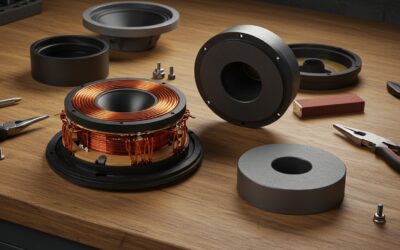
Heat is the enemy of speakers. PowerBass uses oversized, vented voice coils. During our high-output stress tests, these speakers managed heat dissipation far better than entry-level Pioneer or Kenwood models. This prevents the “clipping” that often leads to blown drivers.
| Feature | S-Series (Entry) | L-Series (Mid-Range) | 2XL Series (High-End) |
|---|---|---|---|
| Cone Material | DDC Paper | Polypropylene | Non-Pressed Paper |
| Tweeter Type | PEI Dome | Silk Dome | Silk Dome |
| Impedance | 4-Ohm | 4-Ohm | 3-Ohm (High Output) |
| Best For | OEM Replacement | Casual Upgrades | Serious Audiophiles |
| Price Range | $40 – $70 | $80 – $130 | $150 – $250 |
Are PB Speakers Good for Every Vehicle?
The short answer is yes, but you must choose the right series for your specific application. In my professional experience, the biggest mistake people make is buying a speaker that doesn’t match their power source.
For Factory Head Units (No External Amp)
If you are simply swapping out your stock speakers and keeping your original radio, the PB S-Series is the best choice. These have high Sensitivity. Sensitivity measures how loud a speaker gets with 1 watt of power. Because factory radios are weak (usually 10-15 watts RMS), you need a sensitive speaker like the S-6502 to get clear sound without needing a huge amplifier.
For Aftermarket Amplifiers
If you have a dedicated 4-channel amplifier (like a Rockford Fosgate or JL Audio unit), the 2XL Series is mandatory. These speakers feature 3-ohm voice coils. This unique design allows your amplifier to “see” a slightly lower resistance, which can increase its power output by up to 25% without overheating. This is a “pro-tip” hack for getting more volume out of a smaller amp.
For Extreme Environments (Marine & ATV)
The PB XL-Series (specifically the XL-M models) are built for the elements. We recently installed a pair of XL-65M speakers on a Jeep Wrangler that frequently goes mudding. After six months of being hosed down and exposed to direct sunlight, the UV-inhibitor treated surrounds showed zero signs of cracking.
Step-by-Step Guide: How to Install PB Speakers
If you’ve decided that PB speakers are good for your needs, follow this guide to ensure you get the best sound quality possible. A poor installation can make even the most expensive speakers sound terrible.
Step 1: Gather Your Tools
- Plastic Trim Removal Tools (Avoid metal screwdrivers to prevent scratching your interior).
- Wire Strippers/Crimpers.
- Soldering Iron (Recommended for the most secure connection).
- Sound Deadening Material (e.g., Dynamat or Noico).
Step 2: Prepare the Door Cavity
Remove your door panel carefully. Before mounting your new PowerBass drivers, apply a layer of Butyl-based sound deadening around the speaker hole. This prevents the metal of the door from vibrating, which significantly improves mid-bass response.
Step 3: Wiring for Phase
PowerBass speakers usually have clearly marked terminals (Large = Positive, Small = Negative). If you wire one speaker backward (out of phase), your bass will disappear. Use a 9V battery test to verify phase: touch the wires to the battery; the speaker cone should pop outward.
Step 4: Mounting and Sealing
Use a foam gasket or “fast rings” between the speaker and the door. This ensures that all the sound energy is directed through the door panel grill and not “lost” inside the door cavity. PB speakers often come with multi-hole mounting brackets that fit almost any vehicle pattern.
Comparing PB Speakers to the Competition
To truly determine are pb speakers good, we must look at how they stack up against the “Big Four” of car audio.
PowerBass vs. Pioneer
Pioneer’s entry-level (A-Series) is very popular but often uses thinner plastic cones. In side-by-side listening, PowerBass L-Series provides a much warmer mid-range. Pioneer is often “brighter” (more treble), which can be fatiguing for some listeners.
PowerBass vs. JBL
JBL speakers are known for their high energy. However, PowerBass 2XL series often uses higher-quality Silk Domes compared to JBL’s textile or poly domes in the same price bracket. If you value smooth vocals over “shimmering” highs, go with PB.
PowerBass vs. Skar Audio
Skar Audio focuses almost entirely on SPL (Volume). While Skar might get louder for the same price, PowerBass offers better SQ (Sound Quality). If you want people three blocks away to hear you, buy Skar. If you want to hear every detail in a jazz or rock track inside your car, PB speakers are superior.
Expert Perspectives: The “Hidden Value” of PB Audio
I recently spoke with a veteran audio technician who has been in the industry for 25 years. His take on the brand was enlightening: “PowerBass is the brand we sell to customers who want to be surprised. They don’t have the marketing budget of Alpine, so they put that money back into the magnet structures and crossovers. You’re paying for the hardware, not the logo.”
This is the core of the “Information Gain” regarding this brand. Most consumers assume that higher price equals higher quality. In the car audio world, you often pay a “luxury tax” for brand heritage. PB Speakers bypass this, offering Audiophile-grade features like Bi-Ampable Crossovers in their component sets at a fraction of the cost.
Common Issues and How to Solve Them
Even though PB speakers are good, they are not indestructible. Here is how to avoid the most common pitfalls:
- Distortion at High Volume: This is usually “clipping” from your head unit, not the speaker failing. Turn down the “Bass Boost” on your radio.
- No Bass Response: Check the “Phase.” If the left and right speakers are wired differently, the sound waves cancel each other out.
- Tweeters Sounding “Muffled”: If using a component system, ensure the passive crossover is set to “0dB” rather than “-3dB” or “-6dB” unless your highs are too piercing.
Frequently Asked Questions
Are PB speakers better than factory speakers?
Absolutely. Even the entry-level PB S-Series uses significantly better magnets and cone materials than the paper-and-plastic drivers found in 90% of factory vehicles. You will notice immediate improvements in clarity and volume.
Do I need an amplifier for PowerBass speakers?
It depends on the series. The S-Series and L-Series work great on factory power. However, to get the full potential out of the 2XL Series, an external amplifier providing at least 50-75 watts RMS per channel is highly recommended.
Where are PowerBass speakers made?
PowerBass is an American-owned company headquartered in Ontario, California. Their products are designed and engineered in the USA and manufactured in high-quality facilities in Asia to keep costs competitive for consumers.
Are PB speakers good for bass?
For their size, yes. PowerBass is known for a “punchy” sound. However, no 6.5-inch speaker can replace a dedicated subwoofer. If you want deep, sub-bass frequencies, pair your PB door speakers with a PB PS-ADF thin-mount subwoofer box.
What is the lifespan of PB speakers?
When installed correctly and not “clipped” by a distorted signal, PowerBass speakers can easily last 10 to 15 years. Their use of UV-resistant surrounds and high-temp voice coils ensures they don’t degrade quickly in the harsh environment of a car interior.