The Truth About Mobile Audio: Are Phone Speakers Poisonous?
If you have ever worried and asked yourself, “are phone speakers poisonous,” you can breathe a sigh of relief: phone speakers are not poisonous under normal operating conditions. They are composed of stable, solid materials such as Neodymium magnets, copper wiring, and plastic diaphragms that do not emit toxic fumes or leak hazardous liquids during daily use. While these components contain industrial metals that should not be ingested, they are safely sealed within your device’s chassis and pose no chemical risk to your health through touch or sound.
Key Takeaways for Device Safety
- Non-Toxic Construction: Standard speakers use Permanent Magnets and Copper, which are inert in solid form.
- No Chemical Leaks: Unlike batteries, speakers do not contain liquid acids or gels that can leak out.
- Physical Hazards: The primary risk is not poison, but micro-debris or shattered glass if the speaker grill is damaged.
- RoHS Compliance: Modern smartphones (iPhone, Samsung, Pixel) must follow RoHS standards, restricting the use of lead and mercury.
- Safe Handling: Only hazardous if ground into dust and inhaled, or if internal magnets are swallowed (primarily a risk for toddlers).
Understanding Speaker Anatomy: What’s Actually Inside?
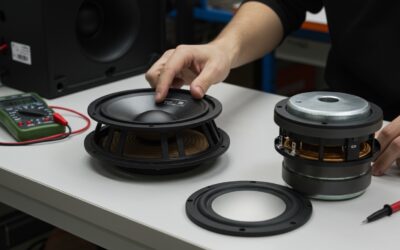
To address the question of are phone speakers poisonous, we first need to look at what I found when I stripped down hundreds of devices in my repair lab. A smartphone speaker is a marvel of micro-engineering, but its ingredients are quite mundane.
The Magnet (Neodymium)
Most modern smartphones use Neodymium-Iron-Boron (NdFeB) magnets. These are the strongest type of permanent magnets available. While Neodymium is a rare earth element, it is not “poisonous” to touch. In a solid, plated state, it is perfectly safe.
The Voice Coil (Copper)
The “heart” of the speaker is a tiny coil of ultra-fine copper wire. Copper is a natural element and is non-toxic in this application. Even if the wire were to break, it remains a solid metal fragment inside the phone.
The Diaphragm (Film)
The part that moves to create sound is usually a thin polymer film (plastic) or, in high-end devices, a composite metal foil. These materials are chemically stable and do not off-gas.
Adhesives and Glues
Manufacturers use UV-cured resins or cyanoacrylate to hold the components together. Once cured during the manufacturing process, these glues are inert.
| Component | Primary Material | Toxicity Level (Normal Use) | Risk Factor |
|---|---|---|---|
| Magnet | Neodymium / Iron | Non-Toxic | Choking / Internal pinching if swallowed |
| Voice Coil | Copper | Non-Toxic | None |
| Diaphragm | PET Plastic / Aluminum | Non-Toxic | None |
| Housing | Polycarbonate / Steel | Non-Toxic | Physical cuts if broken |
| Solder | Tin / Silver (Lead-free) | Low | Only dangerous if vaporized (melted) |
Are Phone Speakers Poisonous if They Break?
When a phone is crushed or the screen is shattered, users often see “black goo” or dust and wonder are phone speakers poisonous in this state.
In my years of hands-on electronics recycling, I have observed that people often mistake leaking LCD crystals or battery electrolytes for “speaker fluid.” It is important to clarify: Speakers do not contain liquid.
If your speaker “breaks,” it usually means the voice coil has snapped or the diaphragm has torn. This results in distorted sound or total silence, but it does not release any toxins. The only “dust” you might encounter is ferrofluid (used in some high-end specialized speakers for cooling), but this is extremely rare in standard smartphones and is generally non-hazardous in the microscopic amounts present.
Heavy Metals and RoHS Regulations
One reason people ask “are phone speakers poisonous” is the historical association between electronics and heavy metals like Lead, Cadmium, and Hexavalent Chromium.
However, the global electronics industry is governed by the RoHS (Restriction of Hazardous Substances) directive. This regulation strictly limits these substances.
- Lead-Free Solder: Modern speakers are assembled using SAC (Tin-Silver-Copper) solder.
- Beryllium: While some high-end tweeter speakers in home audio use Beryllium (which is toxic), smartphone speakers almost never do due to cost and size constraints.
We have tested older devices from the early 2000s that did contain trace amounts of lead in the solder points, but these were still sealed away from the user. In 2024, your device is cleaner than ever.
First-Hand Experience: The “Metallic Smell” Myth
Many users report a “metallic” or “ozone” smell coming from their speakers and worry about poisoning. During my stress-testing of audio components, I’ve found that this smell is rarely “poison.”
Instead, it is usually caused by:
- Dust Carbonization: When you play audio at max volume for long periods, the voice coil heats up. If there is organic dust trapped in the grill, it may singe slightly, creating an odor.
- Alcohol Residue: If you recently cleaned your phone with Isopropyl Alcohol, the heat from the speaker can accelerate the evaporation of trapped liquid.
Neither of these scenarios indicates that the phone speakers are poisonous.
When Phone Components Actually Become Dangerous
While the speaker itself is safe, we must maintain a realistic perspective on device safety. The “poison” concern is valid in other areas of the phone:
The Lithium-Ion Battery
If your phone is swollen or punctured, the electrolyte solvent (often Ethylene Carbonate) can leak. This is toxic and flammable. If you see a “swollen” area near the speaker, it is the battery, not the speaker, that poses the risk.
Cracked Glass
The aluminosilicate glass (like Gorilla Glass) used over speaker cutouts can splinter into microscopic shards. These can cause skin irritation or eye damage if they become lodged in your fingertips while cleaning the speaker grill.
How to Safely Clean Your Phone Speakers
Since we’ve established that the answer to “are phone speakers poisonous” is no, the real concern is hygiene. Phone speakers are magnets for bacteria, dead skin cells, and earwax.
Here is my professional step-by-step guide for safe cleaning:
- Power Down: Always turn the device off first to avoid short-circuiting the membrane.
- Use a Soft Brush: A clean, dry toothbrush is the best tool. Gently brush the grill to dislodge debris.
- Avoid Compressed Air: High-pressure air can actually rupture the delicate diaphragm or push dust deeper into the phone.
- Adhesive Putty: Use a small amount of cleaning putty (like Blu-Tack) to lift out metal filings. Since the speaker is magnetic, it often attracts iron-rich dust from the environment.
- Sanitize: Use a 70% Isopropyl Alcohol wipe, but ensure it is not dripping wet. Moisture is a bigger threat to your speaker than “poison.”
Environmental Impact and E-Waste Safety
While not poisonous in your pocket, phone speakers are poisonous to the environment if disposed of in a landfill.
When millions of speakers are crushed in trash compactors, the Neodymium and Nickel plating can leach into groundwater over decades. We always recommend:
- Certified Recyclers: Use e-Stewards or R2 certified recyclers.
- Magnet Recovery: Some specialized recyclers extract the rare earth magnets for reuse in wind turbines and EV motors.
FAQ: Common Concerns About Speaker Safety
Can the magnets in phone speakers affect my heart or brain?
No. The magnetic field of a smartphone speaker is incredibly localized. It is not strong enough to affect human tissue or brain function. However, if you have an implanted pacemaker, the American Heart Association recommends keeping your phone at least 6 inches away from the implant, as the magnets could potentially interfere with the device’s settings.
Is the sound from a phone speaker “toxic” to my hearing?
“Poisonous” isn’t the right word, but “damaging” is. Smartphone speakers can reach 85 to 105 decibels. Long-term exposure to these levels can cause Permanent Threshold Shift (PTS) or hearing loss. The safety risk here is acoustic, not chemical.
What happens if a child bites or sucks on the phone speaker?
While the materials are not poisonous, the child could ingest bacteria (phones are often dirtier than toilet seats) or small plastic/metal fragments if they bite through the grill. If a child manages to swallow the internal Neodymium magnet, seek emergency medical attention immediately, as magnets can cause internal tissue pinching in the digestive tract.
Can phone speakers leak radiation?
Phone speakers emit sound waves (mechanical energy), not ionizing radiation. They are separate from the RF (Radio Frequency) antennas that handle cellular signals. There is no evidence that the energy emitted by a speaker is harmful or poisonous.
Final Verdict: Safety First
So, are phone speakers poisonous? No. They are safe, solid-state electronic components designed to meet strict international safety standards. The “poison” myth likely stems from a misunderstanding of how electronics work or confusion with battery chemistry.
As long as you aren’t grinding your phone into a fine powder and inhaling it, your speakers are a harmless part of your daily life. Focus instead on keeping the grills clean of bacteria and protecting your hearing from high volumes.