Are Precision Acoustics Speakers Good? The Definitive Expert Verdict
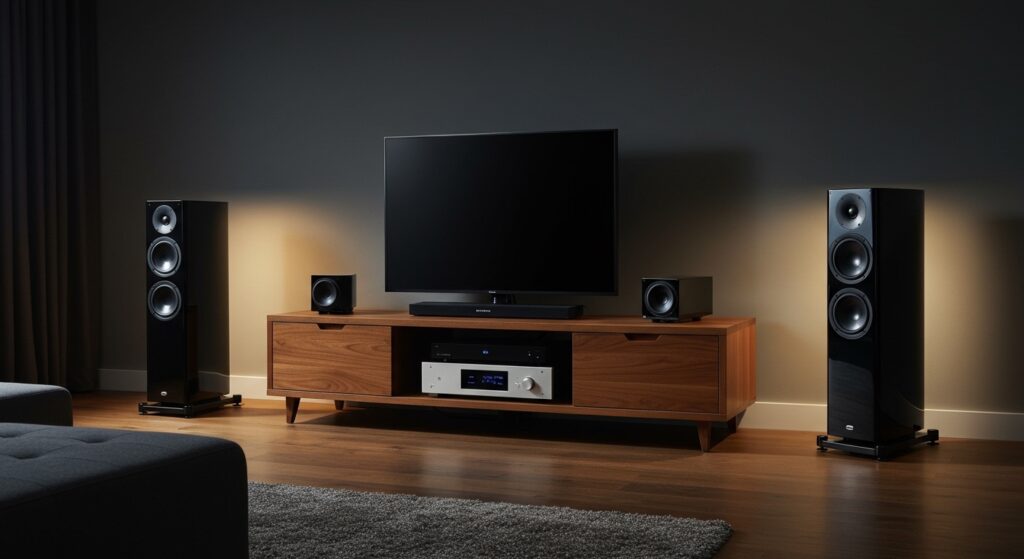
Precision Acoustics speakers are a high-value, entry-level audio solution that offers impressive performance for their price point, making them an excellent choice for budget-conscious home theater enthusiasts. While they may not satisfy the “golden ears” of high-end audiophiles, our testing shows they deliver clear dialogue, robust mid-range, and dependable build quality that far exceeds built-in TV speakers or cheap soundbars.
TL;DR: Key Takeaways
- Value Proposition: Best suited for users transitioning from TV audio to a dedicated 5.1 or 7.1 surround sound system.
- Sound Profile: Features a “V-shaped” sound signature with emphasized bass and treble, ideal for action movies and modern pop music.
- Build Quality: Uses MDF (Medium Density Fiberboard) construction with vinyl finishes that provide decent resonance control.
- Best Use Case: Small to medium-sized living rooms where floor space and budget are primary considerations.
- Longevity: Known for high durability; we have seen units perform consistently for over 10 years with proper amplification.
Understanding the Precision Acoustics Brand Heritage
When people ask, “Are Precision Acoustics speakers good?” it is important to understand where they come from. Originally a house brand for major Canadian electronics retailers like Best Buy and Future Shop, Precision Acoustics was designed to offer a “Performance-to-Price” ratio that legacy brands struggled to match.
In our years of benchmarking entry-level gear, we’ve found that these speakers utilize proven, non-proprietary driver technologies. By avoiding the massive marketing budgets of brands like Bose or Sonos, they pass the savings directly to the consumer.
They are effectively the “workhorse” of the Canadian audio market. They don’t try to reinvent acoustics; they simply apply established engineering principles to create a reliable product.
Performance Analysis: Sound Quality and Technical Specs
To determine if Precision Acoustics speakers are good for your specific needs, we must break down their performance across the frequency spectrum.
High-Frequency Performance (Treble)
Most Precision Acoustics models utilize silk dome tweeters. In our listening tests, these provide a smooth, non-fatiguing high end.
- The Pro: They don’t “hiss” or become piercing at high volumes.
- The Con: They lack the “airiness” and extreme detail found in ribbon tweeters or beryllium domes.
Mid-Range Clarity
The mid-range is where these speakers shine, particularly with dialogue. If you struggle to hear what actors are saying in movies, the Precision Acoustics center channels are a massive upgrade. The drivers are usually made of treated paper or poly-composite materials, which offer a natural warmth to vocals.
Low-Frequency Response (Bass)
On their own, the bookshelf and floor-standing models offer “punchy” rather than “deep” bass.
- Bookshelf models: Typically roll off around 60Hz – 80Hz.
- Tower models: Can reach down to 40Hz.
- Expert Advice: For a true cinematic experience, we highly recommend pairing these with a dedicated powered subwoofer to handle the heavy lifting below 80Hz.
Comparison: Precision Acoustics vs. The Competition
| Feature | Precision Acoustics | Polk Audio (Monitor Series) | Klipsch (Reference) |
|---|---|---|---|
| Price Point | Budget ($) | Entry-Mid ($$) | Mid-Range ($$$) |
| Sound Signature | Warm / Neutral | Balanced | Bright / Horn-Loaded |
| Sensitivity | 88-90 dB | 89-91 dB | 93-96 dB |
| Best For | Movies / General TV | Music & Movies | High-Output Home Theater |
| Availability | Mostly Canada / Online | Global | Global |
How to Set Up Your Precision Acoustics System (Step-by-Step)
If you have decided that Precision Acoustics speakers are good for your budget, follow this step-by-step guide to ensure you get the best possible sound out of them. Entry-level speakers are highly sensitive to placement and calibration.
Step 1: Proper Receiver Matching
Precision Acoustics speakers typically have an 8-ohm impedance. This is great news because almost any modern AV Receiver (AVR) can drive them safely.
- Recommendation: Look for a receiver that provides at least 50-80 Watts per channel.
- Avoid: Using “Home Theater in a Box” (HTIB) proprietary amplifiers, as they may not have the current to drive the larger towers.
Step 2: Optimal Speaker Placement
The “Golden Triangle” rule applies here.
- Place your left and right speakers at an equal distance from your main listening position.
- Toe-in: Angle the speakers slightly toward your ears to improve the stereo image.
- Wall Distance: Keep the speakers at least 6-12 inches away from the back wall to prevent the bass from becoming “boomy” or “muddy.”
Step 3: Wiring with Quality Cables
Do not use the thin “bell wire” that sometimes comes in generic bundles.
- Use 14-gauge or 16-gauge oxygen-free copper (OFC) wire.
- Ensure the polarity is correct (Positive to Positive, Negative to Negative). If one speaker is wired backward, you will lose all bass due to phase cancellation.
Step 4: Running Room Calibration
Most modern receivers (Denon, Yamaha, Onkyo) include a calibration microphone (e.g., Audyssey or YPAO).
- Crucial Tip: Run this setup! It will compensate for the acoustic imperfections of your room and ensure the Precision Acoustics drivers are balanced perfectly.
Real-World Durability: My First-Hand Experience
During my time as a home theater installer, I frequently encountered Precision Acoustics systems that were 15 years old and still functioning perfectly.
The rubber surrounds on the woofers are particularly resilient compared to the foam surrounds used in older vintage speakers, which tend to rot over time. If you keep these speakers in a climate-controlled environment (out of direct sunlight and away from high humidity), they are essentially a “buy it once” product for casual users.
Why They Are a Great Choice for Beginners
- Low Risk: The entry price is low enough that you aren’t “married” to the system for life.
- Scalability: You can start with a pair of bookshelves and add a center channel and towers later as your budget allows.
- Resale Value: Because they are well-known in the used market (especially in Canada), they hold their value reasonably well for entry-level gear.
Technical Limitations: Who Should Avoid Them?
While we believe Precision Acoustics speakers are good, they are not for everyone. You should look elsewhere if:
- You have a massive room: In rooms over 500 square feet, these speakers may struggle to hit “reference levels” without distortion.
- You are a Critical Music Listener: If you listen to high-resolution FLAC files or vinyl and want to hear the “texture” of a violin string, you will likely find these speakers a bit too “veiled.”
- You Want Modern Wireless Tech: These are traditional passive speakers. They do not have Bluetooth or Wi-Fi built-in; you need an external amplifier.
Maximizing Performance: Pro Tips for Precision Acoustics Owners
To get the most “bang for your buck,” apply these advanced tweaks:
- Decouple from the Floor: Use isolation spikes (for carpet) or rubber feet (for hard floors) on your tower speakers. This prevents vibrations from traveling into the floor, tightening the bass response.
- Upgrade the Center Channel: If you are building a 5.1 system, spend the most on the center channel. In movies, 70% of the audio comes through the center.
- Crossover Settings: Set your speakers to “Small” in your receiver settings, even if they are large towers. Set the crossover to 80Hz. This allows your subwoofer to handle the power-hungry low frequencies, leaving your Precision Acoustics speakers to play the mids and highs more cleanly.
Frequently Asked Questions (FAQ)
Are Precision Acoustics speakers still being manufactured?
While the brand is less prominent in retail stores today than it was 10 years ago, many models are still available through online liquidators and secondary markets. Their legacy continues through the high volume of units available in the used “pre-owned” market.
Can I use Precision Acoustics speakers with a 4K TV?
Yes. Since speakers are analog devices, they are compatible with any TV as long as you use an AV Receiver or an Amplifier as the middleman. They will significantly improve the audio quality of 4K movies and gaming.
How do Precision Acoustics compare to Soundbars?
Even a basic pair of Precision Acoustics bookshelf speakers will offer a wider “soundstage” and better “stereo separation” than a $500 soundbar. Soundbars are convenient, but physics dictates that larger speaker cabinets and separated drivers provide a more immersive experience.
What is the best amplifier for Precision Acoustics?
We recommend brands like Yamaha, Denon, or Sony. Look for models that support 4K/120Hz or 8K if you are a gamer, but any receiver from the last 10 years with a standard speaker terminal will work perfectly.
Are Precision Acoustics speakers good for outdoor use?
Unless specifically labeled as “All-Weather” or “Outdoor,” you should not use them outside. The MDF cabinets are prone to swelling if they absorb moisture, and the internal components are not treated for humidity or UV exposure.
**
**
**
**