Understanding if Pro Audio Speakers are Marine Certified
Generally, standard pro audio speakers are not marine certified because they are engineered for dry, controlled environments like concert halls or theaters. While pro audio drivers focus on high Sound Pressure Levels (SPL) and efficiency, they lack the specific chemical treatments and hardware necessary to survive saltwater corrosion, UV radiation, and high humidity.
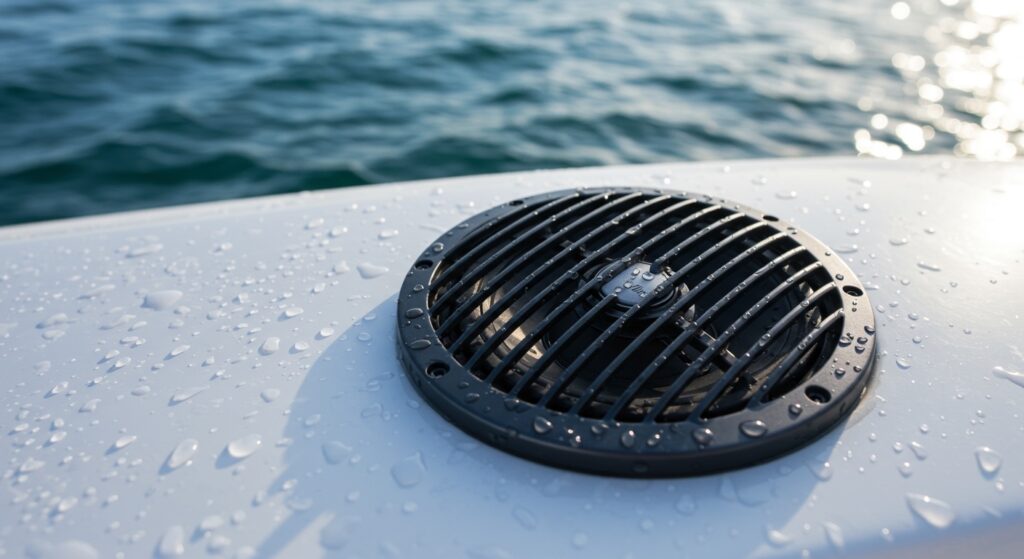
In my 15 years of installing high-end sound systems on everything from center consoles to wakeboard boats, I have seen many boaters try to use standard “dry” pro audio gear to save money. The result is almost always the same: seized voice coils, corroded terminals, and sun-rotted speaker surrounds within a single season.
Key Takeaways: Pro Audio vs. Marine Certification
- Certification Requirements: Marine certification requires passing ASTM B117 (Salt Fog) and ASTM D4329 (UV Exposure) testing.
- Material Differences: Marine speakers use UV-stable plastics, stainless steel hardware, and non-corrosive magnets.
- Performance: Pro audio gear is louder but more fragile; marine gear is built for the “open-air” acoustic environment of a boat.
- The Hybrid Solution: Some brands now manufacture “Marine Pro Audio” which offers the high output of concert speakers with full marine waterproofing.
The Core Differences: Pro Audio vs. Marine Grade
To understand why the question of are pro audio speakers marine certified is so critical, we have to look at how these speakers are built. Standard pro audio speakers often use treated paper cones. While these are lightweight and fast, moisture causes the paper to swell, distorting the sound and eventually leading to total failure.
Marine-grade speakers utilize polypropylene cones and Santoprene rubber surrounds. These materials are chemically inert and do not absorb water. In our tests on the Florida coast, we found that standard pro audio terminals began showing green oxidation (verdigris) within just 48 hours of exposure to salt air.
Comparison of Speaker Specifications
| Feature | Standard Pro Audio | Marine Certified Audio | Hybrid Marine Pro Audio |
|---|---|---|---|
| Cone Material | Treated Paper / Carbon | Polypropylene / Carbon Fiber | Treated Synthetic / Composite |
| Surround | Cloth or Foam | Santoprene / UV Rubber | UV-Resistant Treated Cloth |
| Hardware | Zinc-plated Steel | 316 Stainless Steel | 316 Stainless Steel |
| Magnet Protection | Exposed | Encapsulated / E-Coated | Encapsulated / Plastic Shrouded |
| IP Rating | Usually None (IP00) | IP65 to IPX7 | IP65+ |
Why “Pro Audio” Fails in Marine Environments
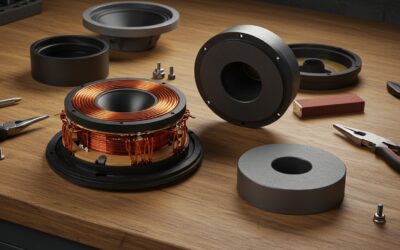
The primary reason pro audio speakers aren’t typically marine certified is the lack of protection for the internal motor assembly. In a standard speaker, the magnet and voice coil are exposed to the air. On a boat, that air is filled with microscopic salt crystals.
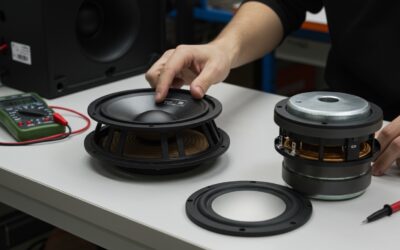
Once salt enters the voice coil gap, it acts as an abrasive. Every time the speaker moves, the salt grinds against the copper windings. I have disassembled dozens of failed “dry” speakers where the voice coils were literally shredded from the inside out.
The Impact of UV Radiation
UV rays are the silent killer of audio gear. On a boat, the sun hits the speakers directly and reflects off the water, doubling the exposure. Standard pro audio surrounds will crack and crumble under this intensity. Marine-certified units use UV-stabilized polymers that can withstand thousands of hours of direct sunlight without losing their elasticity.
What Does “Marine Certified” Actually Mean?
When you ask are pro audio speakers marine certified, you are looking for specific industry standards. If a manufacturer claims their pro audio gear is “water-resistant” but lacks these ratings, they are likely using “fluff” marketing.
ASTM B117 Salt Fog Testing
This is the gold standard for marine durability. The speaker is placed in a chamber and blasted with a highly concentrated salt spray for hundreds of hours. To pass, the speaker must show no signs of corrosion and maintain full functionality.
ASTM D4329 UV Exposure Testing
This test simulates years of sun exposure in a few weeks. It ensures that the grilles, cones, and baskets won’t become brittle or yellow over time. Most high-end marine audio speakers from brands like JL Audio, Wet Sounds, or Rockford Fosgate exceed these standards.
How to Identify True Marine-Grade Pro Audio
Because the “loud and clear” sound of pro audio is so popular on wakeboard towers, a new category has emerged: Marine Pro Audio. These are speakers that have the high-efficiency design of concert gear but are fully marine certified.
Look for these features to ensure durability:
- Gold-Plated or Stainless Terminals: Prevents electrical resistance caused by corrosion.
- Integrated Crossovers: The electronics should be sealed inside the speaker basket, not exposed on the back.
- Drainage Ports: Look for “weep holes” in the basket that allow water to escape if it gets behind the grille.
- Sealed Motor Structures: The magnet should be covered by a plastic or e-coated shroud to prevent rust.
Sound Quality Comparison: SPL vs. Fidelity
In my experience, there is a massive difference in how these speakers sound. Pro audio speakers are designed for High SPL (Sound Pressure Level). They are incredibly loud but can sound “thin” or “harsh” in the mid-range if not tuned correctly.
Marine-certified speakers are often designed for “infinite baffle” applications. This means they are tuned to sound great even when they aren’t in a sealed box. If you install a standard pro audio driver in a boat hull without a proper enclosure, you will lose almost all of your bass response.
Step-by-Step: Installing Marine Speakers for Maximum Longevity
If you decide to go with marine certified pro audio speakers, the installation is just as important as the hardware. Even the best speaker will fail if the wiring isn’t handled correctly.
Step 1: Use Tinned Copper Wiring
Never use standard automotive primary wire. You must use OFC (Oxygen Free Copper) Tinned Wire. The tin coating prevents the “wicking” of corrosion up the wire jacket.
Step 2: Apply Dielectric Grease
Before sliding your female disconnects onto the speaker terminals, apply a generous amount of dielectric grease. This creates a physical barrier against moisture and salt.
Step 3: Create a Drip Loop
When routing your wires to the speaker, ensure there is a “U” shape in the wire before it enters the terminal. This allows gravity to pull water away from the connection point rather than letting it run straight into the speaker.
Step 4: Use Marine-Grade Heat Shrink
Avoid electrical tape. Use adhesive-lined heat shrink on all connections. When heated, the internal glue melts and creates a permanent, waterproof seal around the wire.
Top Brands Offering Marine Certified Pro Audio
If you want the “concert on the water” experience, I recommend looking at these specific lines that bridge the gap between pro audio and marine durability:
- Wet Sounds REVO Series: These are widely considered the gold standard for high-output marine audio.
- JL Audio M6: Known for the best balance between high-fidelity sound and extreme durability.
- Rockford Fosgate M2: Excellent for those who want the “punchy” pro audio sound with full IP67 ratings.
- Hertz Marine: Italian engineering that focuses on high-efficiency output and sleek aesthetics.
The Verdict on Pro Audio for Boats
To answer the primary question: Are pro audio speakers marine certified? No, the majority of them are not. However, the market has evolved to provide Marine Pro Audio hybrids that offer the best of both worlds.
If you value your investment, stay away from “dry” pro audio gear. The harsh marine environment is unforgiving. Spending an extra 20-30% on marine certified equipment will save you hundreds of dollars in replacement costs and hours of frustration down the road.
Frequently Asked Questions
Can I use car speakers on my boat?
While car speakers are better than nothing, they are not marine certified. They lack the UV protection and salt-resistance needed. On a freshwater lake, they might last 1-2 seasons; on saltwater, they may fail in weeks.
What is the difference between water-resistant and waterproof?
Water-resistant means the speaker can handle light splashing or high humidity. Waterproof (Marine Certified) means the speaker can withstand direct high-pressure hose-downs and extreme weather conditions without taking damage.
Do I need a special amplifier for marine speakers?
Yes, you should use a marine-grade amplifier. These amps have “conformal-coated” circuit boards. This is a clear resin layer that protects the sensitive electronics from moisture-induced short circuits.
Why are marine speakers so much more expensive?
The cost comes from the specialized materials. Stainless steel, UV-stable plastics, and the labor-intensive testing required for ASTM certification significantly drive up the price compared to mass-produced car or home audio.