Are Pro Speakers Stereo or Mono? The Definitive Answer
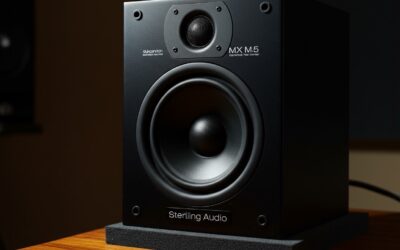
Individual pro speakers are almost exclusively mono devices, meaning a single cabinet produces a single channel of sound. While a single unit might have multiple internal drivers (woofers and tweeters), they work together to reproduce one signal. To achieve a stereo soundstage, you must use at least two separate pro speakers—one for the left channel and one for the right—connected to a stereo source like a mixer or controller.
In our years of configuring live sound for venues ranging from intimate coffee shops to massive outdoor festivals, we have found that while the signal can be stereo, the hardware itself is nearly always mono. This distinction is crucial for preventing “sonic mud” and ensuring every audience member hears the full mix, regardless of where they are standing.
Key Takeaways for Pro Audio Setup
- Individual Cabinets: Almost all professional PA speakers (Point source, line arrays) are mono.
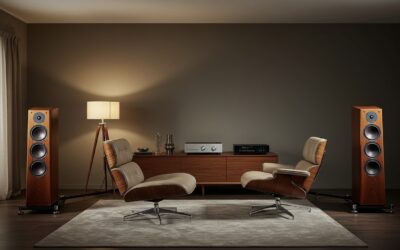
- Stereo Imaging: Requires two independent speakers and a stereo output from your mixer or audio interface.
- Mono Advantage: In large venues, a “Big Mono” setup is often preferred to ensure the entire crowd hears the same balanced mix.
- Cabling: Pro speakers use XLR or TRS cables, which carry balanced mono signals to reduce interference.
- Phase Matters: When using multiple speakers, ensuring they are in phase is more important than the stereo-vs-mono debate.
Understanding the Difference: Mono vs. Stereo in Pro Audio
To understand if pro speakers are stereo or mono, we first need to look at the signal path. A mono signal is a single stream of audio information. A stereo signal consists of two independent streams (Left and Right) that create a sense of space and directionality.
When you look at a professional speaker like a QSC K12.2 or a JBL SRX800, you will see multiple input jacks on the back. While some modern “all-in-one” column arrays might accept a stereo Bluetooth signal, the physical output from the drivers remains a summed mono signal or a single-channel reproduction.
Why Individual Speakers Stay Mono
- Directivity: Pro speakers are designed to project sound to a specific area. Splitting a single cabinet into “left and right” would destroy its ability to throw sound effectively over long distances.
- Power Efficiency: Professional amplifiers are most efficient when driving a single, cohesive load.
- Scalability: In pro environments, we scale systems by adding more mono cabinets to an array, not by buying “wider” stereo speakers.
| Feature | Mono Pro Speaker | Stereo System (2+ Speakers) |
|---|---|---|
| Number of Channels | 1 (Single) | 2 (Left & Right) |
| Common Use Case | Floor monitors, speech, small PAs | Concerts, DJ sets, Studio monitoring |
| Cabling Requirement | One XLR or Speakon cable | Two independent cables from the source |
| Soundstage | Centered, focused | Wide, immersive, directional |
| Phase Issues | Minimal | Potential for cancellation if poorly placed |
Why Most Live Events Actually Use “Dual Mono”
In our experience setting up sound for weddings and corporate events, we often opt for a Dual Mono configuration. This means we take a stereo signal from the mixer, but we pan everything to the center so that both the left and right speakers play the exact same thing.
Why do we do this? If you are standing on the far left of a room and the lead vocals are panned hard right in a true stereo mix, you won’t hear the singer properly. By using a mono approach across multiple pro speakers, we guarantee uniform coverage for every seat in the house.
How to Set Up a Stereo Pro Speaker System: A Step-by-Step Guide
If you want to achieve that immersive, high-fidelity stereo sound for a studio or a controlled listening environment, follow these steps to configure your pro speakers correctly.
Step 1: Verify Your Audio Source
Ensure your source—be it a Pioneer DJ controller, a Focusrite interface, or a digital mixer—is outputting two distinct channels. Check your software settings to ensure the “Mono” toggle is not engaged.
Step 2: Choose the Correct Pro Cables
For a professional setup, you must use balanced cables to prevent hum and noise.
- Use XLR (Male to Female) cables for most powered speakers.
- Use TRS (1/4 inch balanced) cables if your mixer outputs don’t have XLR.
- Pro Tip: Never use a standard “guitar cable” (TS) for long runs to pro speakers, as it will pick up radio interference.
Step 3: Connect the Hardware
- Connect the Left Output of your mixer to the input of Speaker A.
- Connect the Right Output of your mixer to the input of Speaker B.
- If you are using a subwoofer, run the stereo outputs to the sub first (if it has a built-in crossover), then out to the “top” speakers.
Step 4: Position for the “Sweet Spot”
To experience the stereo effect, your speakers and the listener should form an equilateral triangle.
- Angle (toe-in) the speakers slightly toward the center of the room.
- Ensure both speakers are at the same height, ideally with the high-frequency drivers (tweeters) at ear level.
Step 5: Test and Calibrate
Play a track with known stereo movement (like Pink Floyd’s “Money” or Queen’s “Bohemian Rhapsody”). Stand in the center and listen for the “phantom center” image. If the sound feels thin or “hollow,” one of your speakers might be out of phase.
The Role of Subwoofers: Are They Mono?
In almost every professional touring rig we have worked with, the low-end is kept strictly mono. Low-frequency sound waves are omnidirectional, meaning our ears struggle to tell which direction they are coming from.
By summing your bass to mono, you prevent “power alleys” and “dead zones” caused by phase cancellation between two subwoofers. Even if your top pro speakers are running in stereo, we recommend keeping your sub-frequencies under 100Hz in mono for maximum impact.
Expert Advice: When to Use Mono vs. Stereo
During my time as a front-of-house engineer, I learned that “stereo” is often a trap in live sound. Here is how I decide which configuration to use:
- Use Mono When: The venue is wide, the ceiling is low, or the audience is spread out. This ensures everyone hears the guitar, the vocals, and the keys equally.
- Use Stereo When: You are in a controlled “listening” environment, like a small theater or a recording studio, where the audience is concentrated in a central “sweet spot.”
- Use Stereo for Recording: Always record in stereo to give yourself the most flexibility during the mixing process later.
Common Myths About Pro Speakers
Myth 1: “A speaker with two woofers is stereo.”
False. Having multiple drivers in one box usually just means the speaker can handle more power or has a better frequency response. It is still a mono cabinet receiving a single signal.
Myth 2: “Stereo is always better quality than mono.”
False. A high-quality mono setup will sound significantly better than a poorly aligned stereo setup with phase issues. In professional audio, clarity and coverage beat “width” every time.
Myth 3: “I can just use a Y-splitter to make it stereo.”
False. A Y-splitter simply sends the same mono signal to two places. To get stereo, you need two discrete signals from your source.
FAQ: Frequently Asked Questions
Can I connect a phone directly to a pro speaker in stereo?
No. If you use a 3.5mm-to-XLR cable to connect a phone to a single pro speaker, you will often experience “phase cancellation” where the vocals disappear. You need a stereo breakout cable to send the left and right signals to two separate speakers, or a mixer to sum the phone’s signal to mono properly.
Do I need two speakers for a small party?
For most small gatherings, a single high-quality mono pro speaker is more than enough. It is easier to transport, faster to set up, and eliminates the risk of guests only hearing half the song if they are standing on one side of the room.
Why do some pro speakers have ‘Link Out’ ports?
The Link Out (or Thru) port on a pro speaker is used to “daisy-chain” the signal to another speaker. This allows you to send the same mono signal to multiple cabinets to cover a larger area. It does not turn the second speaker into a “right channel.”
Are line arrays stereo or mono?
While a full line array system (the hanging speakers at concerts) can be configured for stereo, each individual module in the array is a mono unit. The “stereo” effect is created by processing the left side of the stage differently than the right side.
What is the best cable for a mono pro speaker?
We always recommend a high-quality XLR cable. Brands like Mogami, Canare, or even the budget-friendly AmazonBasics provide a balanced connection that rejects noise over long distances, which is essential for pro-grade audio.